Infection
-
Infection Related Products (18904)
Related Products (18904)

-
Antibodies (22)
-
Aspergillumarin A
 0 ImagesCat. No.: HY-N16400CAS No.: 1392495-06-5
Aspergillumarin A is a dihydroisocoumarin derivative with various biological activity. Aspergillumarin A inhibits cell proliferation by inducing G0/G1 phase arrest in HepG2 hepatocellular carcinoma cells.. Aspergillumarin A exhibits weak antibacterial activity against Staphylococcus aureus and Bacillus subtilis. Aspergillumarin A can be used for the study of hepatocellular carcinoma (HCC)
-
RK-682 hemicalcium
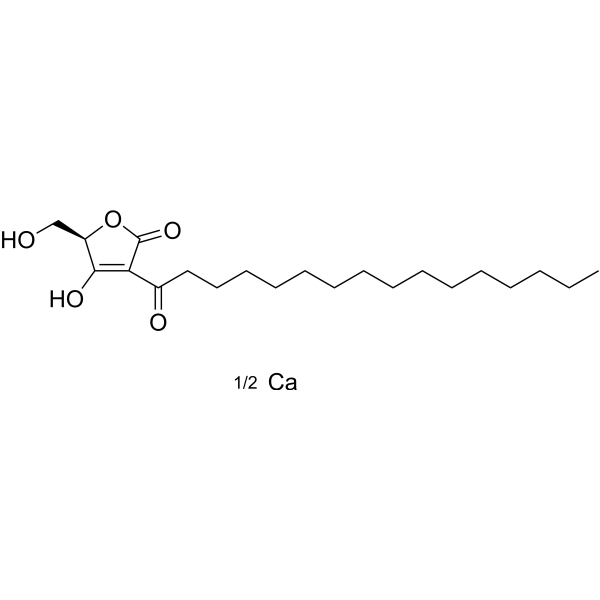 0 ImagesCat. No.: HY-135564CAS No.: 332131-32-5
RK-682 hemicalcium is the hemicalcium salt form of RK-682 (HY-135564A). RK-682 hemicalcium is the inhibitor for protein tyrosine phosphatase (PTPase), heparanase, phospholipase A2 and HIV-1 protease. RK-682 hemicalcium inhibits the dephosphorylation of CD45 (IC50 is 54 μM) and VHR (IC50 is 2.0 μM), and thereby inhibits the ERK signaling pathway. RK-682 hemicalcium inhibits the cell viability of cancer cell MGH-U3, T24 and UROtsa with IC50s of 78.2, 43.2 and 145 nM, respectively, arrests the cell cycle at G1/S phase, inhibits the cell migration and autophagy in MGH-U3 and T24[2].
-
Glucosulfamide
 0 Images
Glucosulfamide is a sulfonamide anti-infective compound. Glucosulfamide can be used in solvent preservatives.
-
AF03
 0 ImagesCat. No.: HY-180141
AF03 is a larvicide against Aedes aegypti Vector Larvae with a LC50 of 41.6 μg/mL. AF03 binds stably to the sterol carrier protein-2 (AeSCP-2) of Aedes aegypti, interfering with lipid metabolism in larvae. AF03 can increase acetylcholinesterase (AChE) activity in the zebrafish brain, slightly elevate catalase (CAT) activity in the liver and heart, and increased superoxide dismutase (SOD) activity in the brain. AF03 can be used for the research of arboviruses infection, such as Dengue.
-
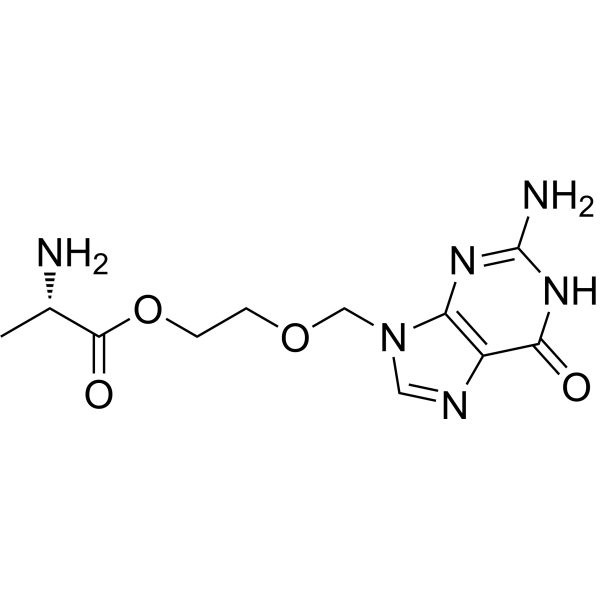
GT-055 free base
 0 ImagesCat. No.: HY-187939CAS No.: 2092930-66-8Synonyms: LCB18-055 free base
GT-055 free base (LCB18-055 free base) is a broad-spectrum β-lactamase inhibitor and penicillin-binding protein 2 (PBP2) inhibitor. GT-055 free base inactivates β-lactamase, protects GT-1 from hydrolysis, and binds tightly to PBP2, thereby inhibiting cell wall biosynthesis. GT-055 free base can be used for research on bacterial infections.

-
Laccase-IN-1
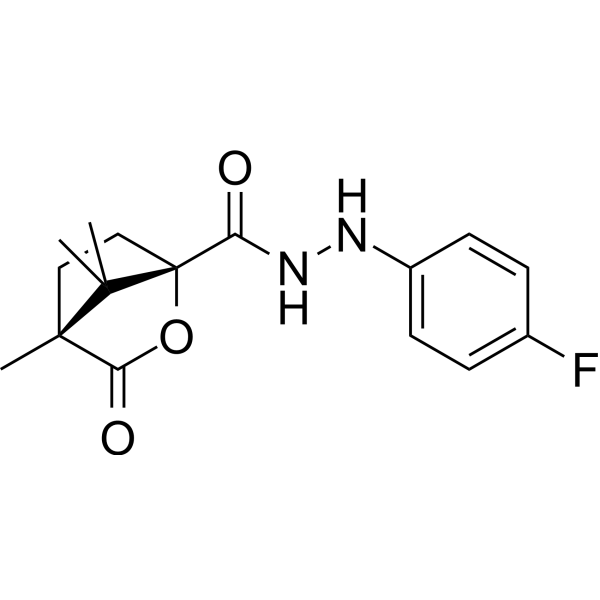 0 ImagesCat. No.: HY-149614CAS No.: 2991094-41-6
Laccase-IN-1 (compound 4b) is an orally active inhibitor of laccase, with the IC50 of 11.3 μM. Laccase-IN-1 displays protective and curative effects on apple fruits infected by B. dothidea. Laccase-IN-1 enhances the cell membrane permeability, destroys the mycelial surface morphology and the cell ultrastructure, and reduces the ergosterol and exopolysaccharide contents of B. dothidea.
-
Mtb-cyt-bd oxidase-IN-3
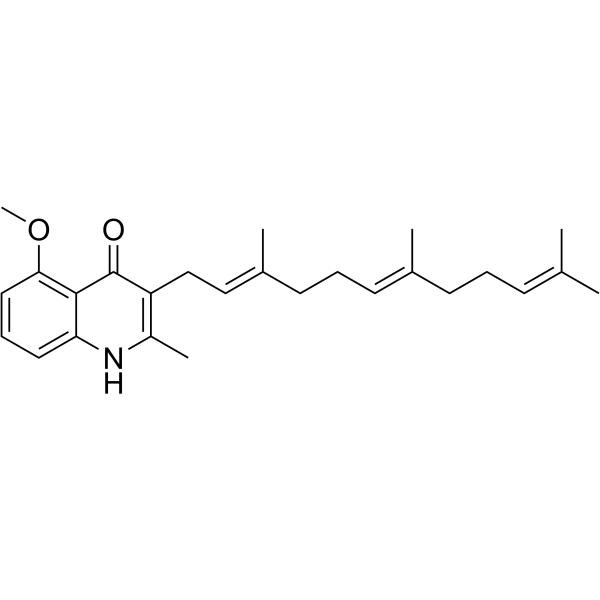 0 ImagesCat. No.: HY-151550
Mtb-cyt-bd oxidase-IN-3 (compound 1u) is a Mycobacterium tuberculosis cytochrome bd oxidase (Mtb cyt-bd oxidase) inhibitor with an IC50 value of 0.36 μM. Mtb-cyt-bd oxidase-IN-3 inhibits the growth of Mycobacterium tuberculosis (MIC=32 μM). Mtb-cyt-bd oxidase-IN-3 can be used in tuberculosis research.
-
Vaneprim
 0 ImagesCat. No.: HY-106771CAS No.: 84854-86-4
Vaneprim is an antibacterial agent.
-
XSJ2-46
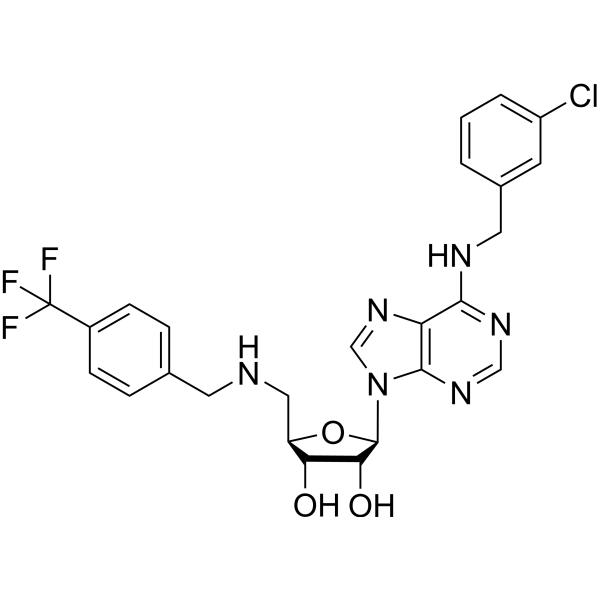 0 ImagesCat. No.: HY-156291CAS No.: 2265911-12-2
XSJ2-46, 5'-amino NI analog, is an antiviral agent. XSJ2-46 has anti-Zika virus activity. XSJ2-46 exhibits reasonable inhibition of RNA-dependent RNA polymerases (RdRp) with an IC50 value of 8.78 μM.
-
HBV-IN-18
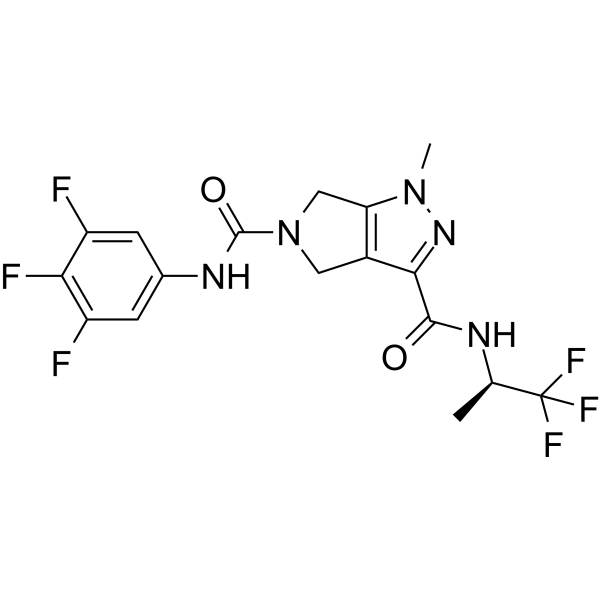 0 ImagesCat. No.: HY-144322CAS No.: 2766688-73-5
HBV-IN-18 (Compound 3) is an HBV capsid assembly modulator (CpAM) with an EC50 of 2790 nM.
-
Malonomicin
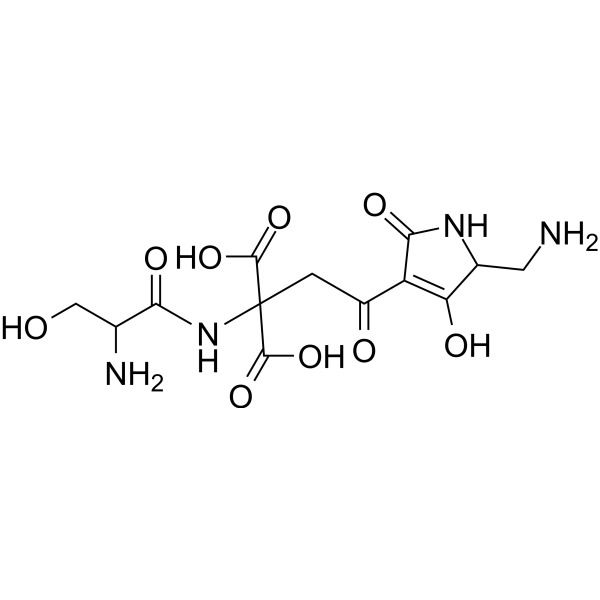 0 ImagesCat. No.: HY-121405CAS No.: 38249-71-7Synonyms: Antibiotic K16
Malonomicin (Antibiotic K16) is an antibiotic with anti-protozoa and anti-trypanosome activities. Malonomicin also shows anti-trypanosome activity in vivo.
-
EBP-59
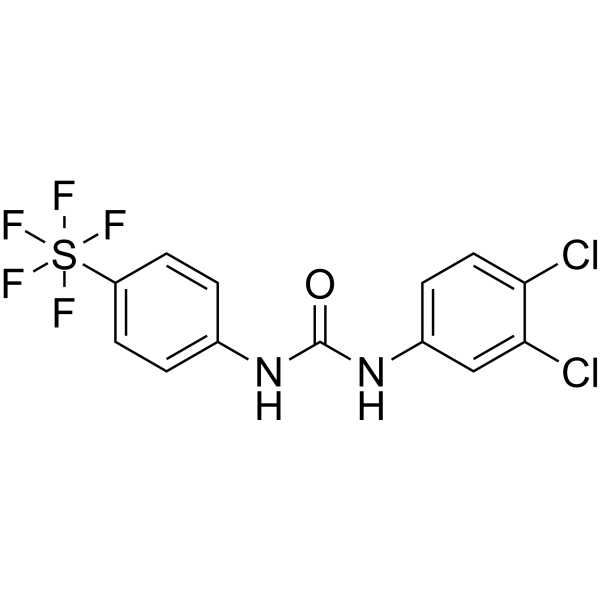 0 ImagesCat. No.: HY-157482CAS No.: 3033056-76-4

-
Amlodipine hydrochloride
 0 ImagesCat. No.: HY-B0317FCAS No.: 246852-07-3
Amlodipine hydrochloride is a biologically active drug used to lower blood pressure and prevent chest pain. Amlodipine hydrochloride has shown synergistic effects with antimicrobial drugs in in vitro studies, especially against carbene peptide-resistant Acinetobacter baumannii. Amlodipine hydrochloride can be used in combination with other antibiotics to enhance the inhibitory effect against resistant bacteria. The use of amlodipine hydrochloride helps reduce the dosage requirements of the drug, reduce toxic effects, and delay the emergence of drug resistance.
-
Decarestrictine D
 0 ImagesCat. No.: HY-125732CAS No.: 127393-89-9
Decarestrictine D exhibits inhibitory activity against cholesterol levels. Decarestrictine D is utilized as receptor for glycosylation reactions to synthesize novel hybrid antibiotics.
-
Oligomycin A (Standard)
 0 Images
Oligomycin A (Standard) is the analytical standard of Oligomycin A. This product is intended for research and analytical applications. Oligomycin A (MCH 32), created by Streptomyces, acts as a mitochondrial F0F1-ATPase inhibitor, with a Ki of 1 μM; Oligomycin A shows anti-fungal activity.
-
Succinate dehydrogenase-IN-9
 0 ImagesCat. No.: HY-176140
Succinate dehydrogenase-IN-9 (Compound Iik) is a succinate dehydrogenase inhibitor (IC50: 3.6 μM). Succinate dehydrogenase-IN-9 exhibits potent inhibitory activity against various fungal species (eg: inhibits S. sclerotiorum with an EC50 value of 1.14 μg/mL. Succinate dehydrogenase-IN-9 enhances the nitrate reductase activity, thereby facilitating plant growth.
-
Dehydrobruceine A
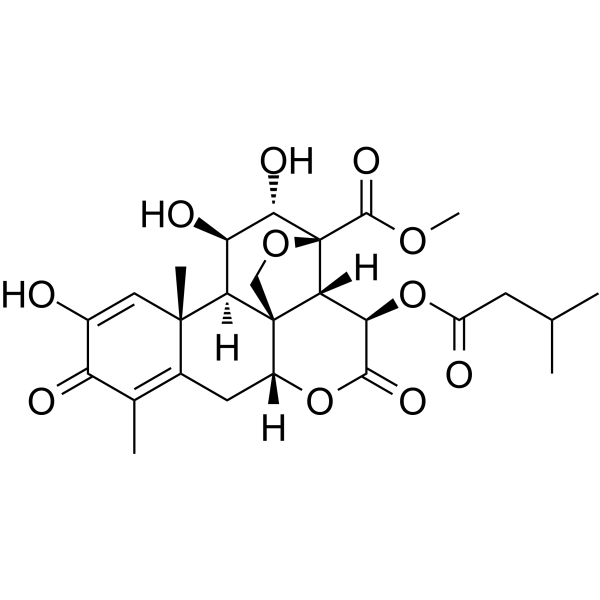 0 ImagesCat. No.: HY-N8257CAS No.: 73435-47-9
Dehydrobruceine A is a low potent antitrypanosomal agent, with an IC50 of 88.5 nM for Plasmodium falciparum.