Infection
-
Infection Related Products (18886)
Related Products (18886)

-
Antibodies (22)
-
Anti-PEDV agent 1
 0 ImagesCat. No.: HY-172772
Anti-PEDV agent 1 (Compound D39) is a highly effective anti-Porcine epidemic diarrhea virus (PEDV) agent with an EC50 value of 0.09 μM. Anti-PEDV agent 1 blocks the early internalization of PEDV during viral entry by modulating intracellular Ca2+ homeostasis. Anti-PEDV agent 1 is promising for research of PEDV infections.
-
Prenylterphenyllin
 0 ImagesCat. No.: HY-N16065CAS No.: 959124-85-7
Prenylterphenyllin (Compound 1) is an antibacterial agent. Prenylterphenyllin can be isolated from marine-derived fungus Aspergillus candidus IF10. Prenylterphenyllin has cytotoxic activity against KB3-1 cells with an IC50 of 8.5 mg/mL. Prenylterphenyllin also has antibacterial activities against Xanthomonas oryzae and Erwinia amylovora with MICs of both 20 μg/mL.
-
ddATP
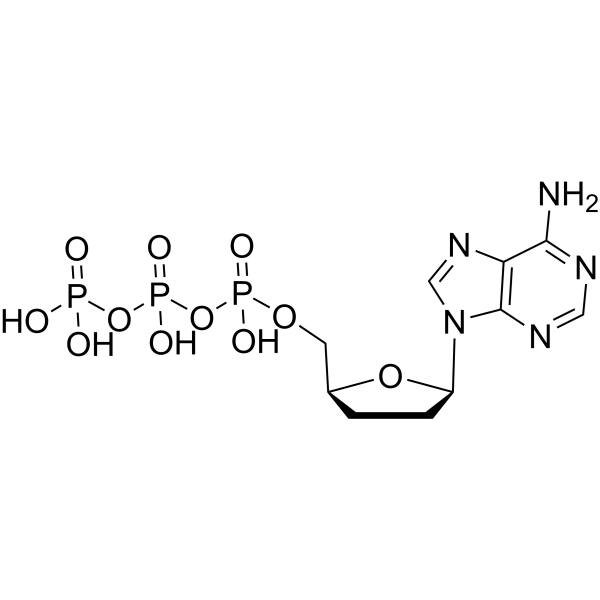 0 ImagesCat. No.: HY-128036CAS No.: 24027-80-3Synonyms: 2',3'-Dideoxyadenosine 5'-triphosphate
ddATP (2',3'-Dideoxyadenosine 5'-triphosphate), an active metabolite of 2',3'-dideoxyinosine, is a chain-elongating inhibitor of DNA polymerase. ddATP can be used for Sanger method for DNA sequencing and research of virus infection.
-
Benanomicin A
 0 ImagesCat. No.: HY-N12260CAS No.: 116249-65-1
Benanomicin A is a microbial metabolite and can be isolated from Actinomycetes.Benanomicin has antifungal activitya and inhibits HIV-1 viral infection in MT-4 cells.
-
Butenafine-13C,d3 hydrochloride
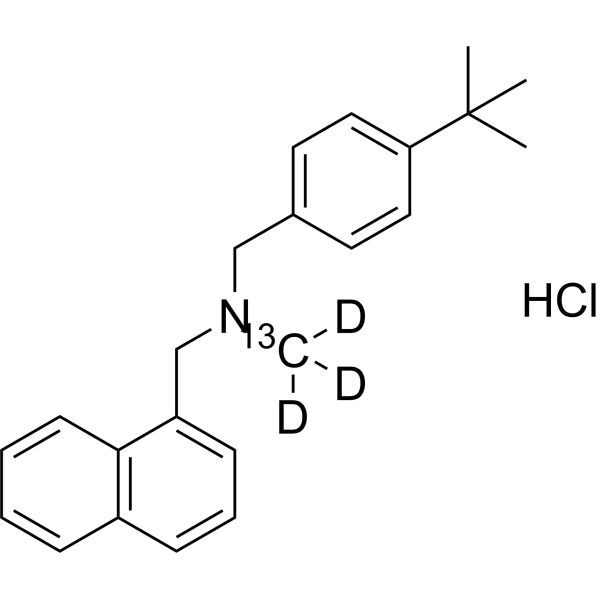 0 ImagesCat. No.: HY-17396SSynonyms: KP363-13C,d3 hydrochloride
Butenafine-13C,d3 (hydrochloride) is the 13C- and deuterium labeled. Butenafine Hydrochloride (KP363 Hydrochloride) is a synthetic benzylamine antifungal, works by inhibiting the synthesis of sterols by inhibiting squalene epoxidase.
-
BIBX 1382 dihydrochloride
 0 ImagesCat. No.: HY-110039CAS No.: 1216920-18-1
BIBX 1382 dihydrochloride is an ErbB kinase inhibitor with significant antiviral activity. BIBX 1382 affects the ability of viruses to enter host cells by inhibiting members of the ErbB kinase family. It can be used to study the interaction mechanism between virus and host and the broad spectrum intervention of highly pathogenic viruses.
-
IQP-0528 (Standard)
 0 ImagesCat. No.: HY-19509RCAS No.: 301297-45-0
IQP-0528 (Standard) is the analytical standard of IQP-0528. This product is intended for research and analytical applications. IQP-0528 is a highly potent nonnucleoside reverse transcriptase inhibitor (NNRTI). IQP-0528 shows nanomolar activity against both HIV-1 and HIV-2, with an HIV-1 EC50 of 0.2 nM and an HIV-2 EC50 of 100 nM.
-
Antifungal agent 26
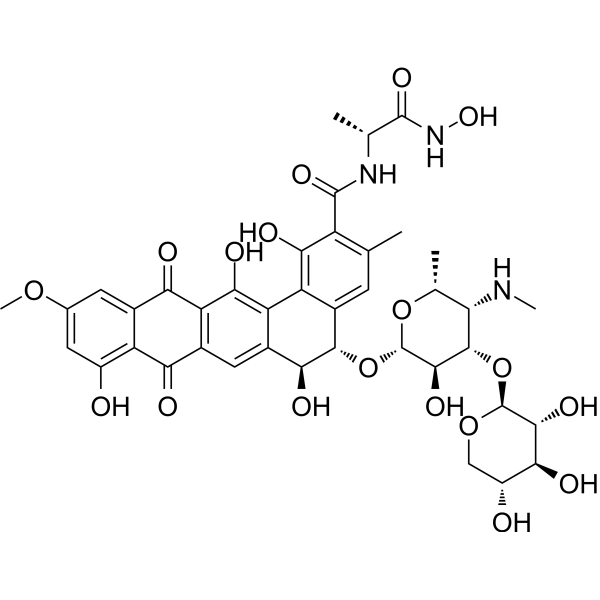 0 ImagesCat. No.: HY-146747CAS No.: 2769834-78-6
Antifungal agent 26, a Pradimicin A derivative, shows antifungal, antiviral, and antiparasitic activities through binding to d-mannose (Man)-containing glycans of pathogenic species.
-
Salbostatin
 0 ImagesCat. No.: HY-N21814CAS No.: 128826-89-1
Salbostatin is a competitive Trehalase inhibitor, with an IC50 of 8.3 μM against silkworm trehalase and a Ki of 180 nM against porcine trehalase. Salbostatin is isolated from Streptomyces albus. Salbostatin shows no antibacterial activity, and does not inhibit porcine intestinal mucosa sucrase (EC 3.2.1.26) or maltase (EC 3.2.1.20). Salbostatin can be used in studies related to the development of plant protectants.
-
Phenoxan
 0 ImagesCat. No.: HY-N21815CAS No.: 134332-63-1
Phenoxan is an inhibitor of cytochrome b and NADH: ubiquinone oxidoreductase. It exerts anti-HIV, antifungal, and cytotoxic effects by inhibiting the electron transport chain, the activity of HIV-1 Reverse Transcriptase, and viral replication. Phenoxan can be used in studies of HIV-1 infection and fungal infections.

-
Xalnesiran sodium scrambled negative control
 0 ImagesCat. No.: HY-145638CSynonyms: RO7445482 sodium scrambled negative control
Xalnesiran sodium scrambled negative control is the sequence scrambled negative control of Xalnesiran sodium.
-
SARS-CoV-2-IN-10
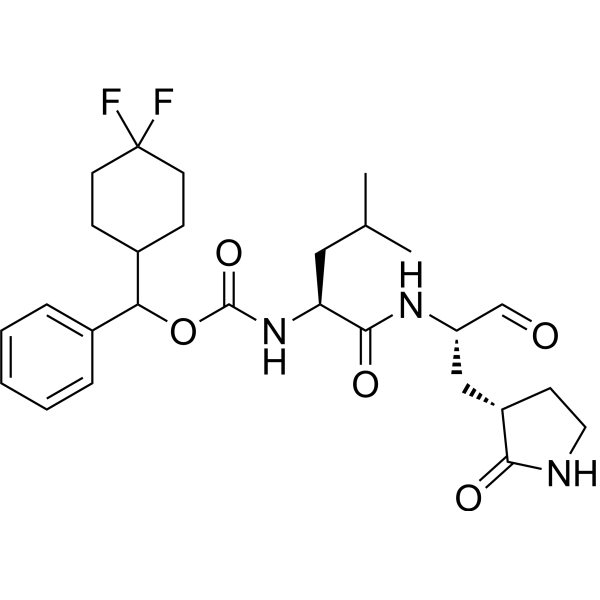 0 ImagesCat. No.: HY-145276CAS No.: 2722634-95-7
SARS-CoV-2-IN-10 is a potent and nontoxic inhibitor of SARS-CoV-2 3CL protease (3CLpro) with an IC50 and EC50 of 0.13 and 1.03 nM, respectively. SARS-CoV-2 3C-like protease (3CLpro), an enzyme essential for viral replication, is an attractive target for intervention. SARS-CoV-2-IN-11 may lead to the emergence of effective SARS-CoV-2-specific antivirals.
-
Crassicauline A (Standard)
 0 ImagesCat. No.: HY-N1924RCAS No.: 79592-91-9Synonyms: Crassicaulin A (Standard)
Crassicauline A (Crassicaulin A) Standard is the analytical standard of Crassicauline A (HY-N1924). This product is intended for research and analytical applications. Crassicauline A (Crassicaulin A) is a diester-type diterpenoid alkaloid. Crassicauline A exhibits feeding deterrent activity against adult Tribolium castaneum, with a EC50 of 1134.5 ppm. Crassicauline A induces arrhythmia at a dose of 0.10 mg/kg.
-
Apolactoferrin
 0 ImagesCat. No.: HY-NP0222
Apolactoferrin is an iron-free form of lactoferrin with antiparasitic activity. Apolactoferrin is an iron-binding protein.
-
LC-1310
 0 ImagesCat. No.: HY-183920CAS No.: 2322268-24-4
LC-1310 is an antiviral agent that targets and inhibits p97, and it suppresses the in vitro replication of human cytomegalovirus (HCMV) with an EC50 value of 0.3 μM. LC-1310 targets the D2 ATP-binding site of p97, downregulates the expression of early viral proteins, thereby blocking the transcription and proliferation of early viral genes. LC-1310 can be used for research on human cytomegalovirus infection.
-
SARS-CoV-2 nsp13-IN-6
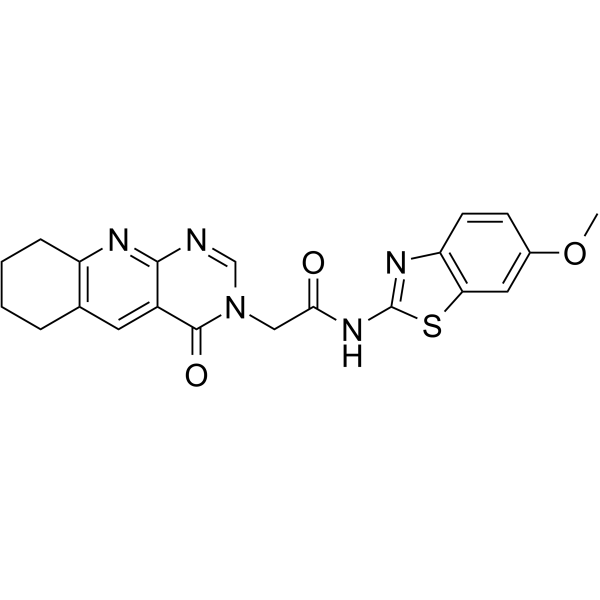 0 ImagesCat. No.: HY-150632CAS No.: 951588-85-5
SARS-CoV-2 nsp13-IN-6 (compound C5) is a potent SARS-CoV-2 non-structural protein 13 (nsp13) inhibitor with IC50 values of 27 and 33 μM for ssDNA+ ATPase and ssDNA- ATPase. SARS-CoV-2 nsp13-IN-6 can be used for researching anti-COVID-19.
-
cis-2-Butene-1,4-diol
 0 ImagesCat. No.: HY-W027631CAS No.: 6117-80-2
cis-2-Butene-1,4-diol serves as a probe for investigating isomerization and hydrogenation/hydrogenolysis reactions. cis-2-Butene-1,4-diol is also a compound used in the synthesis of the antiviral agent Oxetanocin A. cis-2-Butene-1,4-diol undergoes hydrogenation and hydrogenolysis reactions over supported platinum catalysts, with negligible levels of isomerization.
-
Ertapenem-d4 disodium
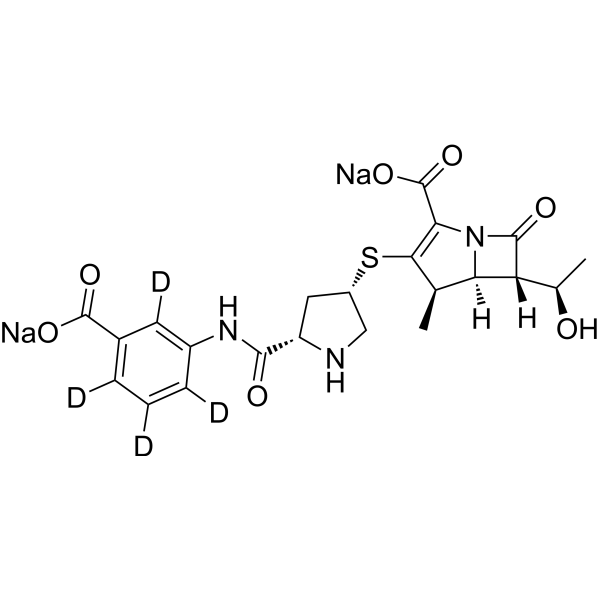 0 ImagesCat. No.: HY-A0294ASCAS No.: 1356934-56-9Synonyms: MK-0826-d4 disodium
Ertapenem-d4 (disodium) is deuterium labeled Ertapenem (disodium).
-
ST-148
 0 ImagesCat. No.: HY-121663CAS No.: 400863-77-6
ST-148 is a novel small molecule compound that has potent inhibitory effects against all four dengue virus serotypes. In the nonlethal AG129 mouse dengue virus infection model, ST-148 significantly reduced viremia and viral load in vital organs and tended to reduce plasma cytokine levels. Compound resistance was associated with the dengue virus capsid (C) gene, and the direct interaction of ST-148 with the C protein was presumed to be achieved through the protein's built-in fluorescence change in the presence of the compound. Therefore, ST-148 appears to interact with the dengue virus C protein and inhibit one or more unique steps of the viral replication cycle.