Infection
-
Infection Related Products (18686)
Related Products (18686)

-
Antibodies (22)
-
Indanazoline hydrochloride
 0 ImagesCat. No.: HY-U00075ACAS No.: 40507-80-0
Indanazoline (hydrochloride) is an orally active imidazoline derivative. Indanazoline (hydrochloride) has a LD50 of 481 mg/kg in rat model. Indanazoline (hydrochloride) can be studied in research on rhinitis.

-
D719
 0 ImagesCat. No.: HY-183926CAS No.: 384361-09-5
D719 is an HIV-1 integrase inhibitor. D719 binds to the hydrophobic pocket of HIV-1 integrase CCD dimer, disrupts interaction with LEDGF/P75, and prevents integrase nuclear translocation. D719 reduces HIV-1 p24 antigen production in acute infection of human T cells. D719 can be used for the research of HIV infection.
-
Kuwanon D
 0 ImagesCat. No.: HY-N21559CAS No.: 67172-84-3
Kuwanon D is a prenylated flavanone found in the root bark of Morus alba L. Kuwanon D is predicted to be a high-affinity binder of SARS-CoV-2 main protease (Mpro), with favorable bioavailability and compliance with Lipinski's Rule of Five. Kuwanon D is an active component of Morus alba root bark identified as a lung cancer-related gene-targeting compound through network pharmacology screening. Kuwanon D is applicable to research related to COVID-19 and lung cancer.
-
2'-Deoxyuridine-2′-13C
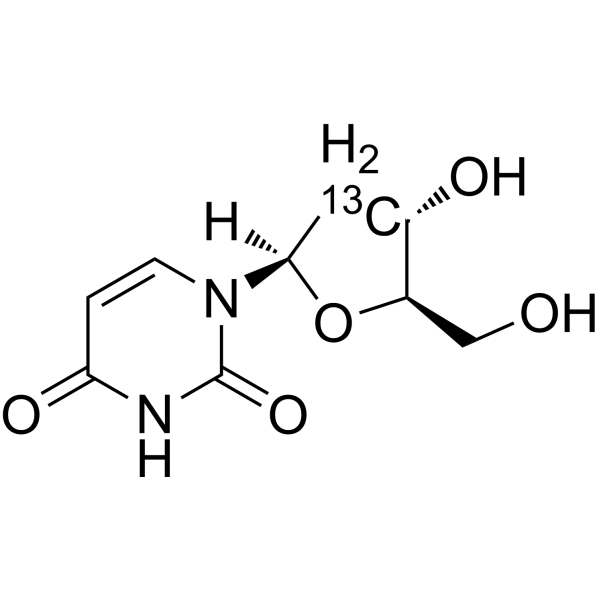 0 ImagesCat. No.: HY-D0186S1CAS No.: 478510-87-1
2'-Deoxyuridine-2′-13C is the 13C labeled 2'-Deoxyuridine. 2'-Deoxyuridine could increase chromosome breakage and results in a decreased thymidylate synthetase activity. A known use of 2'-Deoxyuridine is as a precursor in the synthesis of Edoxud[1]
-
Fluopsin C
 0 ImagesCat. No.: HY-N13259CAS No.: 31323-25-8
Fluopsin C is a copper-containing antibiotic with strong anti-Gram-positive and negative bacteria activity and anti-tumor activity.
-
Z-L(D-Val)G-CHN2
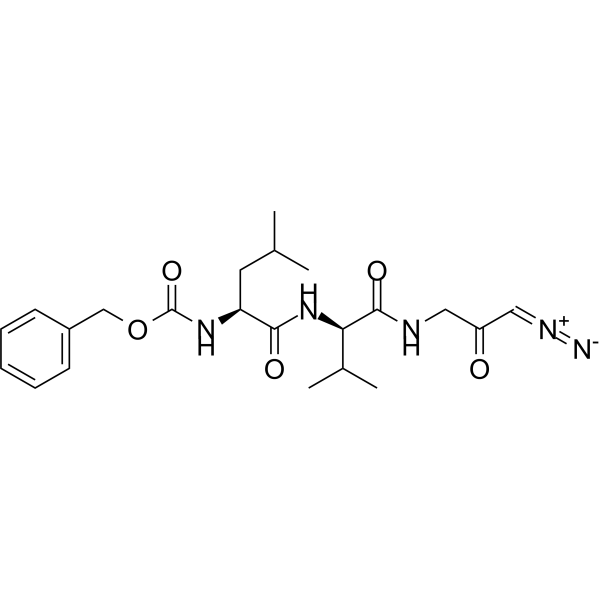 0 ImagesCat. No.: HY-108137APurity: 99.35%
Z-L(D-Val)G-CHN2 is the isoform of Z-LVG-CHN2 (HY-108137). Z-LVG-CHN2 is a cell-permeable and irreversible inhibitor of cysteine proteinase. Z-LVG-CHN2 is a tripeptide derivative and mimics part of the human cysteine proteinase-binding center. Z-LVG-CHN2 displays an inhibition on HSV whereas no significant effect on poliovirus replication. Z-LVG-CHN2 effectively blocks SARS-COV-2 replication (EC50=190 nM) via inhibition of SARS-COV-2 3CL pro protease.
-
(4S)-(+)-Ascochin
 0 ImagesCat. No.: HY-111067CAS No.: 935699-58-4
(4S)-(+)-Ascochin is an antifungal agent against Microbotryum violaceum, Phytophthora infestans and Septoria tritici. (4S)-(+)-Ascochin also exhibits antialgal activity against Chlorella fusca.
-
Antibiofilm agent-7
 0 ImagesCat. No.: HY-158401
Antibiofilm agent-7 (Compound 9) exhibits potent antibiofilm activity with IC50 of 60, 133.32, and 19.67 µg/mL against S. aureus, E. coli, and methicillin-resistant S. aureus (MRSA), respectively. Antibiofilm agent-7 has antibacterial activity for S. aureus, E. coli, C. albicans, and MRSA, with MIC values of 4.88, 78.13, 9.77 and 39.06 µg/mL, respectively.
-
ATV03
 0 ImagesCat. No.: HY-168510
ATV03 is an anti-influenza virus agent with excellent anti-influenza A and B virus activity. ATV03 inhibits anti-influenza A (H3N2) and anti-influenza B with EC50 values of 0.78 nM and 2.02 nM, respectively. ATV03 exerts anti-influenza activity by inhibiting polymerase acidic protein (PA) and RNA-dependent RNA polymerase (RdRp), as well as disrupting nuclear protein.
-
(Z)-γ-Bisabolene
 0 ImagesCat. No.: HY-N11234ACAS No.: 13062-00-5
(Z)-γ-Bisabolene is a monocyclic bisabolane-type sesquiterpene hydrocarbon found in the essential oil of Galinsoga parviflora, acting as a mosquito larvicide and oviposition deterrent. (Z)-γ-Bisabolene induces acute toxicity in larvae of six mosquito species. (Z)-γ-Bisabolene deters oviposition in gravid females of six mosquito species. (Z)-γ-Bisabolene can be used for the research of malaria, dengue, japanese encephalitis, zika virus.
-
SABA1 (Standard)
 0 ImagesCat. No.: HY-144701RCAS No.: 690681-65-3
Fluopicolide (Standard) is the analytical standard of Fluopicolide. This product is intended for research and analytical applications. Fluopicolide is the active compound.
-
Asperglaucin B
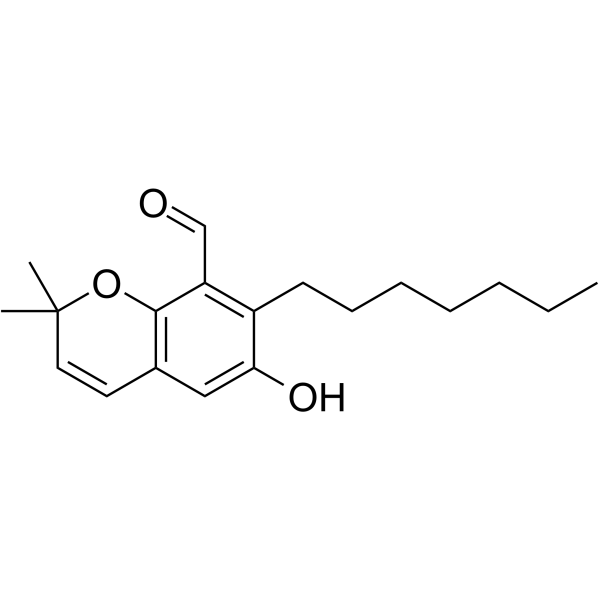 0 ImagesCat. No.: HY-N10281CAS No.: 2701570-80-9
Asperglaucin B is an alkylated salicylaldehyde derivative from the fungus Aspergillus chevalieri SQ-8, with antibacterial activities. Asperglaucin B displays potent antibacterial activities against two plant pathogens Pseudomonas syringae pv actinidae (Psa) and Bacillus cereus, with an MIC value of 6.25 μM.
-
Antileishmanial agent-18
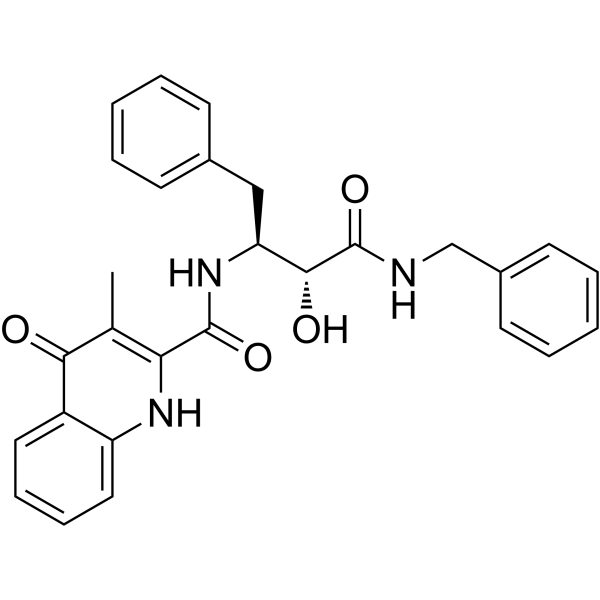 0 ImagesCat. No.: HY-149834CAS No.: 1007567-02-3
Antileishmanial agent-18 (Compound 1e) is an antileishmanial agent. Antileishmanial agent-18 effectively inhibits growth of L. donovani promastigotes. Antileishmanial agent-18 is safe for host cells.
-
Rosmarinus officinalis leaf extract
 0 ImagesCat. No.: HY-N18666CAS No.: 84604-14-8
Rosmarinus officinalis leaf extract, derived from the leaves of the rosemary plant, possesses antioxidant, anti-inflammatory, antibacterial, and cognitive-enhancing properties. Active ingredients in Rosmarinus officinalis leaf extract include rosmarinic acid, caryopsisic acid, caryopsisol, and flavonoids.
-
Tomligisiran sodium
 0 ImagesCat. No.: HY-177667A
-
Maximin H3
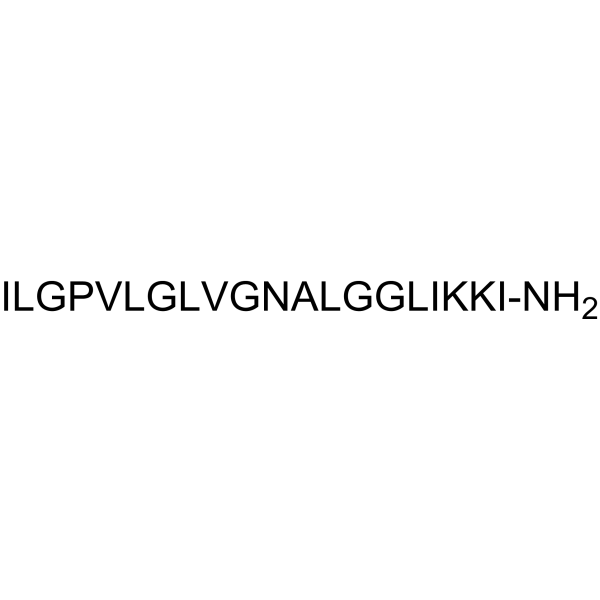 0 ImagesCat. No.: HY-P5619CAS No.: 853262-62-1
Maximin H3 is an antimicrobial peptide derived from the skin secretions of Chinese red belly toad Bombina maxima. Maximin H3 has activity against Escherichia coli ATCC25922, Staphylococcus aureus ATCC2592, Bacillus pyocyaneus CMCCB1010 and Candida albicans ATCC2002, the MIC values are 20, 10, 20, 5 μg/ml, respectively.
-
(Rac)-Tenofovir
 0 ImagesCat. No.: HY-13910CCAS No.: 107021-12-5Synonyms: (Rac)-GS 1278; (Rac)-PMPA
-
14α-Hydroxy Paspalinine
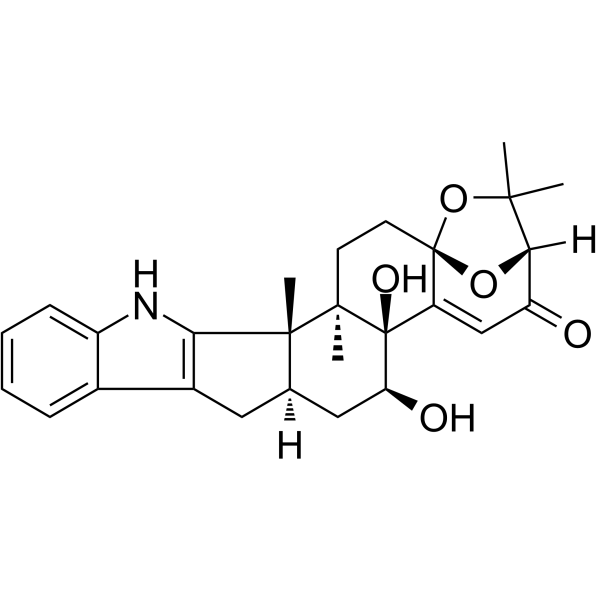 0 ImagesCat. No.: HY-123519CAS No.: 151341-77-4
14α-Hydroxy Paspalinine is a paspalinine derivative with antiinsectan activity from the sclerotia of Aspergillus nomius.
-
Desethylene Ciprofloxacin hydrochloride
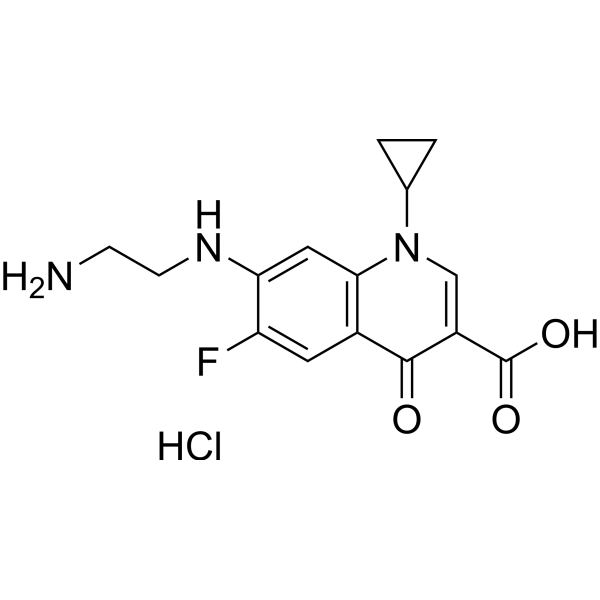 0 Images
Desethylene Ciprofloxacin hydrochloride is a major metabolite of Ciprofloxacin (HY-B0356). Ciprofloxacin is an orally active topoisomerase IV inhibitor. Desethylene Ciprofloxacin hydrochloride has antibacterial activity.