Infection
-
Infection Related Products (18735)
Related Products (18735)

-
Antibodies (22)
-
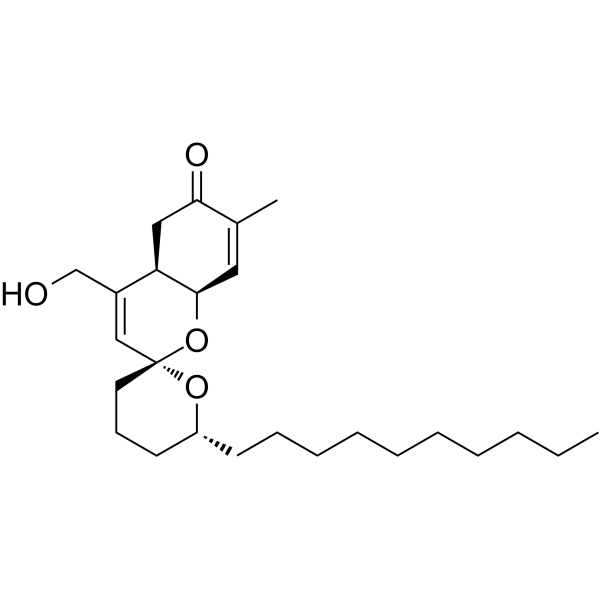
Nanangenine F
 0 ImagesCat. No.: HY-N15479
Nanangenine F is a drimane sesquiterpenoid with weak antibacterial and anticancer activities. Nanangenine F inhibits Bacillus subtilis (ATCC 6633) with an IC50 of 78 µg/mL. Nanangenine F inhibits NS-1, DU-145, MCF-7 and human fibroblast NFF cells with IC50s of 49 µg/mL, 95 µg/mL, 49 µg/mL, and 84 µg/mL, respectively.
-
Temporin-GHd
 0 ImagesCat. No.: HY-P10362CAS No.: 2755770-50-2
Temporin-GHd exhibits antibacterial activity against Streptococcus mutans (MIC=13.1 μM; MBC=26 μM). Temporin-GHd increases the permeability of the bacterial cell membrane, causing membrane damage and leakage of cellular contents. Temporin-GHd disrupts preformed biofilms at high concentrations. Temporin-GHd can bind to bacterial DNA, inhibiting DNA migration.
-
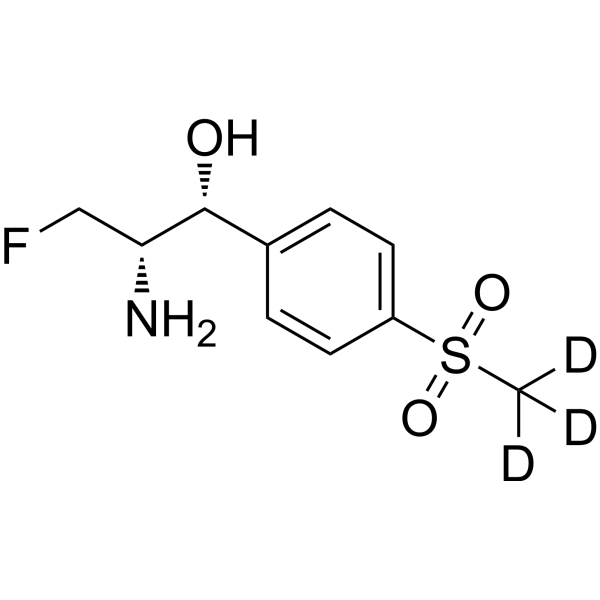
Florfenicol amine-d3
 0 ImagesCat. No.: HY-W653871CAS No.: 3023974-39-9
Florfenicol amine-d5 is the deuterated-labeled Florfenicol amine (HY-133695). Florfenicol amine is the major metabolite of Florfenicol (HY-B1374) and serves as a marker residue in studies of the in vivo disposition and residue depletion of Florfenicol. Florfenicol amine is eliminated more slowly than the parent compound and persists in plasma and tissues. Florfenicol amine is used in veterinary research for studies on the metabolism, pharmacokinetics, and residue depletion of Florfenicol.
-
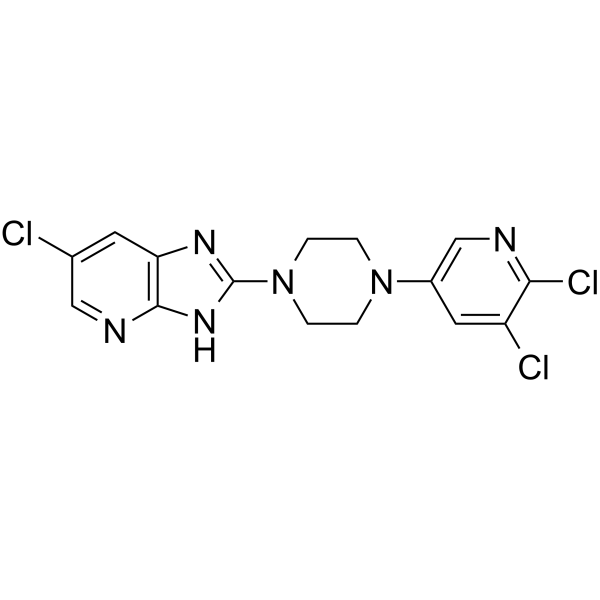
SARS-CoV-2-IN-40
 0 ImagesCat. No.: HY-149304CAS No.: 2984557-53-9
SARS-CoV-2-IN-40 (Compound 19) is a SARS-CoV-2 inhibitor. SARS-CoV-2-IN-40 inhibits SARS-CoV-2 BA.1 and BA.5 variant infection of Calu3 lung cells, with IC50s of 100 nM and 160 nM respectively.
-
PDE4B-IN-7
 0 ImagesCat. No.: HY-181770CAS No.: 1226697-79-5
PDE4B-IN-7 is a PDE-4B inhibitor with an IC50 of 160 nM. PDE4B-IN-7 can form a firm and stable binding with the active site of PDE-4B. PDE4B-IN-7 inhibits acetylcholine-induced bronchospasm in guinea pigs. PDE4B-IN-7 exerts activity against susceptible Gram-positive and Gram-negative bacterial strains. PDE4B-IN-7 can be used for the researches of asthma and bacterial agent.
-
Resorantel (Standard)
 0 Images
Resorantel (Standard) is the analytical standard of Resorantel. This product is intended for research and analytical applications. Resorantel is an anthelmintic. Resorantel is used in the research of paramphistomiasis in cattle and sheep and has also been used for the research of G. aegypticus.
-
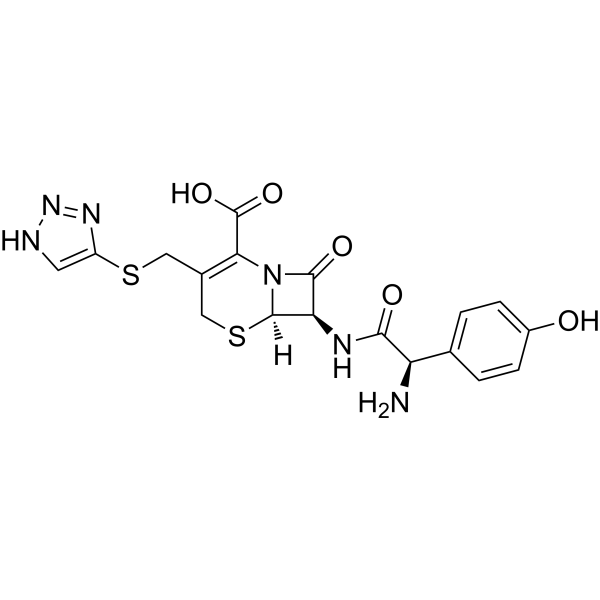
Cefatrizine
 0 ImagesCat. No.: HY-123024CAS No.: 51627-14-6Synonyms: BL-S-640; SK&F 60771
Cefatrizine (BL-S-640) is an orally active and broad-spectrum cephalosporin antibiotic. Cefatrizine is also a eEF2K inhibitor, with anti-proliferative activity in human breast cancer cells, which could induce ER stress, leading to cell death. Cefatrizine can be used in studies of cancer and bacterial infection.
-
Parsley extract
 0 ImagesCat. No.: HY-N18764CAS No.: 84012-33-9
Parsley extract has a natural diuretic effect, which helps relieve bloating and lower blood pressure. It also has antibacterial and antifungal properties and can be used in research on the prevention of infections and foodborne illnesses.
-
JAK2-IN-21
 0 ImagesCat. No.: HY-183670CAS No.: 3038340-43-8
JAK2-IN-21 is a Janus kinase 2 (JAK2) inhibitor with an IC50 of 12.25 nM. JAK2-IN-21 inhibits the JAK2/STAT3/STAT5 tumor-promoting signaling pathway and reduces JAK2 protein expression. JAK2-IN-21 exhibits selective cytotoxicity against HPV-positive cancer cells and induces cancer cell apoptosis. JAK2-IN-21 can be used in the research of HPV-positive cervical cancer.
-
Norzine dimalate
 0 ImagesCat. No.: HY-A0188CAS No.: 52239-63-1Synonyms: Thiethylperazine dimalate
Norzine dimalate (Thiethylperazine dimalate), a Phenothiazine (HY-Y0055) derivate, is an orally active and potent dopamine D2-receptor and histamine H1-receptor antagonist. Norzine dimalate is also a selective ABCC1activator that reduces amyloid-β load in mice. Norzine dimalate has anti-emetic, antipsychotic and antimicrobial effects.
-
Idoxuridine hydrate
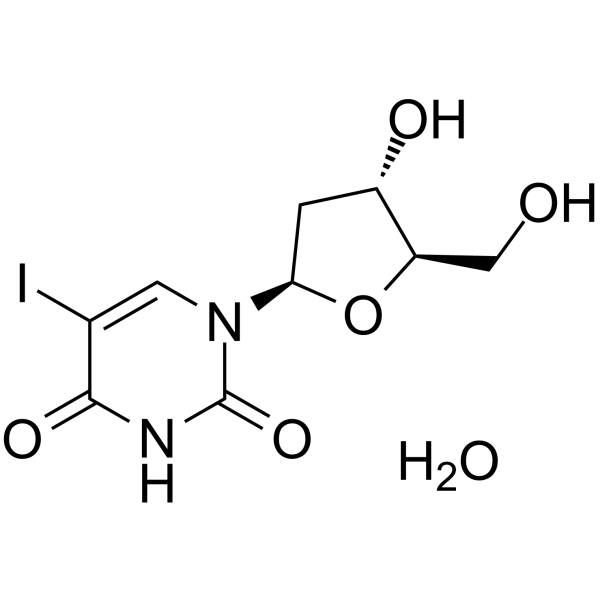 0 ImagesCat. No.: HY-B0307ACAS No.: 17140-71-5Synonyms: 5-Iodo-2′-deoxyuridine hydrate; 5-IUdR hydrate; IdUrd hydrate
Idoxuridine (5-Iodo-2′-deoxyuridine, 5-IUdR, IdUrd) hydrate is an iodinated thymidine analogue that competitively inhibits phosphorylases. Idoxuridine can inhibit viral activity, particularly viral eye infections, including herpes simplex keratitis, by inhibiting DNA polymerase and affecting viral replication. Idoxuridine against feline herpesvirus has the IC50 value of 4.3 μM.
-
Fumitremorgin B-13C27
 0 ImagesCat. No.: HY-117313S2
Fumitremorgin B-13C27 is the 13C-labeled Fumitremorgin B (HY-117313). Fumitremorgin B is a tremorgenic mycotoxin. Fumitremorgin B exhibits significant antifungal activities, with MICs of 6.25-50 μg/mL.
-
Antifungal agent 26
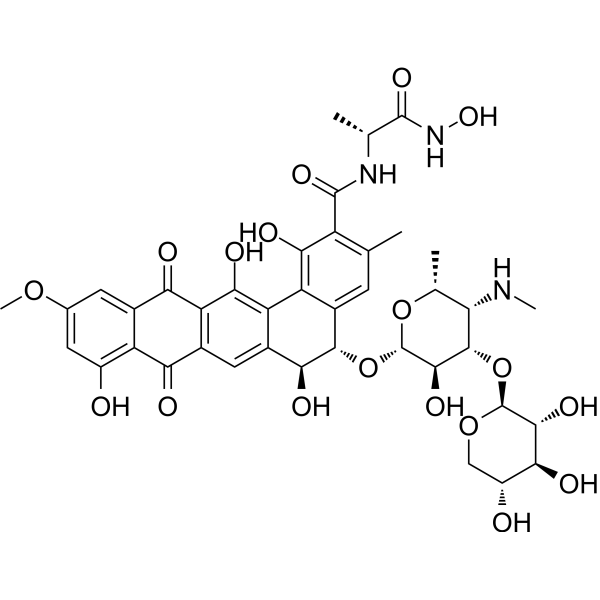 0 ImagesCat. No.: HY-146747CAS No.: 2769834-78-6
Antifungal agent 26, a Pradimicin A derivative, shows antifungal, antiviral, and antiparasitic activities through binding to d-mannose (Man)-containing glycans of pathogenic species.
-
HNC-1664
 0 ImagesCat. No.: HY-170799CAS No.: 2127358-36-3
HNC-1664 is the orally active inhibitor for RNA-dependent RNA polymerase (RdRP). HNC-1664 exhibits broad-spectrum antiviral activity against coronavirus (SARS-CoV-2 wildtype and its mutants XBB.1.18, HK.3.1, BF.7.14, BA.1HCoV-229E, HCoV-OC43) and arenavirus. HNC-1664 exhibits anti-infectious activity in SARS-CoV-2 Delta infected mouse models.
-
Kidamycin
 0 ImagesCat. No.: HY-118230CAS No.: 11072-82-5Synonyms: Rubiflavin B
Kidamycin is a polymycin antibiotic that can be extracted from the antitumor antibiotic rubraflavin.
-
Pipemidic acid trihydrate (Standard)
 0 ImagesCat. No.: HY-W013766RCAS No.: 72571-82-5
Pipemidic acid (trihydrate) (Standard) is the analytical standard of Pipemidic acid (trihydrate). This product is intended for research and analytical applications. Pipemidic acid trihydrate, a derivative of Piromidic acid, is an antibacterial agent. Pipemidic acid trihydrate inhibits DNA gyrase. Pipemidic acid trihydrate is active against gram-negative bacteria including Pseudomonas aeruginosa as well as some gram-positive bacteria. Pipemidic acid trihydrate can be used for the research of intestinal, urinary, and biliary tract infections.
-
Mycobacterium tuberculosis-IN-9
 0 ImagesCat. No.: HY-183606
Mycobacterium tuberculosis-IN-9 is an orally active Mycobacterium tuberculosis BioA inhibitor with a Ki value of 0.2 nM. Mycobacterium tuberculosis-IN-9 targets the biotin biosynthesis pathway. Mycobacterium tuberculosis-IN-9 inhibits the growth of Mycobacterium tuberculosis in mouse models and is effective against both drug-sensitive and drug-resistant strains. Mycobacterium tuberculosis-IN-9 can be used for the research of tuberculosis.
-
CB2R/FAAH modulator-2
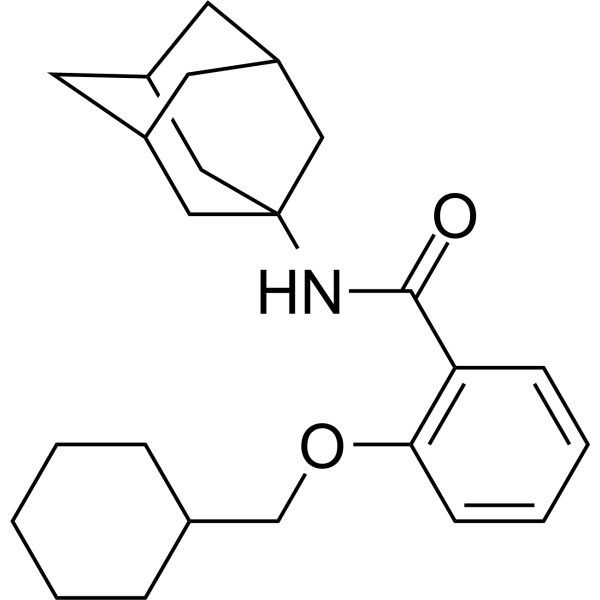 0 ImagesCat. No.: HY-152253CAS No.: 2876918-68-0
CB2R/FAAH modulator-2 (compound 26) is a dual targeting modulator that acts as a CB2R agonist and FAAH inhibitor. The Ki values for CB2R/FAAH modulator-2 are 10.8 and 152.9 nM for CB2R and CB1R, respectively, and the IC50 value for FAAH is 6.2 μM. CB2R/FAAH modulator-2 can be used in studies related to cancer, deleterious inflammatory cascades occurring in neurodegenerative diseases, and COVID-19 infection.
-
ELQ-596
 0 ImagesCat. No.: HY-163482CAS No.: 3023709-98-7
ELQ-596 is a quinolone derivative, that exhibits antimicrobial activity against several protozoan parasites, including the intraerythrocytic parasites Plasmodium and Babesia. ELQ-596 attenuates babesiosis in immunosuppressed mice.