Infection
-
Infection Related Products (18735)
Related Products (18735)

-
Antibodies (22)
-
Phenoxyethanol-d4
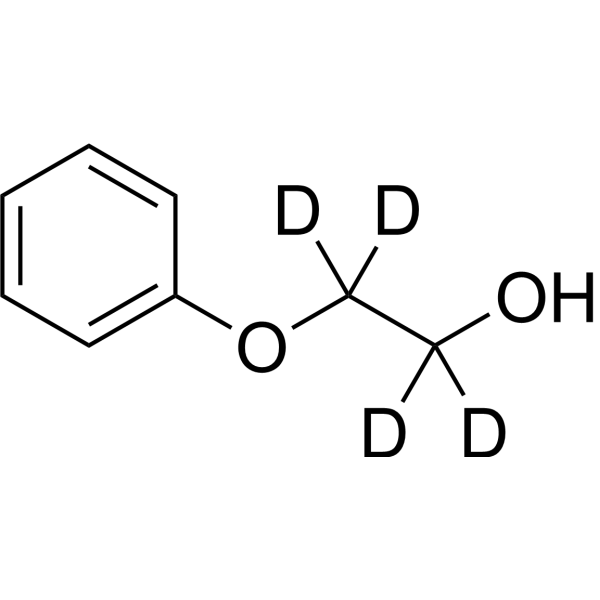 0 ImagesCat. No.: HY-B1729S1CAS No.: 1219804-65-5
Phenoxyethanol-d4 is the deuterium labeled Phenoxyethanol. Phenoxyethanol has a broad spectrum of antimicrobial agent. Phenoxyethanol is an uncouple agent in oxidative phosphorylation from respiration and competitively inhibits malate dehydrogenase. Phenoxyethanol is used as a preservative in cosmetic, vaccine, and textile, et al.
-
IP6C
 0 ImagesCat. No.: HY-W154247CAS No.: 103313-38-8
IP6C is a specific inhibitor and phage sensitizer targeting type II Thoeris systems. IP6C competitively binds to histidine in the catalytic pocket of ThsB, blocks the production of the His-ADPR alarm signal and inhibits ThsA activation, thereby relieving bacterial stasis of phage replication. IP6C selectively resensitizes drug-resistant bacteria carrying type II Thoeris systems (such as Pseudomonas aeruginosa) to phage lysis, without affecting other bacteria, and shows no toxicity to mice and human cell lines. IP6C significantly improves the survival rate of infected mice, and can be used to overcome bacterial phage defense mechanisms and study Pseudomonas aeruginosa infections.
Thoeris system: (named after the Egyptian goddess of fertility and protection), is a widespread anti-phage immune defense system in bacteria and archaea. Thoeris system belongs to the "Abortion Infection (Abi)" mechanism of bacteria: when an individual bacterium detects phage invasion, it initiates a suicide program and dies, thereby blocking phage replication and spread, and protecting the surrounding bacterial population from infection.
-
Heveadride
 0 ImagesCat. No.: HY-N15653CAS No.: 39595-41-0
Heveadride is a fungal metabolite and an antifungal agent. Heveadride is active against various filamentous fungi and some human pathogenic yeasts. Heaveadride induces down-regulation of TNFα-induced NF-κB activity in human chronic myeloid leukemia cells with an IC50 of 82.7 μM.
-
Cyclopiazonic acid (Standard)
 0 ImagesCat. No.: HY-N6771RCAS No.: 18172-33-3
Ancitabine (hydrochloride) (Standard) is the analytical standard of Ancitabine (hydrochloride). This product is intended for research and analytical applications. 0
-
SDH-IN-19
 0 ImagesCat. No.: HY-163911
SDH-IN-19 (compound A13) is a fungicide, with an EC50 value of 0.83 μg/mL against Rhizoctonia solani. SDH-IN-19 can be used in antifungal research of crops.
-
Antitrypanosomal agent 8
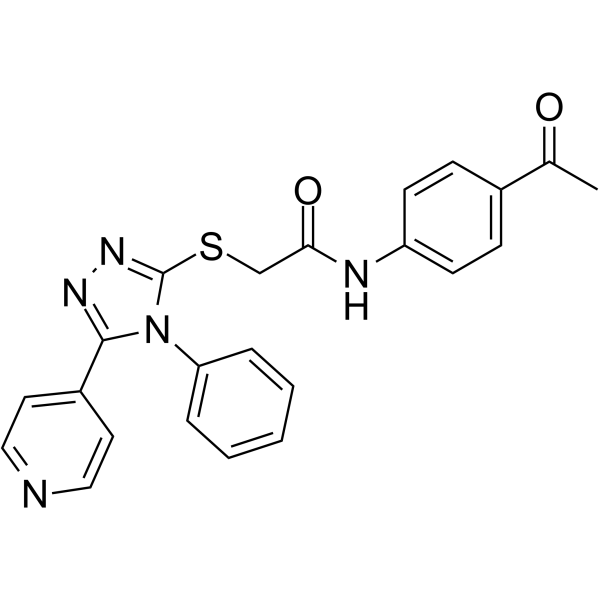 0 ImagesCat. No.: HY-147933CAS No.: 332376-42-8
Antitrypanosomal agent 8 (compound 3b) has potent antitrypanosomal activity against Trypanosoma brucei with an IC50 value of 0.79 μM and exhibits certain cytotoxicity in L6 cells (IC50=80.95 μM).
-
Agar, microbiology tested, for cell culture (granular)
 0 ImagesCat. No.: HY-W134423ACAS No.: 9002-18-0
Agar, microbiology tested, for cell culture (granular) is a hydrocolloid with gelling ability. Agar, microbiology tested, for cell culture (granular) can be used to prepare microbial culture media (for bacteria, yeasts and molds).
-
Dihydrostreptomycin
 0 Images
Dihydrostreptomycin (DHSM) is an aminoglycoside antibiotic with antibacterial effect against Gram-negative bacteria. Dihydrostreptomycin exhibits ototoxicity that causes irreversible damage in inner ear hair cells, leading to hearing loss.
-
Resazurin sodium (solution)
 0 ImagesCat. No.: HY-DY1051CAS No.: 62758-13-8
Resazurin sodium (Diazoresorcinol sodium) (solution) is a non-toxic, stable, membrane-permeable blue non-fluorescent dye (faintly fluorescent). Resazurin sodium is used as a redox indicator, can be reduced to pink, highly fluorescent Resorufin (Ex=530-560 nm, Em=590 nm) in living cells. Resazurin sodium can be used for the detection of cell viability, toxicity, proliferation, migration and invasion in cells (human, plant and animal, bacterial and fungal) .
Solvent and Concentration: Sterile water: 10 mM
-
A-71497
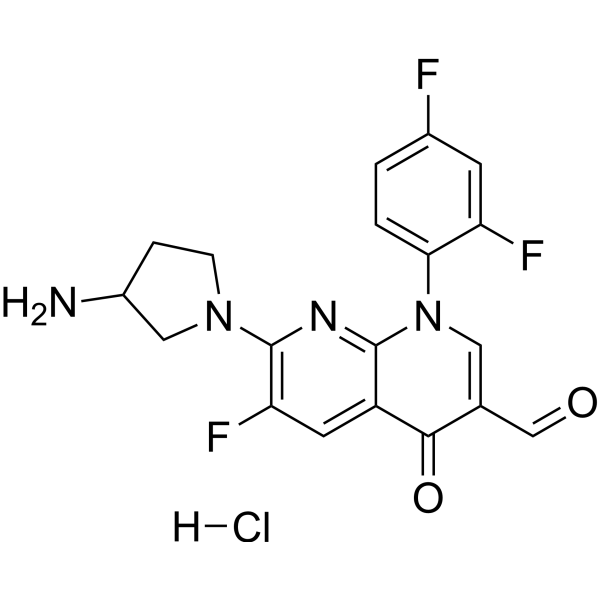 0 ImagesCat. No.: HY-122309CAS No.: 134762-03-1
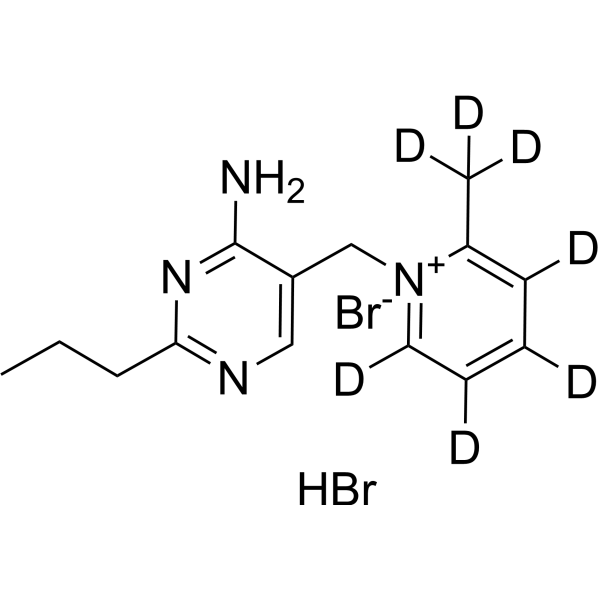
A-71497 is the 3-formyl derivative of the antibiotic Tosufloxacin (HY-B1802). A-71497 can produce high plasma levels of tosufloxacin upon both oral and subcutaneous administration to mice.
-
Sapindus saponaria linnaeus nutshell extract (70%)
 0 ImagesCat. No.: HY-N20101Synonyms: Chinese soapberry fruit nutshell extract (70%); Sapindus mukorossi nutshell extract (70%); Sapindus abruptus nutshell extract (70%)
Sapindus saponaria linnaeus nutshell extract (70%) (Chinese soapberry fruit nutshell extract (70%)) is a 70% extract of Sapindus saponaria fruit shells with antifungal activity.
-
Succinate dehydrogenase-IN-8
 0 ImagesCat. No.: HY-172810CAS No.: 3030753-68-2
Succinate dehydrogenase-IN-8 (compound i19) is a potent succinate dehydrogenase (SDH) inhibitor. Succinate dehydrogenase-IN-8, an indene amino acid derivative, demonstrates potent in vitro antifungal activity against Rhizoctonia solani (EC50=0.1843 mg/L), Botrytis cinerea (EC50=0.4829 mg/L), and Sclerotinia sclerotiorum (EC50=0.1349 mg/L).
-
Anguinomycin A
 0 ImagesCat. No.: HY-126740CAS No.: 111278-01-4
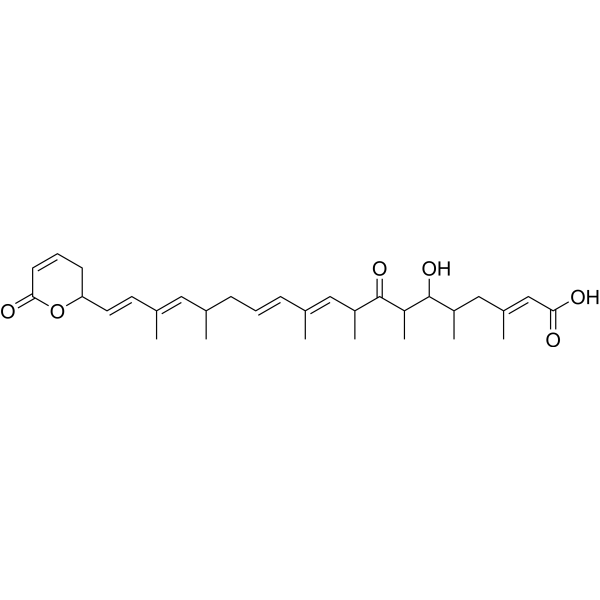
Anguinomycin A is an antibiotic that exhibits good inhibitory activity against G. boninense with an MIC value of 5 µg/disk. Anguinomycin A has antitumor activity.
-
Thioridazine hydrochloride (Standard)
 0 Images
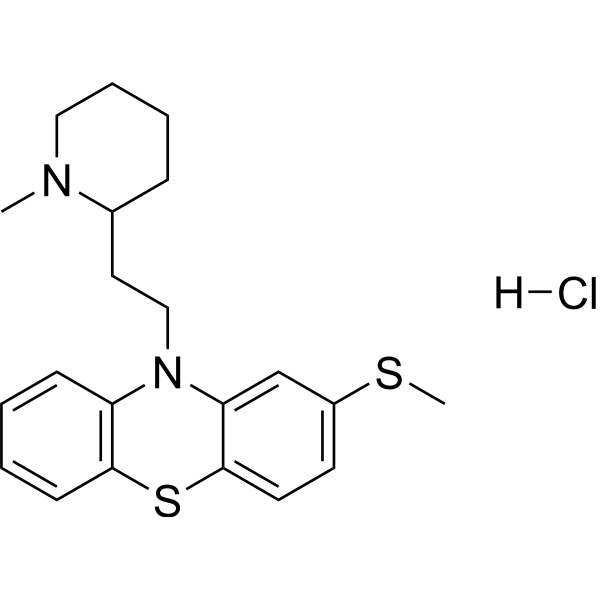
Thioridazine (hydrochloride) (Standard) is the analytical standard of Thioridazine (hydrochloride). This product is intended for research and analytical applications. Thioridazine hydrochloride, an orally active antagonist of the dopamine receptor D2 family proteins, exhibits potent anti-psychotic and anti-anxiety activities. Thioridazine hydrochloride is also a potent inhibitor of PI3K-Akt-mTOR signaling pathways with anti-angiogenic effect. Thioridazine hydrochloride shows antiproliferative and apoptosis induction effects in various types of cancer cells, with specificity on targeting cancer stem cells (CSCs).
-
(+)-Pinoresinol diacetate
 0 ImagesCat. No.: HY-N0954CAS No.: 32971-25-8
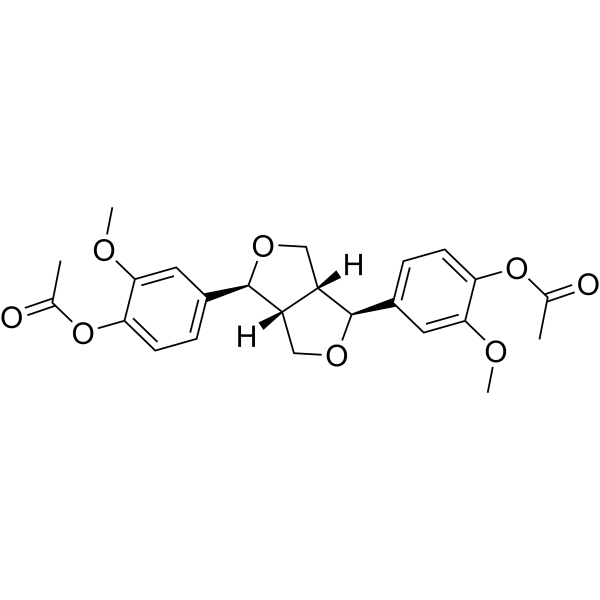
(+)-Pinoresinol diacetate is an antifungal agent that can be isolated from Sambucus williamsii.
-
Antifungal agent 26
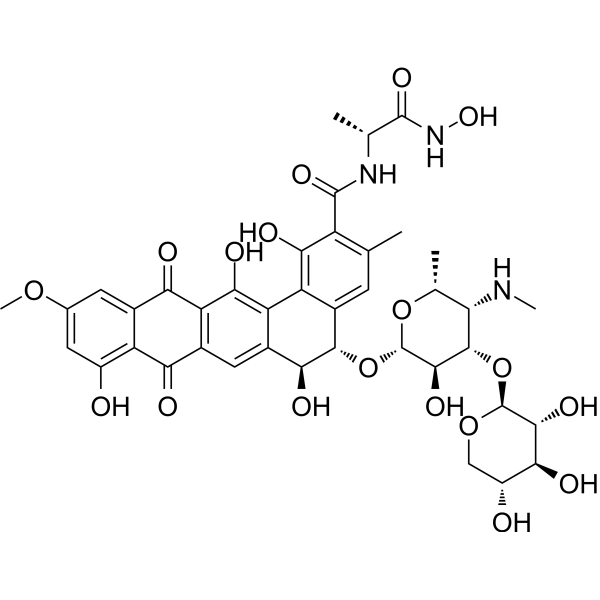 0 ImagesCat. No.: HY-146747CAS No.: 2769834-78-6
Antifungal agent 26, a Pradimicin A derivative, shows antifungal, antiviral, and antiparasitic activities through binding to d-mannose (Man)-containing glycans of pathogenic species.
-
Pritoxaximab
 0 ImagesCat. No.: HY-P99800CAS No.: 1351470-16-0
Pritoxaximab is an IgG1κ antibody targeting shiga toxin type 1.
-
Latarcin 2a
 0 ImagesCat. No.: HY-P11136CAS No.: 910239-76-8
Latarcin 2a is a linear cationic antibacterial peptide that can be isolated from the venom of the spider Lachesana tarabaevi, with broad-spectrum antibacterial activity. Latarcin 2a has a MIC of 0.5 μM for both Bacillus subtilis and Escherichia coli. Latarcin 2a is often used in the research of infectious conditions.
-
Pipemidic acid trihydrate (Standard)
 0 ImagesCat. No.: HY-W013766RCAS No.: 72571-82-5
Pipemidic acid (trihydrate) (Standard) is the analytical standard of Pipemidic acid (trihydrate). This product is intended for research and analytical applications. Pipemidic acid trihydrate, a derivative of Piromidic acid, is an antibacterial agent. Pipemidic acid trihydrate inhibits DNA gyrase. Pipemidic acid trihydrate is active against gram-negative bacteria including Pseudomonas aeruginosa as well as some gram-positive bacteria. Pipemidic acid trihydrate can be used for the research of intestinal, urinary, and biliary tract infections.