Infection
-
Infection Related Products (18904)
Related Products (18904)

-
Antibodies (22)
-
NA-CATH
 0 ImagesCat. No.: HY-P11120
NA-CATH is an antibacterial peptide with effective antibacterial activity against Francisella novicida (EC50 = 1.54 µg/mL). NA-CATH does not cause significant hemolysis at a concentration of 100 µg/mL. NA-CATH is commonly used in the study of bacterial infections.
-
Kanzonol Y
 0 ImagesCat. No.: HY-N19837CAS No.: 184584-87-0
Kanzonol Y is a chalcone compound that can be found in the roots of Glycyrrhiza glabra. Kanzonol Y exerts anticancer and anti-dengue virus activity.
-
RBWH15
 0 ImagesCat. No.: HY-P11898
RBWH15 is a synthetic broad-spectrum antimicrobial peptide. RBWH15 increases the permeability of bacterial outer and inner membranes, disrupts membrane integrity and induces bacterial death. RBWH15 exhibits biofilm eradication activity and can eliminate established bacterial biofilms. RBWH15 shows broad-spectrum antimicrobial activity against Gram-negative and Gram-positive ESKAPE pathogens, including multidrug-resistant strains. RBWH15 can be used in the research of multidrug-resistant bacterial infections.
-
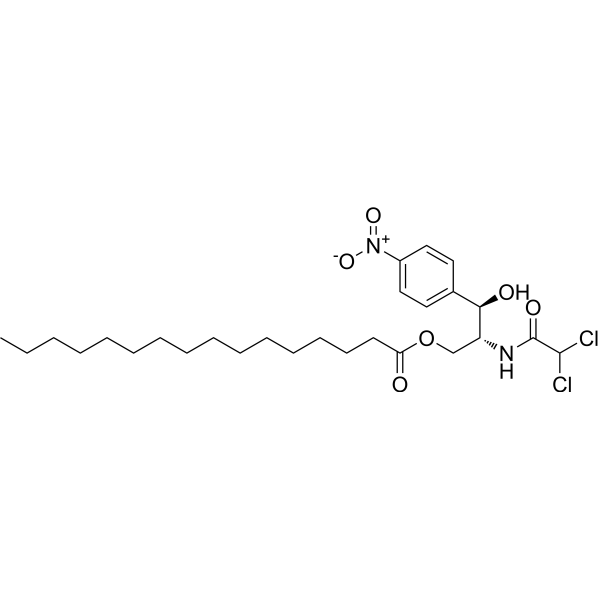
Chloramphenicol palmitate (Standard)
 0 Images
Chloramphenicol palmitate (Standard) is the analytical standard of Chloramphenicol palmitate (HY-B1599). This product is intended for research and analytical applications. Chloramphenicol palmitate is an orally active prodrug of Chloramphenicol (HY-B0239), obtained from the esterification reaction between the agent and Palmitic acid (HY-N0830). Chloramphenicol palmitate is rapidly and completely hydrolyzed by intestinal esterase, releasing Chloramphenicol. Chloramphenicol is an orally effective broad-spectrum antibiotic.
-
Taxus cuspidata extract
 0 ImagesCat. No.: HY-N20209
Taxus cuspidata extract is an extract of the yew tree (Taxus cuspidata) that has antibacterial, antioxidant, anticancer, and anti-aging properties.
-
Stellettamide A TFA
 0 ImagesCat. No.: HY-N18431CAS No.: 129744-24-7Synonyms: ST-A TFA
Stellettamide A TFA is a marine toxin found in a marine sponge. Stellettamide A TFA is a calmodulin inhibitor. Stellettamide A TFA can inhibit Ca2+/Mg2+ ATPase, phosphodiesterase, myosin light chain , and Mg2+-ATPase. Stellettamide A TFA inhibits high K+- and Ca2+-induced contraction in permeabilized smooth muscle. Stellettamide A TFA exhibits antifungal activity against Mortierella remannianus. Stellettamide A TFA can be used for the research of fungal infection.
-
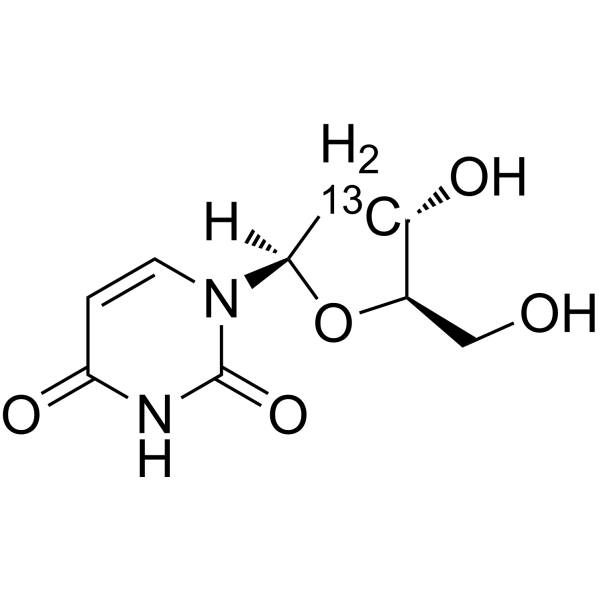
2'-Deoxyuridine-2′-13C
 0 ImagesCat. No.: HY-D0186S1CAS No.: 478510-87-1
2'-Deoxyuridine-2′-13C is the 13C labeled 2'-Deoxyuridine. 2'-Deoxyuridine could increase chromosome breakage and results in a decreased thymidylate synthetase activity. A known use of 2'-Deoxyuridine is as a precursor in the synthesis of Edoxud[1]
-
EVO-46120
 0 ImagesCat. No.: HY-P991499
EVO-46120 is a human monoclonal antibody (mAb) targeting F, Fusion glycoprotein F0. EVO-46120 can be used in respiratory syncytial virus (RSV) and metapneumovirus infections research.
-
HL-3-47
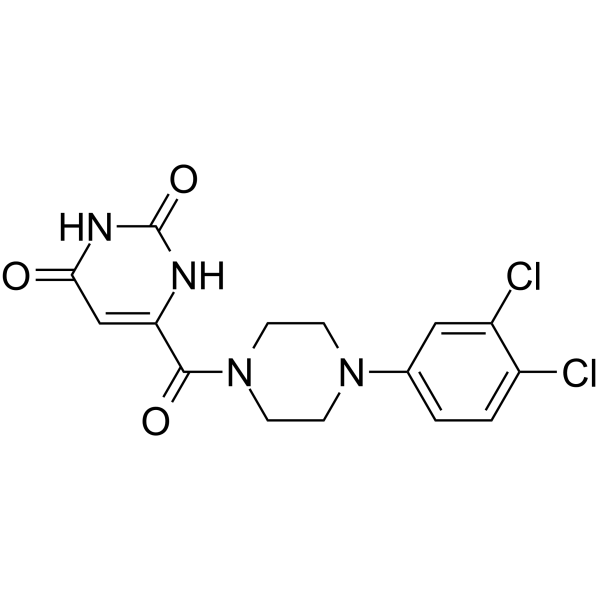 0 ImagesCat. No.: HY-139866CAS No.: 1453052-57-7Synonyms: SARS-CoV-2-IN-9
HL-3-47 is an inhibitor binding to subsites S1 and S2 in SARS-CoV-2 main protease.
-
S 3578 sulfate
 0 ImagesCat. No.: HY-105523CAS No.: 474949-70-7
S 3578 sulfate is a broad-spectrum antibacterial agent, particularly effective against methicillin-resistant Staphylococcus aureus (MRSA) (MIC = 0.78-3.13 μg/mL) and Pseudomonas aeruginosa (MIC = 1.56-6.25 μg/mL). S 3578 sulfate can be used in the research of infectious conditions.
-
Antibacterial agent 58
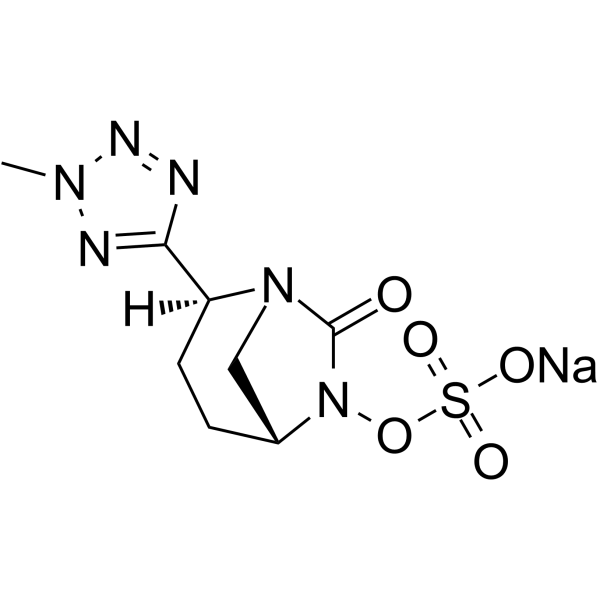 0 ImagesCat. No.: HY-139775CAS No.: 1426572-65-7
Antibacterial agent 58, an antibacterial agent, significantly lowers MIC value of antibacterial agent Ceftazidime.
-
Apigenin-4'-α-L-rhamnoside
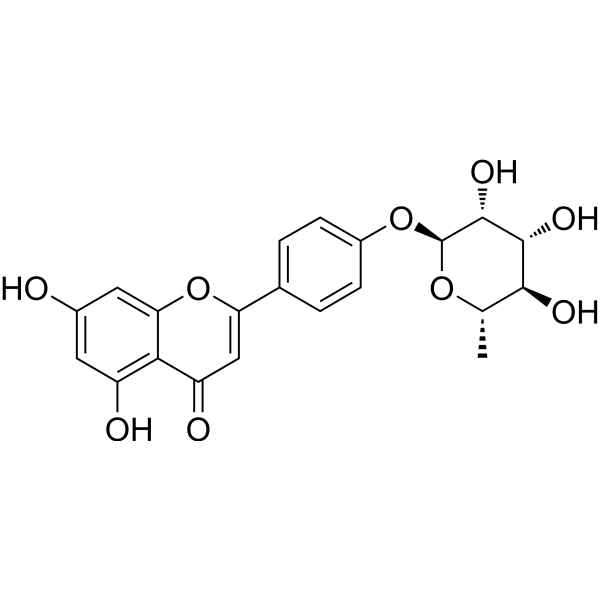 0 ImagesCat. No.: HY-N2882CAS No.: 133538-77-9
-
Apigenin 7,4'-di-O-alloside
 0 ImagesCat. No.: HY-N16586CAS No.: 95693-63-3
Apigenin 7,4'-di-O-alloside is a type of flavonoid glycoside compound that exhibits anti-SARS-CoV-2 virus activity.
-
N-Myristoyl-D-asparagine
 0 ImagesCat. No.: HY-N18530CAS No.: 1439789-50-0
N-Myristoyl-D-asparagine is a key metabolic marker in the biosynthesis and maturation of colibactin. N-Myristoyl-D-asparagine acts as a biomarker for detecting colibactin. N-Myristoyl-D-asparagine exhibits mild growth inhibitory activity against Bacillus subtilis NCIB 3610.
-
Isopropyl 4-hydroxybenzoate-d4
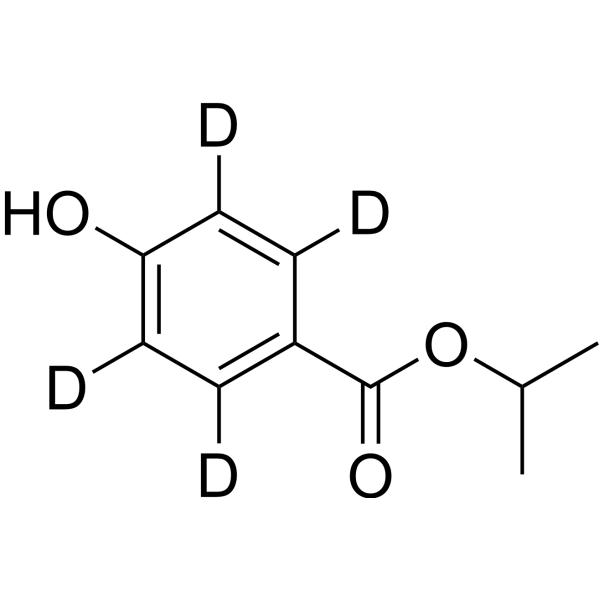 0 ImagesCat. No.: HY-W016491SCAS No.: 1219798-72-7Synonyms: Isopropylparaben-d4
Isopropyl 4-hydroxybenzoate-d4 is the deuterium labeled Isopropyl 4-hydroxybenzoate.
-
FAM labled Ozisiran sodium
 0 ImagesCat. No.: HY-177654C
FAM labled Ozisiran sodiumis a FAM labled Ozisiran sodium.
-
Enduracidin B
 0 ImagesCat. No.: HY-131099CAS No.: 34304-21-7
Enduracidin B is a major component of Enduracidin. Enduracidin is a polypeptide antibiotic produced by Streptomyces fungicides.
-
MB-11362
 0 ImagesCat. No.: HY-123186CAS No.: 1159183-97-7Synonyms: RG-7348
-
Solanum nigrum extract
 0 ImagesCat. No.: HY-N20273
Solanum nigrum extract is an extract of Solanum nigrum Linn., which has anti-tumor, anti-inflammatory, antioxidant, antibacterial and neuroprotective effects.