1. Inflammation/Immunology

Inflammation/Immunology (炎症/免疫)

The diseases caused by disorders of the immune system fall into two broad categories: immunodeficiency and autoimmunity. Immunotherapy is also often used in the immunosuppressed (such as HIV patients) and people suffering from other immune deficiencies or autoimmune diseases. This includes regulating factors such as IL-2, IL-10, IFN-α. Infection with HIV is characterized not only by development of profound immunodeficiency but also by sustained inflammation and immune activation. Chronic inflammation as a critical driver of immune dysfunction, premature appearance of aging-related diseases, and immune deficiency.

製品番号 製品名 CAS 番号 純度 構造式
  • HY-Y0272S
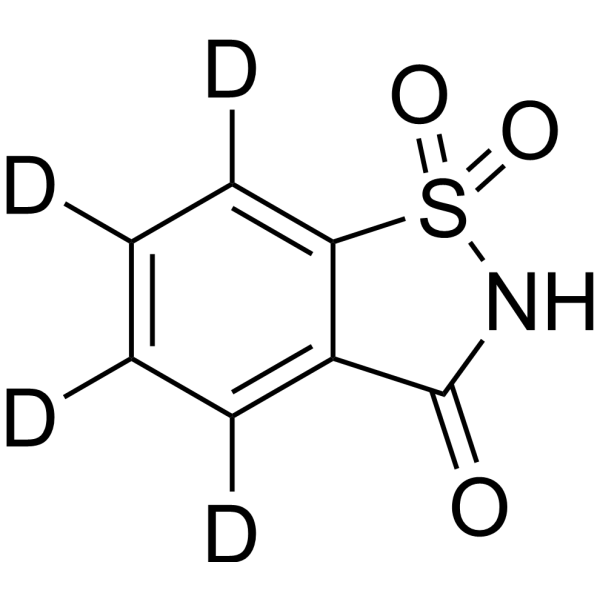
    Saccharin-d4 1189466-17-8 99.71%
    Saccharin-d4 is the deuterium labeled Saccharin. Saccharin is an orally active, non-caloric artificial sweeteners (NAS). Saccharin has bacteriostatic and microbiome-modulating properties.
    Saccharin-d4
  • HY-100573A
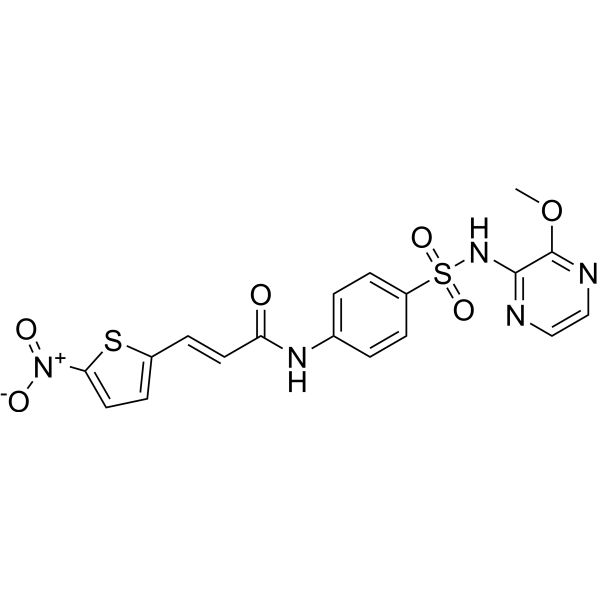
    (E/Z)-Necrosulfonamide 432531-71-0 98.03%
    (E/Z)-Necrosulfonamide is a racemic compound of Necrosulfonamide (HY-100573). Necrosulfonamide is a MLKL and Gasdermin D (GSDMD) inhibitor, capable of separately inhibiting necroptosis and pyroptosis of cells. Necrosulfonamide does not affect the activation of upstream signals, but specifically inhibits the downstream executor oligomerization step. Necrosulfonamide reduces the expression of the key kinases NLRP3 and caspase-1 involved in necroptosis and pyroptosis, activate the Nrf2 pathway and the downstream antioxidant enzymes, and also downregulates a variety of inflammatory factors. Necrosulfonamide plays significant roles in various diseases such as neurodegenerative diseases (such as Parkinson’s disease), tissue damage and ischemia-reperfusion injury, inflammatory bowel disease, osteoarthritis and fracture repair, and hair loss by regulating two important programmed necrosis pathways.
    (E/Z)-Necrosulfonamide
  • HY-101092B
    QS-21-Xyl 250643-56-2
    QS-21-Xyl is a active component of QS-21 (HY-101092A). QS-21 is a natural vaccine adjuvant and induces a balanced Th1/Th2 immune response, particularly cellular immunity.
    QS-21-Xyl
  • HY-101392A
    Harmane hydrochloride 21655-84-5 99.88%
    Harmane hydrochloride is a benzodiazepine receptor inhibitor (IC50=7 μM), with IC50 values for mACh, Opioid Receptor, MAO-A/B, and α2-adrenergic receptor of 24 μM, 2.8 μM, 0.5 μM, 5 μM, and 18 μM, respectively. Harmane hydrochloride inhibits the I1 imidazoline receptor (IC50 = 30 nM) to reduce blood pressure and has antidepressant, anti-anxiety, anticonvulsant, and analgesic effects. Harmane hydrochloride inhibits dopamine biosynthesis by decreasing tyrosine hydroxylase (TH) activity and enhancing L-DOPA-induced cytotoxicity in PC12 cells. Additionally, Harmane hydrochloride can increase the mutagenic effect induced by 2-acetylaminofluorene (AAF).
    Harmane hydrochloride
  • HY-111772A
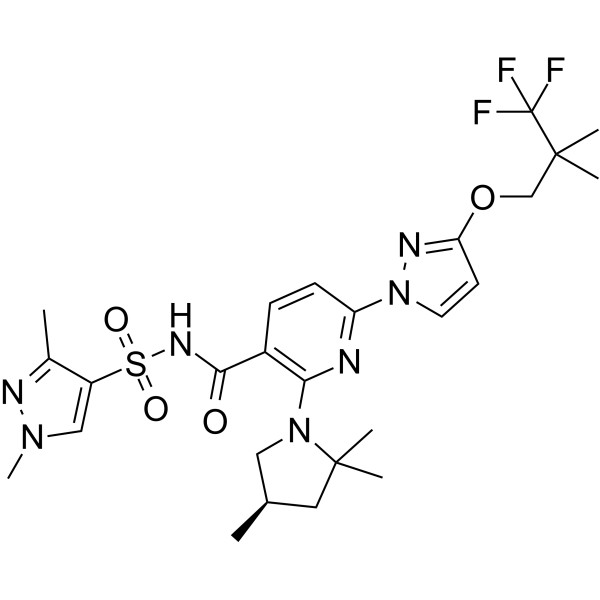
    (R)-Elexacaftor 2229860-99-3 99.44%
    (R)-Elexacaftor ((R)-VX-445) is the enantiomer of Elexacaftor (HY-111772). Elexacaftor is an orally active CFTR modulator that targets nucleotide-binding domain 1. Elexacaftor stabilizes misfolded F508del-CFTR protein, enhances its trafficking to the plasma membrane, and significantly improves metabolic stability, thermal stability and ion conductivity. Elexacaftor not only restores chloride transport function in nasal epithelial cells and rescues multiple CFTR mutation subtypes, but also exerts multiplicative synergistic effects with Ivacaftor (HY-13017), and is often used in a triple combination therapy with Tezacaftor (HY-15448). Elexacaftor is widely used in basic and clinical translational research on cystic fibrosis.
    (R)-Elexacaftor
  • HY-113416R
    Dehydroepiandrosterone sulfate (Standard) 651-48-9 99.93%
    Dehydroepiandrosterone sulfate (DHEA sulfate; Prasterone sulfate) (Standard) is the analytical standard of Dehydroepiandrosterone sulfate (HY-113416). This product is intended for research and analytical applications. Dehydroepiandrosterone sulfate (DHEA sulfate; Prasterone sulfate) is a neurosteroid and the main secretion product of the adrenal gland. Dehydroepiandrosterone sulfate has both non-competitive antagonist activity of GABAA receptor and agonist activity of σ1 receptor. Dehydroepiandrosterone sulfate can partially penetrate the blood-brain barrier, inhibit GABAA receptor-mediated chloride influx, enhance NMDA receptor activity through σ1 receptors, exert anti-inflammatory, anti-glucocorticoid and antidepressant effects, and increase convulsive sensitivity. Dehydroepiandrosterone sulfate participates in neuroprotection, neurite growth regulation and catecholamine secretion regulation, and can be used in the study of depression, post-traumatic stress disorder (PTSD), Alzheimer's disease, etc. Dehydroepiandrosterone sulfate may also be a biomarker for cardiovascular disease mortality, and its concentration is independently and negatively correlated with mortality.
    Dehydroepiandrosterone sulfate (Standard)
  • HY-156693A
    MTvkPABC-P5 TFA 98.78%
    MTvkPABC-P5d TFA, a TLR7 agonist, is an immune stimulant. MTvkPABC-P5d TFA can be used for synthesis of immune-stimulating antibody conjugates (ISACs).
    MTvkPABC-P5 TFA
  • HY-66005S4
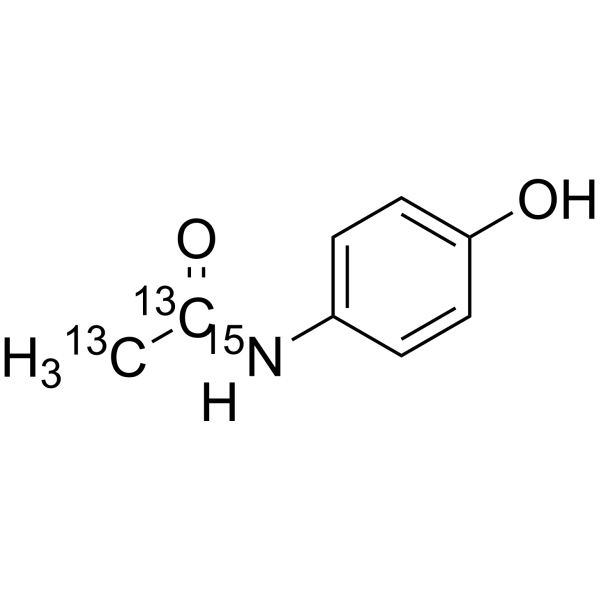
    Acetaminophen-13C2,15N 360769-21-7 98.30%
    Acetaminophen-13C2,15N is the 13C and 15N labeled Acetaminophen. Acetaminophen (Paracetamol) is a selective cyclooxygenase-2 (COX-2) inhibitor with an IC50 of 25.8 μM;is a widely used antipyretic and analgesic agent. Acetaminophen is a potent hepatic N-acetyltransferase 2 (NAT2) inhibitor.
    Acetaminophen-13C2,15N
  • HY-A0124AR
    Sapropterin dihydrochloride (Standard) 69056-38-8 99.96%
    Sapropterin ((6R)-BH4; (6R)-Tetrahydro-L-biopterin) dihydrochloride (Standard) is the analytical standard of Sapropterin dihydrochloride (HY-A0124A) . This product is intended for research and analytical applications. Sapropterin dihydrochloride is an orally active phenylalanine hydroxylase (PAH) cofactor, which is effective in reducing blood phenylalanine concentrations. Sapropterin dihydrochloride can be used in study of phenylketonuria (PKU) phenylketonuria. Sapropterin dihydrochloride can aggravate experimental autoimmune encephalomyelitis (EAE).
    Sapropterin dihydrochloride (Standard)
  • HY-B0345AR
    ATP disodium (Standard) 987-65-5 98.83%
    ATP disodium salt (Standard) is the analytical standard of ATP disodium salt (HY-B0345A). This product is intended for research and analytical applications. ATP disodium salt (Adenosine 5'-triphosphate disodium salt) is a central component of energy storage and metabolism in vivo, provides the metabolic energy to drive metabolic pumps and serves as a coenzyme in cells. ATP disodium salt is an important endogenous signaling molecule in immunity and inflammation.
    ATP disodium (Standard)
  • HY-D1056B4
    Lipopolysaccharides, from Salmonella typhosa
    Lipopolysaccharides, from Salmonella typhosa are lipopolysaccharide endotoxins and TLR-4 activators derived from Salmonella typhosa, classified as S-type LPS, which can activate pathogen-associated molecular patterns (PAMP) of the immune system and induce cellular secretion of migrasomes. Lipopolysaccharides, from Salmonella typhosa exhibit a typical three-part structure: O-antigen, core oligosaccharide, and lipid A. Lipopolysaccharides, from Salmonella typhosa can serve as vaccine adjuvants and demonstrate adjuvant activity targeting B cells in immune responses in vivo.
    It is recommended to prepare a solution with concentration ≥2 mg/mL. Vortex thoroughly for more than 10 minutes. Due to the adsorption characteristics of LPS, silanized container or low adsorption centrifuge tubes should be used for aliquoting and storage, and mix thoroughly before use.
    Lipopolysaccharides, from Salmonella typhosa
  • HY-N1428S6
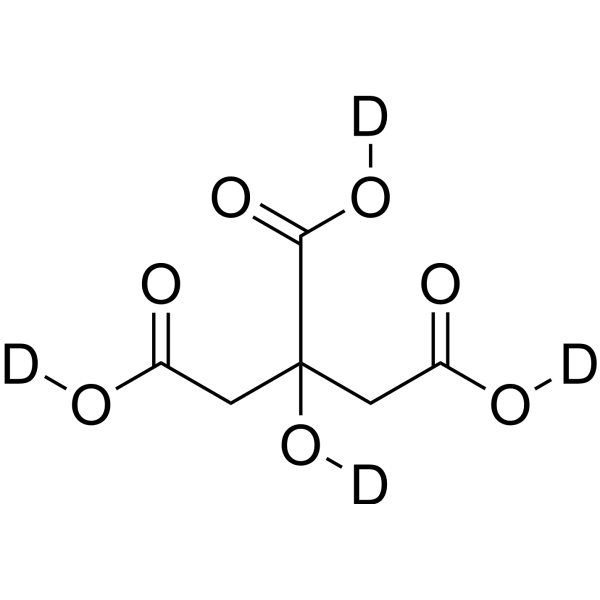
    Citric acid-d4-1
    Citric acid-d4-1 is deuterated labeled Citric acid (HY-N1428). Citric acid is a natural preservative and food tartness enhancer. Citric acid induces apoptosis and cell cycle arrest at G2/M phase and S phase in HaCaT cells. Citric acid cause oxidative damage of the liver by means of the decrease of antioxidative enzyme activities. Citric acid is also an acidulant, emulsifier, sequestrant and buffering agent widely used across many industries.
    Citric acid-d4-1
  • HY-P990124
    Anti-Mouse GITR Antibody (DTA-1) 98.47%
    Anti-Mouse GITR Antibody (DTA-1) is a rat derived IgG2b monoclonal agonist antibody targeting mouse GITR. Anti-Mouse GITR Antibody (DTA-1) can activate T cells and B cells to enhance immune response. Anti-Mouse GITR Antibody (DTA-1) selectively enhances Th2 cell effector function through GITR signaling. Anti-Mouse GITR Antibody (DTA-1) may exacerbate allergic reactions. Anti-Mouse GITR Antibody (DTA-1) can be used for researches on cancer and allergic conditions such as colon cancer and allergic asthma. The recommed isotype control of Anti-Mouse GITR Antibody (DTA-1) is Rat IgG2b kappa, Isotype Control (HY-P990682).
    Anti-Mouse GITR Antibody (DTA-1)
  • HY-P990126
    Anti-Rat CD8α Antibody (OX-8)
    Anti-Rat CD8α Antibody (OX-8) is an anti-rat CD8α IgG1 monoclonal antibody. Anti-Rat CD8α Antibody (OX-8) can deplete CD8+ T cells. Anti-Rat CD8α Antibody (OX-8) can enhance airway remodeling. Anti-Rat CD8α Antibody (OX-8) can be used for researches on allergic conditions and infections such as RHV-rn1 virus infection and asthma.
    Anti-Rat CD8α Antibody (OX-8)
  • HY-P990198
    Anti-Mouse/Human Mac-2/Galectin-3 Antibody (TIB-166)
    Anti-Mouse/Human Mac-2/Galectin-3 Antibody (TIB-166) is a rat-derived anti-mouse/human Mac-2/Galectin-3 IgG2a monoclonal antibody. Anti-Mouse/Human Mac-2/Galectin-3 Antibody (TIB-166) significantly inhibits IL-6 expression (inhibition rates 34.7% and 55.3%). Anti-Mouse/Human Mac-2/Galectin-3 Antibody (TIB-166) is often used for immunoprecipitation, western blot, immunofluorescence, and flow cytometry.
    Anti-Mouse/Human Mac-2/Galectin-3 Antibody (TIB-166)
  • HY-P990258
    Anti-Mouse CLEC9A/CD370 Antibody (7H11)
    Anti-Mouse CLEC9A/CD370 Antibody (7H11) is a rat-derived IgG1 κ type antibody inhibitor, targeting to mouse CLEC9A/CD370. Anti-Mouse CLEC9A/CD370 Antibody (7H11) reacts with mouse CLEC9A (C-type lectin domain family member 9A) and blocks CLEC9A. Anti-Mouse CLEC9A/CD370 Antibody (7H11) can be used for the researches of cancer and immunology, such as B16.F10-OVA tumor.
    Anti-Mouse CLEC9A/CD370 Antibody (7H11)
  • HY-P990283
    Anti-Mouse CD22 Antibody (Cy34.1) 99%
    Anti-Mouse CD22 Antibody (Cy34.1) is a mouse-derived IgG1 κ type antibody inhibitor, targeting to mouse CD22. Anti-Mouse CD22 Antibody (Cy34.1) can deplete CD22 cells and B cells. Anti-Mouse CD22 Antibody (Cy34.1) can promote microglial phagocytosis. Anti-Mouse CD22 Antibody (Cy34.1) can be used for the researches of inflammation and neurological disease, such as Alzheimer's disease (AD) and neuromyelitis.
    Anti-Mouse CD22 Antibody (Cy34.1)
  • HY-P990284
    Anti-Mouse CD205 Antibody (NLDC-145)
    Anti-Mouse CD205 Antibody (NLDC-145) is a rat-derived IgG2aκ type antibody inhibitor, targeting to mouse CD205. Anti-Mouse CD205 Antibody (NLDC-145) reacts with CD205 also known as DEC-205. Anti-Mouse CD205 Antibody (NLDC-145) can be used for the researches of cancer, inflammation, immunology and metabolic disease, such as colitis, D2F2/E2 tumor and diabetes.
    Anti-Mouse CD205 Antibody (NLDC-145)
  • HY-P990392
    Anti-CXCL8/IL-8 Antibody 99.51%
    Anti-CXCL8/IL-8 Antibody is a human antibody expressed in CHO cells that targets CXCL8/IL-8. The Anti-CXCL8/IL-8 Antibody is composed of a huIgG1 heavy chain and a huκ light chain, with a predicted molecular weight (MW) of 145 kDa. The isotype control for Anti-CXCL8/IL-8 Antibody can be referenced as Human IgG1 kappa, Isotype Control (HY-P99001).
    Anti-CXCL8/IL-8 Antibody
  • HY-P990441
    Anti-IGF-2 Antibody (DX-2647) 99.60%
    Anti-IGF-2 Antibody (DX-2647) is a CHO-expressed human antibody that targets IGF-2. Anti-IGF-2 Antibody (DX-2647) has a huIgG1 heavy chain and a huκ light chain, with a predicted molecular weight (MW) of 145.78 kDa. The isotype control for Anti-IGF-2 Antibody (DX-2647) can be referenced as Human IgG1 kappa, Isotype Control (HY-P99001).
    Anti-IGF-2 Antibody (DX-2647)
製品番号 製品名 / Synonyms Application Reactivity