



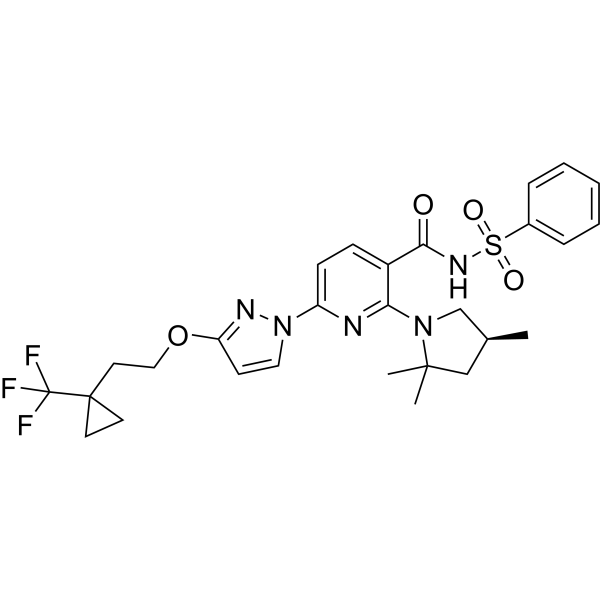
(R)-Elexacaftor

Based on 1 Customer Validation
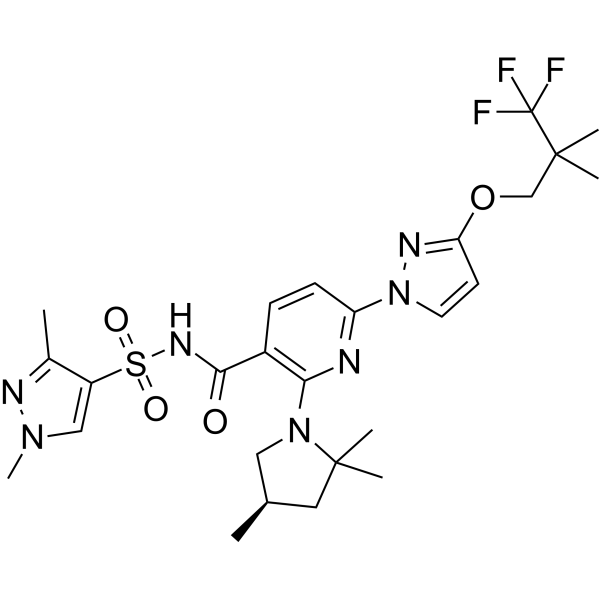
(R)-Elexacaftor ((R)-VX-445) is the enantiomer of Elexacaftor (HY-111772). Elexacaftor is an orally active CFTR modulator that targets nucleotide-binding domain 1. Elexacaftor stabilizes misfolded F508del-CFTR protein, enhances its trafficking to the plasma membrane, and significantly improves metabolic stability, thermal stability and ion conductivity. Elexacaftor not only restores chloride transport function in nasal epithelial cells and rescues multiple CFTR mutation subtypes, but also exerts multiplicative synergistic effects with Ivacaftor (HY-13017), and is often used in a triple combination therapy with Tezacaftor (HY-15448). Elexacaftor is widely used in basic and clinical translational research on cystic fibrosis.
Nur für Forschungszwecke. Wir verkaufen nicht an Patienten.
- Reinheit : 99.44%
- CAS. Nr.: 2229860-99-3
- Formel: C26H34F3N7O4S
- Molecular Weight:597.65
-
Speicherung:Powder -20°C, 3 years , 4°C, 2 years ; In solvent -80°C, 6 months , -20°C, 1 month

To place orders, for customer services and technical support, please contact: MedChemExpress USA
Tel: 609-228-6898 E-mail: [email protected] [email protected]


-
 Biologische Aktivität
-
Chemical Information
-
Lösungsmittel & Löslichkeit
- Protokoll
- Reinheit & Dokumentation
- Verweise
-
 Help & FAQs


-
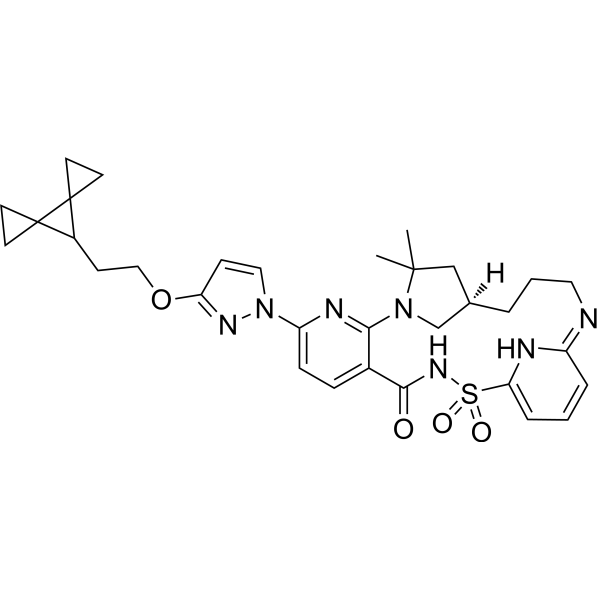
HY-145603A
(R)-VanzacaftorCFTR Modulator -
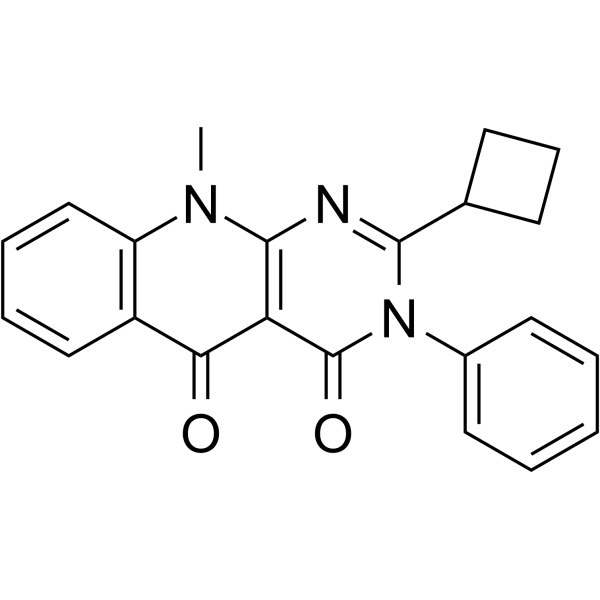
HY-150090
SRI-41315CFTR Activator -
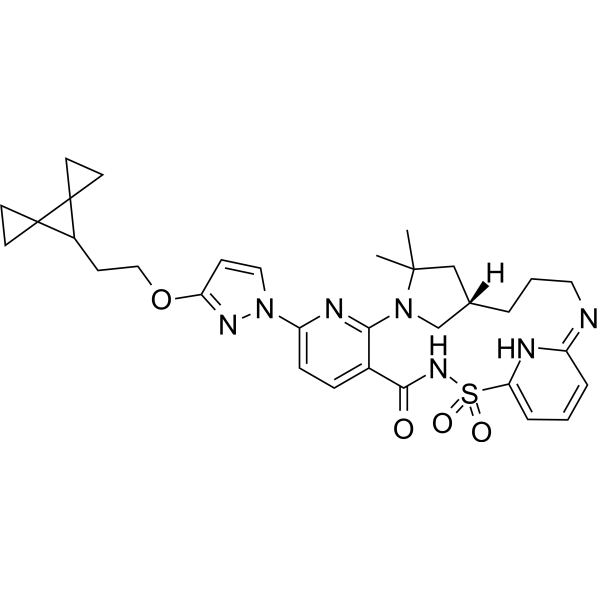
HY-145603
VanzacaftorCFTR Modulator -
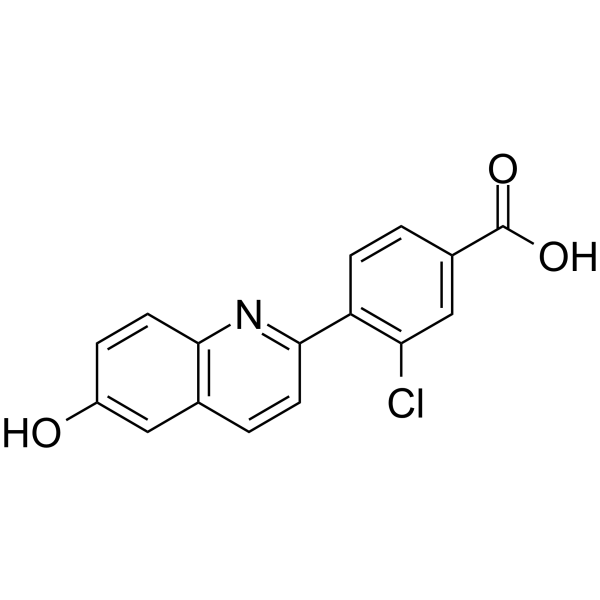
HY-109027
CavosonstatGSNOR Inhibitor -
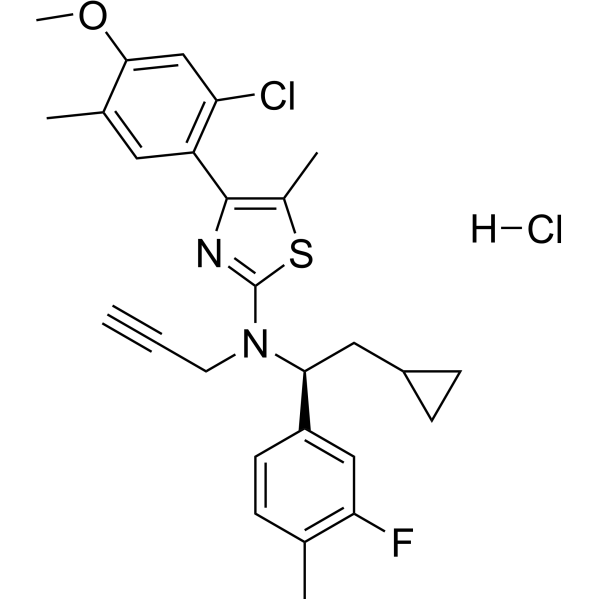
HY-106203A
Crinecerfont hydrochlorideCRF1 Receptor Antagonist -
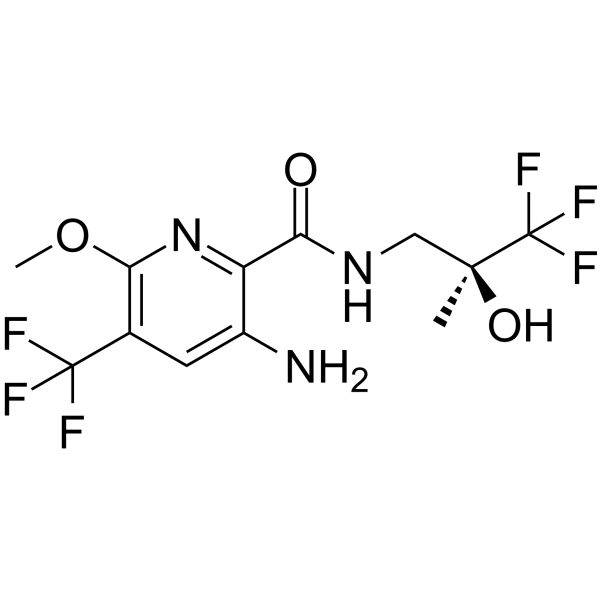
HY-109177
IcenticaftorCFTR Potentiator -
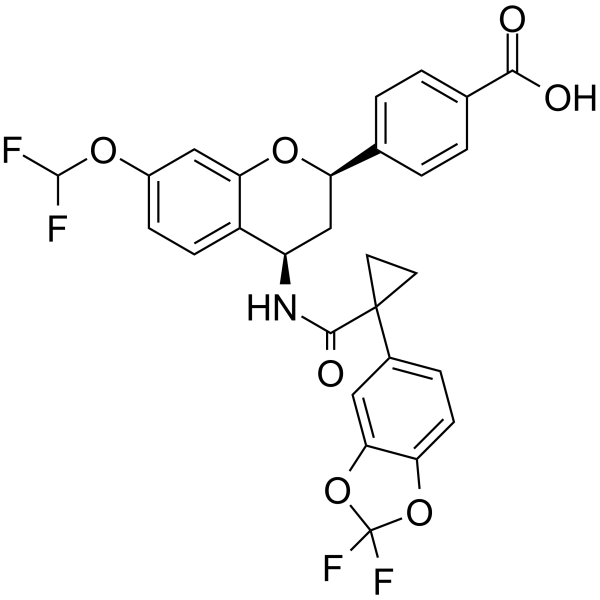
HY-111111
GalicaftorCFTR Corrector -
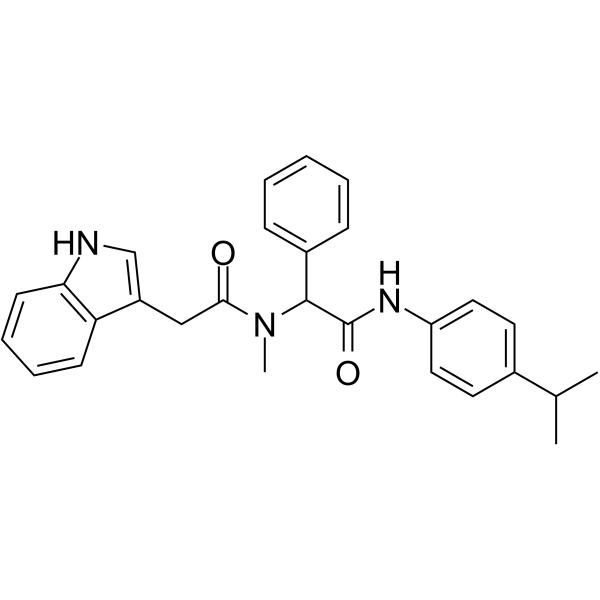
HY-103369
PG01CFTR Potentiator -
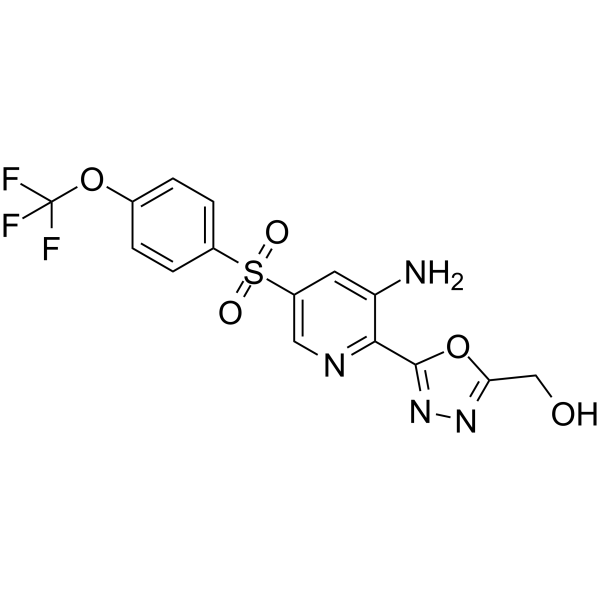
HY-109152
NavocaftorCystic Fibrosis Transmembrane Regulator -
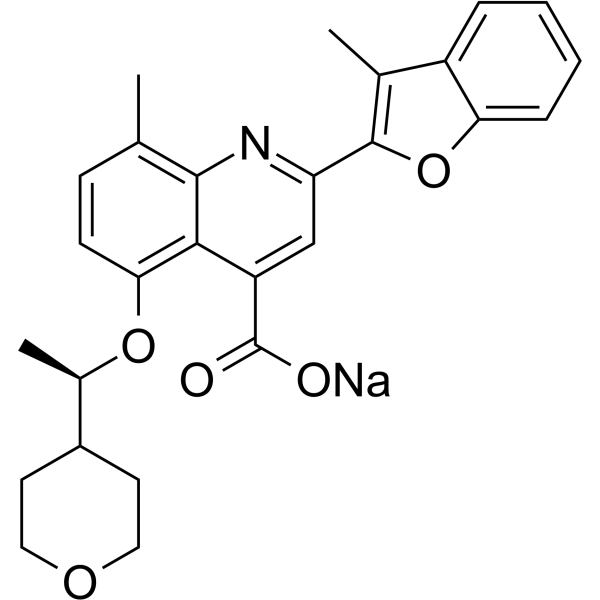
HY-109187A
Posenacaftor sodiumCFTR Modulator -
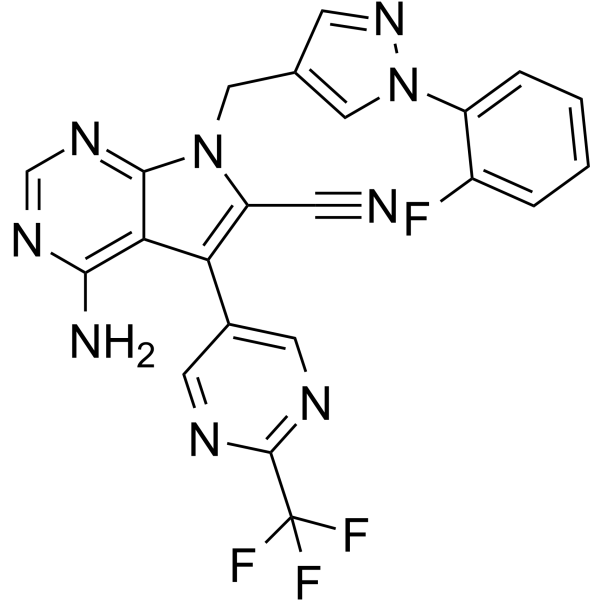
HY-136939
CFTR corrector 6CFTR Activator -
HY-126394
BamocaftorCFTR Corrector


Biologische Aktivität
Beschreibung
In Vitro
Combined treatment of CFBE41o-F508del-CFTR cells with Elexacaftor (3 μM; 24 h), Ivacaftor (HY-13017) and Tezacaftor (HY-15448) synergistically increases the proportion of mature F508del-CFTR, with maximum maturity observed after 24 h of treatment, although its level remains lower than that of wild-type CFTR[1].
When Elexacaftor (0.99 μM; 24 h) is used in combination with Ivacaftor (HY-13017) and Tezacaftor (HY-15448) to treat CFBE41o-F508del-CFTR cells, it maintains a maturation level of F508del-CFTR comparable to that achieved with the full dose of 3 μM, while lower concentrations reduce the maturation efficiency[1].
MedChemExpress (MCE) has not independently confirmed the accuracy of these methods. They are for reference only.
-
Cell Line:CFBE41o- cells expressing F508del-CFTR
-
Concentration:3 μM (as part of ET or ETI); 0 μM (DMSO control)
-
Incubation Time:2 h, 4 h, 6 h, 8 h, 24 h
-
Result:Reached C/(B+C) ratio of 0.32 (n = 5) after 2 h of ETI treatment, higher than 0.21 (n = 5) for ET treatment.
Reached C/(B+C) ratio of 0.60 (n = 5) for ETI and 0.73 (n = 5) for ET at 24 h.
Did not reach the WT-CFTR ratio of 0.96 (n = 5).
-
Cell Line:CFBE41o- cells expressing F508del-CFTR
-
Concentration:3 μM (100% ETI), 0.99 μM (33% ETI), 0.33 μM (11% ETI), 0.099 μM (3.3% ETI), 0.033 μM (1.1% ETI) (as part of ETI); 0 μM (DMSO control)
-
Incubation Time:24 h
-
Result:Showed no significant difference in C/(B+C) ratio between 100% ETI (0.47) and 33% ETI (0.38, n = 4, p = 0.07).
Reduced the C/(B+C) ratio to ~50-60% of the 100% ETI level (0.24, n = 4, p = 0.003 vs. 100% ETI) at 11% ETI.
Resulted in very low C/(B+C) ratio indistinguishable from DMSO control at 3.3% and 1.1% ETI.


Chemical Information
-
CAS. Nr. 2229860-99-3
-
Appearance Solid
-
Molecular Weight 597.65
-
Formel C26H34F3N7O4S
-
Color White to light yellow
-
SMILES
CC1(C)C[C@@H](C)CN1C2=C(C(NS(C3=CN(C)N=C3C)(=O)=O)=O)C=CC(N4C=CC(OCC(C)(C(F)(F)F)C)=N4)=N2
-
Synonyms
(R)-VX-445
-
Versand
Room temperature in continental US; may vary elsewhere.
-
Speicherung
Powder -20°C 3 years 4°C 2 years In solvent -80°C 6 months -20°C 1 month


Lösungsmittel & Löslichkeit
In Vitro:
DMSO : 100 mg/mL (167.32 mM; Need ultrasonic; Hygroscopic DMSO has a significant impact on the solubility of product, please use newly opened DMSO)
Please refer to the solubility information to select the appropriate solvent. Once prepared, please aliquot and store the solution to prevent product inactivation from repeated freeze-thaw cycles.
Storage method and period of stock solution: -80°C, 6 months; -20°C, 1 month. When stored at -80°C, please use it within 6 months. When stored at -20°C, please use it within 1 month.
Please refer to the solubility information to select the appropriate solvent. Once prepared, please aliquot and store the solution to prevent product inactivation from repeated freeze-thaw cycles.
Storage method and period of stock solution: -80°C, 6 months; -20°C, 1 month. When stored at -80°C, please use it within 6 months. When stored at -20°C, please use it within 1 month.
Konzentration (Stammlösung) × Volumen (Stammlösung) = Konzentration (Ziellösung) × Volumen (Ziellösung)
In Vivo:
Select the appropriate dissolution method based on your experimental animal and administration route.
- For the following dissolution methods, please ensure to first prepare a clear stock solution using an In Vitro approach and then sequentially add co-solvents:
- To ensure reliable experimental results, the clarified stock solution can be appropriately stored based on storage conditions. As for the working solution for In Vivo experiments, it is recommended to prepare freshly and use it on the same day.
- The percentages shown for the solvents indicate their volumetric ratio in the final prepared solution. If precipitation or phase separation occurs during preparation, heat and/or sonication can be used to aid dissolution.
Add each solvent one by one: 10% DMSO 40% PEG300 5% Tween-80 45% Saline
Solubility: ≥ 2.08 mg/mL (3.48 mM); Clear solution
This protocol yields a clear solution of ≥ 2.08 mg/mL (saturation unknown).
Taking 1 mL working solution as an example, add 100 μL DMSO stock solution (20.8 mg/mL) to 400 μL PEG300, and mix evenly; then add 50 μL Tween-80 and mix evenly; then add 450 μL Saline to adjust the volume to 1 mL.
Preparation of Saline: Dissolve 0.9 g sodium chloride in ddH₂O and dilute to 100 mL to obtain a clear Saline solution.
In Vivo Dissolution Calculator
Please enter the basic information of animal experiments:
-
-
-
-
Recommended: Prepare an additional quantity of animals to account for potential losses during experiments.
Please enter your animal formula composition:
-
%DMSO +
Recommended: Keep the proportion of DMSO in working solution below 2% if your animal is weak.
-
%+
-
+%Tween-80 + +
-
%Saline +
The co-solvents required include: DMSO, . All of co-solvents are available by MedChemExpress (MCE). , Tween 80. All of co-solvents are available by MedChemExpress (MCE).
Working solution concentration: 0.22 mg/mL
Method for preparing stock solution: mg drug dissolved in μL DMSO. Stock solution concentration: mg/mL.
1. Take μL DMSO stock solution;
2. Add μL .
μL , mix evenly;
3. Then add μL Tween 80, mix evenly;
4. Then add μL
Please ensure that the stock solution in the first step is dissolved to a clear state, and add co-solvents in sequence. You can use ultrasonic heating (ultrasonic cleaner, recommended frequency 20-40 kHz), vortexing, etc. to assist dissolution.


Reinheit & Dokumentation
-
Data Sheet (279 KB)
-
SDS (252 KB)
- English - EN (252 KB)
- Français - FR (252 KB)
- Deutsch - DE (252 KB)
- Norwegian - NO (252 KB)
- Español - ES (252 KB)
- Swedish - SV (252 KB)
- Italian - IT (252 KB)
- Korean - KR (252 KB)
- Portuguese - PT (252 KB)
-
Handling Instructions (2659 KB)
Verweise
[1]. Carrez T, et al. Effect of elexacaftor and bamocaftor on the metabolic and thermal stability of the F508del-CFTR protein in human airway epithelial cells. Am J Physiol Lung Cell Mol Physiol. 2025;329(5):L583-L597. [Content Brief]
[4]. Reyne N, et al. Effect of elexacaftor-tezacaftor-ivacaftor on nasal potential difference and lung function in Phe508del rats. Front Pharmacol. 2024;15:1362325. Published 2024 Mar 13. [Content Brief]
[5]. Sanders M, et al. Evaluation of the drug interaction between rifabutin and elexacaftor/tezacaftor/ivacaftor (ETI). J Cyst Fibros. 2026;25(1):151-157. [Content Brief]


Complete Stock Solution Preparation Table
Please refer to the solubility information to select the appropriate solvent. Once prepared, please aliquot and store the solution to prevent product inactivation from repeated freeze-thaw cycles.
Storage method and period of stock solution: -80°C, 6 months; -20°C, 1 month. When stored at -80°C, please use it within 6 months. When stored at -20°C, please use it within 1 month.
| Optional Solvent | Concentration Solvent Mass | 1 mg | 5 mg | 10 mg | 25 mg |
|---|---|---|---|---|---|
| DMSO | 1 mM | 1.6732 mL | 8.3661 mL | 16.7322 mL | 41.8305 mL |
| 5 mM | 0.3346 mL | 1.6732 mL | 3.3464 mL | 8.3661 mL | |
| 10 mM | 0.1673 mL | 0.8366 mL | 1.6732 mL | 4.1831 mL | |
| 15 mM | 0.1115 mL | 0.5577 mL | 1.1155 mL | 2.7887 mL | |
| 20 mM | 0.0837 mL | 0.4183 mL | 0.8366 mL | 2.0915 mL | |
| 25 mM | 0.0669 mL | 0.3346 mL | 0.6693 mL | 1.6732 mL | |
| 30 mM | 0.0558 mL | 0.2789 mL | 0.5577 mL | 1.3944 mL | |
| 40 mM | 0.0418 mL | 0.2092 mL | 0.4183 mL | 1.0458 mL | |
| 50 mM | 0.0335 mL | 0.1673 mL | 0.3346 mL | 0.8366 mL | |
| 60 mM | 0.0279 mL | 0.1394 mL | 0.2789 mL | 0.6972 mL | |
| 80 mM | 0.0209 mL | 0.1046 mL | 0.2092 mL | 0.5229 mL | |
| 100 mM | 0.0167 mL | 0.0837 mL | 0.1673 mL | 0.4183 mL |


(R)-Elexacaftor Related Classifications
HY-111772A Related Classifications
 Powered by Bioz
Keywords