Neurological Disease
-
Neurological Disease Related Products (19320)
Related Products (19320)

-
Antibodies (42)
-
Related Compound Screening Libraries (7)
-
Tetrabenazine-d7
 0 ImagesCat. No.: HY-B0590S3CAS No.: 2701977-99-1Synonyms: TBZ-d7-d7; Ro 1-9569-d7
Tetrabenazine-d7 (TBZ-d7-d7) is deuterium labeled Tetrabenazine (HY-B0590). Tetrabenazine (Ro 1-9569) is a brain-penetrant and orally active VMAT2-selective ligand with human VMAT2 Ki 100 nM. Tetrabenazine binds VMAT2 to block monoamine uptake into synaptic vesicles, potentiates cytoplasmic monoamine degradation. Tetrabenazine weakly blocks dopamine D2 receptors, and increases dopamine turnover via elevated cerebrospinal fluid homovanillic acid. Tetrabenazine can be used for the research of Huntington’s disease, tardive dyskinesia, and Tourette’s syndrome.
-
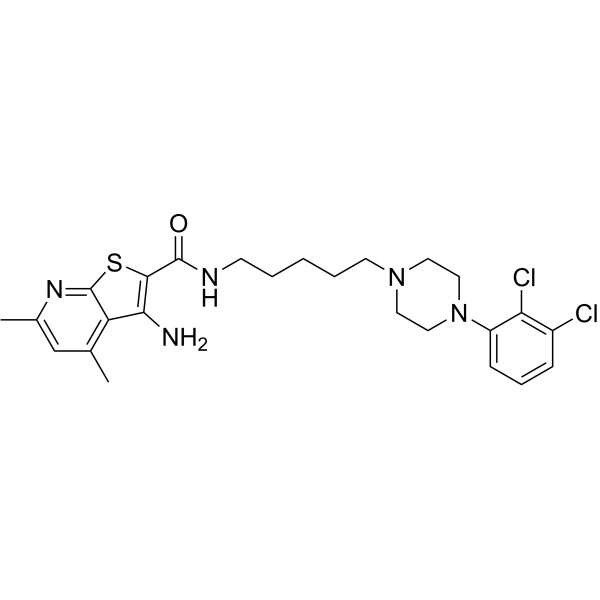
Dopamine D2 receptor agonist-2
 0 Images
Dopamine D2 receptor agonist-2 (compound 36) is a potent dopamine D2 receptor biased agonism ligand with an Ki value of 11.2 nM. Dopamine D2 receptor agonist-2 can be used to research antipsychosis.
-
BB-22
 0 ImagesCat. No.: HY-12244CAS No.: 1400742-42-8
BB-22 is a cannabinoid wih dopamine (DA) stimulant properties. BB-22 shows affinity to CB1 receptors with a Ki value of 0.11 nM and an EC50 value of 2.9 nM.
-
18α-Glycyrrhetinic acid (Standard)
 0 Images
18α-Glycyrrhetinic acid (Standard) is the analytical standard of 18α-Glycyrrhetinic acid. This product is intended for research and analytical applications. 18α-Glycyrrhetinic acid, a diet-derived compound, is an inhibitor of NF-kB and an activator of proteasome, which serves as pro-longevity and anti-aggregation factor in a multicellular organism. 18α-Glycyrrhetinic acid induces apoptosis.
-
rel-Delequamine
 0 ImagesCat. No.: HY-106874BCAS No.: 119813-87-5Synonyms: rel-RS-15385-197
rel-Delequamine (rel-RS-15385-197) is an orally active, brain-penetrant, potent and selective M2-adrenoceptor antagonist and α2-adrenoceptor antagonist. rel-Delequamine has a pKi of 9.45 for α2-adrenoceptors in the rat cortex. rel-Delequamine augments K+-evoked release of noradrenaline with an EC50 of 1 nM.
-
Carbonic anhydrase inhibitor 17
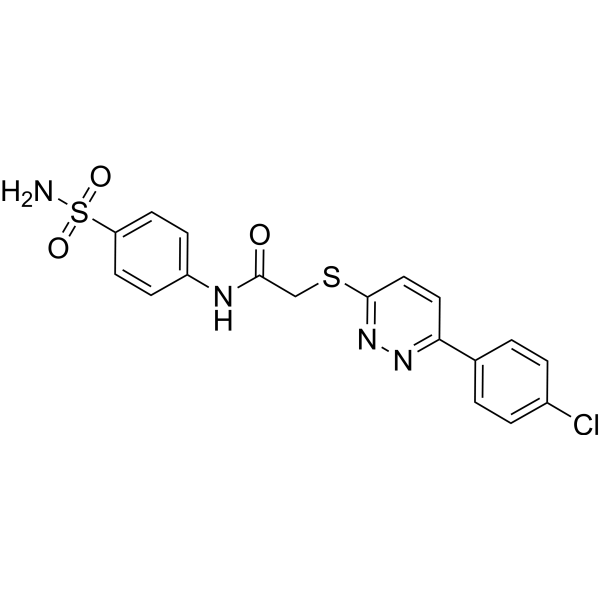 0 ImagesCat. No.: HY-161174CAS No.: 3033849-05-4
Carbonic anhydrase inhibitor 17 (compound 7c) ,pyridazine-tethered sulfonamide, is a carbonic anhydrase II inhibitor with IC50 of 0.63 nM.
-
Ipenoxazone hydrochloride
 0 ImagesCat. No.: HY-100159ACAS No.: 118635-68-0Synonyms: MLV-6976 hydrochloride; NC-1200 hydrochloride
Ipenoxazone (MLV-6976) hydrochloride is a potent and centrally acting muscle relaxant.
-
Lurasidone Metabolite 14283-d8
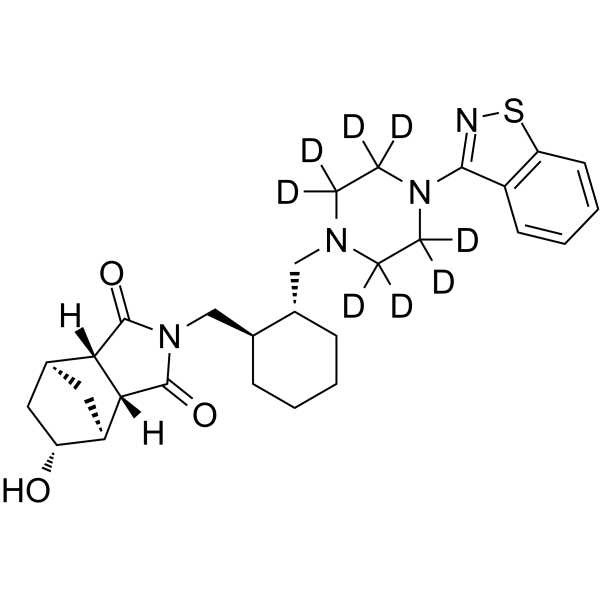 0 ImagesCat. No.: HY-G0001SCAS No.: 2070009-43-5
Lurasidone Metabolite 14283-d8 is the deuterium labeled Lurasidone Metabolite 14283, which is a metabolite of Lurasidone.
-
5-HT1AR agonist 3
 0 ImagesCat. No.: HY-176717CAS No.: 2410053-55-1
5-HT1AR agonist 3 (Compound 77) is a 5-HT1A agonist. 5-HT1AR agonist 3 has 5-HT1A receptor agonist activity (EC50: 1.3 nM). 5-HT1AR agonist 3 mainly exerts its effects by activating 5-HT1A receptors and can be used in the study of neuropsychiatric diseases such as anxiety, depression and sleep disorders.
-
HV1-IN-1 hydrochloride
 0 ImagesCat. No.: HY-163696ACAS No.: 1609461-57-5
HV1-IN-1 hydrochloride is an inhibitor of the human voltage-gated proton channel (hHV1). HV1-IN-1 hydrochloride works by binding to the VSD of the HV1 channel. The VSD is a component of the HV1 channel that is responsible for detecting changes in membrane potential and triggering the opening of the channel. HV1-IN-1 hydrochloride can be used in the study of cancer, neuroinflammation and immune response.
-
NW-1689
 0 Images
NW-1689 is a process-related impurity of safinamide mesilate (SAFM). SAFM can be used for the study of Parkinson's disease (PD). It is a highly selective and reversible inhibitor of monoamine oxidase-B (MAO-B) and also blocks sodium channels and N-type calcium channels. These effects of SAFM help reduce the breakdown of dopamine and inhibit the release of glutamate. NW-1689 has a similar chemical structure to SAFM and has some similar pharmacological effects as SAFM, and can be used in Parkinson's disease research.
-
Org-12962 hydrochloride
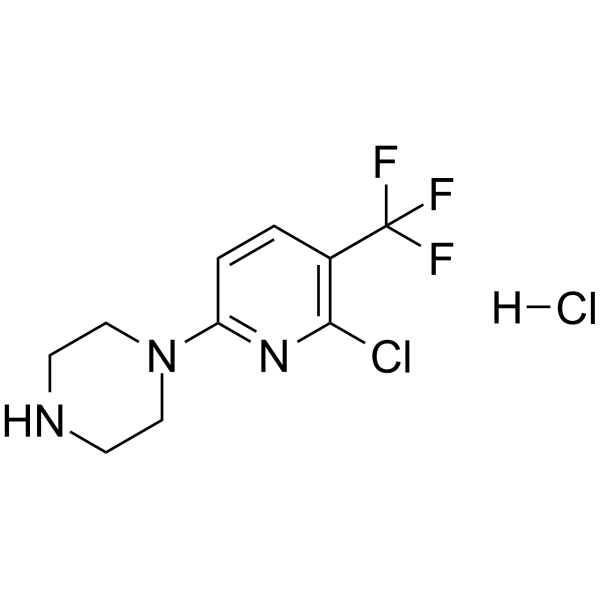 0 ImagesCat. No.: HY-21994CAS No.: 210821-63-9
Org 12962 hydrochloride is a potent, selective and efficacious 5-HT2C receptor agonist and exhibits pEC50 values of 7.01, 6.38 and 6.28 for 5-HT2C, 5-HT2A and 5-HT2A, respectively. Org 12962 hydrochloride is effective in panic-like anxiety animal model.
-
Neostigmine iodide
 0 Images
Neostigmine iodide is a reversible acetylcholinesterase inhibitor with muscle tone-enhancing activity. Neostigmine iodide is primarily used to improve muscle function in patients with myasthenia gravis. Neostigmine iodide is also used in routine anesthesia to reverse the effects of nondepolarizing muscle relaxants such as rocuronium.
-
5-LOX/MAOs-IN-1
 0 ImagesCat. No.: HY-162830CAS No.: 33865-93-9
5-LOX/MAOs-IN-1 (compound 3) is a 5-LOX/MAOs inhibitor and a potent free radical scavenger with antioxidant properties. 5-LOX/MAOs-IN-1 also showed neuroprotective activity in oxidative stress-damaged cell models and can activate the neurogenesis microenvironment of adult mouse neural stem cells. 5-LOX/MAOs-IN-1 can be used for the study of neurodegenerative diseases.
-
AChE/GSK-3β-IN-1
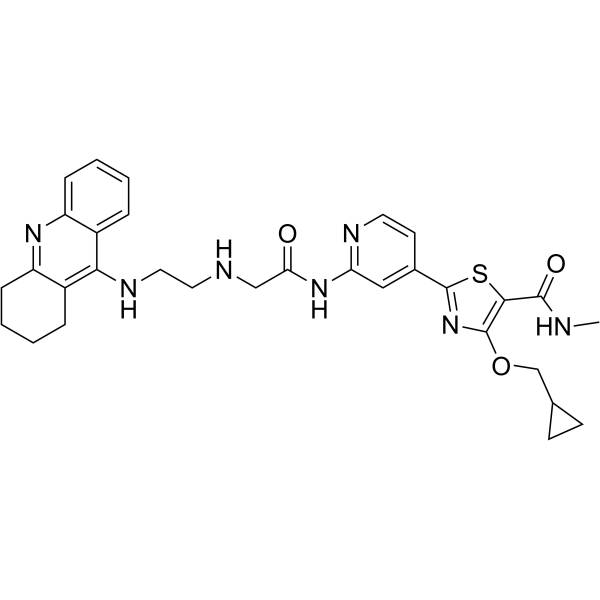 0 ImagesCat. No.: HY-150537CAS No.: 2412364-73-7
AChE/GSK-3β-IN-1 (compound GT15) is a potent, dual AChE/GSK-3β inhibitor with IC50 values of 1.2, 149.8 and 22.4 nM for hAChE , hBChE and hGSK-3β, respectively. AChE/GSK-3β-IN-1 penetrates the blood-brain barrier (BBB). AChE/GSK-3β-IN-1 has high kinase selectivity profiles for the CMGC kinase family. AChE/GSK-3β-IN-1 occupies the ATP binding site of DYRK1A. AChE/GSK-3β-IN-1 inhibits ROS expression and reduces oxidative stress. AChE/GSK-3β-IN-1 can be used for Alzheimer’s disease research.
-
L-663581
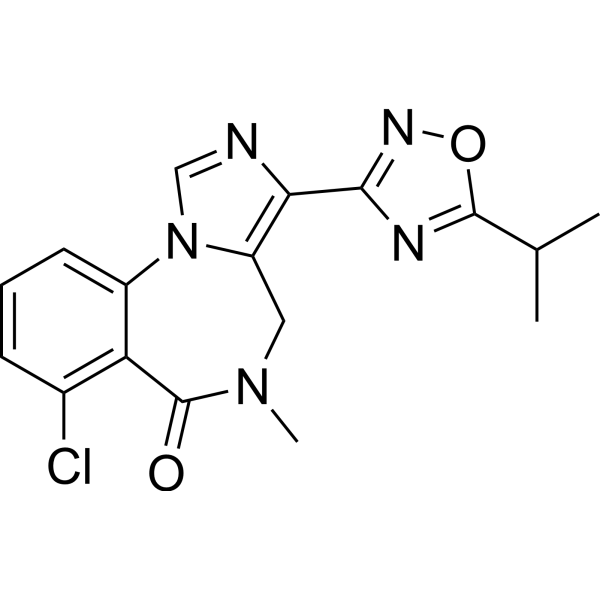 0 ImagesCat. No.: HY-118259CAS No.: 122384-14-9Synonyms: FG-8205
L-663581 (FG-8205) is an agonist of benzodiazepine receptor, acting as a partial agonist at GABA A receptor.
-
HDAC6-IN-45
 0 ImagesCat. No.: HY-161783CAS No.: 3048532-05-1
HDAC6-IN-45 (Compound 15) is a selective inhibitor for HDAC6 with IC50 of 15.2 nM. HDAC6-IN-45 exhibits neurotrophic through the upregulation of GAP43 and Beta-3 tubulin markers. HDAC6-IN-45 activates the Nrf2 signaling pathway, reduces H2O2-induced ROS production, inhibits apoptosis in PC12, and exhibits neuroprotective efficacy in SCOP-induced zebrafish Alzheimer's Disease models. HDAC6-IN-45 exhibits antioxidant activity and good blood-brain barrier (BBB) permeability.
-
DSPE-PEG2000-Maleimide free acid
 0 Images
DSPE-PEG2000-Maleimide free acid is a phospholipid-PEG conjugate. DSPE-PEG2000-Maleimide free acid utilizes the amphiphilicity of DSPE to insert into the lipid bilayer of liposomes or nanoparticles. DSPE-PEG2000-Maleimide free acid covalently couples to the sulfhydryl (-SH) of ligands (such as antibodies, peptides, or proteins) via thiol-maleimide click chemistry, giving the particles targeting capabilities. DSPE-PEG2000-Maleimide free acid can be used in the researches of breast cancer, lymphoma, and inherited retinal degeneration.
-
MAP4343-d4
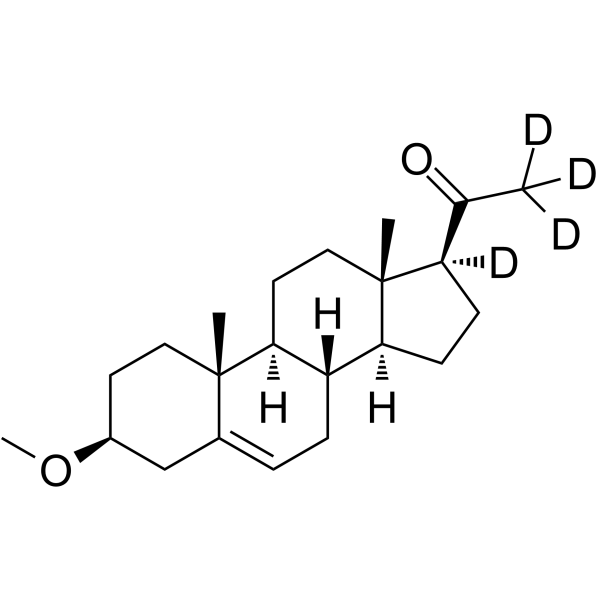 0 ImagesCat. No.: HY-107116S
MAP4343-d4 is the deuterium labeled MAP4343. MAP4343 is the 3-methylether derivative of Pregnenolone. MAP4343 binds in vitro to microtubule-associated protein 2 (MAP2), stimulates the polymerization of tubulin, enhances the extension of neurites and protects neurons against neurotoxic agents.
-
Etilevodopa (Standard)
 0 ImagesCat. No.: HY-116016RCAS No.: 37178-37-3Synonyms: L-DOPA ethyl ester (Standard); Levodopa ethyl ester (Standard)
Chlorbenside (Standard) is the analytical standard of Chlorbenside. This product is intended for research and analytical applications. Chlorbenside is an organochlorine pesticide. Chlorbenside targets organism such as mites and ticks and possesses efficient ovicidal and larvicidal activities.