



Bacterial
Anything that destroys bacteria or suppresses their growth or their ability to reproduce. Heat, chemicals such as chlorine, and antibiotic drugs all have antibacterial properties. Many antibacterial products for cleaning and handwashing are sold today. Such products do not reduce the risk for symptoms of viral infectious diseases in otherwise healthy persons. This does not preclude the potential contribution of antibacterial products to reducing symptoms of bacterial diseases in the home.
All Product Categories
-
Bacterial Inhibitors
(7479)
View all products
-
Bacterial Agonists
(3)
View all products
-
Bacterial Antagonists
(9)
View all products
-
Bacterial Activators
(23)
View all products
-
Bacterial Modulators
(23)
View all products
-
Bacterial Chemicals
(2)
View all products
-
Bacterial Inducers
(7)
View all products
-
Bacterial Controls
(14)
View all products
-
Bacterial Substrates
(2)
View all products
-
Bacterial Ligand
(1)
View all products
-
Bacterial Related Products (8796)
Related Products (8796)

-
Antibodies (14)
-
Related Compound Screening Libraries (1)
-
Trimipramine (Standard)
 0 ImagesCat. No.: HY-B1213ARCAS No.: 739-71-9Trimipramine (Standard) is the analytical standard of Trimipramine. This product is intended for research and analytical applications. Trimipramine is a 5-HT receptor antagonist, with pKi binding values of 6.39, 8.10, 4.66 for 5-HT1C, 5-HT2 and 5-HT1A, respectively. Trimipramine is also a potent and selective inhibitor targeting human noradrenaline (hNAT), serotonin (hSERT) and organic cation transporters (hOCT1, hOCT2) with IC50 values of 4.99 μM, 2.11 μM, 3.72 μM, 8.00 μM, respectively. Trimipramine has vascular activity and anxiolytic efficacy.
-
4'-O-Methyl-8-prenylnaringenin
 0 ImagesCat. No.: HY-N16699CAS No.: 120727-36-84'-O-Methyl-8-prenylnaringenin is a prenylated flavonoid compound with antibacterial activity, which can be isolated from propolis of the Solomon Islands. 4'-O-Methyl-8-prenylnaringenin exerts its antibacterial activity by enhancing cell penetration and damaging bacterial cell membranes or cell walls. The minimum inhibitory concentrations (MICs) against Staphylococcus aureus, Bacillus subtilis, and Pseudomonas aeruginosa are 32 μg/mL, 32 μg/mL, and 128 μg/mL, respectively.
-
FtsZ-IN-9
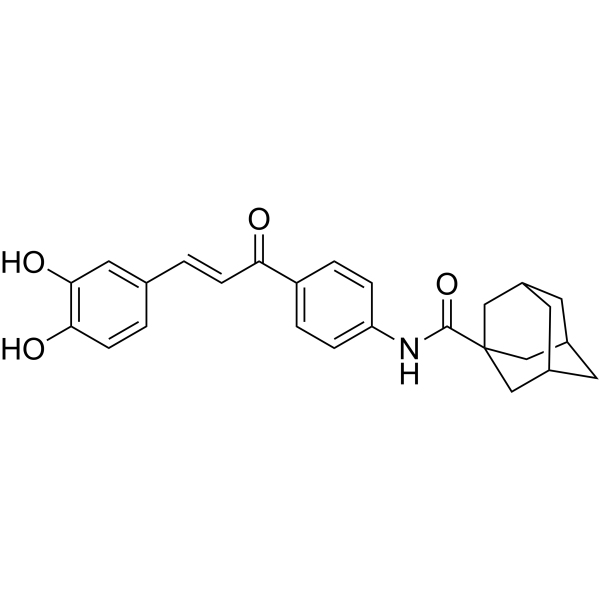 0 ImagesCat. No.: HY-161148CAS No.: 1273524-44-9FtsZ-IN-9 (compound 11) is an antimicrobial agent. FtsZ-IN-9 inhibits the assembly of Mycobacterium smegmatis FtsZ (MsFtsZ)[1].
-
Sunflower dish extract
 0 ImagesCat. No.: HY-N20161Synonyms: Sunflower extractSunflower dish extract is a type of sunflower extract that has antioxidant, antibacterial, and antiproliferative effects.
-
Diptericin
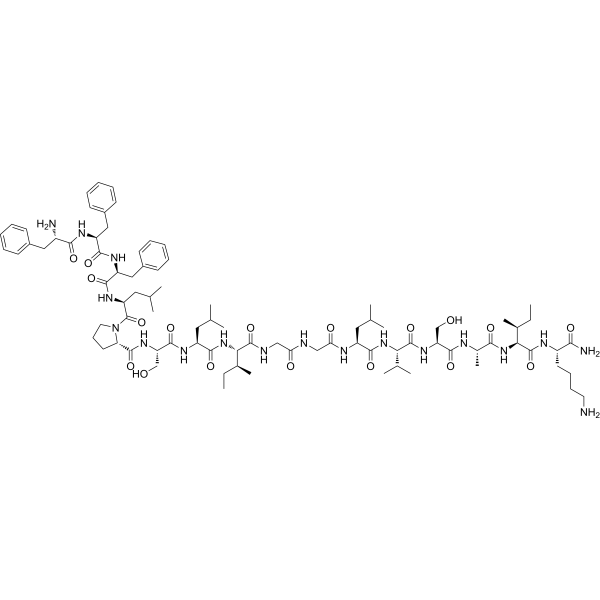
 0 ImagesCat. No.: HY-P11168Diptericin is an antibacterial peptide, originally isolated from Phormia terranovae. Diptericin exhibits potent and selective activity against specific Gram-negative bacteria, such as Escherichia coli and Salmonella typhimurium. Diptericin kills bacteria within 1 hour. Diptericin can be used for antibacterial research.
-
Antitubercular agent-18
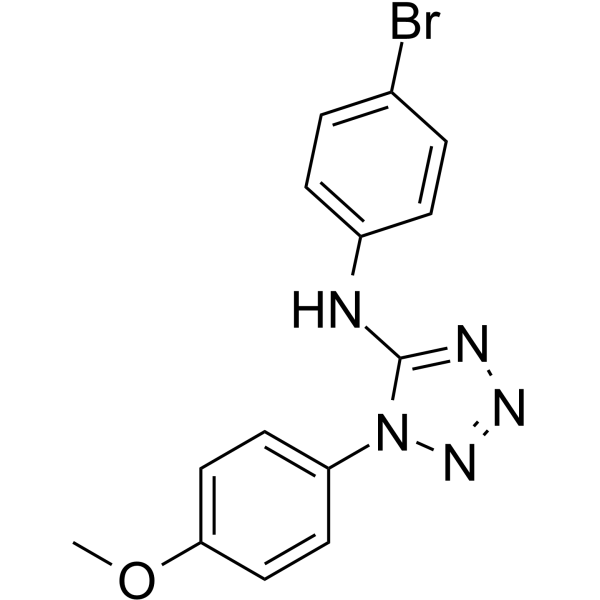 0 ImagesCat. No.: HY-146051CAS No.: 1308272-99-2Antitubercular agent-18 (Compound 9a) is an antitubercular agent with MIC values of 2, 2, 2 and 128 µg/ml against M. tuberculosis H37Rv, Spec. 192, Spec 210 and Spec. 800, respectively. Antitubercular agent-18 shows highly selective antimycobacterial effects.
-
SCH 38519
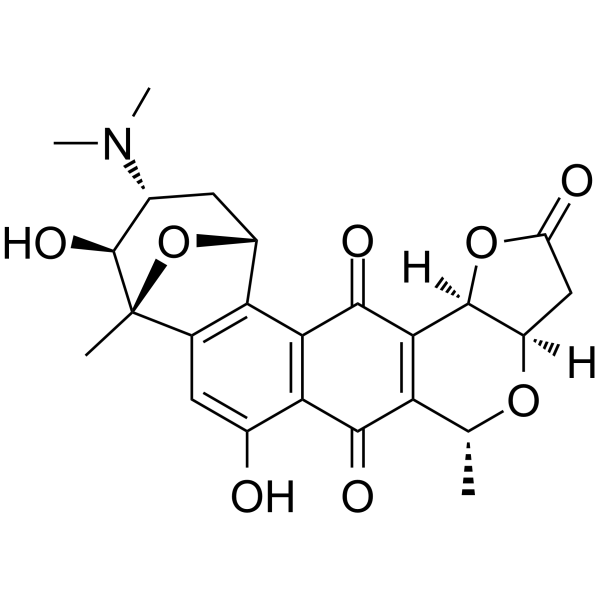 0 ImagesCat. No.: HY-N10271CAS No.: 114970-20-6SCH 38519 is a platelet aggregation inhibitor. SCH 38519 inhibits thrombin-induced aggregation of human platelets with an IC50 of 68 μg/mL. SCH 38519 is also active against Gram-positive and Gram-negative bacteria .
-
BPH-651
 0 ImagesCat. No.: HY-121290CAS No.: 149537-49-5BPH-651 is a compound with antibacterial activity and has the activity to inhibit dehydrosqualene synthase. BPH-651 can bind to different sites of dehydrosqualene synthase, providing structural clues for the mechanism and inhibition of head-to-head prenyltransferase, which will help future compound design.
-
Retrocyclin-3
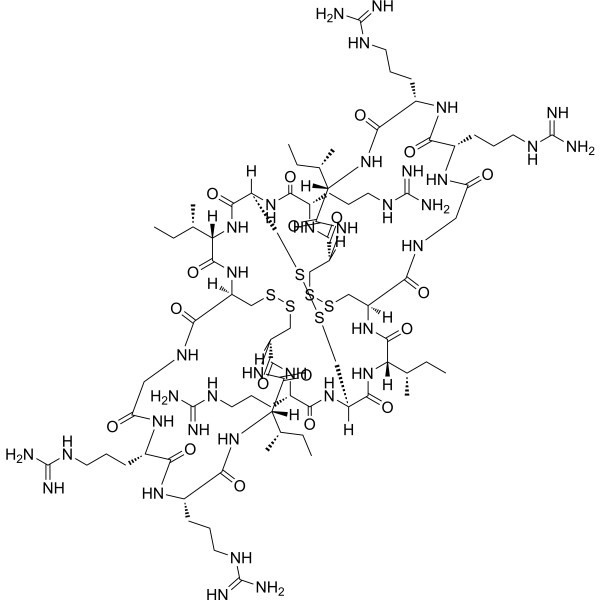 0 ImagesCat. No.: HY-P5644CAS No.: 724760-21-8Retrocyclin-3 is an antimicrobial peptide against human immunodeficiency virus, influenza A and herpes simplex virus.
-
Nannochelin B
 0 ImagesCat. No.: HY-129580CAS No.: 133705-27-8Nannochelin B is a novel citrate-hydroxamate siderophore with a growth-inhibitory activity against some bacteria and fungi.
-
Daunorubicin-13C,d3 TFA
 0 ImagesCat. No.: HY-13062ASSynonyms: Daunomycin-13C,d3 TFA); RP 13057-13C,d3 TFA; Rubidomycin-13C,d3 TFADaunorubicin-13C,d3 TFA (Daunomycin-13C,d3 TFA) is the deuterium and 13C-labeled Daunorubicin TFA. Daunorubicin (Daunomycin) is a topoisomerase II inhibitor with potent anti-tumor activity. Daunorubicin inhibits DNA and RNA synthesis. Daunorubicin is a cytotoxin that inhibits cancer cell viability and induces apoptosis and necrosis. Daunorubicin is also an anthracycline antibiotic. Daunorubicin can be used in the research of infection and variety of cancers, including leukemia, non-Hodgkin lymphomas, Ewing's sarcoma, Wilms' tumor.

-
MB076
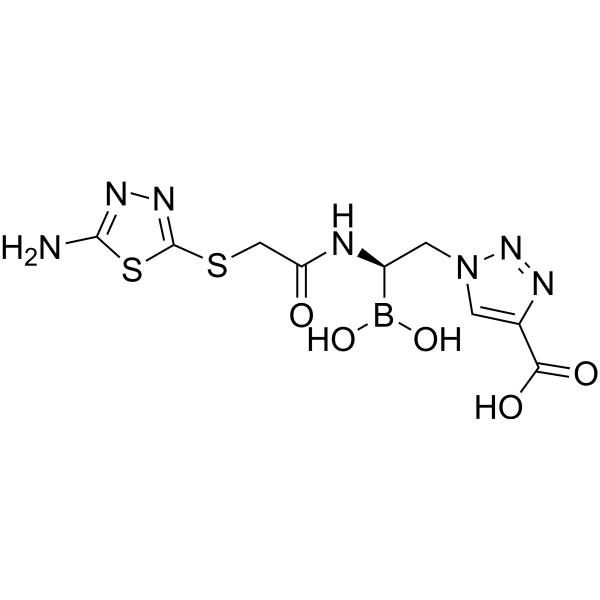 0 ImagesCat. No.: HY-155011CAS No.: 2832966-95-5MB076 is a novel heterocyclic triazole with improved plasma stability. MB076 inhibits seven different Class C Acinetobacter-derived cephalosporinases (ADCs) β-lactamase variants with Ki values <1 μM. MB076 acts synergistically in combination with multiple cephalosporins to restore pBCSK(-) susceptibility.

-
Lincomycin-13C,d3
 0 ImagesCat. No.: HY-117660S1Synonyms: U-10149-13C,d3Lincomycin-13C,d3 (U-10149-13C,d3) is the deuterium and 13C-labeled Lincomycin (HY-117660). Lincomycin (U-10149) is an orally active lincosamide antibiotic. Lincomycin binds to the ribosomes of Gram-positive bacteria to inhibit protein synthesis. Lincomycin can inhibit chloroplast translation, disrupt chloroplast integrity, and activate chloroplast-to-nucleus retrograde signaling in Arabidopsis thaliana seedlings. Lincomycin induces alterations in lipid profiles and liver injury, disrupts blood glucose and insulin levels, and increases growth rate in mice.
-
KPC-2-IN-3
 0 ImagesCat. No.: HY-174980KPC-2-IN-3 (Compound 3b) is a KPC-2 inhibitor with IC50 of 0.533 μM and Kiof 0.194 μM. KPC-2-IN-3 has an antimicrobial activity against carbapenem-resistant K. pneumonia K47-25 and reduces bacterial count with a postantibiotic effect in synergy with Meropenem (HY-13678). KPC-2-IN-3 significantly reduces lung bacterial load in a murine pneumonia model.
-
OCA 983
 0 ImagesCat. No.: HY-105914CAS No.: 161856-02-6OCA 983 is an orally active tetrahydrofuranyl 1β-methylcarbapenem antibiotic. OCA 983 exhibits potent inhibitory activity against class A and class C β-lactamases. OCA 983 possesses a broad antibacterial spectrum, and can be used in the research of infectious diseases.
-
Antistaphylococcal agent 1
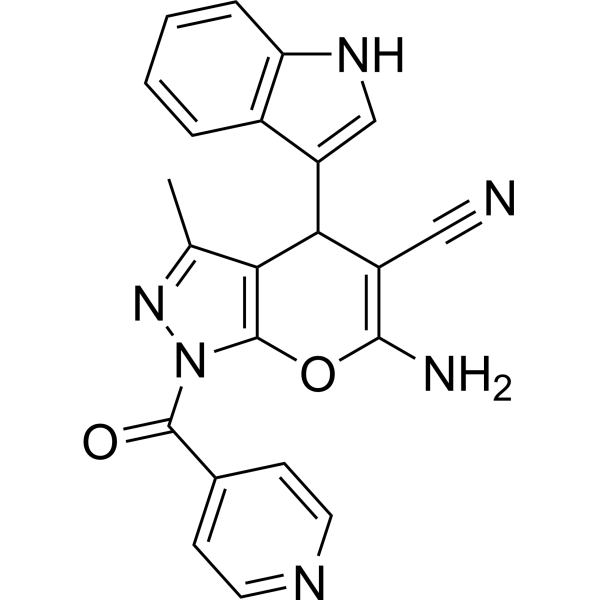 0 ImagesCat. No.: HY-139834CAS No.: 2350182-68-0Antistaphylococcal agent 1 is an antistaphylococcal therapeutic agent.
-
Oxyphenbutazone-13C6
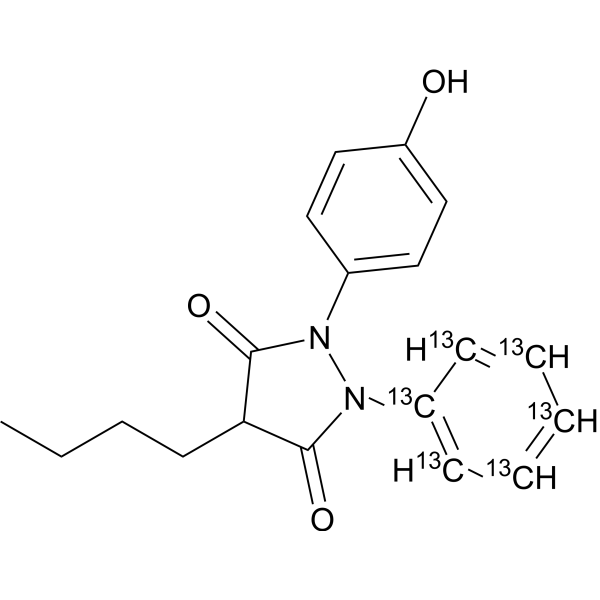 0 ImagesCat. No.: HY-B1355AS1Oxyphenbutazone-13C6 is the 13C6 labeled Oxyphenbutazone (HY-B1355A). Oxyphenbutazone is a phenylbutazone derivative, with anti-inflammatory effect. Oxyphenbutazone is a non-selective COX inhibitor. Oxyphenbutazone is the metabolite of Phenylbutazone (HY-B0230). Oxyphenbutazone selectively kills non-replicating Mycobaterium tuberculosis.




