



Bacterial
Anything that destroys bacteria or suppresses their growth or their ability to reproduce. Heat, chemicals such as chlorine, and antibiotic drugs all have antibacterial properties. Many antibacterial products for cleaning and handwashing are sold today. Such products do not reduce the risk for symptoms of viral infectious diseases in otherwise healthy persons. This does not preclude the potential contribution of antibacterial products to reducing symptoms of bacterial diseases in the home.
All Product Categories
-
Bacterial Inhibitors
(7501)
View all products
-
Bacterial Agonists
(3)
View all products
-
Bacterial Antagonists
(9)
View all products
-
Bacterial Activators
(23)
View all products
-
Bacterial Modulators
(27)
View all products
-
Bacterial Chemicals
(2)
View all products
-
Bacterial Inducers
(7)
View all products
-
Bacterial Controls
(14)
View all products
-
Bacterial Substrates
(2)
View all products
-
Bacterial Ligand
(1)
View all products
-
Bacterial Related Products (8826)
Related Products (8826)

-
Antibodies (14)
-
Related Compound Screening Libraries (1)
-
YopE(69-77)
 0 ImagesCat. No.: HY-P12181CAS No.: 1357447-10-9YopE (69-77) is an H-2Kb-restricted immunodominant protective bacterial epitope that binds with high affinity to mouse H-2Kb and human HLA-A26:01 class I MHC alleles. YopE is a virulence factor derived from Yersinia pseudotuberculosis, Yersinia pestis, and serogroups O9 and O3 of Yersinia enterocolitica. YopE (69-77) can be used in studies related to Yersinia pseudotuberculosis infection.
-
Antibacterial agent 332
 0 ImagesCat. No.: HY-182049CAS No.: 3106820-05-4Antibacterial agent 332 is an inhibitor of DsbA from Escherichia coli (EcDsbA). Antibacterial agent 332 reduces the swarming motility of Escherichia coli without affecting bacterial growth. Antibacterial agent 332 can be used in the research of bacterial infections caused by Escherichia coli.
-
Psidium guajava extract
 0 ImagesCat. No.: HY-N19074Psidium guajava extract is rich in flavonoids (such as quercetin and kaempferol), tannins, vitamin C, carotenoids, and phenolic acids, which give it antioxidant, anti-inflammatory, antibacterial, and antiviral properties.
-
YJ182
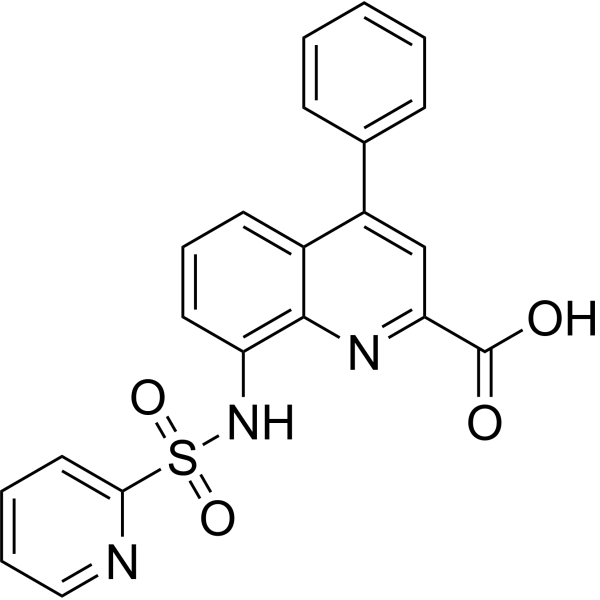 0 ImagesCat. No.: HY-155201CAS No.: 3035446-91-1
-
Brevicidine TFA
 0 ImagesCat. No.: HY-P10519ABrevicidine TFA is an antimicrobial peptide with selective bactericidal activity against Gram-negative pathogens. Brevicidine TFA disrupts bacterial morphology by binding to lipopolysaccharide (LPS) on the bacterial cell membrane to form pores. Brevicidine TFA causes dissipation of intracellular proton motive force, outer membrane damage, inhibition of ATP biosynthesis and reactive oxygen species accumulation in bacterial cells. As a sensitizer, Brevicidine TFA exerts synergistic activity when combined with a variety of conventional antibiotics.
-
2-Methyltetrahydrofuran-3-one (Standard)
 0 Images2-Methyltetrahydrofuran-3-one (Standard) is the analytical standard of 2-Methyltetrahydrofuran-3-one. This product is intended for research and analytical applications. 2-Methyltetrahydrofuran-3-one is a quorum sensing inhibitor that can inhibit biofilm formation by H. alvei. 2-Methyltetrahydrofuran-3-one is one of the volatile constituents of roasted coffee[1][2].
-
Teicoplanin A2-4
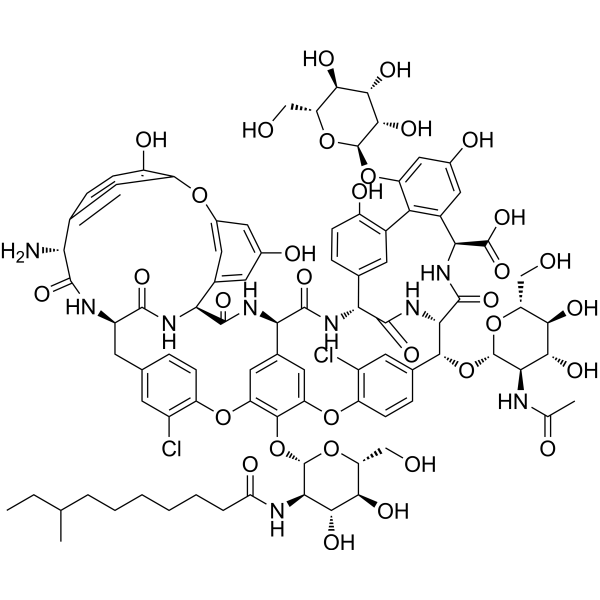 0 ImagesCat. No.: HY-130339CAS No.: 91032-37-0Synonyms: Teichomycin A2 factor 4Teicoplanin A2-4 is an antibiotic active against Gram-positive aerobic and anaerobic bacteria.
-
L-Serine-15N,d3
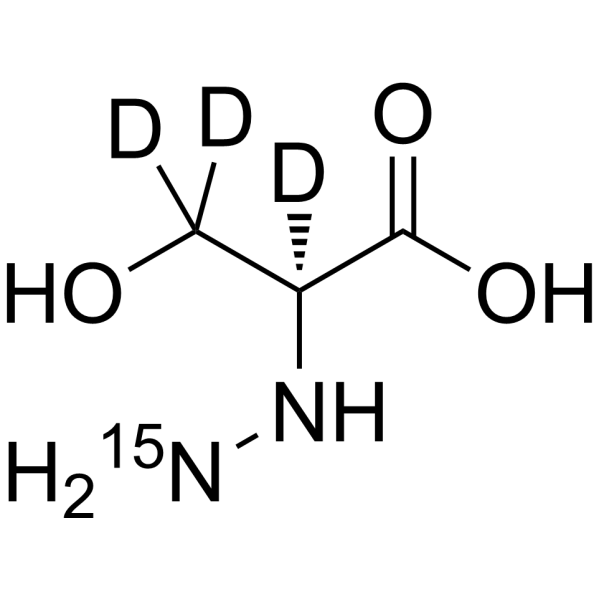 0 ImagesCat. No.: HY-N0650S12L-Serine-15N,d3 is the deuterium and 15N labeled L-Serine[1]. L-Serine ((-)-Serine;(S)-Serine), one of the so-called non-essential amino acids, plays a central role in cellular proliferation[2].
-
(Rac)-DNDI-8219
 0 ImagesCat. No.: HY-129819CAS No.: 1333170-15-2(Rac)-DNDI-8219 is an antituberculosis compound with potent anti-leishmanial activity. (Rac)-DNDI-8219 demonstrated superior efficacy in the Leishmania donovani mouse model. (Rac)-DNDI-8219 showed promising activity in the Leishmania infantum hamster model. (Rac)-DNDI-8219 candidate compound R-6 provided excellent oral efficacy in the same hamster model.
-
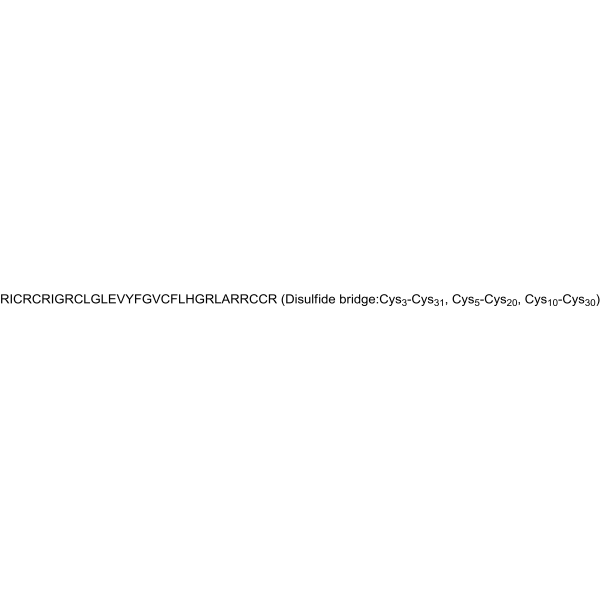
Palicourein
 0 ImagesCat. No.: HY-P5738CAS No.: 331714-57-9Palicourein is a 37 amino acid cyclic polypeptide. Palicourein inhibits the in vitro cytopathic effects of HIV-1RF infection of CEM-SS cells with an EC50 value of 0.1 μM and an IC50 value of 1.5 μM.
-
CYP3A4 enzyme-IN-1
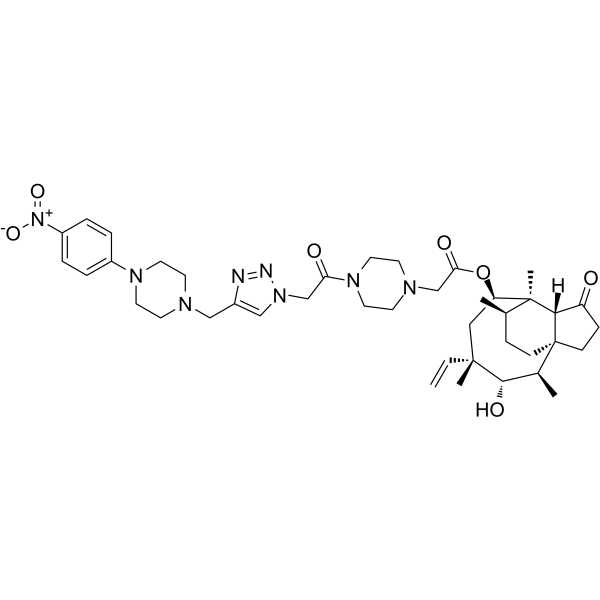 0 ImagesCat. No.: HY-146177CAS No.: 2531281-25-9
-
Xanthoangelol F
 0 ImagesCat. No.: HY-149456CAS No.: 265652-71-9Xanthoangelol F is a prenylated (geranylated) chalcone and Antibacterial agent. Xanthoangelol F can be isolated from Angelica keiskei. Xanthoangelol F inhibits the growth of Gram-positive bacteria Bacillus subtilis, Staphylococcus epidermidis, and Micrococcus luteus, with an MIC of 64 μg/mL.
-
AcrB-IN-1
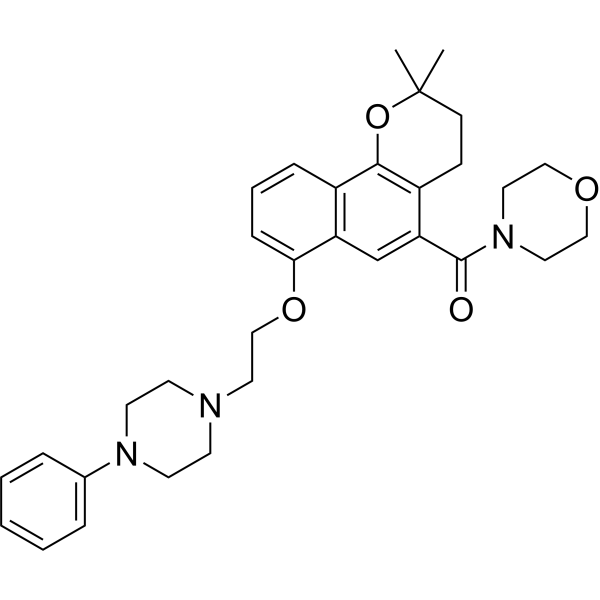 0 ImagesCat. No.: HY-149809CAS No.: 2890177-82-7AcrB-IN-1 (Compound H6) is a potent AcrB inhibitor. AcrB-IN-1 can be used for the reversal of bacterial multidrug resistance.
-
NITD-304
 0 ImagesCat. No.: HY-W064918CAS No.: 1473450-60-0NITD-304 is an orally active anti-tuberculosis agent. NITD-304 exerts inhibitory and bactericidal activities gainst Mycobacterium tuberculosis and multidrug-resistant Mycobacterium tuberculosis. NITD-304 inhibits mycobacterial cell wall biosynthesis and demonstrates synergistic or additive growth inhibitory activity with select antibacterial agents. NITD-304 shows low risk of cardiotoxicity and drug-drug interactions, with no inhibition of major cytochrome P-450 enzymes or hERG channel. NITD-304 can be used for the research of tuberculosis and multidrug-resistant tuberculosis.

-
6-OAU (Standard)
 0 ImagesSynonyms: GTPL5846 (Standard)Prochloraz manganese (Standard) is the analytical standard of Prochloraz manganese. This product is intended for research and analytical applications. Prochloraz manganese is an antifungal agent, and is used in agricultural industries.
-
(R)-Methotrexate-d3
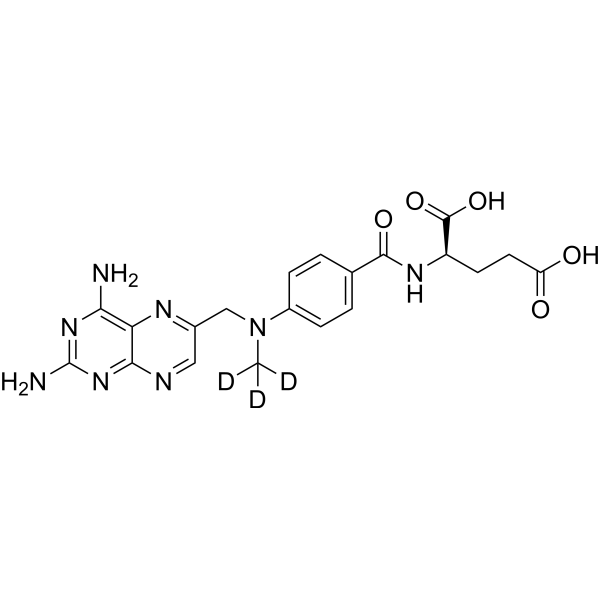 0 ImagesCat. No.: HY-14519CSCAS No.: 2470329-38-3(R)-Methotrexate-d3 is the deuterium labeled (R)-Methotrexate.
-
Ceftobiprole medocaril
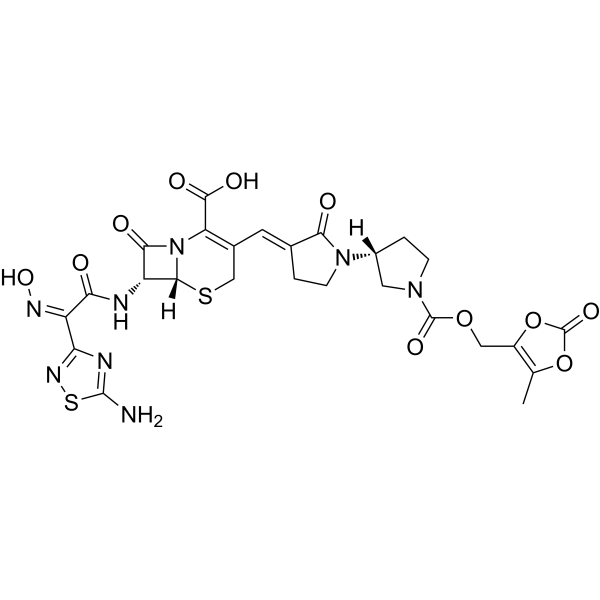 0 ImagesCat. No.: HY-106574CAS No.: 376653-43-9Synonyms: BAL5788Ceftobiprole medocaril (BAL5788) is the parenteral proagent of Ceftobiprole (HY-112579). Ceftobiprole is a parenteral pyrrolidinone cephalosporin. Ceftobiprole is a broad-spectrum cephalosporin with high levels of in vitro activity against methicillin- (MRSA) and vancomycin-resistant staphylococci (VRSA) and penicillin-resistant streptococci. Ceftobiprole also inhibits gram-positive and gram-negative pathogens.
-
Antitubercular agent-20
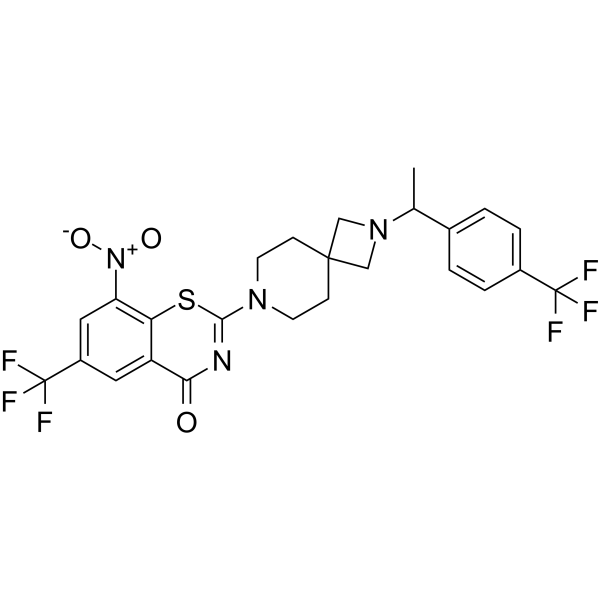 0 ImagesCat. No.: HY-146496CAS No.: 2413124-92-0Antitubercular agent-20 (Compound 2d) is an orally active antitubercular agent. Antitubercular agent-20 shows excellent activity against MTB H37Rv and MDR-MTB strains (MIC: <0.016 µg/ml). Antitubercular agent-20 has low cytotoxicity and good tolerance in BALB/c mice.




