



Bacterial
Anything that destroys bacteria or suppresses their growth or their ability to reproduce. Heat, chemicals such as chlorine, and antibiotic drugs all have antibacterial properties. Many antibacterial products for cleaning and handwashing are sold today. Such products do not reduce the risk for symptoms of viral infectious diseases in otherwise healthy persons. This does not preclude the potential contribution of antibacterial products to reducing symptoms of bacterial diseases in the home.
All Product Categories
-
Bacterial Inhibitors
(7477)
View all products
-
Bacterial Agonists
(3)
View all products
-
Bacterial Antagonists
(9)
View all products
-
Bacterial Activators
(23)
View all products
-
Bacterial Modulators
(23)
View all products
-
Bacterial Chemicals
(2)
View all products
-
Bacterial Inducers
(7)
View all products
-
Bacterial Controls
(14)
View all products
-
Bacterial Substrates
(2)
View all products
-
Bacterial Ligand
(1)
View all products
-
Bacterial Related Products (8794)
Related Products (8794)

-
Antibodies (14)
-
Related Compound Screening Libraries (1)
-
Tylosin tartrate (Standard)
 0 ImagesCat. No.: HY-B0519RCAS No.: 74610-55-2Tylosin (tartrate) (Standard) is the analytical standard of Tylosin (tartrate). This product is intended for research and analytical applications. Tylosin tartrate is a macrolide antibiotic found naturally as a fermentation product of Streptomyces fradiae. Tylosin tartrate exerts potent antimicrobial activity against Gram-positive bacteria. Tylosin tartrate is widely used as a feed additive for promoting animal growth. Tylosin tartrate is used for veterinary purposes against bacterial dysentery and respiratory diseases in poultry, pigs and cattle.
-
4-Piperidinecarboxamide
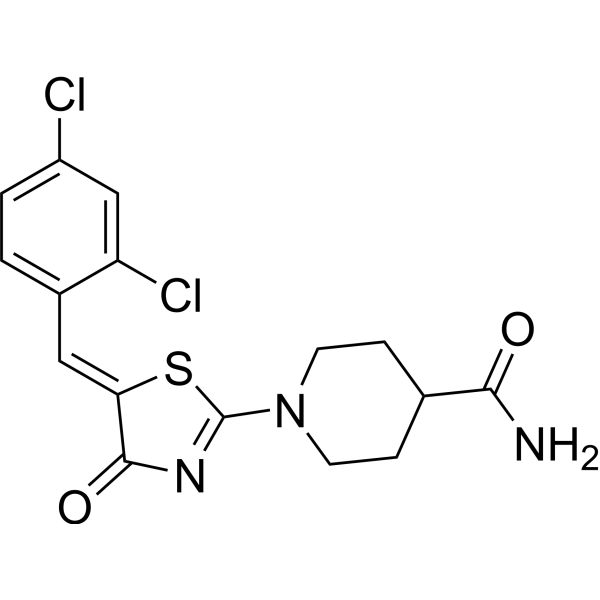 0 ImagesCat. No.: HY-142031CAS No.: 519034-65-24-Piperidinecarboxamide is a mycobacterial aspartyl-tRNA synthetase (AspS) inhibitor. 4-Piperidinecarboxamide is a promising anti-tuberculosis (TB) agent.
-
5CF2PB
 0 Images5CF2PB is an antibacterial and antifungal agent. 5CF2PB targets 5O4L. 5CF2PB exhibits potent antibacterial and antifungal activities, particularly against Pseudomonas aeruginosa and Aspergillusniger.
-
Viroxocin
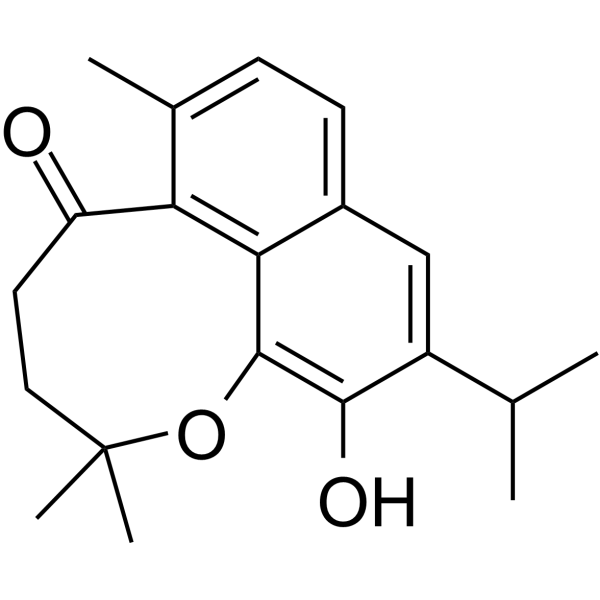 0 ImagesCat. No.: HY-N10774CAS No.: 1631054-69-7Viroxocin is a diterpenoid. Viroxocin can be isolated from the roots of Salvia viridis L. cvar. Blue Jeans. Viroxocin also has weak antibacterial activity.
-
NDM-622
 0 ImagesCat. No.: HY-184325NDM-622 is a Colistin (HY-113678) adjuvant. NDM-622 weakly inhibits IKKβ with an IC50 of 20.40 μM. NDM-622 reduces the minimum inhibitory concentration of colistin against colistin-highly-resistant Acinetobacter baumannii and Klebsiella pneumoniae. NDM-622 decreases bacterial colony-forming units in a mouse peritonitis model infected with colistin-highly-resistant Klebsiella pneumoniae. NDM-622 does not modify bacterial lipid A, induce reactive oxygen species production, or increase bacterial membrane permeability. NDM-622 can be used in the research of extensively drug-resistant Gram-negative bacterial infections, colistin-resistant Acinetobacter baumannii infections, and Klebsiella pneumoniae infections.
-
Meridinol
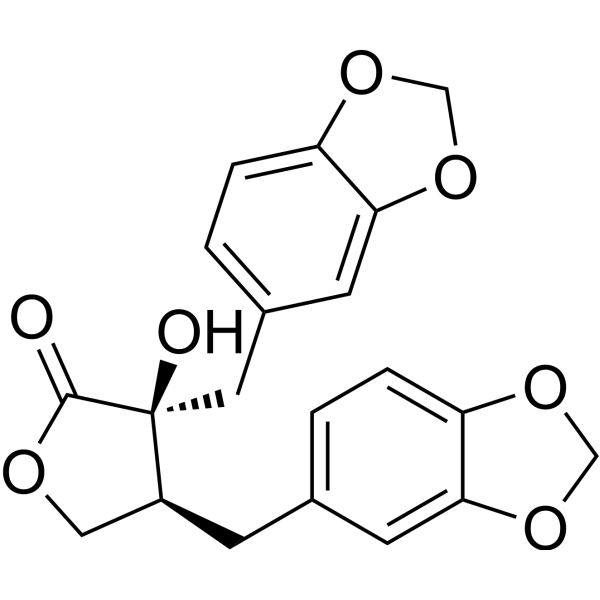 0 ImagesCat. No.: HY-N3296CAS No.: 120051-54-9Synonyms: (-)-MeridinolMeridinol ((-)-Meridinol) shows antimicrobial activity against a wide range of gram-positive and gram-negative bacteria and fungi.
-
Sulisatin
 0 ImagesCat. No.: HY-122307CAS No.: 54935-03-4Synonyms: DAN-603Sulisatin (DAN-603) is an anionic laxative that is hydrolyzed to diphenolic derivatives by bacterial aryl sulfate sulfohydrolases in the colon during oral administration.
-
FuK
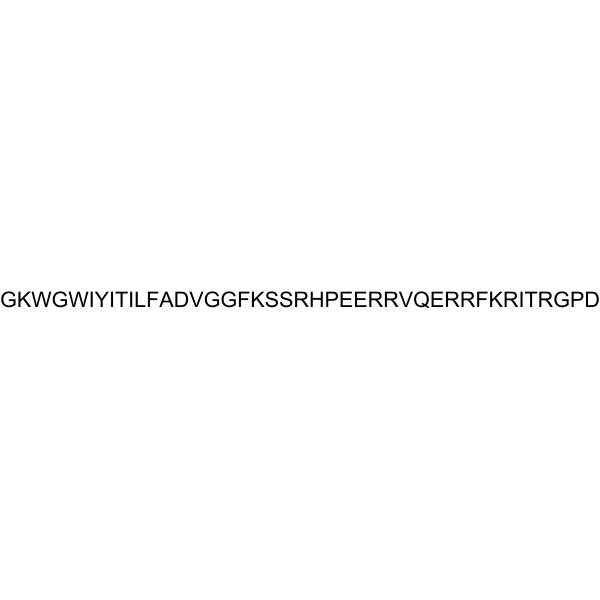
 0 ImagesCat. No.: HY-P11615FuK is a WK2-analog antimicrobial peptide modified with fluorinated unnatural amino acids. FuK has an LD50 of 72.34 mg/kg in mice, shows no hemolytic activity, with high stability against trypsin, chymotrypsin, and saline environments. FuK exerts bactericidal effects by enhancing the permeability of bacterial outer membranes, inducing depolarization of cytoplasmic membranes, and disrupting membrane potential balance against bacterias such as Staphylococcus aureus, Escherichia coli, Klebsiella pneumoniae, and MRSA. FuK exhibits synergistic antimicrobial activity with polymyxin B (HY-149179), vancomycin (HY-B0671), and ciprofloxacin (HY-B0356), and also inhibits Ciprofloxacin-induced bacterial drug resistance. FuK has in vivo safety, effectively reduces bacterial load and inflammatory cell infiltration in a mouse MRSA model, and promotes collagen fiber formation in skin wounds.

-
Nifursol (Standard)
 0 ImagesNifursol (Standard) is the analytical standard of Nifursol (HY-B1703). This product is used for research and analytical applications. Nifursol is an orally active veterinary antibiotic. Nifursol inhibits Histomonas meleagridis. Nifursol prevents histomoniasis in turkeys. Nifursol is widely used in studies of Escherichia coli gastroenteritis in Salmonella-infected poultry and aquatic animals.
-
α-Rubromycin
 0 ImagesCat. No.: HY-119787CAS No.: 27267-69-2Synonyms: Collinomycinα-Rubromycin (Collinomycin) is an antibiotic isolated from the mycelia of Streptomyces collinus. α-Rubromycin also acts as a DNA polymerase inhibitor, with an IC50 of 0.91 μM against bovine mammalian DNA polymerase. α-Rubromycin binds to the active region of DNA polymerase β, competes with nucleotide substrates for binding, and interferes with template-DNA interactions. α-Rubromycin inhibits the activities of telomerase, retroviral reverse transcriptase and terminal deoxynucleotidyl transferase, as well as the growth of Staphylococcus aureus. α-Rubromycin can be used in studies related to bacterial infections.
-
FtsZ-IN-8
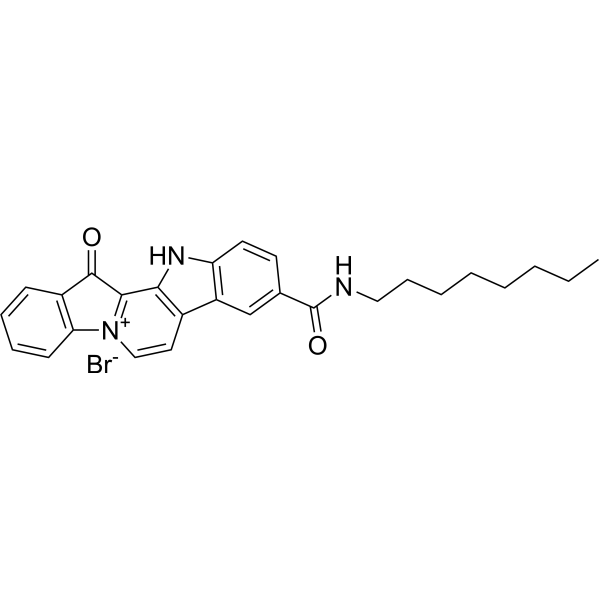 0 ImagesCat. No.: HY-149226FtsZ-IN-8 is a potent FtsZ inhibitor, to promote FtsZ polymerization and inhibit GTPase activity of FtsZ. Thus, FtsZ-IN-8 inhibits bacterial division to lead to death of bacterial cells. FtsZ-IN-8 shows bactericidal activity with no significant tendency to trigger bacterial resistance as well as rapid bactericidal properties. And FtsZ-IN-8 shows low hemolytic activity and cytotoxicity to mammalian cells.
-
M104 peptide
 0 ImagesCat. No.: HY-P11720M104 peptide is an OXA-48 carbapenemase inhibitor and antibiotic potentiator. M104 peptide effectively blocks the binding and active site cavity of OXA-48. M104 peptide restores Meropenem (HY-13678)’s antibacterial activity against OXA-48-producing Klebsiella pneumoniae. M104 peptide can be used for the research of Carbapenem-resistant Klebsiella pneumoniae infection.
-
MtTMPK-IN-4
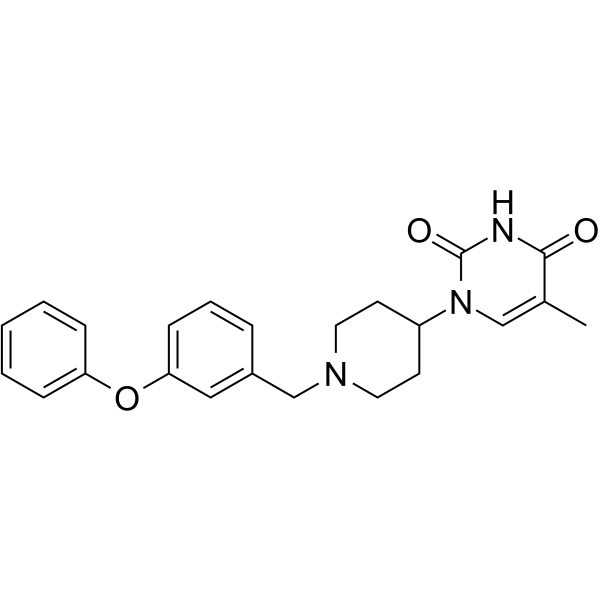 0 ImagesCat. No.: HY-143452CAS No.: 2225889-49-4MtTMPK-IN-4 (compound 2), a para-piperidine, is a potent mycobacterium tuberculosis thymidylate kinase (MtTMPK) inhibitor with an IC50 of 6.1 μM. MtTMPK-IN-4 is a potent tyrosinase inhibitor. MtTMPK-IN-4 is a potent antibacterial agent.
-
Droxacin
 0 ImagesCat. No.: HY-184088CAS No.: 35067-47-1Droxacin is an antibacterial agent structurally related to furo[2,3-g]quinoline derivatives, with in vitro activity against Gram-positive and Gram-negative bacteria. Droxacin can be used in the research of bacterial infections.
-
Anti-MRSA agent 23
 0 ImagesCat. No.: HY-168873CAS No.: 2607085-75-4Anti-MRSA agent 23 (compound 11) is a potent anti-methicillin-resistant Staphylococcus aureus agent. Anti-MRSA agent 23 shows antibacterial and antibiofilm activities. Anti-MRSA agent 23 accelerates the reconstruction and healing of MRSA-infected cutaneous wounds by decreasing bacterial loads, attenuating inflammation, and promoting angiogenesis.
-
DprE1-IN-9
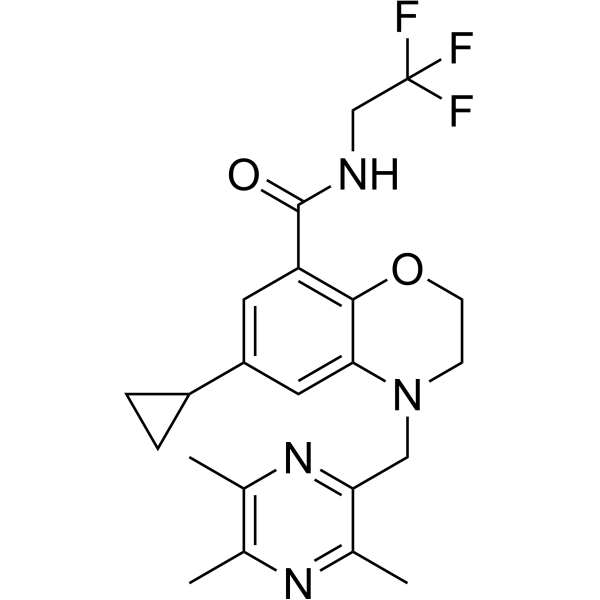 0 ImagesCat. No.: HY-149581CAS No.: 2906099-98-5DprE1-IN-9 (compound B18) is an effective reversible DprE1 inhibitor and can bind to the receptor cavity of DprE1. DprE1-IN-9 shows strong antimycobacterial activity not only against non-pathogenic strain H37Ra (MIC=0.18 µg/mL) but also against pathogenic H37Rv and the clinical MDR and XDR isolates.
-
Taurolidine-d6
 0 ImagesCat. No.: HY-W744578Taurolidine-d6 is the deuterium labeled Taurolidine (HY-W011522). Taurolidine is a potent antimicrobial and anticancer agent. Taurolidine inhibits cell proliferation. Taurolidine induces apoptosis and autophagy. Taurolidine rescues mice from sepsis-associated lethality.
-
Calpinactam
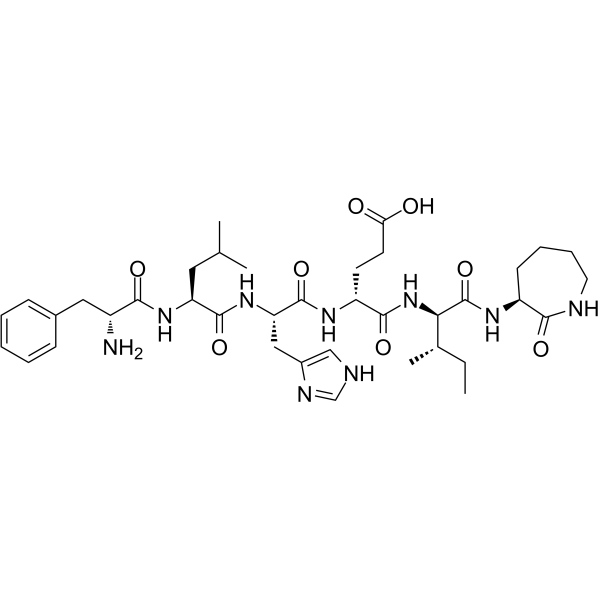 0 ImagesCat. No.: HY-120733CAS No.: 1205538-83-5Synonyms: FKI-4905Calpinactam (FKI-4905), a fungal metabolite, is a new anti-mycobacterial agent.Calpinactam is active only against Mycobacteria among various microorganisms, including Gram-positive and Gram-negative bacteria, fungi and yeasts. Calpinactam inhibits the growth of Mycobacterium smegmatis and Mycobacterium tuberculosis with MIC values of 0.78 and 12.5 μg/ml, respectively.




