



Acyltransferase
Diacylglycerol acyltransferase; Diglyceride acyltransferase; acyl-CoA:cholesterol acyltransferase; mono- acylglycerol acyltransferase
Acyltransferase (AT) catalyzes the transfer of an acyl moiety from acyl-coenzyme A (acyl-CoA) to an acceptor. Acyltransferases play important roles in the maintenance of homeostasis in the human body and have been linked to various diseases. The Acyltransferase family includes acyl-CoA:cholesterol AT (ACAT), diacylglycerol AT (DGAT), and monoacylglycerol AT (MGAT) for the metabolism of lipids.
ACAT (acyl-coenzyme A:cholesterol acyltransferase) is an intracellular enzyme that catalyzes the formation of cholesterol esters from cholesterol and fatty acyl-coenzyme A. In mammals, two isoenzymes, ACAT1 and ACAT2, encoded by two different genes, exist. ACATs play important roles in cellular cholesterol homeostasis in various tissues.
DGAT (acyl-CoA:diacylglycerol acyltransferase) is an integral membrane enzyme that catalyses the last step of triacylglycerol synthesis from diacylglycerol and acyl-CoA. DGAT activity resides mainly in two distinct membrane bound polypeptides, known as DGAT1 and DGAT2.
MGAT (acyl-CoA:monoacylglycerol acyltransferase) catalyzes the synthesis of diacylglycerol, the precursor of physiologically important lipids such as triacylglycerol and phospholipids. In the intestine, MGAT plays a major role in the absorption of dietary fat because resynthesis of triacylglycerol is required for the assembly of lipoproteins that transport absorbed fat to other tissues.
Acyltransferase Isoform Specific Products
All Product Categories
-
Acyltransferase Related Products (244)
Related Products (244)

-
Antibodies (4)
-
Acyltransferase Isoform Comparison
-
GSK2973980A
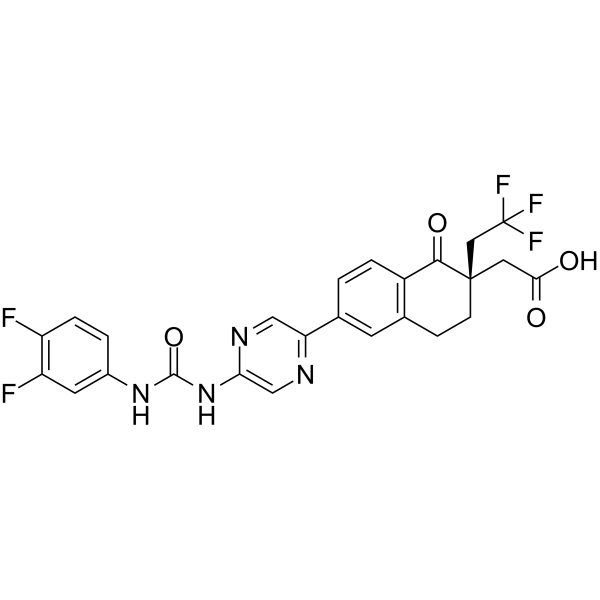 0 ImagesCat. No.: HY-111417CAS No.: 2219321-25-0GSK2973980A is a potent and selective Acyl-CoA:diacylglycerol acyltransferase 1 (DGAT1) inhibitor with an IC50 of 3 nM.
-
ACAT-IN-8
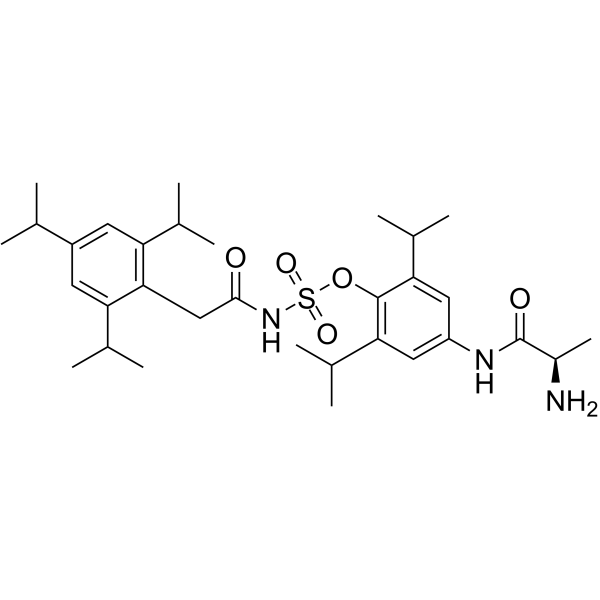 0 ImagesCat. No.: HY-139025CAS No.: 199984-35-5ACAT-IN-8 (example 206) is an acyl-Coenzyme A:cholesterol acyltransferase (ACAT) inhibitor. ACAT-IN-8 inhibits NF-κB mediated transcription.
-
ANAT inhibitor-1
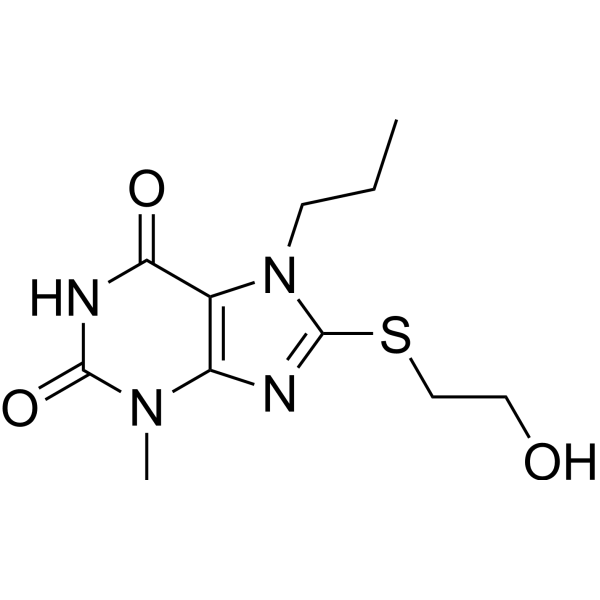 0 ImagesCat. No.: HY-139629CAS No.: 331751-78-1ANAT inhibitor-1 is a human aspartate N-acetyltransferase (ANAT) inhibitor for canavan disease.
-
DM245
 0 ImagesCat. No.: HY-182274CAS No.: 3106606-60-1DM245 is an EPAC1 activator and STAT3 phosphorylation inhibitor with a target pIC50 of 4.801. DM245 activates EPAC1 to increase Rap1-GTP levels, with no activation of EPAC2 or PKA. DM245 reduces IL-6/IL-6Rα-evoked STAT3 phosphorylation in endothelial cells. DM245 suppresses TGF-β1-induced fibroblast-to-myofibroblast transition, reducing αSMA and Collagen I levels. DM245 exhibits minimal cytotoxicity in normal human lung fibroblasts, with negligible loss of intact nuclei after 72 h exposure.
-
447C88
 0 ImagesCat. No.: HY-19112CAS No.: 130400-16-7447C88 is an acyl-coenzyme A cholesterol acyltransferase (ACAT) inhibitor with an IC50 of 23 nM. 447C88 can reduce plasma cholesterol levels and can be used in the research of endocrine and metabolic diseases such as hyperlipidemia.
-
FR-182980
 0 ImagesCat. No.: HY-120082CAS No.: 179054-51-4FR-182980 is an orally active ACAT1 inhibitor (IC50: 30 nM). FR-182980 has hypocholesterolemic activity and can be used for research of atherosclerosis.
-
DGAT2-IN-3
 0 ImagesCat. No.: HY-162978CAS No.: 3037141-61-7DGAT2-IN-3 (compound 9) is a DGAT2 inhibitor, with IC50 of 0.4 nM. DGAT2-IN-3 can be used in the research of steatohepatitis, diabetes and cardiovascular diseases.
-
Penicillide
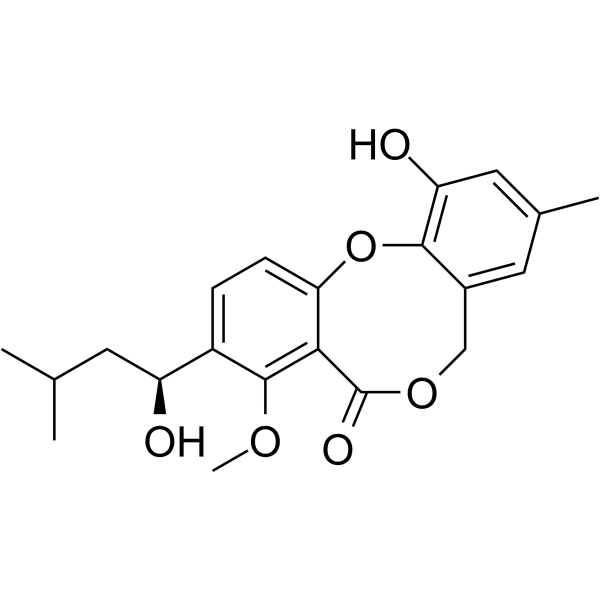 0 ImagesCat. No.: HY-126455CAS No.: 55303-92-9Synonyms: Vermixocin APenicillide (Vermixocin A), isolated from Talaromyces derxii cultivated on rice, shows inhibitory activity against acyl-CoA:cholesterol acyltransferase (ACAT).

-
Esculeogenin A
 0 ImagesCat. No.: HY-N18066CAS No.: 854381-37-6Esculeogenin A is the sapogenol of tomato saponin Esculeoside A (HY-N18067). Esculeogenin A is an orally active hepatoprotective, hypolipidemic, and antioxidant agent. Esculeogenin A regulates molecular targets like PPARα, SREBP1, Nrf2, NF-κB, ACAT1/ACAT2 to promote hepatic fatty acid oxidation, suppress de novo lipogenesis, enhance antioxidant defense, and inhibit inflammation. Esculeogenin A improves liver function, alleviates hyperlipidemia, and inhibits hepatic steatosis and foam cell formation, preventing nonalcoholic fatty liver disease in high-fat-diet-fed rats and reducing atherosclerotic lesions in apoE-deficient mice. Esculeogenin A can be used for the research of nonalcoholic fatty liver disease, atherosclerosis, and hyperlipidemia.
-
ACAT-IN-7
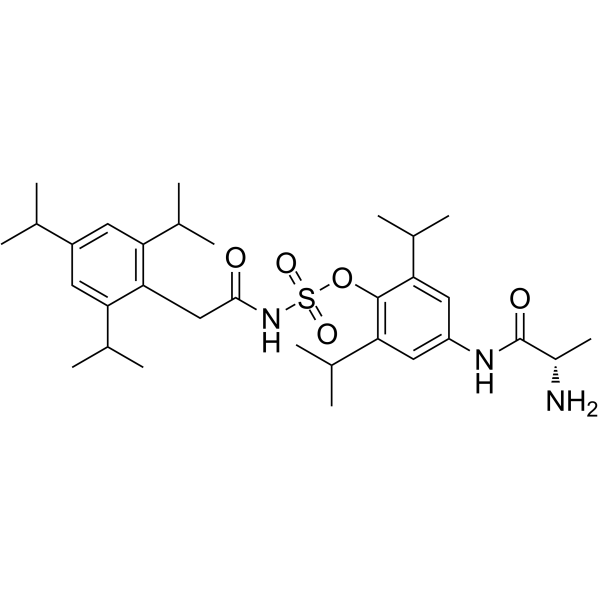 0 ImagesCat. No.: HY-139024CAS No.: 199984-38-8ACAT-IN-7 is an acyl-Coenzyme A:cholesterol acyltransferase (ACAT) inhibitor. ACAT-IN-7 inhibits NF-κB mediated transcription.
-
Belfosdil
 0 ImagesCat. No.: HY-113671CAS No.: 103486-79-9Belfosdil is an orally active and highly specific calcium channel blocker that also inhibits the activity of acyl coenzyme A cholesterol acyltransferase.
-
24-Methylenecholesterol-13C
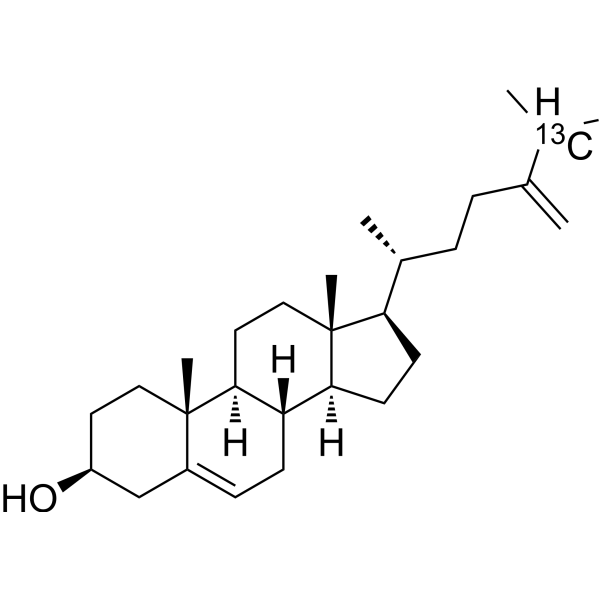 0 ImagesCat. No.: HY-133968S1Synonyms: Ostreasterol-13C24-Methylenecholesterol-13C (Ostreasterol-13C) is the 13C labeled 24-Methylenecholesterol (HY-133968). 24-Methylenecholesterol (Ostreasterol) is a regulator targeting acyl-CoA cholesterol acyltransferase (ACAT) with anti-aging and neuroprotective effects. 24-Methylenecholesterol mimics the effects of nerve growth factor (NGF), can extend yeast lifespan through an anti-oxidative stress mechanism, and exhibits neuroprotective activity in PC12 cells. 24-Methylenecholesterol can reduce intracellular reactive oxygen species (ROS) and malondialdehyde (MDA) levels, activate anti-oxidative stress pathways (such as UTH1, SOD-related genes), and promote synaptic growth.
-
SM-32504
 0 ImagesCat. No.: HY-114952CAS No.: 185539-34-8SM-32504 is an effective ACAT inhibitor that can significantly reduce serum cholesterol levels in mouse models fed with high-fat and high-cholesterol diets. SM-32504 can be used for research on hypercholesterolemia and atherosclerosis.
-
ACAT-IN-2
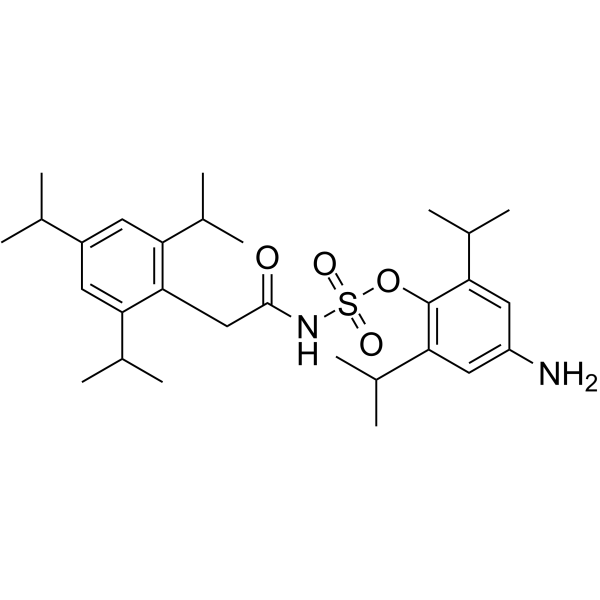 0 ImagesCat. No.: HY-139019CAS No.: 199984-55-9ACAT-IN-2 is an acyl-Coenzyme A:cholesterol acyltransferase (ACAT) inhibitor extracted from patent EP1236468A1, example 187. ACAT-IN-2 inhibits NF-κB mediated transcription.
-
E-5324
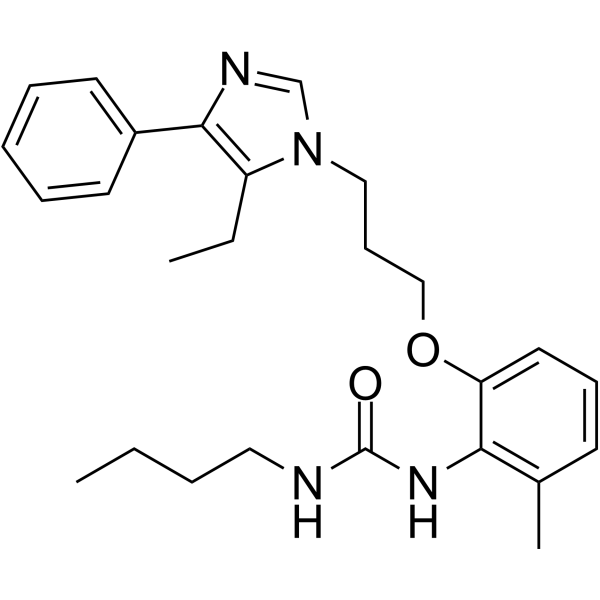 0 ImagesCat. No.: HY-19183CAS No.: 141799-76-0E-5324 is potent inhibitor of acyl-CoA:cholesterol acyltransferase (ACAT) with IC50s of 44 to 190 nM.
-
24-Methylenecholesterol (Standard)
 0 ImagesCat. No.: HY-133968RCAS No.: 474-63-5Synonyms: Ostreasterol (Standard)24-Methylenecholesterol (Ostreasterol) (Standard) is the analytical standard of 24-Methylenecholesterol (HY-133968). This product is intended for research and analytical applications. 24-Methylenecholesterol (Ostreasterol) is a regulator targeting acyl-CoA cholesterol acyltransferase (ACAT) with anti-aging and neuroprotective effects. 24-Methylenecholesterol mimics the effects of nerve growth factor (NGF), can extend yeast lifespan through an anti-oxidative stress mechanism, and exhibits neuroprotective activity in PC12 cells. 24-Methylenecholesterol can reduce intracellular reactive oxygen species (ROS) and malondialdehyde (MDA) levels, activate anti-oxidative stress pathways (such as UTH1, SOD-related genes), and promote synaptic growth.
-
(Rac)-GSK2973980A
 0 ImagesCat. No.: HY-180395CAS No.: 1414797-35-5(Rac)-GSK2973980A (Compound 215) is a DGAT1 inhibitor with an IC50 of 1.8 nM for hDGAT1. (Rac)-GSK2973980A can be used for research on obesity and obesity-related diseases.
-
PF-06427878
 0 ImagesCat. No.: HY-138942CAS No.: 1809064-23-0PF-06427878 is an orally active, selective liver-targeted diacylglycerol acyltransferase 2 (DGAT2) inhibitor with IC50s of 99 nM and 202 nM for human and rat DGAT2, respectively. PF-06427878 shows greater than 470-fold selectivity for DGAT2 over DGAT1, MGAT1, MGAT2 and MGAT3. PF-06427878 can improve liver steatosis and function. PF-06427878 can be used for the study of nonalcoholic fatty liver diseases.
-
YM-17E hydrochloride
 0 ImagesCat. No.: HY-19140CAS No.: 124884-99-7YM17E hydrochloride is an acyl CoA:cholesterol acyltransferase (ACAT) inhibitor, with IC50 of 44 nM. YM17E hydrochloride has hypocholesterolemic effect.




