



MGAT2
MGAT2 (monoacylglycerol acyltransferase 2) is a key enzyme in the monoacylglycerol pathway that catalyzes the conversion of monoacylglycerol and fatty acyl-CoA into diacylglycerol, thereby supporting intestinal triacylglycerol synthesis and dietary fat absorption[1][2]. Mechanistically, MGAT2 is highly expressed in the small intestine, where it drives the re-esterification of dietary lipid intermediates and contributes to chylomicron-associated lipid transport following nutrient uptake[1][3]. The enzyme functions upstream of diacylglycerol acyltransferases, and MGAT2-derived diacylglycerol can be utilized by DGAT2 to promote triacylglycerol synthesis, linking these enzymes within a coordinated lipid metabolic network[4]. In metabolic disease models, enhanced flux through the MGAT pathway has been associated with obesity, insulin resistance, and nonalcoholic steatohepatitis, making MGAT2 a therapeutic target for disorders characterized by excessive triglyceride accumulation[1][5]. Compared with related acyltransferase isoforms, MGAT2 exhibits a predominant role in intestinal lipid absorption, whereas DGAT1 and DGAT2 display distinct tissue distributions and functional specializations in triglyceride biosynthesis[2][6]. This biological distinction has driven the development of selective MGAT2 inhibitors, which are being investigated as potential approaches to reduce triglyceride absorption while aiming to improve gastrointestinal tolerability relative to previously developed DGAT1 inhibitors[1][7].
References:
- [1]. Devasthale P, et al. Monoacylglycerol Acyltransferase 2 (MGAT2) Inhibitors for the Treatment of Metabolic Diseases and Nonalcoholic Steatohepatitis (NASH). J Med Chem. 2018 Nov 21;61(22):9879-9888. [Content Brief]
- [2]. Witayavanitkul N, et al. Myocardial infarction-induced N-terminal fragment of cardiac myosin-binding protein C (cMyBP-C) impairs myofilament function in human myocardium. J Biol Chem. 2014 Mar 28;289(13):8818-27. [Content Brief]
- [3]. Arnold AP, et al. Minireview: Sex chromosomes and brain sexual differentiation. Endocrinology. 2004 Mar;145(3):1057-62. [Content Brief]
- [4]. Lee MJ, et al. Time to HIV rebound after infusion of long-acting broadly neutralising antibodies 3BNC117-LS and 10-1074-LS and analytical treatment interruption (the RIO trial): a double-blind, randomised, placebo-controlled trial. Lancet HIV. 2026 May 27:S2352-3018(26)00059-7. [Content Brief]
- [5]. Yang M, et al. MOGAT2: A New Therapeutic Target for Metabolic Syndrome. Diseases. 2015 Aug 28;3(3):176-192. [Content Brief]
- [6]. Bhatt-Wessel B, et al. Role of DGAT enzymes in triacylglycerol metabolism. Arch Biochem Biophys. 2018 Oct 1;655:1-11. [Content Brief]
- [7]. Huard K, et al. Discovery of Selective Small Molecule Inhibitors of Monoacylglycerol Acyltransferase 3. J Med Chem. 2015 Sep 24;58(18):7164-72. [Content Brief]
All Product Categories
-
MGAT2 Related Products (3)
Related Products (3)


-
MGAT2-IN-2
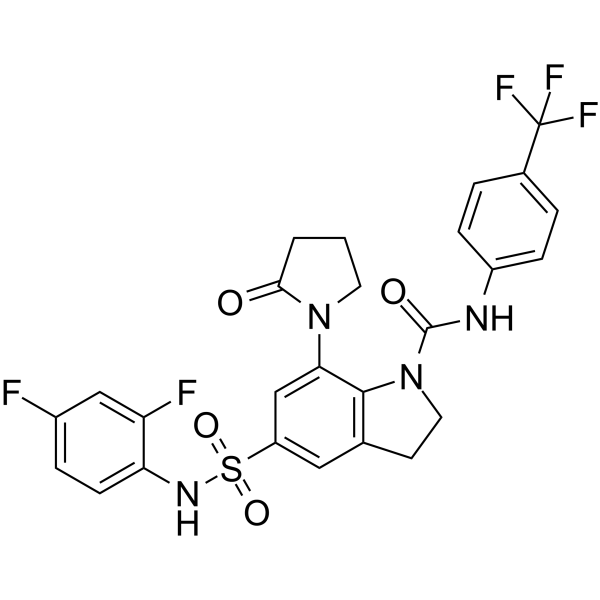 0 ImagesCat. No.: HY-U00430CAS No.: 1710630-11-7MGAT2-IN-2 is a potent and selective acyl CoA:monoacylglycerol acyltransferase 2 (MGAT2) inhibitor with an IC50 of 3.4 nM.
-
MGAT2-IN-6
 0 ImagesCat. No.: HY-181563MGAT2-IN-6 (Compound 23AX) is an orally active MGAT2 inhibitor. MGAT2-IN-6 reduces triglyceride levels and liver fibrosis. MGAT2-IN-6 can be used in the research of metabolic dysfunction-associated fatty liver disease.



