



DGAT2
DGAT2 (diacylglycerol O-acyltransferase 2) catalyzes the terminal and committed step of triacylglycerol (TG) synthesis by esterifying diacylglycerol with fatty acyl-CoA, thereby regulating intracellular lipid storage and lipid droplet formation[1][2]. DGAT2 is predominantly expressed in liver, adipose tissue, mammary gland, testis, peripheral leukocytes, and cardiac tissue, where it supports TG synthesis and intracellular lipid accumulation[3]. Mechanistically, DGAT2 functions within fatty acid metabolism pathways that maintain cellular energy balance, and its activity contributes directly to lipid droplet biogenesis through TG production[2][3]. In metabolic disease models, suppression of DGAT2 reduces hepatic diacylglycerol and triglyceride levels and improves insulin sensitivity, supporting its role in hepatic lipid homeostasis and metabolic regulation[4]. DGAT2 inhibition in hepatocytes also blocks SREBP-1 cleavage and lowers liver triglyceride accumulation, further linking DGAT2 activity to hepatic lipid metabolic pathways[5]. Compared with the related isoform DGAT1, DGAT2 displays distinct tissue distribution, intracellular localization, and physiological functions despite catalyzing the same biochemical reaction[2][3]. DGAT2 can localize to lipid droplets and is strongly associated with intracellular lipid storage, whereas DGAT1 is primarily retained within the endoplasmic reticulum and contributes preferentially to dietary fat processing and fatty acid utilization pathways[3]. Therefore, DGAT2-selective inhibitors, including clinical-stage compounds such as ervogastat, have been developed to reduce liver fat content and investigate therapeutic strategies targeting metabolic dysfunction-associated steatotic liver disease and related disorders[5][6].
References:
- [1]. Roe ND, et al. The Role of Diacylglycerol Acyltransferase (DGAT) 1 and 2 in Cardiac Metabolism and Function. Sci Rep. 2018 Mar 21;8(1):4983. [Content Brief]
- [2]. Wang L, et al. The role of DGAT1 and DGAT2 in tumor progression via fatty acid metabolism: A comprehensive review. Int J Biol Macromol. 2024 Oct;278(Pt 3):134835. [Content Brief]
- [3]. Deng B, et al. The role of DGAT1 and DGAT2 in regulating tumor cell growth and their potential clinical implications. J Transl Med. 2024 Mar 18;22(1):290. [Content Brief]
- [4]. Lee MJ, et al. Time to HIV rebound after infusion of long-acting broadly neutralising antibodies 3BNC117-LS and 10-1074-LS and analytical treatment interruption (the RIO trial): a double-blind, randomised, placebo-controlled trial. Lancet HIV. 2026 May 27:S2352-3018(26)00059-7. [Content Brief]
- [5]. Ramalho T, et al. Itaconate impairs immune control of Plasmodium by enhancing mtDNA-mediated PD-L1 expression in monocyte-derived dendritic cells. Cell Metab. 2024 Mar 5;36(3):484-497.e6. [Content Brief]
- [6]. Filipski KJ, et al. Design of Next-Generation DGAT2 Inhibitor PF-07202954 with Longer Predicted Half-Life. ACS Med Chem Lett. 2023 Oct 2;14(10):1427-1433. [Content Brief]
All Product Categories
-
DGAT2 Related Products (2)
Related Products (2)

-
Hexadecyl-CoA
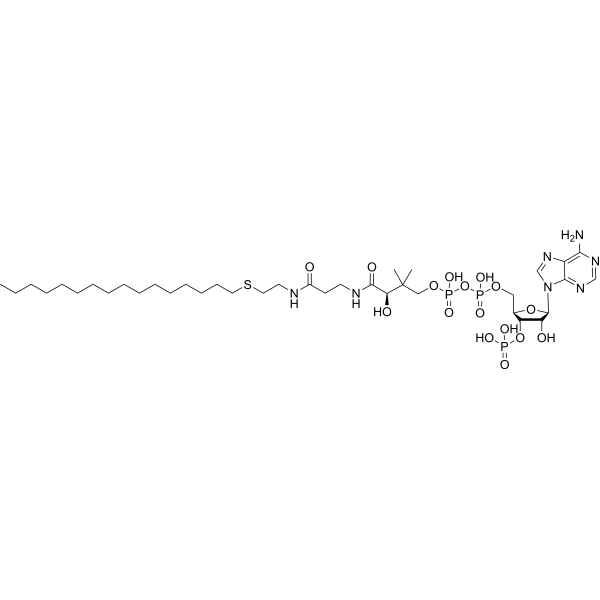 0 ImagesCat. No.: HY-E70277CAS No.: 71425-89-3Hexadecyl-CoA is a non-hydrolyzable thioether analog of Palmitoyl-CoA. Hexadecyl-CoA competitively inhibits the acyl-CoA thioesterase activity of HNF-4α with a Ki of 0.3 μM, and inhibits DGAT2 activity with an IC50 of approximately 2 μM. Hexadecyl-CoA also inhibits ATGL activity and serves as a reference inhibitor for DGAT2 LC/MS enzyme activity assays. Hexadecyl-CoA can be used in studies related to lipid metabolism, triglyceride synthesis and lipolysis.
-
DGAT1-IN-4
 0 ImagesCat. No.: HY-153507CAS No.: 1137671-16-9DGAT1-IN-4 is a potent, orally active, and selective DGAT1 inhibitor with an IC50 of 17 nM. DGAT1-IN-4 exhibits >588-fold selectivity over DGAT2. DGAT1-IN-4 suppresses intracellular triglyceride synthesis in mouse myoblast cells. DGAT1-IN-4 suppresses body weight gain in diet-induced obese dogs. DGAT1-IN-4 can be used for the research of obesity.



