



ACAT1
ACAT1, also termed sterol O-acyltransferase 1 (SOAT1), is an endoplasmic reticulum-associated enzyme that catalyzes the conversion of free cholesterol and long-chain fatty acyl-CoA into cholesteryl esters, thereby maintaining intracellular cholesterol homeostasis and promoting lipid droplet formation[1][5]. Mechanistically, ACAT1-mediated cholesterol esterification limits excess free cholesterol accumulation and regulates cholesterol storage, linking membrane cholesterol balance to cellular metabolic adaptation[1][6]. In macrophages, increased cholesterol influx activates ACAT1 and drives cholesteryl ester deposition, a process closely associated with foam-cell formation and early atherosclerotic lesion development[7][2]. Experimental inhibition of ACAT activity enhances the pool of free cholesterol available for efflux and alters macrophage cholesterol metabolism, making ACAT1 a widely studied target in atherosclerosis models[7][2]. Beyond cardiovascular disease, dysregulated ACAT1-dependent cholesterol esterification has been reported in cancer and neurodegenerative disorders, where elevated cholesteryl ester accumulation is linked to altered cellular cholesterol handling[5][1][3]. Compared with the related isoform ACAT2/SOAT2, which is enriched in intestine and liver and participates in lipoprotein-associated cholesteryl ester production, ACAT1 is broadly expressed in peripheral tissues and is the dominant isoform involved in macrophage cholesterol storage and foam-cell biology[6][4]. For experimental applications, inhibitors including avasimibe and the ACAT1-selective compound K-604 have been used to investigate cholesterol esterification, plaque remodeling, and disease-associated lipid metabolic pathways[2][8].
Références:
- [1]. Tu T, et al. Targeting sterol-O-acyltransferase 1 to disrupt cholesterol metabolism for cancer therapy. Front Oncol. 2023;13:1197502.
- [2]. Bocan TM, et al. The ACAT inhibitor avasimibe reduces macrophages and matrix metalloproteinase expression in atherosclerotic lesions of hypercholesterolemic rabbits. Arterioscler Thromb Vasc Biol. 2000 Jan;20(1):70-9. [Content Brief]
- [3]. Chang TY, et al. Blocking cholesterol storage to treat Alzheimer’s disease. Explor Neuroprot Ther. 2021;1:173-184.
- [4]. Liu Q, et al. ACAT1/SOAT1 maintains adipogenic ability in preadipocytes by regulating cholesterol homeostasis. J Lipid Res. 2024;65(12):100680.
- [5]. Bhattacharjee P, et al. Targeting Sterol O-Acyltransferase/Acyl-CoA:Cholesterol Acyltransferase (ACAT): A Perspective on Small-Molecule Inhibitors and Their Therapeutic Potential. J Med Chem. 2022 Dec 22;65(24):16062-16098. [Content Brief]
- [6]. Hai Q, et al. Acyl-Coenzyme A: Cholesterol Acyltransferase (ACAT) in Cholesterol Metabolism: From Its Discovery to Clinical Trials and the Genomics Era. Metabolites. 2021;11(8):543. [Content Brief]
- [7]. Kiros M, et al. Trends in HIV-1 pretreatment drug resistance and HIV-1 variant dynamics among antiretroviral therapy-naive Ethiopians from 2003 to 2018: a pooled sequence analysis. Virol J. 2023 Oct 25;20(1):243. [Content Brief]
- [8]. Ohshiro T. Isoform-specific inhibitors of ACATs: recent advances and promising developments. Future Med Chem. 2011 Dec;3(16):2039-61.
All Product Categories
-
ACAT1 Produits associés (8)
Produits associés (8)

-
Anticorps (1)
-
Avasimibe
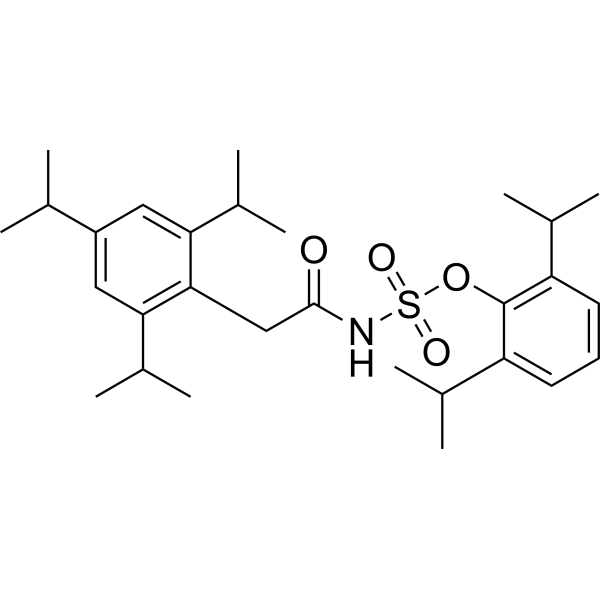 0 ImagesSynonyms: CI-1011; PD-148515Avasimibe (CI-1011; PD-148515) is an orally active acyl coenzyme A-cholesterol acyltransferase (ACAT; also called SOAT)) inhibitor with IC50s of 24 and 9.2 µM for ACAT1 and ACAT2, respectively. Avasimibe can be used for the research of prostate cancer.
-
K-604 dihydrochloride
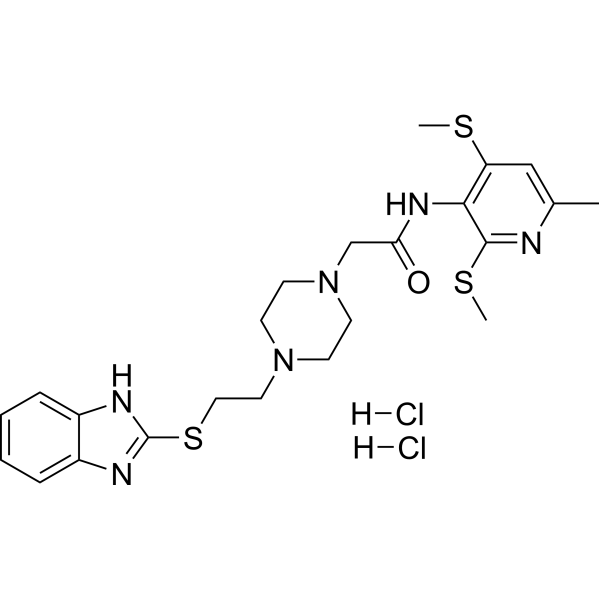 0 ImagesK-604 dihydrochloride is a potent and selective acyl-CoA:cholesterol acyltransferase 1 (ACAT-1) inhibitor with an IC50 of 0.45±0.06 μM.
-
Nevanimibe hydrochloride
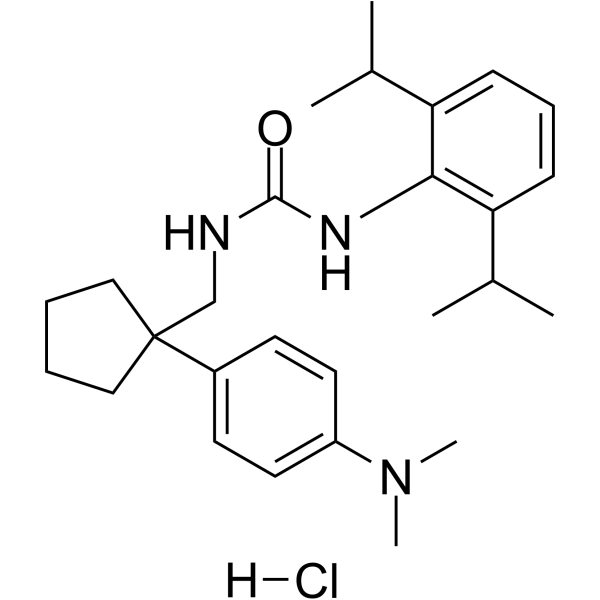 0 ImagesSynonyms: PD-132301 hydrochloride; ATR101 hydrochlorideNevanimibe hydrochloride (PD-132301 hydrochloride) is an orally active and selective acyl-coenzyme A:cholesterol O-acyltransferase 1 (ACAT1) inhibitor with an EC50 of 9 nM. Nevanimibe hydrochloride inhibits ACAT2 with an EC50 of 368 nM. Nevanimibe hydrochloride induces cell apoptosis and has the potential for adrenocortical cancer.
-
Pactimibe
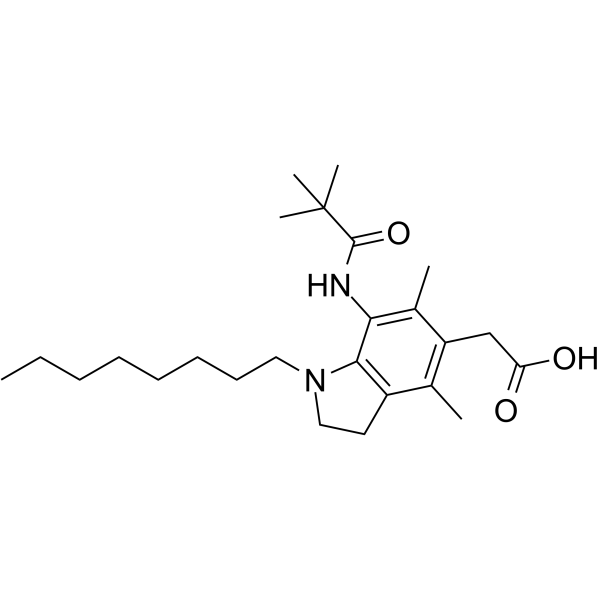 0 ImagesSynonyms: CS-505 free basePactimibe (CS-505 free base) is a dual ACAT1/2 inhibitor with IC50s of 4.9 μM and 3.0 μM, respectively. Pactimibe (CS-505 free base) inhibits ACAT with IC50s of 2.0 μM, 2.7 μM, 4.7 μM in the liver, macrophages and THP-1 cells, respectively. Pactimibe (CS-505 free base) noncompetitively inhibits oleoyl-CoA with a Ki value of 5.6 μM. Moreover, Pactimibe (CS-505 free base) obviously inhibits cholesteryl ester formation with an IC50 of 6.7 μM. Pactimibe (CS-505 free base) possesses anti-atherosclerotic potential with lowering plasma cholesterol activity.
-
Nevanimibe
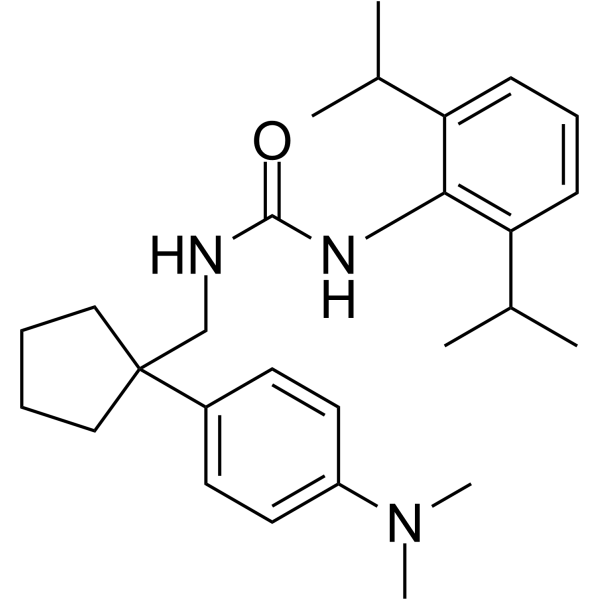 0 ImagesSynonyms: PD-132301; ATR-101
-
Pactimibe sulfate
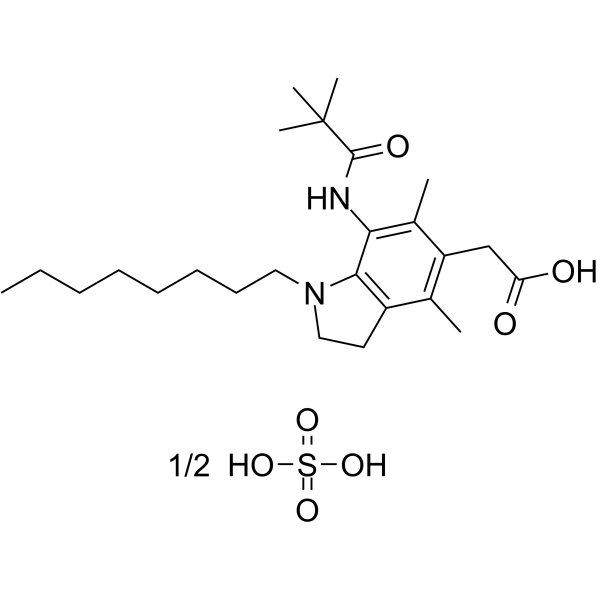 0 ImagesSynonyms: CS-505Pactimibe sulfate (CS-505) is a dual ACAT1/2 inhibitor with IC50s of 4.9 μM and 3.0 μM, respectively. Pactimibe sulfate (CS-505) inhibits ACAT with IC50s of 2.0 μM, 2.7 μM, 4.7 μM in the liver, macrophages and THP-1 cells, respectively. Pactimibe sulfate (CS-505) noncompetitively inhibits oleoyl-CoA with a Ki value of 5.6 μM. Moreover, Pactimibe sulfate (CS-505) obviously inhibits cholesteryl ester formation with an IC50 of 6.7 μM. Pactimibe sulfate (CS-505) possesses anti-atherosclerotic potential with lowering plasma cholesterol activity.
-
Esculeogenin A
 0 ImagesCat. No.: HY-N18066CAS No.: 854381-37-6Esculeogenin A is the sapogenol of tomato saponin Esculeoside A (HY-N18067). Esculeogenin A is an orally active hepatoprotective, hypolipidemic, and antioxidant agent. Esculeogenin A regulates molecular targets like PPARα, SREBP1, Nrf2, NF-κB, ACAT1/ACAT2 to promote hepatic fatty acid oxidation, suppress de novo lipogenesis, enhance antioxidant defense, and inhibit inflammation. Esculeogenin A improves liver function, alleviates hyperlipidemia, and inhibits hepatic steatosis and foam cell formation, preventing nonalcoholic fatty liver disease in high-fat-diet-fed rats and reducing atherosclerotic lesions in apoE-deficient mice. Esculeogenin A can be used for the research of nonalcoholic fatty liver disease, atherosclerosis, and hyperlipidemia.
-
Avasimibe sodium
 0 ImagesCat. No.: HY-13215ACAS No.: 166518-61-2Synonyms: CI-1011 sodium; PD-148515 sodiumAvasimibe sodium (CI-1011 sodium; PD-148515 sodium) is an orally active acyl coenzyme A-cholesterol acyltransferase (ACAT; also called SOAT)) inhibitor with IC50s of 24 and 9.2 µM for ACAT1 and ACAT2, respectively. Avasimibe sodium can be used for the research of prostate cancer.




