



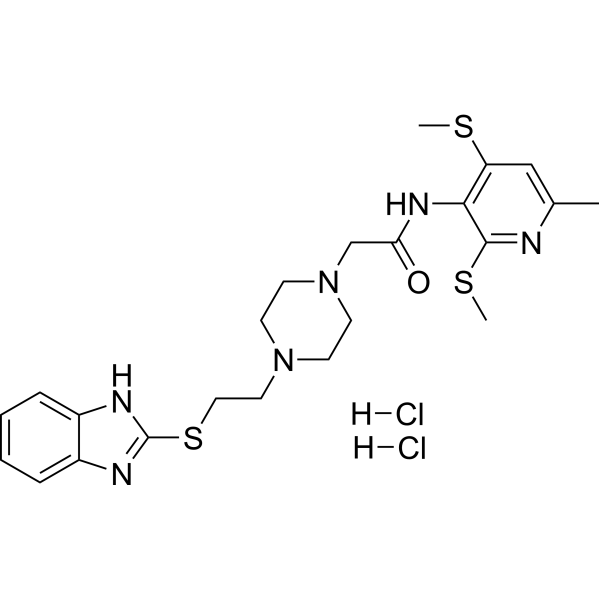
K-604 dihydrochloride
Based on 7 publication(s) in Google Scholar
K-604 dihydrochloride is a potent and selective acyl-CoA:cholesterol acyltransferase 1 (ACAT-1) inhibitor with an IC50 of 0.45±0.06 μM.
For research use only. We do not sell to patients.
- Purity : 99.42%
- CAS No.: 217094-32-1
- Formula: C23H32Cl2N6OS3
- Molecular Weight:575.64
-
Storage:
4°C, sealed storage, away from moisture
* In solvent : -80°C, 2 years; -20°C, 1 year (sealed storage, away from moisture)

To place orders, for customer services and technical support, please contact: MedChemExpress USA
Tel: 609-228-6898 E-mail: [email protected] [email protected]


-
 Biological Activity
-
Chemical Information
-
Solvent & Solubility
- Protocols
- Purity & Documentation
- References
-
 Help & FAQs


-
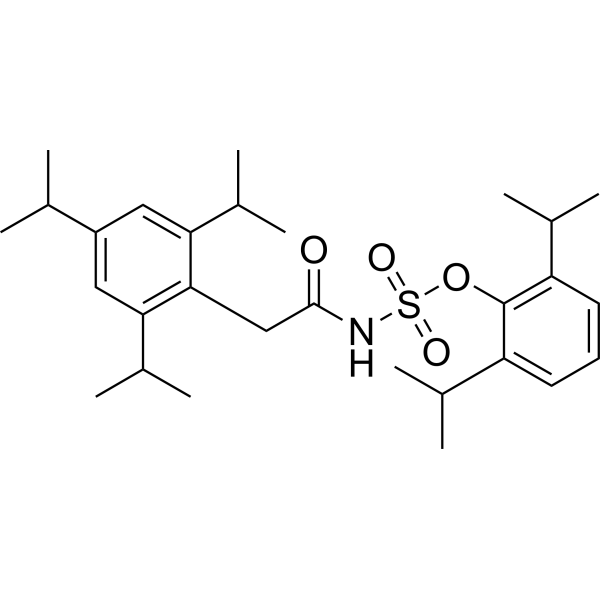
HY-13215
AvasimibeACAT/SOAT Inhibitor -
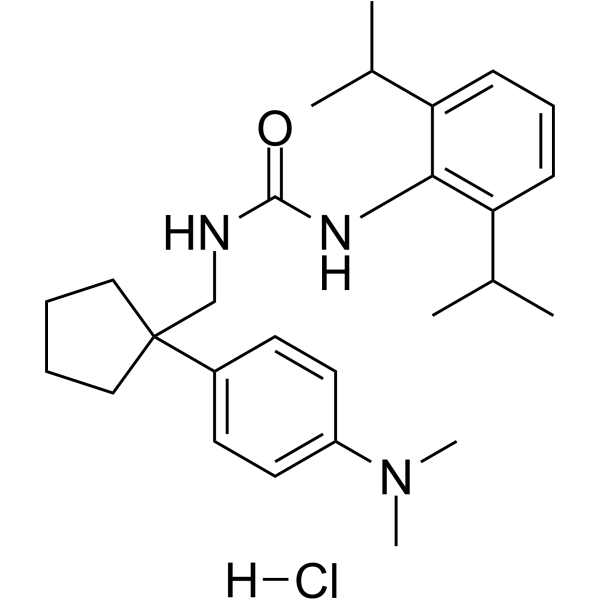
HY-100399A
Nevanimibe hydrochlorideACAT1 Inhibitor -
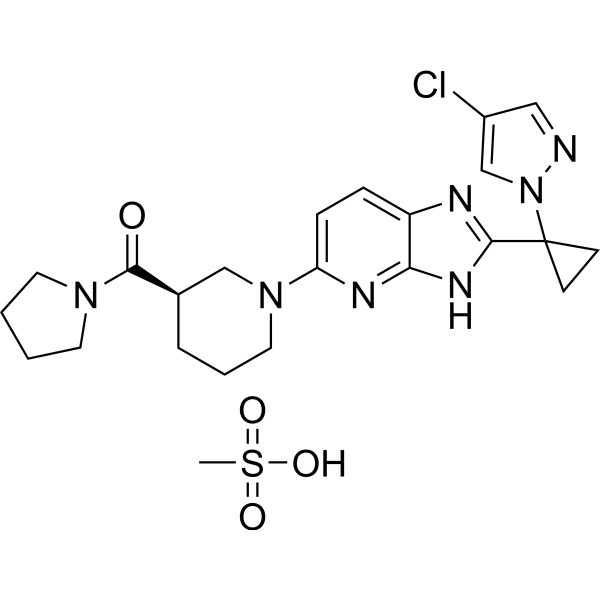
HY-108341A
PF-06424439 methanesulfonateDGAT2 Inhibitor -
HY-100401
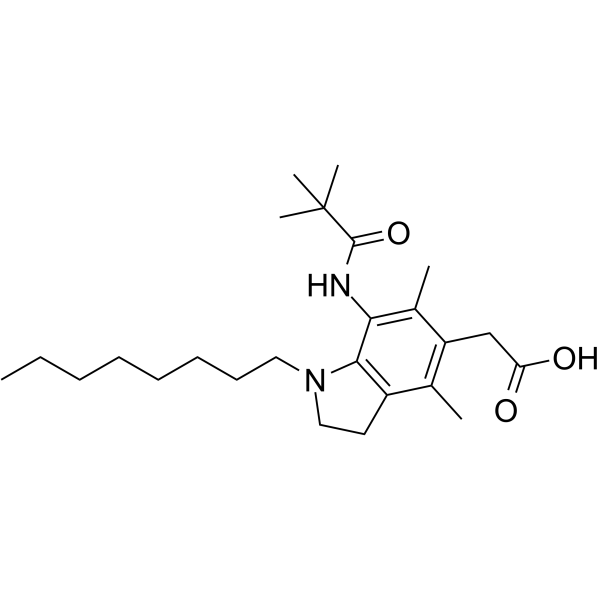
PactimibeACAT1/2 Inhibitor -
HY-16437
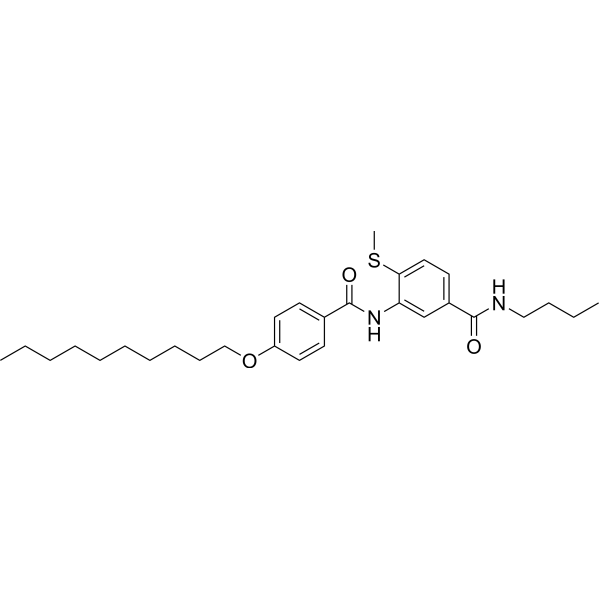
RP-64477ACAT Inhibitor -
HY-15197
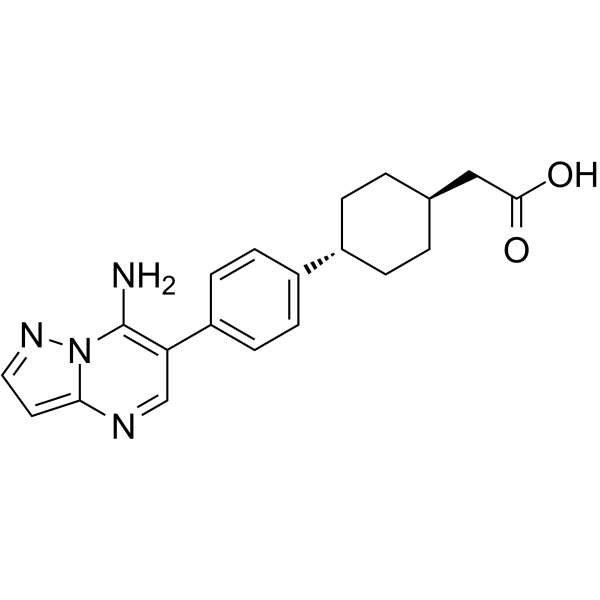
ABT-046DGAT-1 Inhibitor -
HY-117832
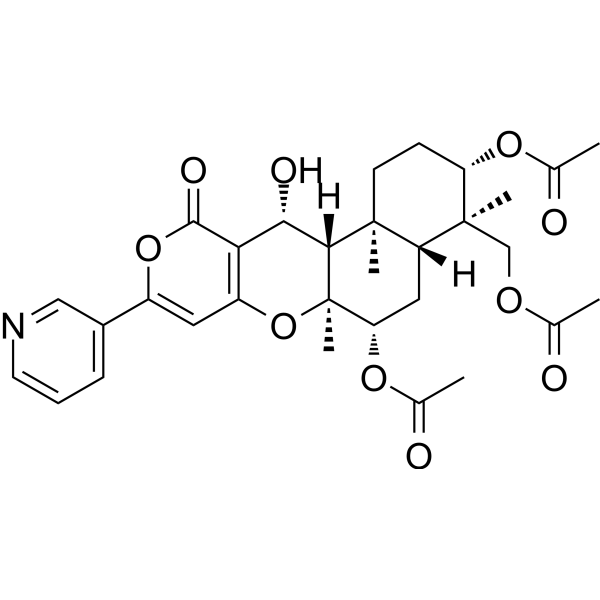
Pyripyropene ASOAT2/ACAT2 Inhibitor -
HY-32219
T863DGAT1 Inhibitor -
HY-101576
RP 70676ACAT Inhibitor -
HY-107572
PD 128042ACAT/LPAT Inhibitor -
HY-100401A
Pactimibe sulfateACAT1/2 Inhibitor -
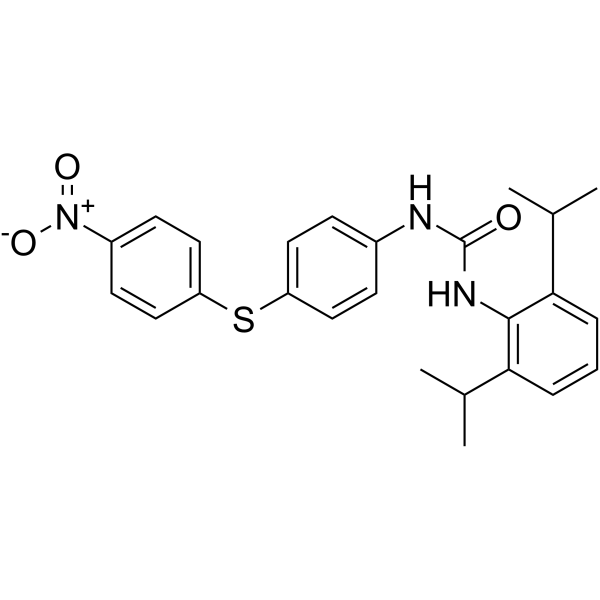
HY-107571
VULM 1457Acyl-CoA Inhibitor
Publications Citing Use of MedChemExpress (MCE) K-604 dihydrochloride
More- Int J Biol Macromol. 2024 Dec;282(Pt 5):137235. [Abstract]
- Brain Behav Immun. 2025 Apr 22:S0889-1591(25)00170-9. [Abstract]
- Stem Cell Reports. 2025 Mar 11;20(3):102420. [Abstract]
- Mol Cell Biochem. 2025 Jul;480(7):4197-4212. [Abstract]
- J Cell Mol Med. 2020 Dec;24(23):14039-14049. [Abstract]
- bioRxiv. 2025 Oct 13.
- bioRxiv. 2024 Mar 17.
 Customer Validation & Images

-
Cell Imaging/Staining

-
Flow Cytometry

-
IF

-
RT-PCR

-
In Vivo Efficacy Study


Biological Activity
Description
IC50 & Target
[1]|
ACAT-1 0.45 μM (IC50) |
ACAT-2 102.85 μM (IC50) |
In Vitro
The potency and selectivity of K-604 for human ACAT-1 and ACAT-2 is examined. The IC50 value of K-604 for human ACAT-1 is 0.45 μM and that for human ACAT-2 is 102.85 μM, indicating that K-604 is 229-fold more selective for ACAT-1 than ACAT-2. Kinetic analysis indicates that the inhibition is competitive with respect to oleoyl-coenzyme A with a Ki value of 0.378 μM. K-604 efficiently inhibits cholesterol esterification in human macrophages with IC50 value of 68 nM[1]. In cell free biochemical assays, K604 at 0.5 μM inhibits ACAT1 enzymatic activity by 70% without significantly inhibiting the ACAT2 enzyme activity. To investigate whether blocking ACAT1 increases autophagy in neuronal cells, N2a cells are treated with K604. The result shows that at 0.1 to 1 μM, K604 inhibits ACAT activity by 60-80%. Next K604 is added to N2a cells at concentrations from 0.1 to 1 μM for 24 h, and LC3 levels are examined by western blot. The result shows that K604 increases the LC3-II/LC3-I ratio, a reliable marker for autophagosome formation, in a dose-dependent manner. The number of the fluorescent LC3 puncta is significantly increased in N2a cells after K604 treatment. By western blot, K604 significantly decreases the levels of p62 in N2a cells[2].
MedChemExpress (MCE) has not independently confirmed the accuracy of these methods. They are for reference only. Further protocols information, click here.
In Vivo
MedChemExpress (MCE) has not independently confirmed the accuracy of these methods. They are for reference only.
Clinical Trial
| NCT Number | Sponsor | Condition | Start Date |
Phase

|
|---|---|---|---|---|
| NCT01329991 | Plexxikon| | 2011-05 | PHASE1 |


Chemical Information
-
CAS No. 217094-32-1
-
Appearance Solid
-
Molecular Weight 575.64
-
Formula C23H32Cl2N6OS3
-
Color White to light yellow
-
SMILES
O=C(NC1=C(SC)C=C(C)N=C1SC)CN2CCN(CCSC3=NC4=CC=CC=C4N3)CC2.[H]Cl.[H]Cl
-
Shipping
Room temperature in continental US; may vary elsewhere.
-
Storage
4°C, sealed storage, away from moisture
* In solvent : -80°C, 2 years; -20°C, 1 year (sealed storage, away from moisture)


Publications (7)
-
Journal Impact Factor
-
Most Recent
-
Int J Biol Macromol
Transcription factor ETV4 plays a critical role in the development of non-alcoholic fatty liver disease. [Abstract]2024 Dec;282(Pt 5):137235. PMID: 39500423 -
Brain Behav Immun
SOAT1 dysregulation in astrocytes drives Blood-Brain barrier dysfunction and neuroinflammation in Alzheimer's disease. [Abstract]2025 Apr 22:S0889-1591(25)00170-9. PMID: 40274003 -
Stem Cell Reports
An efficient, non-viral arrayed CRISPR screening platform for iPSC-derived myeloid and microglia models. [Abstract]2025 Mar 11;20(3):102420. PMID: 39983727
K-604 dihydrochloride purchased from MedChemExpress. Usage Cited in: Stem Cell Reports. 2025 Mar 11;20(3):102420. [Abstract]
Effect of SOAT1 KO on NR intensity per cell area in BIONi010-C (APOE3/4) microglia. Inhibitor treatment: SOAT1 inhibitor (K-604 dihydrochloride) 500 nM for 2 days.
-
Mol Cell Biochem
Macrophage polarization-related gene SOAT1 is involved in inflammatory response and functional recovery after spinal cord injury. [Abstract]2025 Jul;480(7):4197-4212. PMID: 40050510
K-604 dihydrochloride purchased from MedChemExpress. Usage Cited in: Mol Cell Biochem. 2025 Jul;480(7):4197-4212. [Abstract]
Flow cytometric analysis of CD86 and CD206 expression in BMDMs after treatment with K604 (K-604 dihydrochloride; 1 μM; 24 h). K604 inhibited M1 polarization and promoted M2 polarization in vitro.
K-604 dihydrochloride purchased from MedChemExpress. Usage Cited in: Mol Cell Biochem. 2025 Jul;480(7):4197-4212. [Abstract]
Immunofluorescence staining of iNOS, CD206, and CD68 in spinal cord sections from SCI rats after daily intraperitoneal administration of K604 (K-604 dihydrochloride; 10 mg/kg; 7 d). K604 significantly decreased iNOS+ cells and increased CD206+ cells.
K-604 dihydrochloride purchased from MedChemExpress. Usage Cited in: Mol Cell Biochem. 2025 Jul;480(7):4197-4212. [Abstract]
qRT-PCR analysis of pro-inflammatory and anti-inflammatory markers in SCI rats after daily intraperitoneal administration of K604 (K-604 dihydrochloride; 10 mg/kg; 7 d). K-604 treatment significantly reduced the expression level of pro-inflammatory markers (TNFα, IL-1β and iNOS) and upregulated that of anti-inflammatory markers (CD206, L-10, and Arg1).
K-604 dihydrochloride purchased from MedChemExpress. Usage Cited in: Mol Cell Biochem. 2025 Jul;480(7):4197-4212. [Abstract]
Basso, Beattie, and Bresnahan locomotor scores and inclined plane test results in SCI rats after daily intraperitoneal administration of K604 (K-604 dihydrochloride; 10 mg/kg; 7 d).

K-604 dihydrochloride purchased from MedChemExpress. Usage Cited in: Mol Cell Biochem. 2025 Jul;480(7):4197-4212. [Abstract]
Representative MRI T2 image in SCI rats after daily intraperitoneal administration of K604 (K-604 dihydrochloride; 10 mg/kg; 7 d). K-604 administration significantly reduced the spinal cord lesion volumes.
-
J Cell Mol Med
Sirtuin 5 regulates the proliferation, invasion and migration of prostate cancer cells through acetyl-CoA acetyltransferase 1. [Abstract]2020 Dec;24(23):14039-14049. PMID: 33103371 -
-


Solvent & Solubility
In Vitro:
H2O : 100 mg/mL (173.72 mM; Need ultrasonic)
DMSO : 58.33 mg/mL (101.33 mM; ultrasonic and warming and heat to 60°C; Hygroscopic DMSO has a significant impact on the solubility of product, please use newly opened DMSO)
Please refer to the solubility information to select the appropriate solvent. Once prepared, please aliquot and store the solution to prevent product inactivation from repeated freeze-thaw cycles.
Storage method and period of stock solution: -80°C, 2 years; -20°C, 1 year (sealed storage, away from moisture). When stored at -80°C, please use it within 2 years. When stored at -20°C, please use it within 1 year.
* Note: If you choose water as the stock solution, please dilute it to the working solution, then filter and sterilize it with a 0.22 μm filter before use.
Please refer to the solubility information to select the appropriate solvent. Once prepared, please aliquot and store the solution to prevent product inactivation from repeated freeze-thaw cycles.
Storage method and period of stock solution: -80°C, 2 years; -20°C, 1 year (sealed storage, away from moisture). When stored at -80°C, please use it within 2 years. When stored at -20°C, please use it within 1 year.
* Note: If you choose water as the stock solution, please dilute it to the working solution, then filter and sterilize it with a 0.22 μm filter before use.
Concentration (start) × Volume (start) = Concentration (final) × Volume (final)
In Vivo:
Select the appropriate dissolution method based on your experimental animal and administration route.
- For the following dissolution methods, please ensure to first prepare a clear stock solution using an In Vitro approach and then sequentially add co-solvents:
- To ensure reliable experimental results, the clarified stock solution can be appropriately stored based on storage conditions. As for the working solution for In Vivo experiments, it is recommended to prepare freshly and use it on the same day.
- The percentages shown for the solvents indicate their volumetric ratio in the final prepared solution. If precipitation or phase separation occurs during preparation, heat and/or sonication can be used to aid dissolution.
Add each solvent one by one: 10% DMSO 40% PEG300 5% Tween-80 45% Saline
Solubility: ≥ 2.25 mg/mL (3.91 mM); Clear solution
This protocol yields a clear solution of ≥ 2.25 mg/mL (saturation unknown).
Taking 1 mL working solution as an example, add 100 μL DMSO stock solution (22.5 mg/mL) to 400 μL PEG300, and mix evenly; then add 50 μL Tween-80 and mix evenly; then add 450 μL Saline to adjust the volume to 1 mL.
Preparation of Saline: Dissolve 0.9 g sodium chloride in ddH₂O and dilute to 100 mL to obtain a clear Saline solution.
Add each solvent one by one: 10% DMSO 90% (20% SBE-β-CD in Saline)
Solubility: ≥ 2.25 mg/mL (3.91 mM); Clear solution
This protocol yields a clear solution of ≥ 2.25 mg/mL (saturation unknown).
Taking 1 mL working solution as an example, add 100 μL DMSO stock solution (22.5 mg/mL) to 900 μL 20% SBE-β-CD in Saline, and mix evenly.
Preparation of 20% SBE-β-CD in Saline (4°C, storage for one week): 2 g SBE-β-CD powder is dissolved in 10 mL Saline, completely dissolve until clear.
For the following dissolution methods, please prepare the working solution directly:
It is recommended to prepare fresh solutions and use them promptly within a short period of time.
The percentages shown for the solvents indicate their volumetric ratio in the final prepared solution. If precipitation or phase separation occurs during preparation, heat and/or sonication can be used to aid dissolution.
Add each solvent one by one: PBS
Solubility: 100 mg/mL (173.72 mM); Clear solution; Need ultrasonic and warming and heat to 60°C
In Vivo Dissolution Calculator
Please enter the basic information of animal experiments:
-
-
-
-
Recommended: Prepare an additional quantity of animals to account for potential losses during experiments.
Working solution concentration: 0.22 mg/mL
This product has good water solubility, please refer to the measured solubility data in water/PBS/Saline for details.

Protocols
-
Cell Cytotoxicity Assay
Cytotoxicity assays are usually based on the assessment of cell membrane damage, which can also be indirectly detected by measuring cell viability. Detection methods include MTT assay, CKK-8 assay, LDH assay and ATP assay, etc.


Purity & Documentation
-
Data Sheet (281 KB)
-
SDS (393 KB)
- English - EN (393 KB)
- Français - FR (393 KB)
- Deutsch - DE (393 KB)
- Norwegian - NO (393 KB)
- Español - ES (393 KB)
- Swedish - SV (393 KB)
- Italian - IT (393 KB)
- Korean - KR (393 KB)
- Portuguese - PT (393 KB)
-
Handling Instructions (2659 KB)
References
[1]. Ikenoya M, et al. A selective ACAT-1 inhibitor, K-604, suppresses fatty streak lesions in fat-fed hamsters without affecting plasma cholesterol levels. Atherosclerosis. 2007 Apr;191(2):290-7. [Content Brief]
[2]. Shibuya Y, et al. Acyl-coenzyme A:cholesterol acyltransferase 1 blockage enhances autophagy in the neurons of triple transgenic Alzheimer's disease mouse and reduces human P301L-tau content at the presymptomatic stage. Neurobiol Aging. 2015 Jul;36(7):2248-2259. [Content Brief]


Complete Stock Solution Preparation Table
Please refer to the solubility information to select the appropriate solvent. Once prepared, please aliquot and store the solution to prevent product inactivation from repeated freeze-thaw cycles.
Storage method and period of stock solution: -80°C, 2 years; -20°C, 1 year (sealed storage, away from moisture). When stored at -80°C, please use it within 2 years. When stored at -20°C, please use it within 1 year.
| Optional Solvent | Concentration Solvent Mass | 1 mg | 5 mg | 10 mg | 25 mg |
|---|---|---|---|---|---|
| DMSO / H2O | 1 mM | 1.7372 mL | 8.6860 mL | 17.3720 mL | 43.4299 mL |
| 5 mM | 0.3474 mL | 1.7372 mL | 3.4744 mL | 8.6860 mL | |
| 10 mM | 0.1737 mL | 0.8686 mL | 1.7372 mL | 4.3430 mL | |
| 15 mM | 0.1158 mL | 0.5791 mL | 1.1581 mL | 2.8953 mL | |
| 20 mM | 0.0869 mL | 0.4343 mL | 0.8686 mL | 2.1715 mL | |
| 25 mM | 0.0695 mL | 0.3474 mL | 0.6949 mL | 1.7372 mL | |
| 30 mM | 0.0579 mL | 0.2895 mL | 0.5791 mL | 1.4477 mL | |
| 40 mM | 0.0434 mL | 0.2171 mL | 0.4343 mL | 1.0857 mL | |
| 50 mM | 0.0347 mL | 0.1737 mL | 0.3474 mL | 0.8686 mL | |
| 60 mM | 0.0290 mL | 0.1448 mL | 0.2895 mL | 0.7238 mL | |
| 80 mM | 0.0217 mL | 0.1086 mL | 0.2171 mL | 0.5429 mL | |
| 100 mM | 0.0174 mL | 0.0869 mL | 0.1737 mL | 0.4343 mL |
* Note: If you choose water as the stock solution, please dilute it to the working solution, then filter and sterilize it with a 0.22 μm filter before use.


K-604 dihydrochloride Related Classifications
HY-100400A Related Classifications
 Powered by Bioz