



Estrogen Receptor/ERR
Estrogen receptors are a group of proteins found inside cells. They are receptors that are activated by the hormone estrogen (17β-estradiol). Two classes of estrogen receptor exist: ER, which is a member of the nuclear hormone family of intracellular receptors, and GPER (GPR30), which is a member of the rhodopsin-like family of G protein-coupled receptors. The ER's helix 12 domain plays a crucial role in determining interactions with coactivators and corepressors and, therefore, the respective agonist or antagonist effect of the ligand. Different ligands may differ in their affinity for alpha and beta isoforms of the estrogen receptor: estradiol binds equally well to both receptors, estrone, and raloxifene bind preferentially to the alpha receptor, estriol, and genistein to the beta receptor. Estrogen and its receptors are essential for sexual development and reproductive function, but also play a role in other tissues such as bone. Estrogen receptors are also involved in pathological processes including breast cancer, endometrial cancer, and osteoporosis. Alternative promoter usage and alternative splicing result in dozens of transcript variants, but the full-length nature of many of these variants has not been determined.
Estrogen Receptor/ERR Isoform Specific Products
All Product Categories
-
Estrogen Receptor/ERR Inhibitors
(133)
View all products
-
Estrogen Receptor/ERR Agonists
(162)
View all products
-
Estrogen Receptor/ERR Antagonists
(107)
View all products
-
Estrogen Receptor/ERR Activators
(51)
View all products
-
Estrogen Receptor/ERR Modulators
(119)
View all products
-
Estrogen Receptor/ERR Chemicals
(2)
View all products
-
Estrogen Receptor/ERR Degraders
(73)
View all products
-
Estrogen Receptor/ERR Controls
(6)
View all products
-
Estrogen Receptor/ERR Ligands
(27)
View all products
-
Estrogen Receptor Proteins
(2)
View all products
-
ER-alpha Proteins
(1)
View all products
-
ER-beta Proteins
(1)
View all products
-
Estrogen Receptor/ERR Related Products (819)
Related Products (819)

-
Recombinant Proteins (2)
-
Antibodies (11)
-
Estrogen Receptor/ERR Isoform Comparison
-
YXG-158
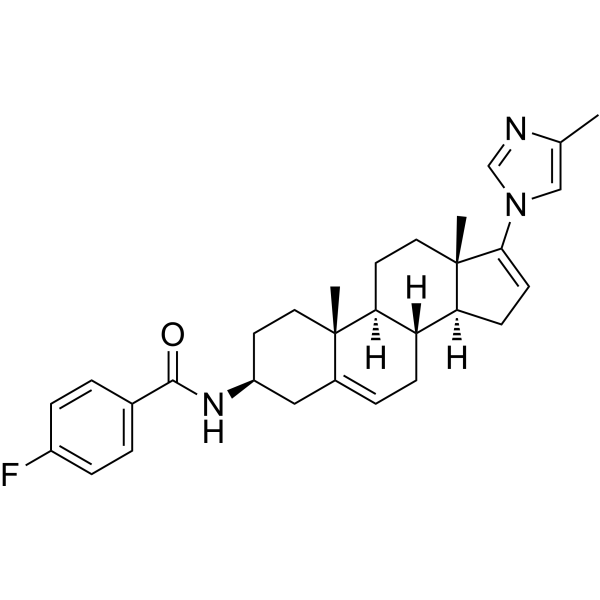 0 ImagesCat. No.: HY-155666CAS No.: 2952994-34-0YXG‑158 is an orally active, anticancer bifunctional steroid analog with both androgen receptor (AR) degradation activity (DC50 = 1.28 μM) and CYP17A1 inhibitory activity (IC50 = 100 nM). YXG-158 reduces AR protein and mRNA expression via proteasome-dependent degradation, degrades AR-V7, and inhibits CYP17A1 enzymatic activity to block androgen biosynthesis. YXG-158 inhibits the activities of ERα and ERβ, as well as cancer cell proliferation. YXG-158 decreases the weight of androgen-sensitive organs in castrated rats treated with testosterone propionate, downregulates AR protein, reduces PSA levels, and suppresses tumor growth in Enzalutamide (HY-70002)-sensitive and -resistant xenograft models. YXG-158 can be used in prostate cancer-related research.
-
Estrogen receptor-IN-2
 0 ImagesCat. No.: HY-184982Estrogen receptor-IN-2 is a potent estrogen receptor inhibitor formed by the conjugation of Tam (HY-13757)-NHC and gold (I). Estrogen receptor-IN-2 significantly downregulates estrogen receptor (ER) levels, inhibits ER-mediated downstream signaling pathways, and induces immunogenic cell death (ICD) mediated by damage-associated molecular patterns (DAMPs). Estrogen receptor-IN-2 can overcome drug resistance in MCF-7Y537S mutant cells via the RAMP3/CALCR signaling pathway. It is suitable for research on endocrine-resistant breast cancer.
-
Clomiphene hydrochloride
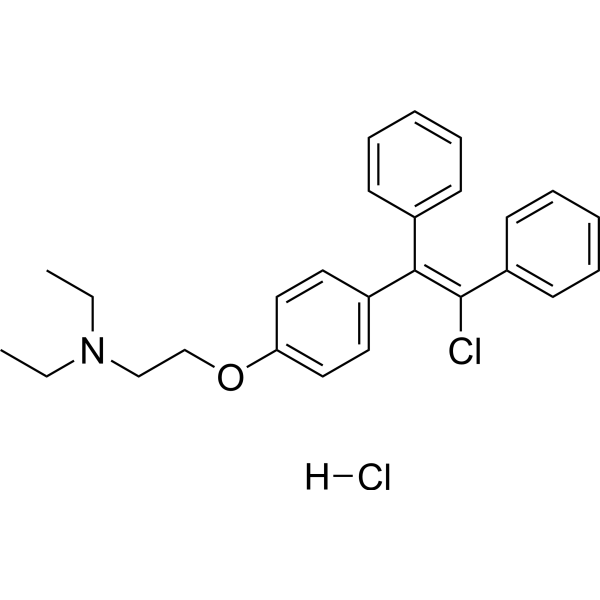 0 ImagesCat. No.: HY-A0287ACAS No.: 57049-00-0Synonyms: Clomifene hydrochloride; (Z/E)-Enclomiphene hydrochloride; (Z/E)-Enclomifene hydrochlorideClomiphene (Clomifene; (Z/E)-Enclomiphene; (Z/E)-Enclomifene) hydrochloride is an orally active ovulation-inducing agent. Clomiphene hydrochloride binds to hypothalamic estrogen receptors to elevate FSH levels, and exhibits antiestrogenic or estrogenic properties. Clomiphene hydrochloride can induce erturbations during meiotic maturation and cytogenetic abnormalities in mouse oocytes. Clomiphene hydrochloride ameliorates memory impairment in PCOS models. Clomiphene hydrochloride mobilizes cytosolic calcium and reduces viability in prostate cancer cells. Clomiphene hydrochloride can be used for the research of polycystic ovary syndrome (PCOS) and prostate cancer.
-
(E/Z)-Panomifene hydrochloride
 0 ImagesCat. No.: HY-122411ACAS No.: 3026790-25-7Synonyms: (E/Z)-EGIS 5650 hydrochloride; (E/Z)-GYKI-13504 hydrochloride
-
AhR modulator-1
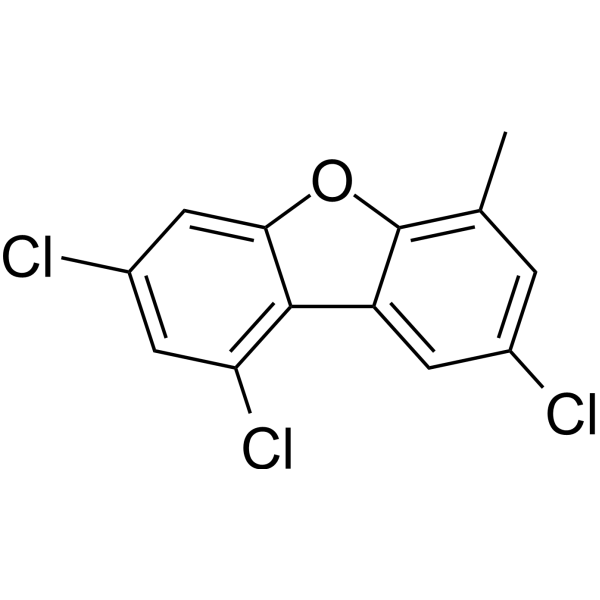 0 ImagesCat. No.: HY-135671CAS No.: 118174-38-2AhR modulator-1 (compound 6-MCDF) is a selective and orally active aryl hydrocarbon receptor (AhR) modulator. AhR modulator-1 inhibits metastasis, in part, by inhibiting prostatic VEGF production prior to tumor formation. AhR modulator-1 also possess anti-estrogenic properties in rat uterus.
-
Anticancer agent 353
 0 ImagesCat. No.: HY-184961CAS No.: 3099598-10-1Anticancer agent 353 is a heterobifunctional antitumor agent with weak ERα inhibitory activity and anticancer activity. Anticancer agent 353 exhibits growth inhibitory activity against MCF7 cells. Anticancer agent 353 can be used in cancer research.
-
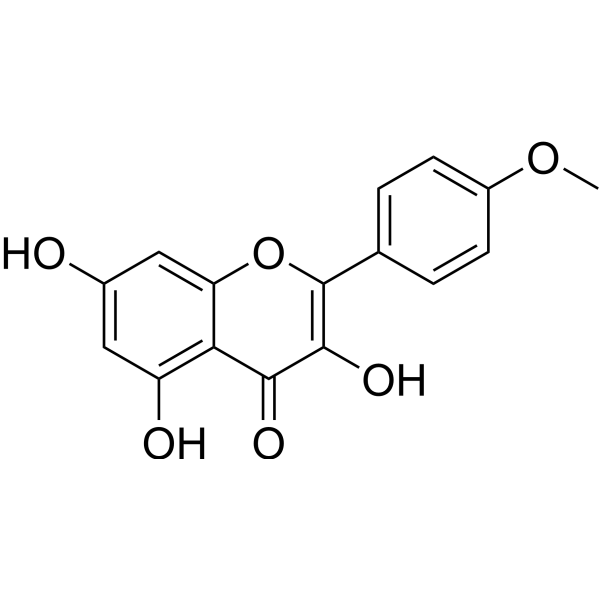
(-)-(E)-Guggulsterone (Standard)
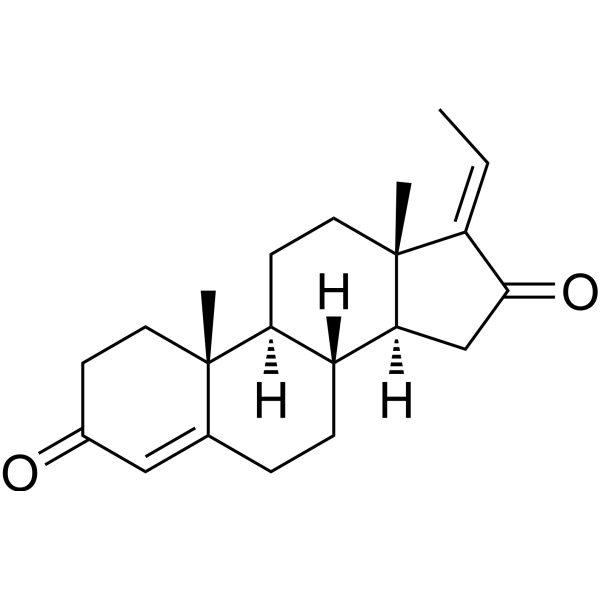 0 ImagesSynonyms: (E)-Guggulsterone (Standard)(-)-(E) -guggulsterone (Standard) is the analytical standard for (-)-(E) -guggulsterone ((E)-Guggulsterone) (HY-N7781). (-)-(E)-Guggulsterone is an orally active natural stereoisomer of Guggulsterone (HY-107738). (-)-(E)-Guggulsterone is an antagonist for the Farnesoid X Receptor (FXR) with an IC50 of 24.06 μM and possesses potent hypolipidemic properties. (-)-(E)-Guggulsterone suppresses dengue virus (DENV) replication by upregulating antiviral interferon responses by inducing HO-1 expression via Nrf2 activation. (-)-(E)-Guggulsterone exhibits antibacterial activities against Bacillus subtilis, Staphylococcus aureus and Pseudomonas aeruginosa. (-)-(E)-Guggulsterone has cardiac protective and antioxidant activities in rats.
-
CDD-1274
 0 ImagesCat. No.: HY-179510CDD-1274 is an ERα (Estrogen receptor α) variant inhibitor. CDD-1274 induces proteasomal degradation of ERα variants in breast cancer cell lines and causes Y537S ERα degradation. CDD-1274 potently blocks ligand-dependent and ligand-independent ER signaling in endocrine-resistant breast cancer cells. CDD-1274 can be used for the study of breast cancer.
-
Tracheloside (Standard)
 0 ImagesCat. No.: HY-N1507RCAS No.: 33464-71-0Tracheloside (Standard) is the analytical standard of Tracheloside. This product is intended for research and analytical applications. Tracheloside is an antiestrogenic lignin. Tracheloside promotes keratinocyte proliferation through ERK1/2 stimulation. Tracheloside is a good candidate to promote wound healing.
-
rel-Vepdegestrant
 0 ImagesCat. No.: HY-138642BCAS No.: 2614417-52-4Synonyms: rel-ARV-471; rel-PF-07850327(Rac)-Vepdegestrant is the relative configuration of Vepdegestrant (HY-138642). Vepdegestrant is an orally active PROTAC estrogen receptor degrader against breast cancer. Vepdegestrant is a hetero-bifunctional molecule that facilitates the interactions between estrogen receptor alpha and an intracellular E3 ligase complex. Vepdegestrant leads to the ubiquitylation and subsequent degradation of estrogen receptors via the proteasome. Vepdegestrant robustly degrades ER in ER-positive breast cancer cell lines with a half-maximal degradation concentration (DC50) of about 2 nM.
-
ERRγ-IN-1
 0 ImagesCat. No.: HY-177011CAS No.: 2170732-60-0ERRγ-IN-1 is a ERRγ inhibitor with an IC50 of 0.040 μM. ERRγ-IN-1 activates MAPK (p44/p42) and inhibits the activity of ERRγ. ERRγ-IN-1 significantly increases iodine uptake in anaplastic thyroid carcinoma xenografts and suppresses tumor growth in nude mice. ERRγ-IN-1 is applicable for the research of anaplastic thyroid carcinoma.
-
ERβ agonist-2
 0 ImagesCat. No.: HY-186074CAS No.: 628321-25-5ERβ agonist-2 (Page 72) is a selective ERβ agonist with an EC50 of 800 nM or lower. ERβ agonist-2 selectively inhibits T cell activation and/or proliferation, thereby reducing circulating T cell levels in subjects, without exerting significant effects on circulating neutrophil, monocyte or B cell levels. ERβ agonist-2 is applicable to studies of chronic heart failure after myocardial infarction, as well as graft-versus-host disease, multiple sclerosis and experimental autoimmune encephalomyelitis.

-
Elacestrant-d4
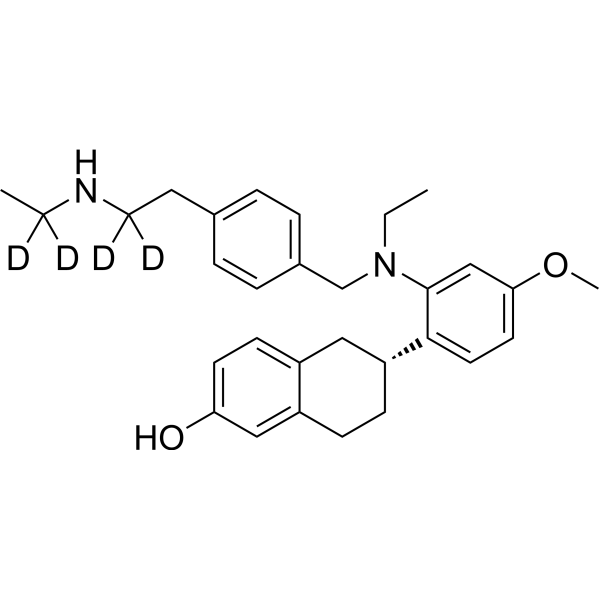 0 ImagesCat. No.: HY-19822SSynonyms: RAD1901-d4Elacestrant-d4 (RAD1901-d4) is a deuterated labeled Elacestrant (HY-19822). Elacestrant (RAD1901) is a selective estrogen receptor (estrogen receptor, ER) degrader (SERD) with oral activity, with IC50 values of 48 and 870 nM for ERα and ERβ, respectively. Elacestrant can also effectively inhibit the growth of ER+ breast cancer cell lines both in vitro and in vivo.
-
D 15413
 0 ImagesCat. No.: HY-124403CAS No.: 83364-03-8D 15413 is an orally active antagonist for nonsteroidal estrogen. D 15413 inhibits growth of estrogen receptor positive MCF-7 cell with an inhibition rate of 70% at 10-7 M. D 15413 exhibits antitumor efficacy against DMBA (HY-W011845) or MNU (HY-34758)-induced breast cancer.
-
Anticancer agent 344
 0 ImagesCat. No.: HY-184947CAS No.: 3099598-95-2Anticancer agent 344 is a heterobifunctional anticancer compound with moderate cancer cell growth inhibitory activity, and it also exhibits inhibitory activity against ERα-overexpressing cells. Anticancer agent 344 can be used in cancer-related research.
-
EC 313
 0 ImagesCat. No.: HY-W753635CAS No.: 1249398-29-5EC 313 is a selective progesterone receptor modulator. EC 313 can dose dependently reduce the weight of fibroids. EC 313 can reduce the expression of ER and PR. EC 313 can be used for the study of uterine fibroids.
-
Antiproliferative agent-51
 0 ImagesCat. No.: HY-163766Antiproliferative agent-51 (Compound 18h) exhibits inhibitory efficacy against estrogen receptor α (ERα) mediated transcription, with an IC50 of 1.6 nM. Antiproliferative agent-51 inhibits the proliferation of cancer cell ZR-75, with an IC50 of 0.031 μM. Antiproliferative agent-51 exhibits antitumor efficacy in mouse models.
-
2-Hydroxyestrone-13C6
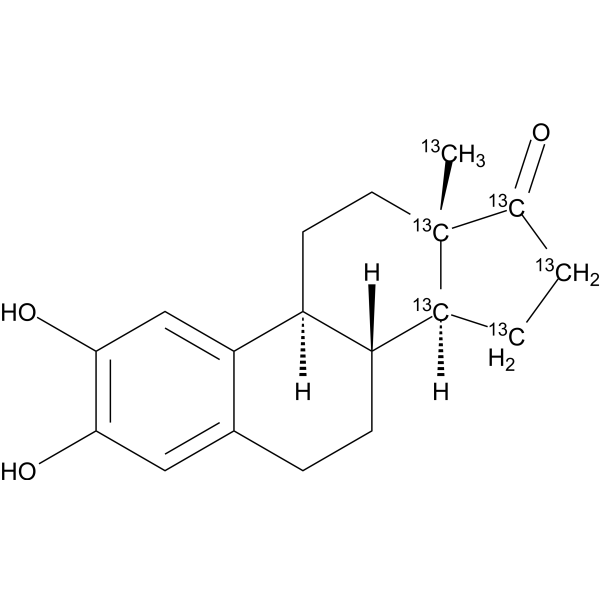 0 ImagesCat. No.: HY-113251S1Synonyms: Catecholestrone-13C62-Hydroxyestrone-13C6 is the 13C-labeled 2-Hydroxyestrone. 2-Hydroxyestrone (Catecholestrone) is a specific receptor-mediated antiestrogenic agent. 2-Hydroxyestrone is anticarcinogenic.




