



Fungal
An antifungal agent is a drug that selectively eliminates fungal pathogens from a host with minimal toxicity to the host.
Classes: 1. Polyene Antifungal Drugs: Amphotericin, nystatin, and pimaricin interact with sterols in the cell membrane (ergosterol in fungi, cholesterol in humans) to form channels through which small molecules leak from the inside of the fungal cell to the outside. 2. Azole Antifungal Drugs: Fluconazole, itraconazole, and ketoconazole inhibit cytochrome P450-dependent enzymes (particularly C14-demethylase) involved in the biosynthesis of ergosterol, which is required for fungal cell membrane structure and function. 3. Allylamine and Morpholine Antifungal Drugs: lylamines (naftifine, terbinafine) inhibit ergosterol biosynthesis at the level of squalene epoxidase. The morpholine drug, amorolfine, inhibits the same pathway at a later step. 4. Antimetabolite Antifungal Drugs: 5-Fluorocytosine acts as an inhibitor of both DNA and RNA synthesis via the intracytoplasmic conversion of 5-fluorocytosine to 5-fluorouracil.
All Product Categories
-
Fungal Related Products (2737)
Related Products (2737)

-
Antibodies (1)
-
Related Compound Screening Libraries (1)
-
Alternapyrone
 0 ImagesCat. No.: HY-165128CAS No.: 676340-02-6Alternapyrone is an α-pyrone compound found in fungi, some of which are phytotoxic to wheat seed germination, and its biosynthesis requires only three enzymes.

-
Feruloyl esterase, Acetivibrio cellulolyticus
 0 ImagesCat. No.: HY-E70115AFeruloyl esterase, Acetivibrio cellulolyticus is a subclass of carboxylesterases that hydrolyzes the ester linkages between hydroxycinnamic acids and arabinoxylan/pectin polysaccharides in plant cell walls. Feruloyl esterase, Acetivibrio cellulolyticus can hydrolyze ethyl ferulate to release ferulic acid, disrupt plant cell wall structure, promote fiber swelling, and facilitate cellulase hydrolysis. Feruloyl esterase, Acetivibrio cellulolyticus synergizes with xylanase by removing ferulic acid side chains, thereby promoting efficient hydrolysis of xylan into monomers. Feruloyl esterase, Acetivibrio cellulolyticus acts as a virulence factor for Verticillium dahliae VdFAE and Magnaporthe oryzae Fae1, facilitating host infection and colonization. Feruloyl esterase, Acetivibrio cellulolyticus promotes the degradation of cotton GhDFR through binding to its NADPH domain, thereby inhibiting flavonoid-mediated innate immunity and inducing cell death in Nicotiana benthamiana. Feruloyl esterase, Acetivibrio cellulolyticus can be used in studies related to verticillium wilt and rice blast.
-
Balteatide
 0 ImagesCat. No.: HY-P10538CAS No.: 1630816-52-2Balteatide is an antimicrobial peptide, which can be found in skin secretion of Phyllomedusa baltea. Balteatide inhibits the gram-positive Staphylococcus aureus (MIC=435 μM), the gram-negative Escherichia coli (MIC=109 μM), and Candida albicans (MIC=27 μM). Balteatide lacks hemolytic activity (at 512 mg/L) and myotropic activity.
-
Oxyclozanide (Standard)
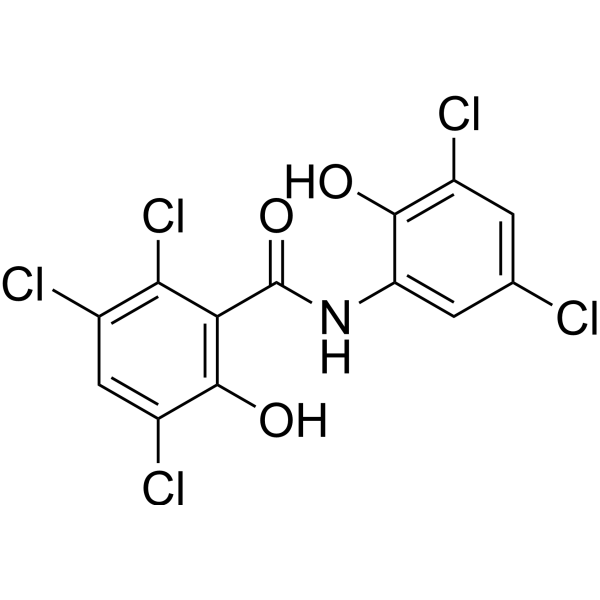 0 ImagesOxyclozanide (Standard) is the analytical standard of Oxyclozanide. This product is intended for research and analytical applications. Oxyclozanide is an orally active salicylanilide anthelmintic agent that mainly acts by uncoupling oxidative phosphorylation in flukes. Oxyclozanide shows good anti-adenovirus, anti-biofilm, antifungal, and antibacterial activity.
-
Buforin IIb
 0 ImagesCat. No.: HY-P12127CAS No.: 233273-63-7Synonyms: BF2-BBuforin IIb (BF2-B) is an anticancer peptide, as well as an Antibacterial and Antifungal agent. Buforin IIb is derived from histone H2A. Buforin IIb activates SAPK/JNK and p38 MAPK. Buforin IIb induces mitochondria-dependent Apoptosis. Buforin IIb achieves selective targeting by interacting with gangliosides on the surface of cancer cells, and can penetrate cancer cell membranes without causing damage. Buforin IIb exhibits antibacterial activity against Gram-negative bacteria, Gram-positive bacteria and fungi. Buforin IIb can be used in the research of cervical cancer, as well as cancers including leukemia, central nervous system cancer, ovarian cancer, breast cancer, melanoma, colon cancer, non-small cell lung cancer, renal cancer and prostate cancer.
-
Sordarin
 0 ImagesCat. No.: HY-128478CAS No.: 11076-17-8Sordarin (Compound 1) is an antifungal agent targeting Elongation factor 2 (EF2) with a tetracyclic diterpene core including a norbornene system. Sordarin can be isolated from the fungus Sordaria araneosa. Sordarin has potent antifungal activity against Saccharomyces cerevisiae and Candida albicans. Sordarin prevents the translocation of the ribosome along mRNA during elongation of the emerging polypeptide chain, inhibiting protein synthesis in fungi by stabilizing the ribosome/EF2 complex.
-
lsocryptomerin
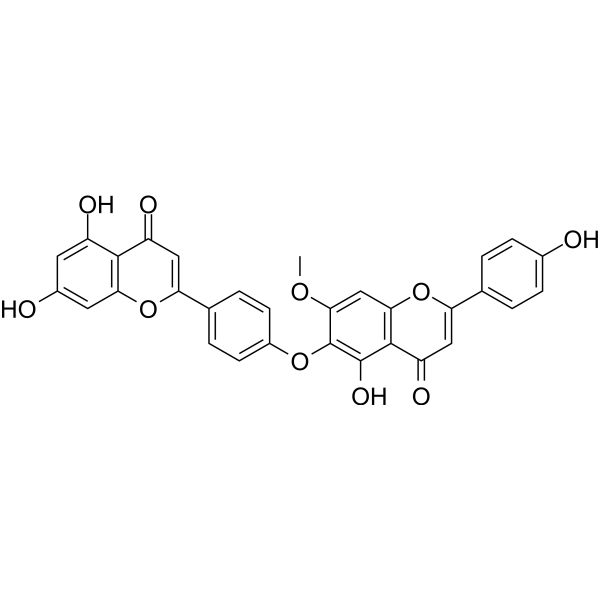 0 ImagesCat. No.: HY-N11506CAS No.: 20931-58-2lsocryptomerin is a membrane-active antifungal compound that can be isolated from Selaginella tamariscina. lsocryptomerin can depolarize fungal plasma membrane. lsocryptomerin also shows anticancer and antibacterial activities.

-
Phenoxan
 0 ImagesCat. No.: HY-N21815CAS No.: 134332-63-1Phenoxan is an inhibitor of cytochrome b and NADH: ubiquinone oxidoreductase. It exerts anti-HIV, antifungal, and cytotoxic effects by inhibiting the electron transport chain, the activity of HIV-1 Reverse Transcriptase, and viral replication. Phenoxan can be used in studies of HIV-1 infection and fungal infections.
-
CYP51/HDAC-IN-1
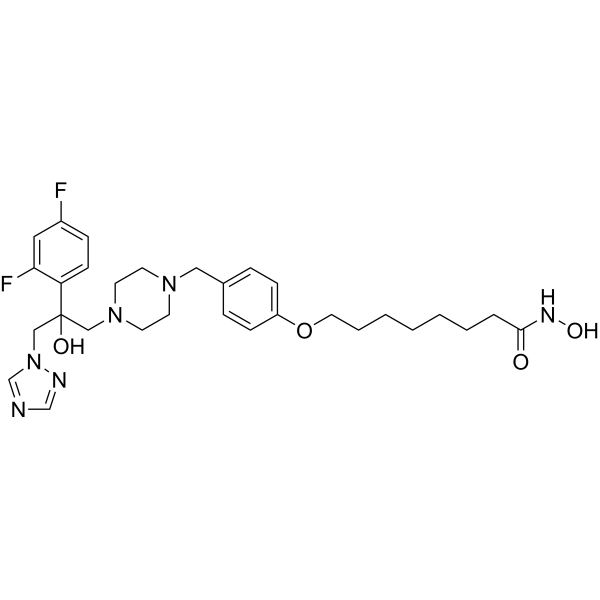 0 ImagesCat. No.: HY-144643CAS No.: 2502095-64-7CYP51/HDAC-IN-1 is a potent, orally active CYP51/HDAC dual inhibitor. CYP51/HDAC-IN-1 inhibits important virulence factors and down-regulated resistance-associated genes. CYP51/HDAC-IN-1 exhibits potent therapeutic effects for both tropical candidiasis and cryptococcal meningitis.
-
Fosmanogepix TFA
 0 ImagesCat. No.: HY-119726BFosmanogepix TFA (APX001 TFA) is an orally active APX001A (HY-18233) prodrug and antifungal agent. Fosmanogepix TFA is effective against Cryptococcus neoformans, Fluconazole (HY-B0101)-resistant C. auris. Fosmanogepix TFA is effective in the treatment of invasive pulmonary aspergillosis and pulmonary murine mucormycosis.
-
(-)-Oxysporidinone
 0 ImagesCat. No.: HY-N19644CAS No.: 884604-98-2
-
SDH-IN-19
 0 ImagesCat. No.: HY-163911SDH-IN-19 (compound A13) is a fungicide, with an EC50 value of 0.83 μg/mL against Rhizoctonia solani. SDH-IN-19 can be used in antifungal research of crops.
-
Antituberculosis agent-7
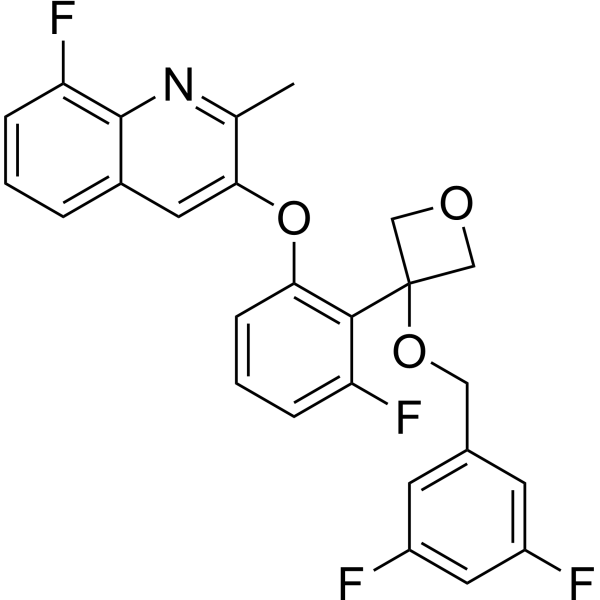 0 ImagesCat. No.: HY-152137CAS No.: 2874263-73-5Antituberculosis agent-7, an oxetanyl-quinoline derivative, has shown good antibacterial activity against P. mirabilis with a MIC of 31.25 μM. Antituberculosis agent-7 shows good antifungal activity against A. niger with a MIC of 62.5 μM. Antituberculosis agent-7 shows excellent antimycobacterial activity with MIC 3.41 μM for M. tuberculosis H37Rv.
-
D0870
 0 ImagesCat. No.: HY-105206ACAS No.: 149715-95-7Synonyms: ZD0870D0870 (ZD0870) is an antifungal agent that inhibits C. neoformans, vaginal candidiasis and viable yeasts.
-
Sinigrin (Standard)
 0 ImagesSynonyms: Allyl-glucosinolate (Standard); 2-Propenyl-glucosinolate (Standard)Sinigrin (Standard) (Allyl-glucosinolate (Standard)) is the analytical standard of Sinigrin (HY-N0404). This product is intended for research and analytical applications. Sinigrin (Allyl-glucosinolate) is an orally active glucosinolate found in cruciferous plants. Sinigrin possesses multiple activities such as anti-cancer, antibacterial, antifungal, anti-inflammatory, antioxidant, and inhibition of fat synthesis. Sinigrin can be used in the research of tumors, inflammatory, and metabolic diseases.
-
(+)-Sclerosporin
 0 ImagesCat. No.: HY-N19774CAS No.: 66419-03-2(+)-Sclerosporin is a cedrane-type sesquiterpene. (+)-Sclerosporin induces the formation of asexual arthrospores in fungal hyphae.
-
Hydroxyphenyllactic acid-d3
 0 ImagesCat. No.: HY-W654234CAS No.: 2249814-89-7Hydroxyphenyllactic acid-d3 is the deuterium labeled Hydroxyphenyllactic acid (HY-113219). Hydroxyphenyllactic acid is an antifungal metabolite.
-
6-Hydroxy-8-methoxy-3-methylisocoumarin
 0 ImagesCat. No.: HY-N19147CAS No.: 2090467-41-56-Hydroxy-8-methoxy-3-methylisocoumarin is an isocoumarin that can be found in rice fermentation of sponge-derived fungus Curvularia sp. ZYX-Z-4. 6-Hydroxy-8-methoxy-3-methylisocoumarin exhibits no significant anti-inflammatory or antifungal activity.




