



Glucosidase Inhibitor
-
3,5-Dihydroxybenzaldehyde
 0 Images
3,5-Dihydroxybenzaldehyde is an α-glucosidase inhibitor with an IC50 of 0.47 μg/mL. 3,5-Dihydroxybenzaldehyde exerts bactericidal activity against Campylobacter jejuni, Escherichia coli O157:H7, Listeria monocytogenes and Salmonella enterica. 3,5-Dihydroxybenzaldehyde can be used in glucose metabolism-related research.
-
Docosapentaenoic acid (22n-3)
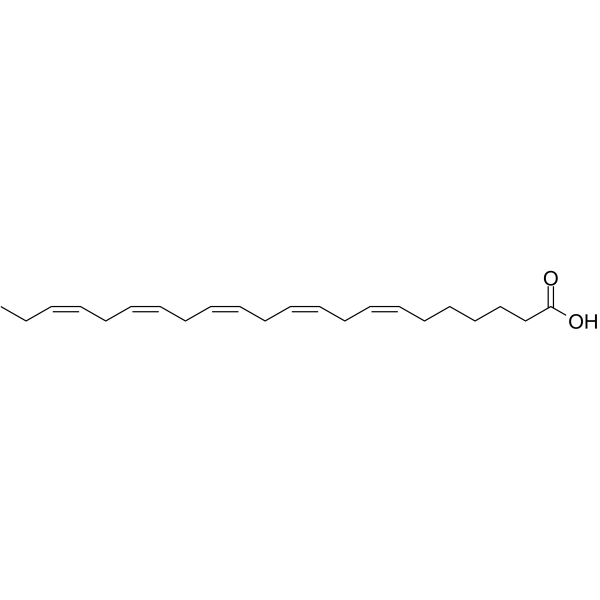 0 ImagesSynonyms: Clupanodonic acid
Docosapentaenoic acid (22n-3) is a component of phospholipids. Docosapentaenoic acid 22n-3 has inhibitory activity against α-amylase and α-glucosidase, with IC50s value of 17 μg/mL and 22 μg/mL, respectively. Docosapentaenoic acid 22n-3 increases cell vitality. Docosapentaenoic acid 22n-3 has a weak anti-inflammatory effect.
-
2-(2-Phenylethyl)chromone
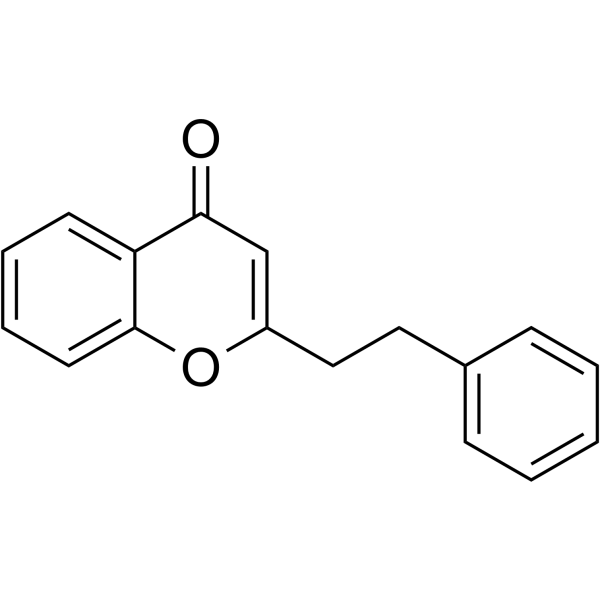 0 ImagesSynonyms: Flidersiachromone
2-(2-Phenylethyl) chromone (Flidersiachromone) is a chromone derivative and antioxidant. 2-(2-Phenylethyl) chromone scavenges ABTS·+ free radicals, and its derivatives exhibit diverse activities including anti-inflammatory, neuroprotective, anti-tumor, and α-glucosidase inhibitory effects. 2-(2-Phenylethyl) chromone is applicable to experimental research in fields such as inflammation-related diseases, tumors, and neurodegenerative diseases.
-
D-Threitol
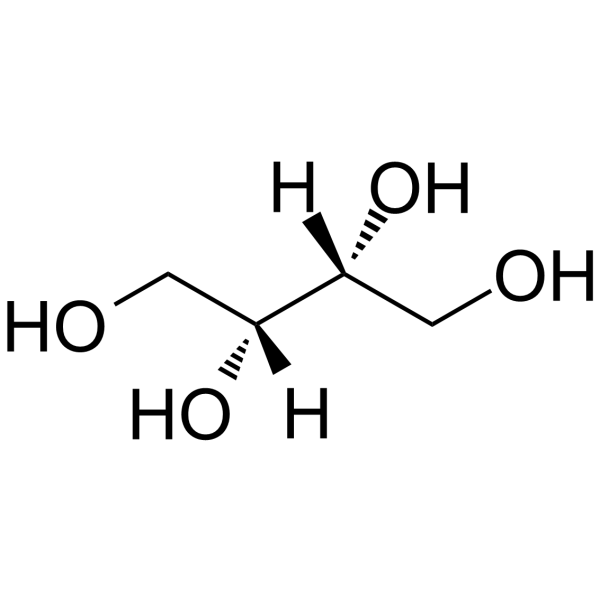 0 Images
D-Threitol is a naturally occurring four-carbon sugar alcohol and an α-glucosidase (α‑glucosidase) inhibitor with an IC50 of 49 mM against yeast α-glucosidase, and it is orally active. D-Threitol modulates gut microbiota composition, increases microbial diversity, enriches beneficial bacterial genera, and restores fecal short-chain fatty acid levels. D-Threitol reduces body weight gain and fat accumulation, improves glucose tolerance and insulin sensitivity, and alleviates liver, kidney, and pancreatic tissue damage. D-Threitol inhibits hepatic accumulation of ceramides and diacylglycerols. D-Threitol preserves glomerular morphology and islet structure in diabetes models. D-Threitol is also a low-calorie sweetener. D-Threitol serves as a cryoprotective polyol that stabilizes protein structure at low temperatures. D-Threitol is used in research on type 2 diabetes and as an antifreeze agent for the Alaskan beetle.
-
2-Hydroxyquinoline
 0 Images
2-Hydroxyquinoline is an α-glucosidase inhibitor (IC50 = 64.4 µg/mL) and an α-amylase inhibitor (IC50 = 130.5 µg/mL). 2-Hydroxyquinoline inhibits α-glucosidase and α-amylase activities. 2-Hydroxyquinoline exhibits antidiabetic effects. 2-Hydroxyquinoline can be used for research on diabetes.
-
Lariciresinol
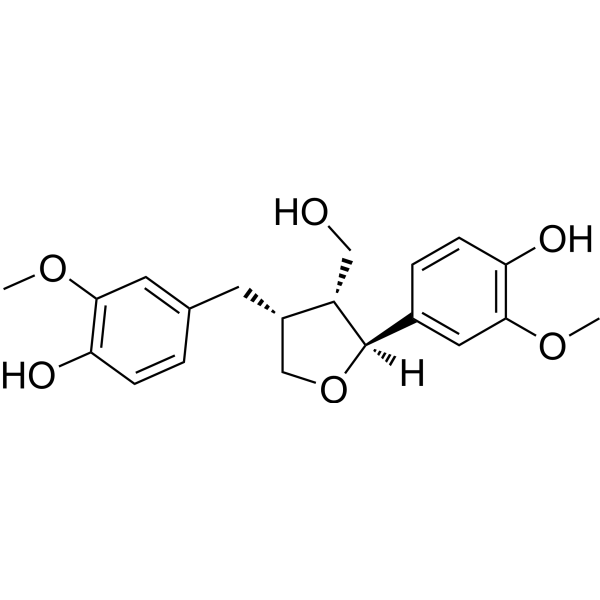 0 Images
Lariciresinol is an orally active ingredient. Lariciresinol can be isolated from Arabidopsis thaliana. Lariciresinol inhibits α-glucosidase activity (IC50 of 6.97 μM; Ki of 0.046 μM). Lariciresinol dereases Bcl-2, upregulates Bax and induces Apoptosis. Lariciresinol regulates TGF-β and NF-κB pathways. Lariciresinol has antitumor activity against liver cancer, gastric cancer, and breast cancer. Lariciresinol shows antifungal activity and anti-diabetic activity.
-
Pinoresinol 4-O-β-D-glucopyranoside
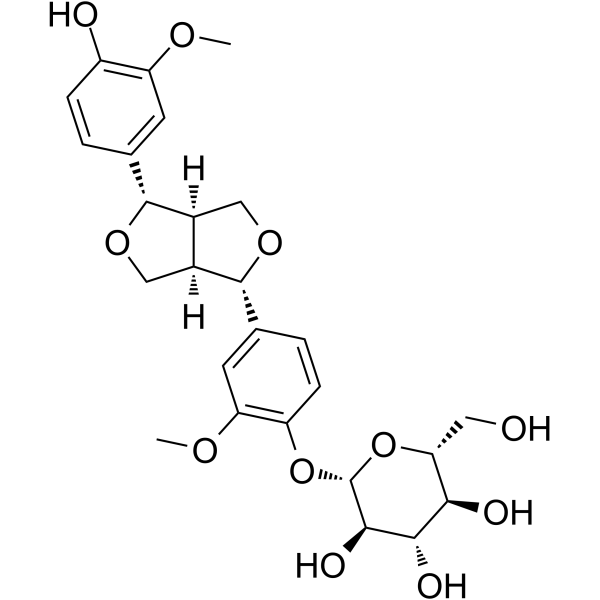 0 ImagesSynonyms: (+)-Pinoresinol 4-O-β-D-glucopyranoside
Pinoresinol 4-O-β-D-glucopyranoside ((+)-Pinoresinol 4-O-β-D-glucopyranoside) is an orally active α-glucosidase inhibitor, with an IC50 of 48.13 μg/mL. Pinoresinol 4-O-β-D-glucopyranoside binds to estrogen receptors. Pinoresinol 4-O-β-D-glucopyranoside inhibits phosphodiesterase. Pinoresinol 4-O-β-D-glucopyranoside exhibits various activities such as antioxidant, anti-inflammatory, anti-hyperglycemic, hepatoprotective and anti-epileptic effects.
-
Delphinidin-3-O-galactoside chloride
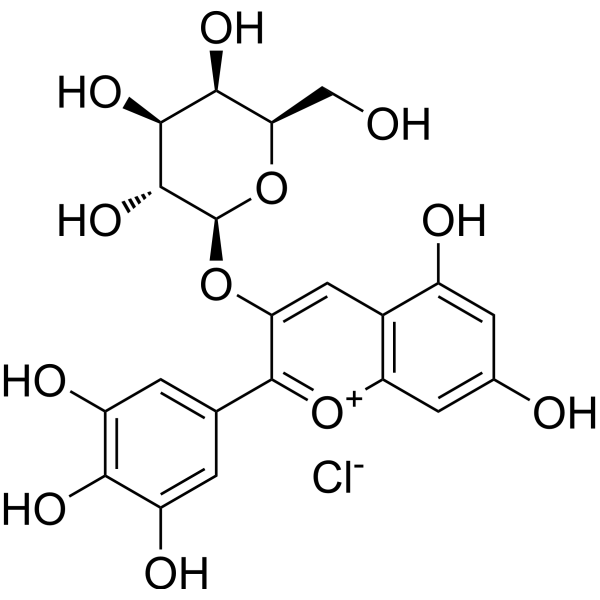 0 Images
Delphinidin-3-O-galactoside chloride is an anthocyanin found in abbiteye blueberry. Delphinidin-3-O-galactoside chloride show inhibitory activitiesagainst α-glucosidase with an IC50 of 68.33 μM, and tyrosinase with an IC50 of 34.14 μM. Delphinidin-3-O-galactoside chloride attenuates HO-1 and HSP70 messenger RNA down-regulation, suppresses cytotoxicity, reduces endoplasmic reticulum stress responses, scavenges free radicals, reduces intracellular triglyceride levels and lipid droplet accumulation. Delphinidin-3-O-galactoside chloride can be used for the researches of diabesity, melanoma and inflammation.

-
α-Glucosidase-IN-22
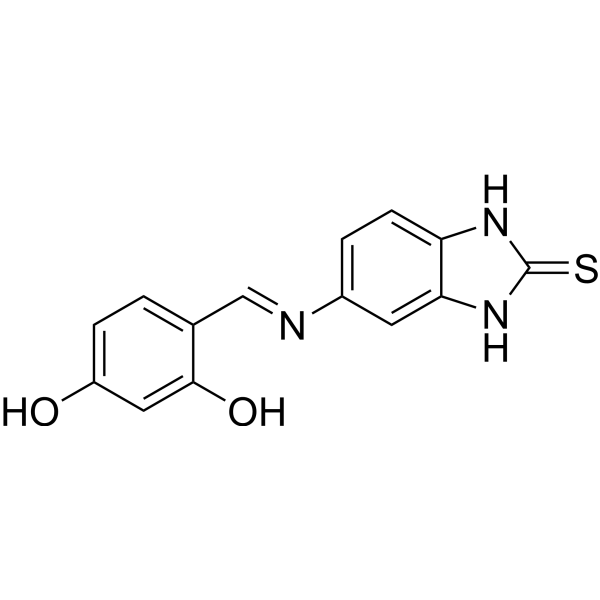 0 Images
α-Glucosidase-IN-22 (Compound 7i) is a α-glucosidase inhibitor with an IC50 value of 0.64 μM. α-Glucosidase-IN-22 can be used for the research of type 2 diabetes.
-
D-Threitol (Standard)
 0 Images
D-Threitol (Standard) is the analytical standard of D-Threitol (HY-W012846). This product is intended for research and analytical applications. D-Threitol is a naturally occurring four-carbon sugar alcohol and an α-glucosidase (α‑glucosidase) inhibitor with an IC50 of 49 mM against yeast α-glucosidase, and it is orally active. D-Threitol modulates gut microbiota composition, increases microbial diversity, enriches beneficial bacterial genera, and restores fecal short-chain fatty acid levels. D-Threitol reduces body weight gain and fat accumulation, improves glucose tolerance and insulin sensitivity, and alleviates liver, kidney, and pancreatic tissue damage. D-Threitol inhibits hepatic accumulation of ceramides and diacylglycerols. D-Threitol preserves glomerular morphology and islet structure in diabetes models. D-Threitol is also a low-calorie sweetener. D-Threitol serves as a cryoprotective polyol that stabilizes protein structure at low temperatures. D-Threitol is used in research on type 2 diabetes and as an antifreeze agent for the Alaskan beetle.
-
Millewanin H
 0 ImagesCat. No.: HY-N3256CAS No.: 874303-34-1
Millewanin H is a Flavonoids product that can be isolated from the herbs of Millettia pachycarpa. Millewanin H has antiestrogenic activity and inhibit 17β-estradiol-induced-β-galactosidase activity. Millewanin H showes α-glucosidase inhibition.
-
trans-p-Coumaraldehyde
 0 ImagesCat. No.: HY-W1060183CAS No.: 20711-53-9Synonyms: (E)-4-Hydroxycinnamaldehyde; (E)-p-Hydroxycinnamaldehyde
trans-p-Coumaraldehyde ((E)-4-Hydroxycinnamaldehyde) is a natural product. trans-p-Coumaraldehyde can be isolated from the seeds of Petai cina. trans-p-Coumaraldehyde exhibits potential α-glucosidase inhibitory activity. trans-p-Coumaraldehyde can be used in diabetes research.
-
Cefetecol
 0 ImagesCat. No.: HY-159796ACAS No.: 117211-03-7Synonyms: GR69153
Ceftezole (GR69153) is a broad-spectrum cephalosporin antibiotic and an α-glucosidase inhibitor. Ceftezole inhibits bacterial cell lysis by inhibiting cell wall synthesis and binding to penicillin-binding proteins (PBPs). Ceftezole exhibits in vivo anti-diabetic activity in diabetic mice. Ceftezole can be used in antibacterial and anti-diabetic research.
-
α-Glucosidase-IN-78
 0 ImagesCat. No.: HY-170588CAS No.: 3115340-49-0
α-Glucosidase-IN-78 (Compound 12m) is an inhibitor for α-glucosidase with a reversible, competitive IC50 6.0 μM. α-Glucosidase-IN-78 can be used in research of diabete for its hypoglycemic property.
-
ALR2/α-Glucosidase-IN-1
 0 ImagesCat. No.: HY-182311
ALR2/α-Glucosidase-IN-1 (Compound 4) is a competitive ALR2 inhibitor and competitive α-glucosidase inhibitor, with an IC50 of 0.250 μM against ALR2 and an IC50 of 0.561 μM against α-glucosidase. ALR2/α-Glucosidase-IN-1 binds to the active sites of ALR2 and α-glucosidase, and inhibits enzymatic activity by competing with their respective substrates. ALR2/α-Glucosidase-IN-1 can be used in diabetes-related research.
-
α-Glucosidase-IN-95
 0 ImagesCat. No.: HY-175170
α-Glucosidase-IN-95 (Compound 21c) is a competitive α-Glucosidase inhibitor with an IC50 of 0.44 μM. α-Glucosidase-IN-95 has a significant inhibitory potency without cytotoxicity to normal cells. α-Glucosidase-IN-95 can be used for metabolic disorders like diabetes mellitus research.
-
Euphominoid C
 0 ImagesCat. No.: HY-N21640ACAS No.: 2113766-69-9
Euphominoid C is a competitive α-glucosidase inhibitor (IC50 = 52.50 μM) and a mixed-type β-glucuronidase inhibitor (IC50 = 45.87 μM). Euphominoid C exhibits reversible binding modes against both enzymes. Euphominoid C can be used for the research of diabetes.




