



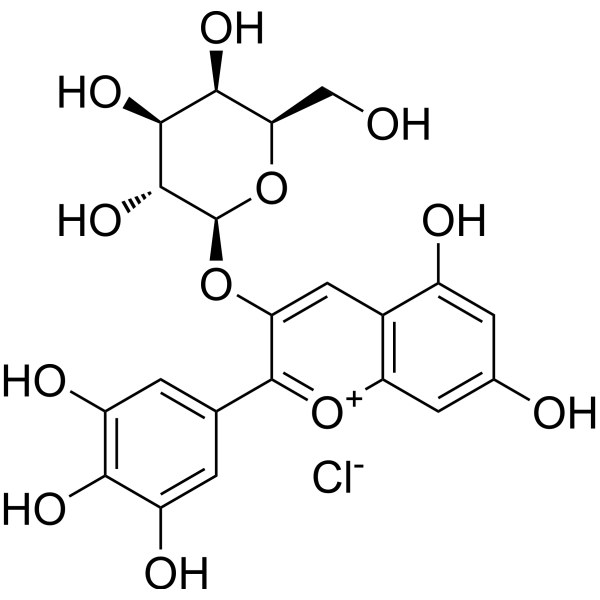
Delphinidin-3-O-galactoside chloride
Based on 1 publication(s) in Google Scholar
Delphinidin-3-O-galactoside chloride is an anthocyanin found in abbiteye blueberry. Delphinidin-3-O-galactoside chloride show inhibitory activitiesagainst α-glucosidase with an IC50 of 68.33 μM, and tyrosinase with an IC50 of 34.14 μM. Delphinidin-3-O-galactoside chloride attenuates HO-1 and HSP70 messenger RNA down-regulation, suppresses cytotoxicity, reduces endoplasmic reticulum stress responses, scavenges free radicals, reduces intracellular triglyceride levels and lipid droplet accumulation. Delphinidin-3-O-galactoside chloride can be used for the researches of diabesity, melanoma and inflammation.
For research use only. We do not sell to patients.
- Purity : 99.21%
- CAS No.: 28500-00-7
- Formula: C21H21ClO12
- Molecular Weight:500.84
-
Storage:
-20°C, sealed storage, away from moisture and light
* In solvent : -80°C, 6 months; -20°C, 1 month (sealed storage, away from moisture and light)

To place orders, for customer services and technical support, please contact: MedChemExpress USA
Tel: 609-228-6898 E-mail: [email protected] [email protected]


-
 Biological Activity
-
Chemical Information
-
Solvent & Solubility
- Purity & Documentation
- References
-
 Help & FAQs


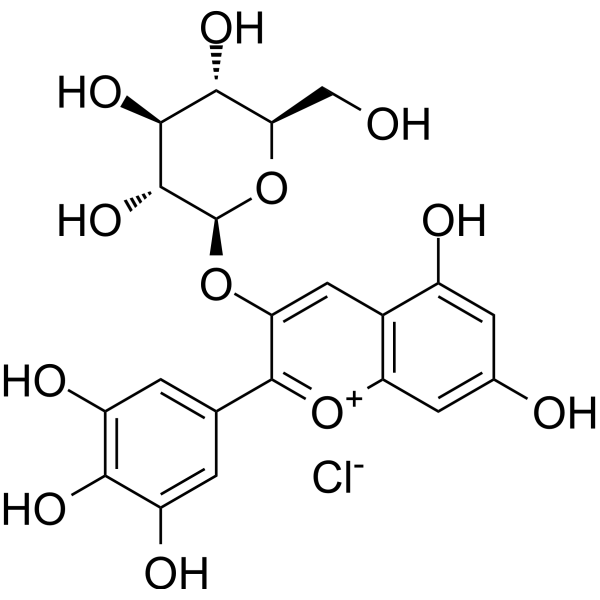
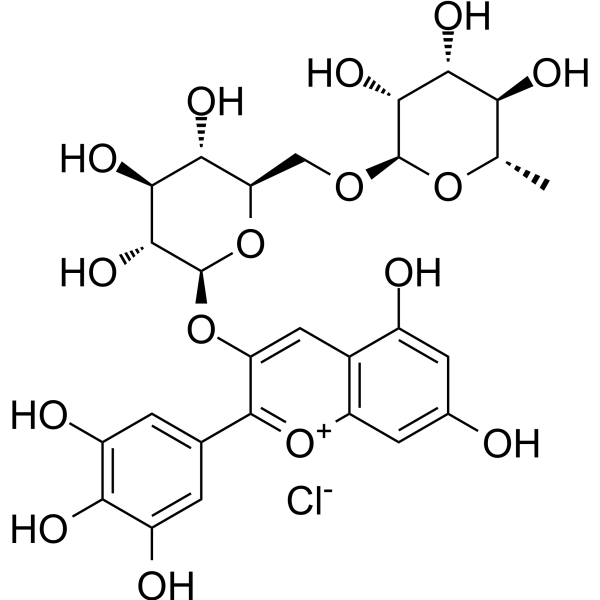
Publications Citing Use of MedChemExpress (MCE) Delphinidin-3-O-galactoside chloride
More

Biological Activity
Description
IC50 & Target
[1]|
α‑glucosidase |
HO-1 |
HSP70 |
In Vitro
Delphinidin-3-O-galactoside chloride (50-500 μM; 6 h, 24 h) shows low cytotoxicity toward Hepa1c1c-7 mouse hepatocytes after 6 hours at concentrations up to 500 μM, but reduces cell viability by 40% and 48% at 300 μM and 500 μM, respectively, after 24 hours of treatment[1].
Delphinidin-3-O-galactoside chloride (100 μM; 6-24 h) protects Hepa1c1c-7 mouse hepatocytes from EGCG (HY-13653)-induced cytotoxicity[1].
Delphinidin-3-O-galactoside chloride (100 μM; 24 h) up-regulates HO-1 and HSP70 mRNA expression in Hepa1c1c-7 mouse hepatocytes and suppresses EGCG-induced down-regulation of these two genes, while having no effect on Cu/ZnSOD, MnSOD, or HSP90 expression[1].
Delphinidin-3-O-galactoside chloride (100 μM; 24 h) suppresses EGCG-induced endoplasmic reticulum stress in Hepa1c1c-7 mouse hepatocytes, as shown by reduced CHOP mRNA expression and eliminated XBP-1 mRNA splicing[1].
Delphinidin-3-O-galactoside chloride scavenges DPPH free radicals with an EC50 of 39.91 µM[2].
Delphinidin-3-O-galactoside chloride scavenges ABTS+ free radicals with an EC50 of 19.01 µM[2].
Delphinidin-3-O-galactoside chloride inhibits α-glucosidase from Saccharomyces cerevisiae with an IC50 of 68.33 µM[2].
Delphinidin-3-O-galactoside chloride (25-100 µM; 12 h) does not significantly reduce the viability of HepG2 cells[2].
Delphinidin-3-O-galactoside chloride (50-100 µM; 12 h) significantly reduces intracellular total cholesterol, triglyceride levels and lipid droplet accumulation in high glucose/Oleic acid (HY-N1446)-induced HepG2 cells[2].
Delphinidin-3-O-galactoside chloride potently inhibits Agaricus bisporus tyrosinase with an IC50 of 34.14 μM[3].
MedChemExpress (MCE) has not independently confirmed the accuracy of these methods. They are for reference only.
-
Cell Line:Hepa1c1c-7 mouse hepatocytes
-
Concentration:50, 100, 200, 300, 500 μM
-
Incubation Time:6 h; 24 h
-
Result:Showed no cytotoxic effect, with cell viability remaining near 100% across all tested concentrations after 6 hours.
Reduced cell viability by 40% at 300 μM and 48% at 500 μM after 24 hours, while 50 μM and 100 μM treatments showed no significant reduction in cell viability.
-
Cell Line:Hepa1c1c-7 mouse hepatocytes
-
Concentration:100 μM
-
Incubation Time:6 h (co-treatment); 6 h (pretreatment); 24 h (pretreatment)
-
Result:Suppressed EGCG-induced cell viability reduction by 36% when cotreated with 300 μM EGCG for 6 hours.
Reduced EGCG-induced cell viability loss when pretreated for 6 hours prior to 300 μM EGCG treatment for 6 hours.
Remarkably suppressed EGCG-induced cell viability reduction by 46% when pretreated for 24 hours prior to 300 μM EGCG treatment for 6 hours.
-
Cell Line:Hepa1c1c-7 mouse hepatocytes
-
Concentration:100 μM
-
Incubation Time:24 h (pretreatment prior to 6 h EGCG treatment)
-
Result:Increased heme oxygenase-1 (HO-1) mRNA levels by 14% and heat shock protein 70 (HSP70) mRNA levels relative to vehicle control when used alone.
Suppressed EGCG-induced HO-1 down-regulation by 44% and suppressed EGCG-induced HSP70 down-regulation when used as pretreatment.
Had no effect on Cu/Zn superoxide dismutase (Cu/ZnSOD), manganese superoxide dismutase (MnSOD), or heat shock protein 90 (HSP90) mRNA levels, and did not suppress EGCG-induced HSP90 down-regulation.
Did not up-regulate CHOP mRNA levels when used alone.
Significantly suppressed EGCG-induced CHOP mRNA expression and abrogated EGCG-induced XBP-1 mRNA splicing when used as pretreatment.
-
Cell Line:human hepatocellular carcinoma HepG2 cells
-
Concentration:25, 50, and 100 µM
-
Incubation Time:12 h
-
Result:Did not exhibit significant cytotoxicity compared to the control group, with cell viability remaining near 100%.


Chemical Information
-
CAS No. 28500-00-7
-
Appearance Solid
-
Molecular Weight 500.84
-
Formula C21H21ClO12
-
Color Brown to dark brown
-
SMILES
OC1=CC(O)=CC2=C1C=C(C(C3=CC(O)=C(C(O)=C3)O)=[O+]2)O[C@@H]4O[C@@H]([C@@H]([C@@H]([C@H]4O)O)O)CO.[Cl-]
-
Structure Classification
-
Initial Source
-
Shipping
Room temperature in continental US; may vary elsewhere.
-
Storage
-20°C, sealed storage, away from moisture and light
* In solvent : -80°C, 6 months; -20°C, 1 month (sealed storage, away from moisture and light)


Publications (1)
-
Journal Impact Factor
-
Most Recent
-
Food Chem
Flavonoid-mediated metabolic underpinning quality variation in red bud-sport pear mutants. [Abstract]2025 Oct 15:489:144992. PMID: 40466530


Solvent & Solubility
In Vitro:
DMSO : 100 mg/mL (199.66 mM; Need ultrasonic; Hygroscopic DMSO has a significant impact on the solubility of product, please use newly opened DMSO)
Please refer to the solubility information to select the appropriate solvent. Once prepared, please aliquot and store the solution to prevent product inactivation from repeated freeze-thaw cycles.
Storage method and period of stock solution: -80°C, 6 months; -20°C, 1 month (sealed storage, away from moisture and light). When stored at -80°C, please use it within 6 months. When stored at -20°C, please use it within 1 month.
Please refer to the solubility information to select the appropriate solvent. Once prepared, please aliquot and store the solution to prevent product inactivation from repeated freeze-thaw cycles.
Storage method and period of stock solution: -80°C, 6 months; -20°C, 1 month (sealed storage, away from moisture and light). When stored at -80°C, please use it within 6 months. When stored at -20°C, please use it within 1 month.
Concentration (start) × Volume (start) = Concentration (final) × Volume (final)
In Vivo:
Select the appropriate dissolution method based on your experimental animal and administration route.
- For the following dissolution methods, please ensure to first prepare a clear stock solution using an In Vitro approach and then sequentially add co-solvents:
- To ensure reliable experimental results, the clarified stock solution can be appropriately stored based on storage conditions. As for the working solution for In Vivo experiments, it is recommended to prepare freshly and use it on the same day.
- The percentages shown for the solvents indicate their volumetric ratio in the final prepared solution. If precipitation or phase separation occurs during preparation, heat and/or sonication can be used to aid dissolution.
Add each solvent one by one: 10% DMSO 40% PEG300 5% Tween-80 45% Saline
Solubility: ≥ 2.5 mg/mL (4.99 mM); Clear solution
This protocol yields a clear solution of ≥ 2.5 mg/mL (saturation unknown).
Taking 1 mL working solution as an example, add 100 μL DMSO stock solution (25.0 mg/mL) to 400 μL PEG300, and mix evenly; then add 50 μL Tween-80 and mix evenly; then add 450 μL Saline to adjust the volume to 1 mL.
Preparation of Saline: Dissolve 0.9 g sodium chloride in ddH₂O and dilute to 100 mL to obtain a clear Saline solution.
Add each solvent one by one: 10% DMSO 90% (20% SBE-β-CD in Saline)
Solubility: ≥ 2.5 mg/mL (4.99 mM); Clear solution
This protocol yields a clear solution of ≥ 2.5 mg/mL (saturation unknown).
Taking 1 mL working solution as an example, add 100 μL DMSO stock solution (25.0 mg/mL) to 900 μL 20% SBE-β-CD in Saline, and mix evenly.
Preparation of 20% SBE-β-CD in Saline (4°C, storage for one week): 2 g SBE-β-CD powder is dissolved in 10 mL Saline, completely dissolve until clear.
In Vivo Dissolution Calculator
Please enter the basic information of animal experiments:
-
-
-
-
Recommended: Prepare an additional quantity of animals to account for potential losses during experiments.
Please enter your animal formula composition:
-
%DMSO +
Recommended: Keep the proportion of DMSO in working solution below 2% if your animal is weak.
-
%+
-
+%Tween-80 + +
-
%Saline +
The co-solvents required include: DMSO, . All of co-solvents are available by MedChemExpress (MCE). , Tween 80. All of co-solvents are available by MedChemExpress (MCE).
Working solution concentration: 0.22 mg/mL
Method for preparing stock solution: mg drug dissolved in μL DMSO. Stock solution concentration: mg/mL. * In solvent : -80°C, 6 months; -20°C, 1 month (sealed storage, away from moisture and light)
1. Take μL DMSO stock solution;
2. Add μL .
μL , mix evenly;
3. Then add μL Tween 80, mix evenly;
4. Then add μL
Please ensure that the stock solution in the first step is dissolved to a clear state, and add co-solvents in sequence. You can use ultrasonic heating (ultrasonic cleaner, recommended frequency 20-40 kHz), vortexing, etc. to assist dissolution.


Purity & Documentation
-
Data Sheet (289 KB)
-
SDS (252 KB)
- English - EN (252 KB)
- Français - FR (252 KB)
- Deutsch - DE (252 KB)
- Norwegian - NO (252 KB)
- Español - ES (252 KB)
- Swedish - SV (252 KB)
- Italian - IT (252 KB)
- Korean - KR (252 KB)
- Portuguese - PT (252 KB)
-
Handling Instructions (2659 KB)
References
[1]. Inoue H, et al. Delphinidin-3-O-galactoside protects mouse hepatocytes from (-)-epigallocatechin-3-gallate-induced cytotoxicity via up-regulation of heme oxygenase-1 and heat shock protein 70. Nutr Res. 2012;32(5):357-364. [Content Brief]
[2]. Zhu CW, et al. Five blueberry anthocyanins and their antioxidant, hypoglycemic, and hypolipidemic effects in vitro. Front Nutr. 2023;10:1172982. Published 2023 May 18. [Content Brief]
[3]. Chen R, et al. Spectroscopic studies and molecular docking on the interaction of delphinidin-3-O-galactoside with tyrosinase. Biotechnol Appl Biochem. 2022;69(4):1327-1338. [Content Brief]


Complete Stock Solution Preparation Table
Please refer to the solubility information to select the appropriate solvent. Once prepared, please aliquot and store the solution to prevent product inactivation from repeated freeze-thaw cycles.
Storage method and period of stock solution: -80°C, 6 months; -20°C, 1 month (sealed storage, away from moisture and light). When stored at -80°C, please use it within 6 months. When stored at -20°C, please use it within 1 month.
| Optional Solvent | Concentration Solvent Mass | 1 mg | 5 mg | 10 mg | 25 mg |
|---|---|---|---|---|---|
| DMSO | 1 mM | 1.9966 mL | 9.9832 mL | 19.9665 mL | 49.9161 mL |
| 5 mM | 0.3993 mL | 1.9966 mL | 3.9933 mL | 9.9832 mL | |
| 10 mM | 0.1997 mL | 0.9983 mL | 1.9966 mL | 4.9916 mL | |
| 15 mM | 0.1331 mL | 0.6655 mL | 1.3311 mL | 3.3277 mL | |
| 20 mM | 0.0998 mL | 0.4992 mL | 0.9983 mL | 2.4958 mL | |
| 25 mM | 0.0799 mL | 0.3993 mL | 0.7987 mL | 1.9966 mL | |
| 30 mM | 0.0666 mL | 0.3328 mL | 0.6655 mL | 1.6639 mL | |
| 40 mM | 0.0499 mL | 0.2496 mL | 0.4992 mL | 1.2479 mL | |
| 50 mM | 0.0399 mL | 0.1997 mL | 0.3993 mL | 0.9983 mL | |
| 60 mM | 0.0333 mL | 0.1664 mL | 0.3328 mL | 0.8319 mL | |
| 80 mM | 0.0250 mL | 0.1248 mL | 0.2496 mL | 0.6240 mL | |
| 100 mM | 0.0200 mL | 0.0998 mL | 0.1997 mL | 0.4992 mL |


Delphinidin-3-O-galactoside chloride Related Classifications
HY-N6606 Related Classifications
 Powered by Bioz