



HSPA5
HSPA5, also known as GRP78/BiP, encodes an endoplasmic reticulum (ER)-resident Hsp70 family chaperone that maintains protein folding, assembly, and quality control within the ER lumen[1][2]. Mechanistically, HSPA5 functions as a central regulator of the unfolded protein response (UPR) by interacting with the ER stress sensors PERK, IRE1, and ATF6, thereby coordinating cellular adaptation to proteotoxic stress[3][4]. Under basal conditions, HSPA5 binds and suppresses these UPR transducers, whereas accumulation of unfolded or misfolded proteins promotes HSPA5 dissociation and activation of downstream stress-signaling pathways[3][4]. Consequently, HSPA5 contributes to restoration of proteostasis through regulation of protein folding, ER-associated degradation, autophagy, and survival-associated stress responses[1]. Disease studies further demonstrate that dysregulated HSPA5 expression is linked to cancer, neurodegeneration, viral infection, and inflammatory disorders, highlighting its broad relevance to cellular stress adaptation and disease pathogenesis[2][5][6][7]. In experimental models, genetic depletion of HSPA5 disrupts UPR homeostasis and causes degeneration of Purkinje cells, establishing an essential role in neuronal survival and normal tissue function[8]. Compared with other cytosolic Hsp70 family members, HSPA5 is distinguished by its predominant ER localization and specialized function in ER protein quality control and stress signaling[1][2]. For research applications, HSPA5 has emerged as a therapeutic target, and pharmacological modulation of its activity is widely used to investigate ER stress, UPR signaling, and disease-associated proteostasis mechanisms[5].
References:
- [1]. Younus LA, et al. FTO gene polymorphisms (rs9939609 and rs17817449) as predictors of Type 2 Diabetes Mellitus in obese Iraqi population. Gene. 2017 Sep 5;627:79-84. [Content Brief]
- [2]. Wang M, et al. Role of the unfolded protein response regulator GRP78/BiP in development, cancer, and neurological disorders. Antioxid Redox Signal. 2009 Sep;11(9):2307-16. [Content Brief]
- [3]. Kiros M, et al. Trends in HIV-1 pretreatment drug resistance and HIV-1 variant dynamics among antiretroviral therapy-naive Ethiopians from 2003 to 2018: a pooled sequence analysis. Virol J. 2023 Oct 25;20(1):243. [Content Brief]
- [4]. Li J, et al. The unfolded protein response regulator GRP78/BiP is required for endoplasmic reticulum integrity and stress-induced autophagy in mammalian cells. Cell Death Differ. 2008 Sep;15(9):1460-71. [Content Brief]
- [5]. Enogieru AB, et al. GRP78/BIP/HSPA5 as a Therapeutic Target in Models of Parkinson's Disease: A Mini Review. Adv Pharmacol Sci. 2019 Mar 5;2019:2706783. [Content Brief]
- [6]. Shin WJ, et al. The stress-inducible ER chaperone GRP78/BiP is upregulated during SARS-CoV-2 infection and acts as a pro-viral protein. Nat Commun. 2022 Nov 14;13(1):6551. [Content Brief]
- [7]. Yoo SA, et al. A novel pathogenic role of the ER chaperone GRP78/BiP in rheumatoid arthritis. J Exp Med. 2012 Apr 9;209(4):871-86. [Content Brief]
- [8]. Wang M, et al. Essential role of the unfolded protein response regulator GRP78/BiP in protection from neuronal apoptosis. Cell Death Differ. 2010 Mar;17(3):488-98. [Content Brief]
All Product Categories
-
HSPA5 Related Products (5)
Related Products (5)

-
Antibodies (2)
-
Glutamic acid sodium salt
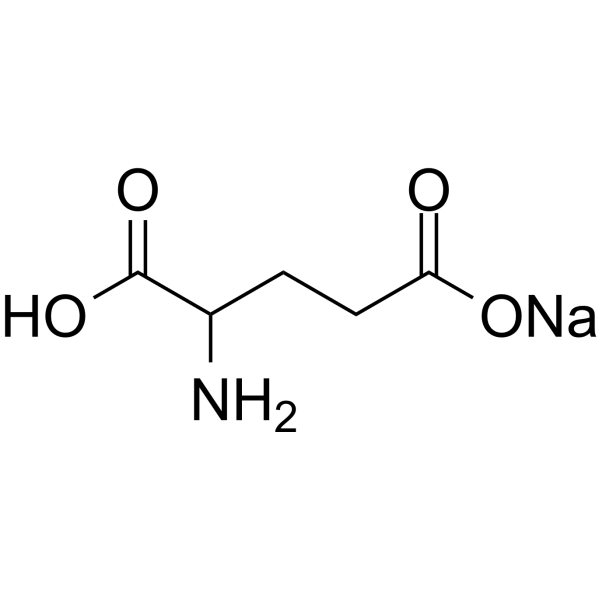 0 ImagesSynonyms: Monosodium glutamateGlutamic acid sodium salt (Monosodium glutamate) is an orally active food flavor enhancer. Glutamic acid sodium salt causes ROS generation, mitochondrial dysfunction, and Apoptosis. Glutamic acid sodium salt upregulates CHOP, Grp78, and Bcl-2. Glutamic acid sodium salt impairs cognition, induces depressive-like behavior, induces hyperalgesia, and induces obesity and insulin resistance. Glutamic acid sodium salt can be used to study neurotoxicity (e.g., brain damage, cognitive impairment), metabolic disorders (e.g., obesity, insulin resistance), hepatotoxicity, and renal toxicity, as well as pain-related disorders.
-
HM03
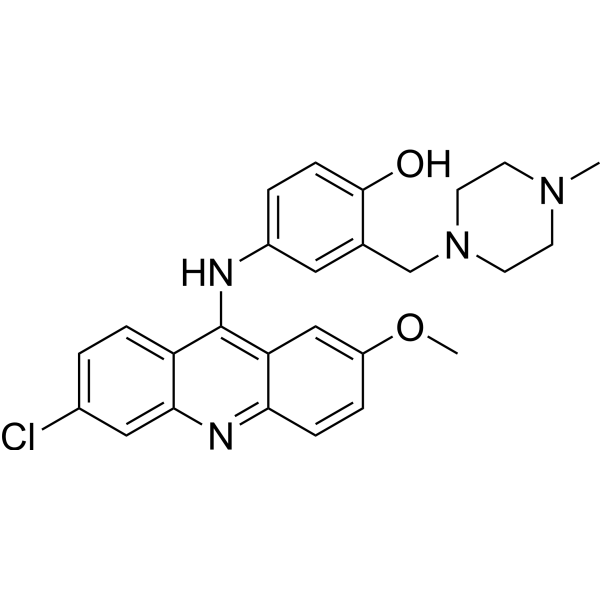 0 ImagesHM03 is a potent and selective HSPA5 (Heat shock 70kDa protein 5, also known as Bip, Grp78) inhibitor. HM03 has anticancer activity.
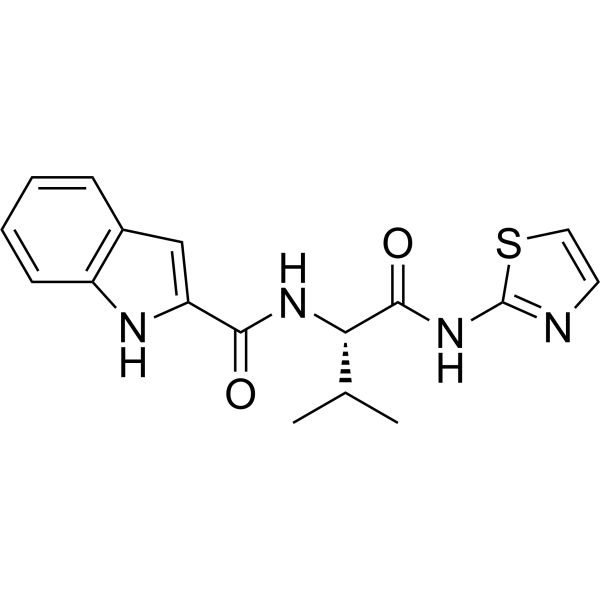
-
Estrogen receptor-IN-2
 0 ImagesCat. No.: HY-184982Estrogen receptor-IN-2 is a potent estrogen receptor inhibitor formed by the conjugation of Tam (HY-13757)-NHC and gold (I). Estrogen receptor-IN-2 significantly downregulates estrogen receptor (ER) levels, inhibits ER-mediated downstream signaling pathways, and induces immunogenic cell death (ICD) mediated by damage-associated molecular patterns (DAMPs). Estrogen receptor-IN-2 can overcome drug resistance in MCF-7Y537S mutant cells via the RAMP3/CALCR signaling pathway. It is suitable for research on endocrine-resistant breast cancer.
-
HM03 trihydrochloride
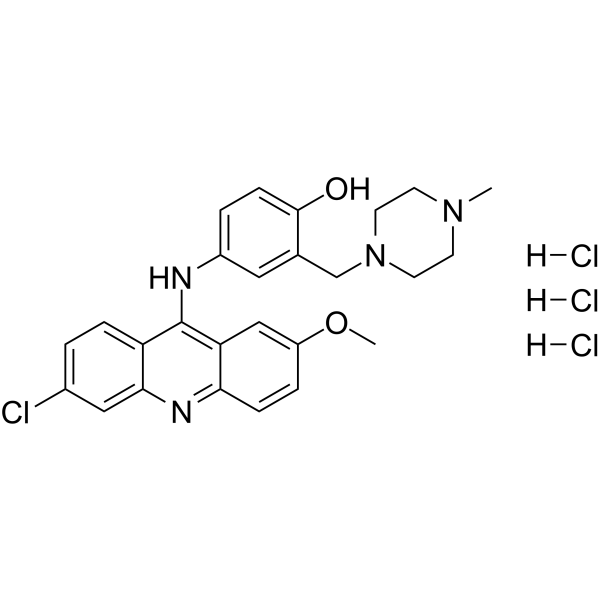 0 ImagesCat. No.: HY-125974ACAS No.: 1082532-95-3HM03 trihydrochloride is a potent and selective HSPA5 (Heat shock 70kDa protein 5, also known as Bip, Grp78) inhibitor. HM03 trihydrochloride has anticancer activity.




