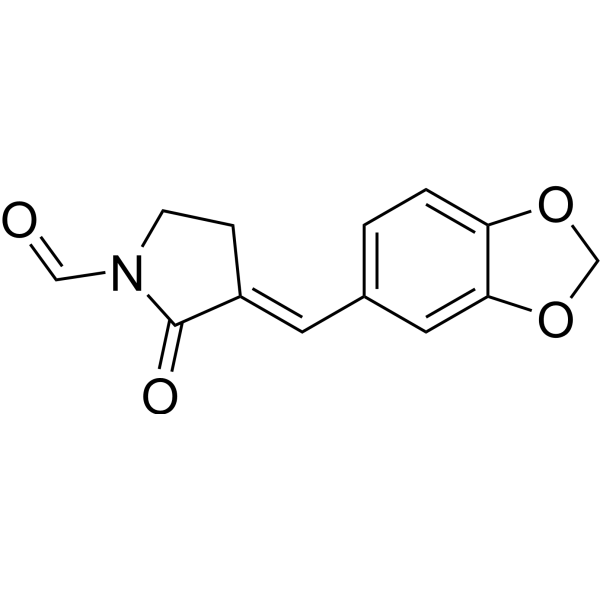
HSP105
HSP105 is a large heat shock protein that functions as a molecular chaperone, supporting protein folding and maintaining cellular proteostasis under stress conditions[1][2]. Mechanistically, HSP105 interacts with GRP78 and glycogen synthase kinase-3 (GSK3) to facilitate endoplasmic reticulum (ER) stress-induced caspase-3 activation, thereby promoting apoptosis specifically in ER stress contexts[1]. In neural systems, HSP105 upregulates hippocampal brain-derived neurotrophic factor (BDNF) levels, enhancing neurogenesis and mitigating depression-like behavior in mouse models[2]. HSP105 also participates in the Wnt/β-catenin pathway by recruiting protein phosphatase 2A (PP2A) to the β-catenin degradation complex, modulating phosphorylation-dependent β-catenin stability, nuclear translocation, and transcription of target genes[3]. Overexpression of HSP105 in tumors correlates with elevated nuclear β-catenin and Wnt target gene expression, suggesting a role in cancer progression[3]. Compared with other HSP isoforms, HSP105 exhibits selective functional interactions in ER stress and Wnt signaling, distinguishing it from stress-inducible HSPs and constitutive HSP70 family members[1][3]. Small molecule inducers, such as geranylgeranylacetone (GGA), enhance HSP105 expression and its neuroprotective functions, providing potential experimental applications in behavioral and neurodegenerative research[2]. These findings establish HSP105 as a multifunctional chaperone linking stress responses, cell death, and signal transduction in disease-relevant pathways[1][3][2].
References:
- [1]. Hashikawa N, et al. HSP105 prevents depression-like behavior by increasing hippocampal brain-derived neurotrophic factor levels in mice. Sci Adv. 2017 May 31;3(5):e1603014. [Content Brief]
- [2]. Meares GP, et al. HSP105 interacts with GRP78 and GSK3 and promotes ER stress-induced caspase-3 activation. Cell Signal. 2008 Feb;20(2):347-58. [Content Brief]
- [3]. Yu N, et al. HSP105 recruits protein phosphatase 2A to dephosphorylate β-catenin. Mol Cell Biol. 2015 Apr;35(8):1390-400. [Content Brief]
All Product Categories
-
HSP105 Related Products (1)
Related Products (1)