



Endogenous Metabolite
Endogenous metabolites refer to the collective set of small-molecule chemical substances present within organelles, cells, organs, biological fluids, or entire organisms; their molecular weights are typically less than 1500 Da. These endogenous metabolites—including lipids, amino acids, short peptides, nucleic acids, carbohydrates, alcohols, and organic acids—not only participate in signal transduction governing genomic function but also receive upstream signals from the environment, thereby bridging the interrelationships among genotype, environment, and phenotype.
Based on their biological functions, microbial endogenous metabolites can be broadly classified into two categories: primary metabolites and secondary metabolites. Primary metabolites are the core molecules essential for supporting microbial growth and proliferation; they serve to provide energy to the microbes or act as precursors and cofactors for the synthesis of biological macromolecules. In contrast, microbial secondary metabolites are a class of low-molecular-weight products that are not strictly essential for microbial growth. Nevertheless, microbial secondary metabolites include numerous substances—such as antibiotics, anti-tumor agents, and cholesterol-lowering agents—that are of critical importance to human health[1][2][3]. Furthermore, the metabolome of a biological organism is influenced by a variety of endogenous factors, including age, sex, body composition, genetic background, and underlying pathological states. The small-molecule metabolites within an organism are diverse and highly distinct; their levels are typically subject to the synergistic regulation of a vast array of enzymes and transport proteins, undergoing processes of synthesis, transformation, degradation, and compartmentalized distribution. Metabolomics research based on endogenous metabolites has been widely applied in the fields of metabolic disorders, neurodegenerative diseases, cancer, cardiovascular diseases, and infectious diseases, where these metabolites hold potential utility as biomarkers or therapeutic targets[1][2][3].
References:
- [1]. Seyedsayamdost MR. Toward a global picture of bacterial secondary metabolism. J Ind Microbiol Biotechnol. 2019 Mar;46(3-4):301-311. [Content Brief]
- [2]. Ruiz B, et al. Production of microbial secondary metabolites: regulation by the carbon source. Crit Rev Microbiol. 2010 May;36(2):146-67. [Content Brief]
- [3]. Wishart DS. Metabolomics for Investigating Physiological and Pathophysiological Processes. Physiol Rev. 2019 Oct 1;99(4):1819-1875. [Content Brief]
Endogenous Metabolite Isoform Specific Products
All Product Categories
-
Endogenous Metabolite Related Products (8420)
Related Products (8420)

-
Antibodies (477)
-
Endogenous Metabolite Isoform Comparison
-
Cytidine diphosphate-13C9,15N3 dilithium
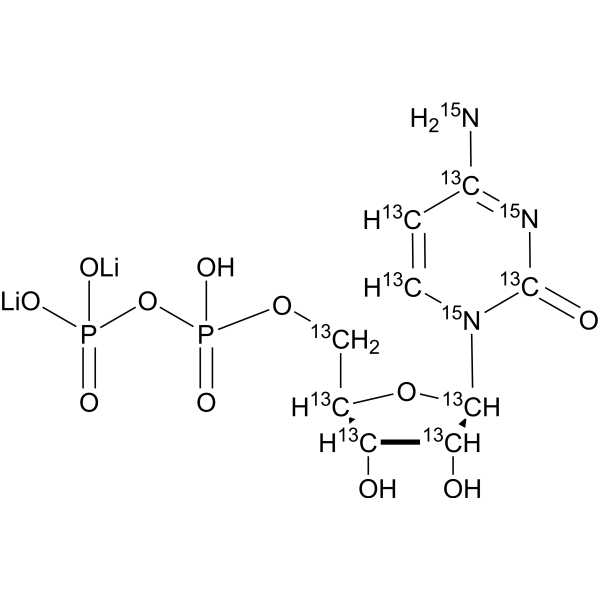 0 ImagesCat. No.: HY-113400S2Purity: 99.7%
-
Acetaminophen-13C6
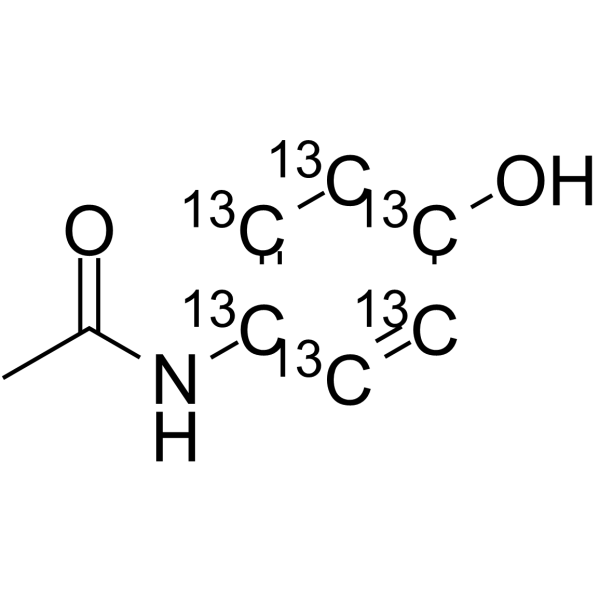 0 ImagesCat. No.: HY-66005S3CAS No.: 2132405-57-1Synonyms: Paracetamol-13C6; 4-Acetamidophenol-13C6; 4'-Hydroxyacetanilide-13C6Acetaminophen-13C6 (Paracetamol-13C6) is the 13C-labeled Acetaminophen. Acetaminophen (Paracetamol) is a selective cyclooxygenase-2 (COX-2) inhibitor with an IC50 of 25.8 μM; is a widely used antipyretic and analgesic agent. Acetaminophen is a potent hepatic N-acetyltransferase 2 (NAT2) inhibitor.
-
D-Sorbitol, M150 (GMP Like)
 0 ImagesCat. No.: HY-B0400CGLCAS No.: 50-70-4Synonyms: Sorbitol, M150 (GMP Like); D-Glucitol, M150 (GMP Like)D-Sorbitol, M150 (GMP Like) is the GMP Like class D-Sorbitol, M150 that can be used as pharmaceutical excipients. D-Sorbitol (Sorbitol) is a six-carbon sugar alcohol and can used as a sugar substitute. D-Sorbitol can be used as a stabilizing excipient and/or isotonicity agent, sweetener, humectant, thickener and dietary supplement.
-
L-Serine-2-13C
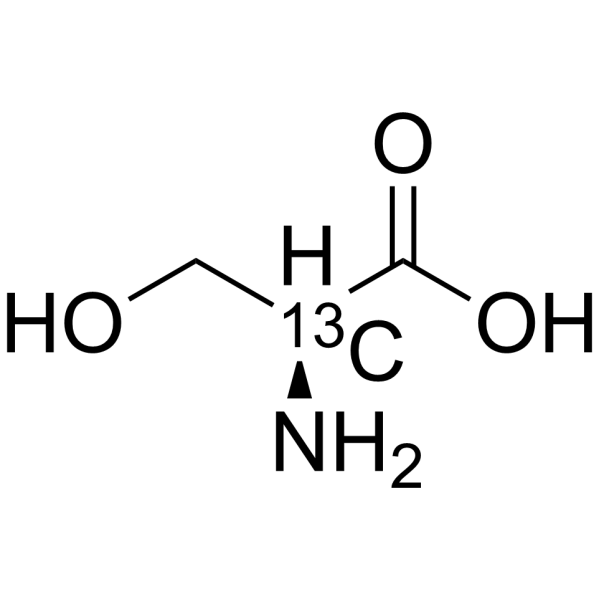 0 ImagesSynonyms: (-)-Serine-2-13C; (S)-Serine-2-13CL-Serine-2-13C is the 13C-labeled L-Serine. L-Serine ((-)-Serine; (S)-Serine), one of the so-called non-essential amino acids, plays a central role in cellular proliferation.
-
Cholesteryl arachidonate-d8
 0 ImagesCat. No.: HY-113369SPurity: 98.1%Cholesteryl arachidonate-d8 is deuterium labeled Cholesteryl arachidonate (HY-113369). Cholesteryl arachidonate, a lipid, is an endogenous metabolite. Cholesteryl arachidonate has antibacterial activity.
-
Oxalic acid dihydrate (Standard)
 0 ImagesOxalic acid dihydrate (Standard) is the analytical standard of Oxalic acid dihydrate. This product is intended for research and analytical applications. Oxalic acid dihydrate is an endogenous metabolite.
-
5β-Cholestane-3α,7α,12α,25-tetrol
 0 ImagesCat. No.: HY-171949CAS No.: 18866-87-0Synonyms: 3α,7α,12α,25-Tetrahydroxycoprostane5β-Cholestane-3α,7α,12α,25-tetrol (3α,7α,12α,25-Tetrahydroxycoprostane) is a bile acid alcohol. 5β-Cholestane-3α,7α,12α,25-tetrol is a GPBAR1 (also known as TGR5) activator (EC50: 1.36 μM). 5β-Cholestane-3α,7α,12α,25-tetrol is the predominant bile-alcohol disease marker present in patients with Cerebrotendinous xanthomatosis (CTX).
-
8,8'-Lignan-3,3',4,4',5,9,9'-heptol
 0 ImagesCat. No.: HY-N21689CAS No.: 202644-38-08,8'-Lignan-3,3',4,4',5,9,9'-heptol is a dibenzylbutane-type lignan that can be found in Justicia procumbens. It is useful for research related to lignan components and natural product chemistry.
-
LY-99335
 0 ImagesCat. No.: HY-115844CAS No.: 78738-97-3LY-99335 is an anesthetic antagonist with behavioral inhibitory activity. LY-99335 exhibits large dose separation at specific doses, indicating its potential in anesthetic antagonism.
-
D-Allose-13C-1
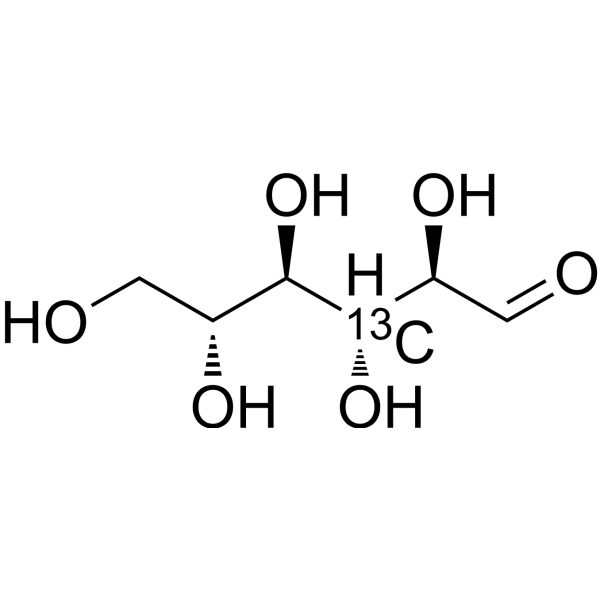 0 ImagesCat. No.: HY-128741S1D-Allose-13C-1 is the 13C labeled D-Allose (HY-128741). D-Allose exhibits antitumor activity against various cancer cells. D-Allose scavenges reactive oxygen species (ROS) and reduces oxidative stress damage. D-Allose exhibits anti-inflammatory and neuroprotective through inhibition of TLR4/PI3K/AKT signaling pathway. D-Allose exhibits antihypertensive, cryoprotective, and anti-osteoporotic activities.
-
2-Methylsuccinic acid-d6
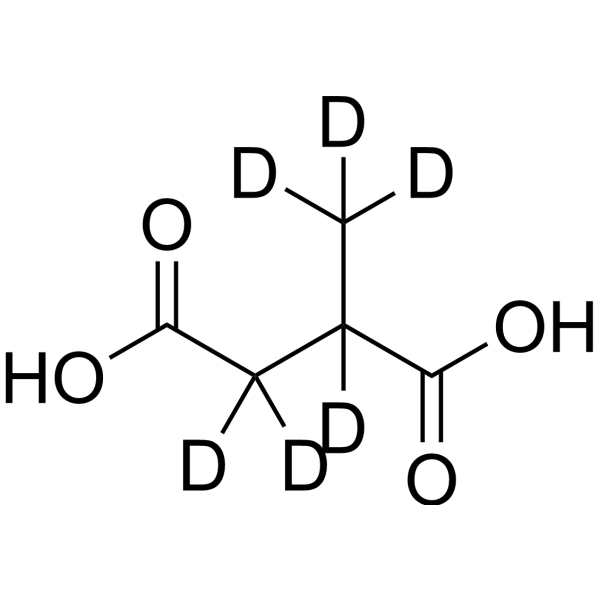 0 ImagesCat. No.: HY-W010381SCAS No.: 347840-08-82-Methylsuccinic acid-d6 is the deuterium labeled 2-Methylsuccinic acid. 2-Methylsuccinic acid is a normal metabolite in human fluids and the main biochemical measurable features in ethylmalonic encephalopathy.
-
C22 Phytoceramide-d3 (t18:0/22:0)
 0 ImagesCat. No.: HY-115708SCAS No.: 2011762-87-9C22 Phytoceramide-d3 (t18:0/22:0) is a deuterated labeled C22 Phytoceramide (t18:0/22:0). C22 Phytoceramide is a sphingolipid that has been found in Moro blood orange (C. sinensis) peels. It has also been found in primary human astrocytes.
-
7β-Hydroxykaurenolide
 0 Images7β-Hydroxykaurenolide is a kaurenolide and by-product of Gibberellin biosynthesis, can be found in Gibberella fujikuroi cultures. 7β-Hydroxykaurenolide is a drug intermediate.
-
(R)-3-O-Methyldopa-d3 hydrochloride
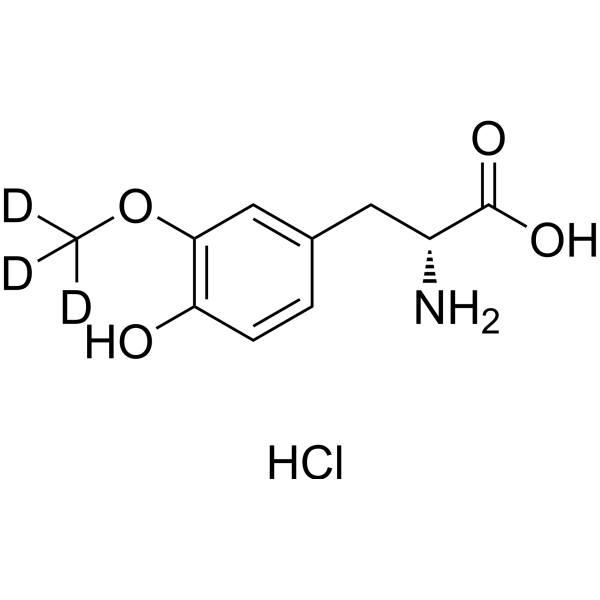 0 ImagesCat. No.: HY-W401531S1CAS No.: 2714485-35-3(R)-3-O-Methyldopa-d3 (hydrochloride) is a deuterium labeled (R)-3-O-Methyldopa, and (R)-3-O-Methyldopa is an R-enantiomer of 3-O-Methyldopa. 3-O-Methyldopa is a metabolite of L-DOPA which is formed by catechol-O-methyltransferase (COMT). 3-O-Methyldopa competitively inhibits the pharmacodynamics of L-DOPA and dopamine.
-
15-Deoxy-Δ12,14-Prostaglandin J2-2-glyceryl ester
 0 ImagesCat. No.: HY-176243CAS No.: 1947405-90-415-Deoxy-Δ12,14-Prostaglandin J2-2-glyceryl ester is a derivate of 15-Deoxy-Δ-12,14-prostaglandin J2 (HY-108568). 15-Deoxy-Δ-12,14-prostaglandin J2 (15d-PGJ2) is a cyclopentenone prostaglandin and a metabolite of PGD2. 15-Deoxy-Δ-12,14-prostaglandin J2 is a selective PPARγ (EC50 of 2 µM) and a covalent PPARδ agonist. 15-Deoxy-Δ-12,14-prostaglandin J2 promotes efficient differentiation of C3H10T1/2 fibroblasts to adipocytes with an EC50 of 7 μM.
-
5-Hydroxytryptamine-d4 creatinine sulfate monohydrate
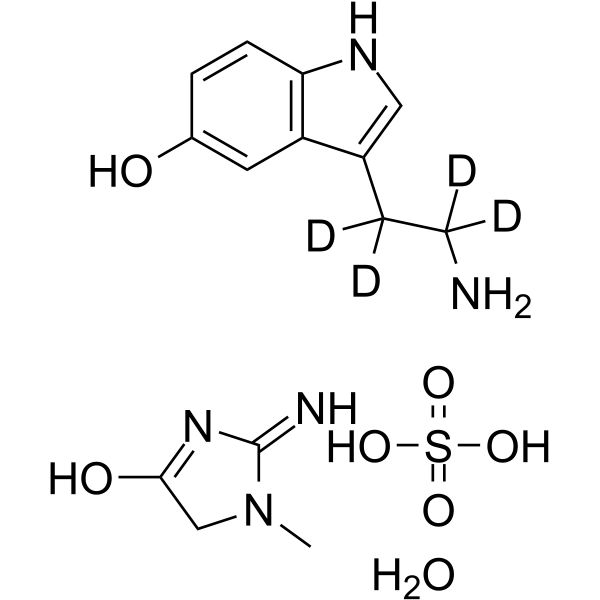 0 ImagesCat. No.: HY-W010973SCAS No.: 2687960-56-95-Hydroxytryptamine-d4 creatinine sulfate monohydrate is the deuterated-labeled 5-Hydroxytryptamine creatinine sulfate monohydrate (HY-W010973). 5-Hydroxytryptamine creatinine sulfate monohydrate is a 5-HT receptor agonist and amine oxidase substrate that acts through multiple physiological responses, including induction of vasoconstriction, pressor effects, acceleration of platelet potassium exchange, and endothelium-dependent relaxation, and can serve as a radiolabeled substrate for organelle uptake assays. 5-Hydroxytryptamine creatinine sulfate monohydrate can be used in research on burns, tourniquet and botulinum shock.
-
Magnesium ionophore III
 0 ImagesSynonyms: ETH 4030Magnesium ionophore III (ETH 4030) is an ionophore that has the activity of regulating the intracellular magnesium concentration. Magnesium ionophore III can promote the permeability of cell membranes to magnesium ions and enhance cell functions and metabolic activities. Magnesium ionophore III is also used to study the importance of magnesium ions in biological processes and its effects on cell physiology.
-
D-Glucose-13C,d-1
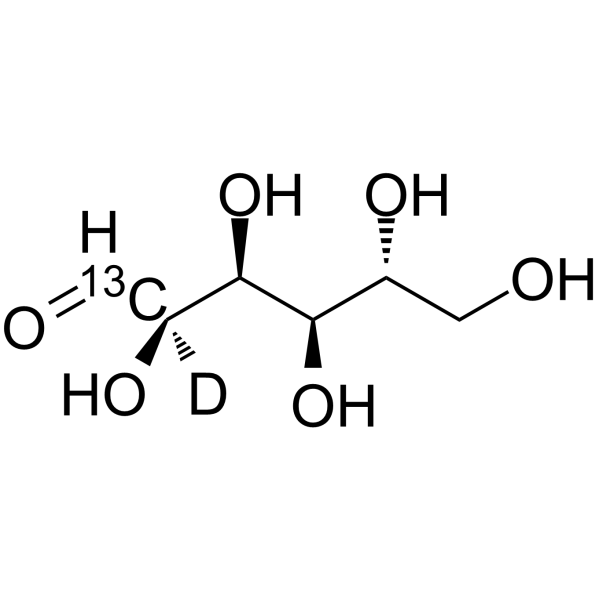 0 ImagesSynonyms: Glucose-13C,d-1; D-(+)-Glucose-13C,d-1; Dextrose-13C,d-1D-Glucose-13C,d-1 is the deuterium and 13C labeled D-Glucose. D-Glucose (Glucose), a monosaccharide, is an important carbohydrate in biology. D-Glucose is a carbohydrate sweetener and critical components of the general metabolism, and serve as critical si
-
(E)-2-Methylbut-2-enoic-4,4,4-d3 acid
 0 ImagesCat. No.: HY-W699735CAS No.: 19146-57-7(E)-2-Methylbut-2-enoic-4,4,4-d3 acid is the deuterium labeled Tiglic acid (HY-W012999). Tiglic acid is a monocarboxylic unsaturated organic acid found in croton oil and in several other natural products. Tiglic aci has a role as a plant metabolite.
-
P-orlandin
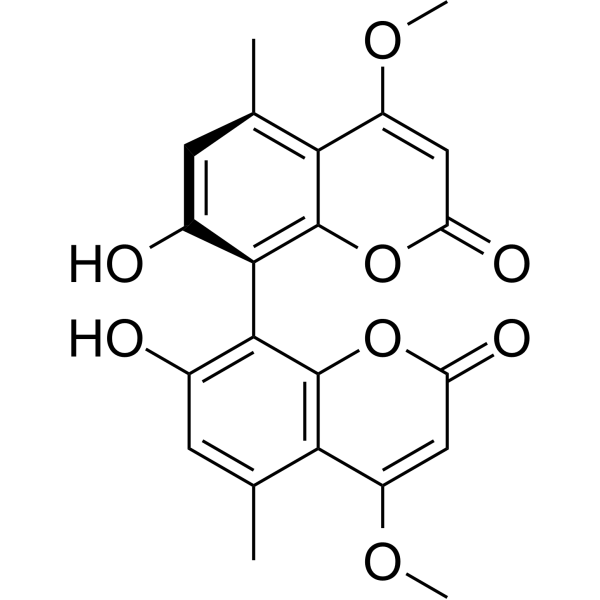 0 ImagesCat. No.: HY-N10194CAS No.: 1407546-21-7




