



Endogenous Metabolite
Endogenous metabolites refer to the collective set of small-molecule chemical substances present within organelles, cells, organs, biological fluids, or entire organisms; their molecular weights are typically less than 1500 Da. These endogenous metabolites—including lipids, amino acids, short peptides, nucleic acids, carbohydrates, alcohols, and organic acids—not only participate in signal transduction governing genomic function but also receive upstream signals from the environment, thereby bridging the interrelationships among genotype, environment, and phenotype.
Based on their biological functions, microbial endogenous metabolites can be broadly classified into two categories: primary metabolites and secondary metabolites. Primary metabolites are the core molecules essential for supporting microbial growth and proliferation; they serve to provide energy to the microbes or act as precursors and cofactors for the synthesis of biological macromolecules. In contrast, microbial secondary metabolites are a class of low-molecular-weight products that are not strictly essential for microbial growth. Nevertheless, microbial secondary metabolites include numerous substances—such as antibiotics, anti-tumor agents, and cholesterol-lowering agents—that are of critical importance to human health[1][2][3]. Furthermore, the metabolome of a biological organism is influenced by a variety of endogenous factors, including age, sex, body composition, genetic background, and underlying pathological states. The small-molecule metabolites within an organism are diverse and highly distinct; their levels are typically subject to the synergistic regulation of a vast array of enzymes and transport proteins, undergoing processes of synthesis, transformation, degradation, and compartmentalized distribution. Metabolomics research based on endogenous metabolites has been widely applied in the fields of metabolic disorders, neurodegenerative diseases, cancer, cardiovascular diseases, and infectious diseases, where these metabolites hold potential utility as biomarkers or therapeutic targets[1][2][3].
References:
- [1]. Seyedsayamdost MR. Toward a global picture of bacterial secondary metabolism. J Ind Microbiol Biotechnol. 2019 Mar;46(3-4):301-311. [Content Brief]
- [2]. Ruiz B, et al. Production of microbial secondary metabolites: regulation by the carbon source. Crit Rev Microbiol. 2010 May;36(2):146-67. [Content Brief]
- [3]. Wishart DS. Metabolomics for Investigating Physiological and Pathophysiological Processes. Physiol Rev. 2019 Oct 1;99(4):1819-1875. [Content Brief]
Endogenous Metabolite Isoform Specific Products
All Product Categories
-
Endogenous Metabolite Related Products (8367)
Related Products (8367)

-
Antibodies (477)
-
Endogenous Metabolite Isoform Comparison
-
Linoleic acid-d11
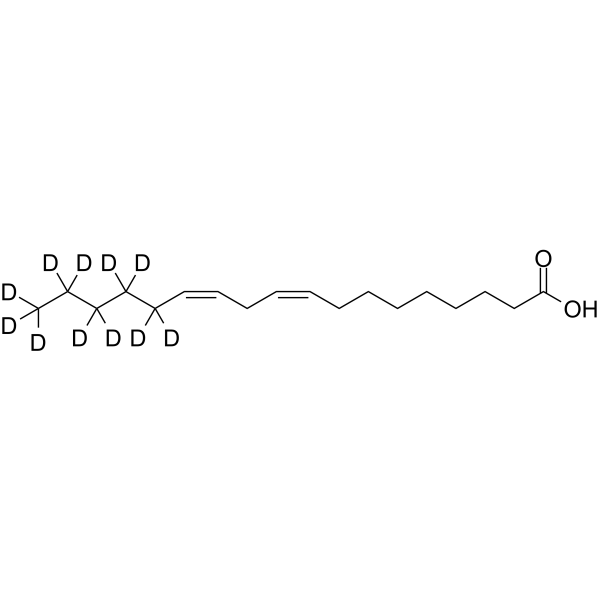 0 ImagesCat. No.: HY-N0729S1CAS No.: 2055171-21-4Linoleic acid-d11 is the deuterium labeled Linoleic acid. Linoleic acid is a common polyunsaturated (PUFA) found in plant-based oils, nuts and seeds. Linoleic acid is a part of membrane phospholipids, and functions as a structural component to maintain a certain level of membrane fluidity of the transdermal water barrier of the epidermis. Linoleic acid induces red blood cells and hemoglobin damage via oxidative mechanism.
-
N-Methyl-DL-glutamic acid (Standard)
 0 ImagesCat. No.: HY-W015424RCAS No.: 35989-16-3N-Methyl-DL-glutamic acid is a L-Glutamic acid (HY-14608) analog with cytotoxic effects.
-
Euphol (Standard)
 0 ImagesEuphol (Standard) is the analytical standard of Euphol. This product is intended for research and analytical applications. Euphol is a tetracyclic triterpene alcohol isolated from the sap of Euphorbia tirucalli with anti-mutagenic, anti-inflammatory and immunomodulatory effects, orally active. Euphol inhibits the monoacylglycerol lipase (MGL) activity via a reversible mechanism (IC50=315 nM). MGL inhibition in the periphery modulates the endocannabinoid system to block the development of inflammatory pain.
-
Fumaric acid2,3-13C2 disodium
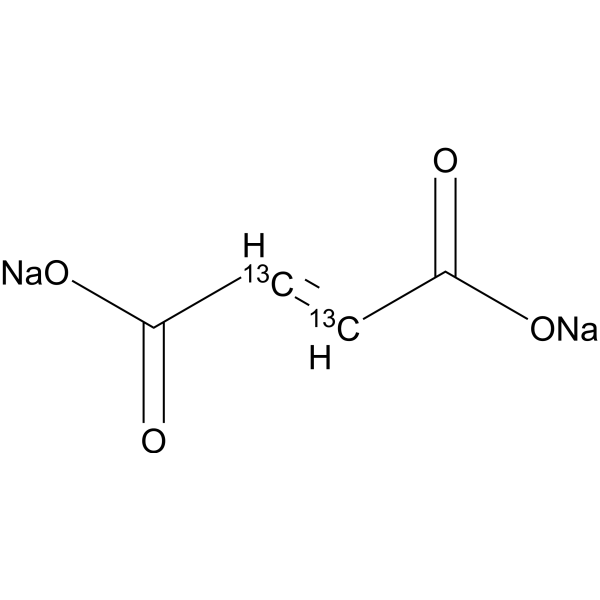 0 ImagesFumaric acid2,3-13C2 disodium is the 13C-labeled Fumaric acid (disodium) (HY-W015883A). Fumaric acid disodium is an unsaturated dicarbonic acid, an intermediate product of the citric acid cycle that provides intracellular energy in the form of ATP. Fumaric acid disodium exerts anti-inflammatory effects by inhibiting the NF-κB signaling pathway dependent on p38 MAPK. Fumaric acid disodium can be used in the study of pregnancy-induced hypertension.
-
O-Acetyl-L-serine hydrochloride (Standard)
 0 ImagesCat. No.: HY-101409ARCAS No.: 66638-22-0O-Acetyl-L-serine (hydrochloride) (Standard) is the analytical standard of O-Acetyl-L-serine (hydrochloride). This product is intended for research and analytical applications. O-Acetyl-L-serine hydrochloride is an endogenous metabolite.
-
Stachyose tetrahydrate (Standard)
 0 ImagesCat. No.: HY-113529RCAS No.: 10094-58-3Stachyose (tetrahydrate) (Standard) is the analytical standard of Stachyose (tetrahydrate). This product is intended for research and analytical applications. Stachyose tetrahydrate, a functional oligosaccharide, acts as a prebiotic. Stachyose tetrahydrate can prevent indirectly colon cancer cell growth by promoting the proliferation of probiotics or producing beneficial materials in the intestine.
-
Normetanephrine (Standard)
 0 ImagesCat. No.: HY-113517RCAS No.: 97-31-4Synonyms: (±)-Normetanephrine (Standard); DL-Normetanephrine (Standard)Normetanephrine (Standard) is the analytical standard of Normetanephrine. This product is intended for research and analytical applications. Normetanephrine is an endogenous metabolite present in Cerebrospinal_Fluid that can be used for the research of Hypertension.
-
N-Octadecyl-N'-propyl-sulfamide
 0 ImagesCat. No.: HY-124399CAS No.: 925891-74-3Peroxisome proliferator-activated receptors (PPARs) play an important role in regulating lipid and glucose metabolism, and oleoylethanolamide (OEA) is a natural ligand for PPARα. N-Octadecyl-N'-propyl-sulfamide is an analog of OEA and a potent activator of PPARα, with selective binding affinity for PPARα (EC50=100 nM, compared to 120 nM for OEA). N-Octadecyl-N'-propyl-sulfamide (10 mg/kg; ip) inhibits food intake and reduces body weight gain in rats. At a dose of 1 mg/kg, N-Octadecyl-N'-propyl-sulfamide induces satiety, thereby reducing food intake, body weight, and plasma triglyceride concentrations in free-feeding Wistar rats and obese Zucker (fa/fa) rats.
-
Bhimanone
 0 ImagesCat. No.: HY-N13017CAS No.: 701915-56-2Bhimanone is a bioinactive tetralone, which can be isolated from Streptomyces sp..
-
Furan fatty acid F5
 0 ImagesCat. No.: HY-N7736CAS No.: 57818-37-8Synonyms: Furan Fatty acid F512,15-epoxy-13-methyl-12,14-Eicosadienoic acid is a furan fatty acid originally isolated from northern pike (E. lucius).1 Levels of 12,15-epoxy-13-methyl-12,14-eicosadienoic acid are increased in the liver of starving cod.
-
Pregnanediol (Standard)
 0 ImagesSynonyms: NSC 1612 (Standard); NSC 47462 (Standard)Pregnanediol (Standard) is the analytical standard of Pregnanediol. This product is intended for research and analytical applications. Pregnanediol is the major metabolite of progesterone and can be excreted via urine. Pregnanediol offers an indirect way to measure progesterone levels in vivo.
-
Guanosine triphosphate
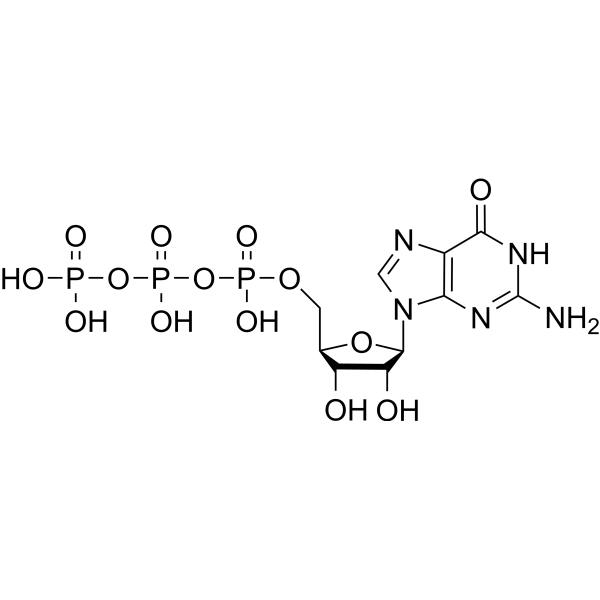 0 ImagesGuanosine triphosphate (GTP) is a critical nucleotide and regulator of cellular metabolism. Guanosine triphosphate promotes ribosomal DNA localization, pre-rRNA transcription and ribosome biogenesis by binding to RNA polymerase I and GPN proteins (GPN1/3). Guanosine triphosphate links MYC-dependent ribosome biogenesis to nucleotide sufficiency, acts as a metabolic gatekeeper supporting protein synthesis, DNA/RNA synthesis and cellular signal transduction, while also participating in the physiological activities of pancreatic β-cells and serving as an oxidative substrate for reactive oxygen species. In small cell lung cancer with high MYC expression, Guanosine triphosphate accumulates through the IMPDH-driven synthetic pathway, thereby affecting apoptosis and mitotic processes. Guanosine triphosphate is used in the research of small cell lung cancer, hepatoblastoma and cellular metabolism.
-
Methyl isovanillate (Standard)
 0 ImagesCat. No.: HY-W002773RCAS No.: 6702-50-7Methyl isovanillate (Standard) is the analytical standard of Methyl isovanillate (HY-W002773). This product is intended for research and analytical applications. Methyl isovanillate is a secondary metabolite isolated from Vitex agnus-castus. Methyl isovanillate does not exhibit significant activity in the DPPH free radical scavenging experiment.
-
Δ2-trans-Hexadecenoic acid
 0 ImagesCat. No.: HY-131306ACAS No.: 929-79-3Δ2-trans-Hexadecenoic acid is a trans fatty acid isolated from the seed oil of Aster tataricus (Thunb.).
-
(±)-Δ7-Mesembrenone
 0 ImagesCat. No.: HY-168778CAS No.: 80287-15-6(±)-Δ7-Mesembrenone is a mesembrine-type alkaloid which can be extracted from various Sceletium.
-
Sabizabulin hydrochloride
 0 ImagesCat. No.: HY-120599ACAS No.: 2635953-17-0Synonyms: VERU-111 hydrochloride; ABI-231 hydrochlorideSabizabulin hydrochloride is a potent orally bioavailable microtubule inhibitor with activity that interacts with the colchicine binding site. Sabizabulin hydrochloride demonstrated significant inhibition of melanoma tumor growth with an average IC50 of 5.2 nM in melanoma and prostate cancer cell lines. Pharmacological screening of Sabizabulin hydrochloride shows it has a low risk of potential side effects.
-
3,5-Dibromo-4-methoxybenzoic acid (Standard)
 0 ImagesCat. No.: HY-W038627RCAS No.: 4073-35-2Synonyms: 3,5-Dibromo-p-anisic acid (Standard)3,5-Dibromo-4-methoxybenzoic acid (Standard) is the analytical standard of 3,5-Dibromo-4-methoxybenzoic acid (HY-W038627). This product is intended for research and analytical applications. 3,5-Dibromo-4-methoxybenzoic acid (3,5-Dibromo-p-anisic acid) is a brominated alkaloid that can be isolated from sponges such as Amphimedon sp. and Psammaplysilla purpurea.
-
Riboflavin-d8
 0 ImagesCat. No.: HY-B0456S5Synonyms: Vitamin B2-d8 ; E101-d8Riboflavin-d8 (Vitamin B2-d8 ) is deuterium labeled Riboflavin. Riboflavin, an orally active and easily absorbed micronutrient, is a precursor of flavin mononucleotide (FMN) and flavin adenine dinucleotide (FAD), which serve as coenzymes for numerous enzymatic reactions and perform key metabolic functions by mediating the transfer of electrons in biological oxidation-reduction reaction.
-
L-Uridine (Standard)
 0 ImagesCat. No.: HY-W006429RCAS No.: 26287-69-4L-Uridine (Standard) is the analytical standard of L-Uridine (HY-W006429). This product is intended for research and analytical applications. L-Uridine is an enantiomer of the normal RNA constituent D-uridine. L-Uridine can be isolated from the Polyporaceae fungus Poria cocos (Schw.). L-uridine acts as a phosphate acceptor for nucleoside phosphotransferases.
-
D-Glutamic acid-13C5
 0 ImagesCat. No.: HY-100805S2CAS No.: 1202063-54-4Synonyms: (R)-Glutamic acid-13C5D-Glutamic acid-13C5 ((R)-Glutamic acid-13C5) is 13C labeled D-Glutamic acid. D-glutamic acid, an enantiomer of L- glutamic acid, is widely used in pharmaceuticals and foods.




