



Endogenous Metabolite
Endogenous metabolites refer to the collective set of small-molecule chemical substances present within organelles, cells, organs, biological fluids, or entire organisms; their molecular weights are typically less than 1500 Da. These endogenous metabolites—including lipids, amino acids, short peptides, nucleic acids, carbohydrates, alcohols, and organic acids—not only participate in signal transduction governing genomic function but also receive upstream signals from the environment, thereby bridging the interrelationships among genotype, environment, and phenotype.
Based on their biological functions, microbial endogenous metabolites can be broadly classified into two categories: primary metabolites and secondary metabolites. Primary metabolites are the core molecules essential for supporting microbial growth and proliferation; they serve to provide energy to the microbes or act as precursors and cofactors for the synthesis of biological macromolecules. In contrast, microbial secondary metabolites are a class of low-molecular-weight products that are not strictly essential for microbial growth. Nevertheless, microbial secondary metabolites include numerous substances—such as antibiotics, anti-tumor agents, and cholesterol-lowering agents—that are of critical importance to human health[1][2][3]. Furthermore, the metabolome of a biological organism is influenced by a variety of endogenous factors, including age, sex, body composition, genetic background, and underlying pathological states. The small-molecule metabolites within an organism are diverse and highly distinct; their levels are typically subject to the synergistic regulation of a vast array of enzymes and transport proteins, undergoing processes of synthesis, transformation, degradation, and compartmentalized distribution. Metabolomics research based on endogenous metabolites has been widely applied in the fields of metabolic disorders, neurodegenerative diseases, cancer, cardiovascular diseases, and infectious diseases, where these metabolites hold potential utility as biomarkers or therapeutic targets[1][2][3].
References:
- [1]. Seyedsayamdost MR. Toward a global picture of bacterial secondary metabolism. J Ind Microbiol Biotechnol. 2019 Mar;46(3-4):301-311. [Content Brief]
- [2]. Ruiz B, et al. Production of microbial secondary metabolites: regulation by the carbon source. Crit Rev Microbiol. 2010 May;36(2):146-67. [Content Brief]
- [3]. Wishart DS. Metabolomics for Investigating Physiological and Pathophysiological Processes. Physiol Rev. 2019 Oct 1;99(4):1819-1875. [Content Brief]
Endogenous Metabolite Isoform Specific Products
All Product Categories
-
Endogenous Metabolite Related Products (8400)
Related Products (8400)

-
Antibodies (477)
-
Endogenous Metabolite Isoform Comparison
-
Cryptochlorogenic acid (Standard)
 0 ImagesSynonyms: 4-Caffeoylquinic acid (Standard); 4-O-Caffeoylquinic acid (Standard)Cryptochlorogenic acid (Standard) is the analytical standard of Cryptochlorogenic acid. This product is intended for research and analytical applications. Cryptochlorogenic acid is a natural product.
-
Deoxyshikonofuran
 0 ImagesCat. No.: HY-N15277CAS No.: 104056-81-7Deoxyshikonofuran is a shikonofuran derivative that can be extracted from the shikonin-producing cell cultures of Lithospermum erythrorhizon. Deoxyshikonofuran can be used for the study of the shikonin biosynthetic pathway.
-
Dipivefrin hydrochloride (Standard)
 0 ImagesCat. No.: HY-B1323RCAS No.: 64019-93-8Synonyms: Dipivefrine hydrochloride (Standard)Dipivefrin hydrochloride (Standard) (Dipivefrine hydrochloride (Standard)) is the analytical standard of Dipivefrin hydrochloride (HY-B1323). This product is intended for research and analytical applications. Dipivefrin hydrochloride is an α/β-adrenoceptor agonist and a prodrug of epinephrine. Dipivefrin hydrochloride regulates intraocular pressure by agonizing α/β-adrenoceptors and modulating the aqueous humor outflow pathway. Dipivefrin hydrochloride acts on neuroblastoma cells and downregulates glutamate-induced intracellular calcium levels. Dipivefrin hydrochloride is used in research related to α/β-adrenoceptor-mediated diseases, such as glaucoma.
-
Smilagenin (Standard)
 0 ImagesCat. No.: HY-106353RCAS No.: 126-18-1Smilagenin (Standard) is the analytical standard of Smilagenin. This product is intended for research and analytical applications. Smilagenin (SMI) is a small-molecule steroidal sapogenin from Anemarrhena asphodeloides and Pelargonium hortorum widely used in traditional Chinese medicine for treating chronic neurodegeneration diseases. Smilagenin (SMI) improves memory of aged rats by increasing the muscarinic receptor subtype 1 (M1)-receptor density. Smilagenin (SMI) attenuates Aβ(25-35)-induced neurodegenerationvia stimulating the gene expression of brain-derived neurotrophic factor, may represents a novel therapeutic strategy for AD.
-
OT-730
 0 ImagesCat. No.: HY-19495CAS No.: 870809-51-1OT-730 is an innovative selective beta-blocker prodrug designed for research into ocular diseases.
-
Oxythiamine chloride hydrochloride (Standard)
 0 ImagesCat. No.: HY-107430ARCAS No.: 614-05-1Synonyms: Hydroxythiamine chloride hydrochloride (Standard)Oxythiamine chloride hydrochloride (Standard) is the analytical standard of Oxythiamine chloride hydrochloride (HY-107430A). This product is intended for research and analytical applications. Oxythiamine (Hydroxythiamine) chloride hydrochloride, an analogue of anti-metabolite, can suppress the non-oxidative synthesis of ribose and induce cell apoptosis. Oxythiamine chloride hydrochloride is a thiamine antagonist and inhibits transketolase (TK). Oxythiamine chloride hydrochloride inhibits cancer cell apoptosis and inhibits cell proliferation.
-
Adenosine-2'-monophosphate (Standard)
 0 ImagesCat. No.: HY-124151RCAS No.: 130-49-4Synonyms: 2'-AMP (Standard); Adenosine 2'-phosphate (Standard); AMP 2'-phosphate (Standard)Bisphenol A diglycidyl ether (Standard) is the analytical standard of Bisphenol A diglycidyl ether. This product is intended for research and analytical applications. Bisphenol A diglycidyl ether is used as a stabilizer and embedding agent.

-
Tamsulosin-d4
 0 ImagesCat. No.: HY-B0661SCAS No.: 1231943-97-7Synonyms: (R)-(-)-YM12617 free base-d4; LY253351 free base-d4Tamsulosin-d4 ((R)-(-)-YM12617 (free base)-d4) is deuterium labeled Tamsulosin. Tamsulosin ((R)-(-)-YM12617 free base) is an inhibitor of α1-adrenergic receptor. Tamsulosin is used for the research of prostatic hyperplasia. Tamsulosin attenuates abdominal aortic aneurysm growth in animal models.
-
H-Tyr(3-I)-OH (Standard)
 0 ImagesH-Tyr(3-I)-OH is a potent and effective tyrosine hydroxylase inhibitor. H-Tyr(3-I)-OH is an intermediate in the production of thyroid hormones and has a role as a human or mouse metabolite.
-
Propofol β-D-glucuronide (Standard)
 0 ImagesCat. No.: HY-118774RCAS No.: 114991-26-3Propofol β-D-glucuronide (Standard) is the analytical standard of Propofol β-D-glucuronide. This product is intended for research and analytical applications. Propofol β-D-glucuronide is a metabolite of Propofol sulfate and can be used for diagnosis to distinguish colorectal cancer from healthy individuals.
-
Linoleic acid-d11
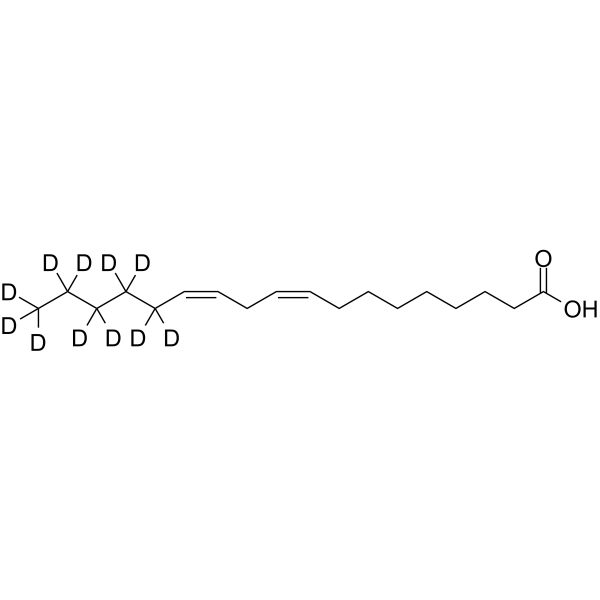 0 ImagesCat. No.: HY-N0729S1CAS No.: 2055171-21-4Linoleic acid-d11 is the deuterium labeled Linoleic acid. Linoleic acid is a common polyunsaturated (PUFA) found in plant-based oils, nuts and seeds. Linoleic acid is a part of membrane phospholipids, and functions as a structural component to maintain a certain level of membrane fluidity of the transdermal water barrier of the epidermis. Linoleic acid induces red blood cells and hemoglobin damage via oxidative mechanism.
-
N-Methyl-DL-glutamic acid (Standard)
 0 ImagesCat. No.: HY-W015424RCAS No.: 35989-16-3N-Methyl-DL-glutamic acid is a L-Glutamic acid (HY-14608) analog with cytotoxic effects.
-
Euphol (Standard)
 0 ImagesEuphol (Standard) is the analytical standard of Euphol. This product is intended for research and analytical applications. Euphol is a tetracyclic triterpene alcohol isolated from the sap of Euphorbia tirucalli with anti-mutagenic, anti-inflammatory and immunomodulatory effects, orally active. Euphol inhibits the monoacylglycerol lipase (MGL) activity via a reversible mechanism (IC50=315 nM). MGL inhibition in the periphery modulates the endocannabinoid system to block the development of inflammatory pain.
-
Fumaric acid2,3-13C2 disodium
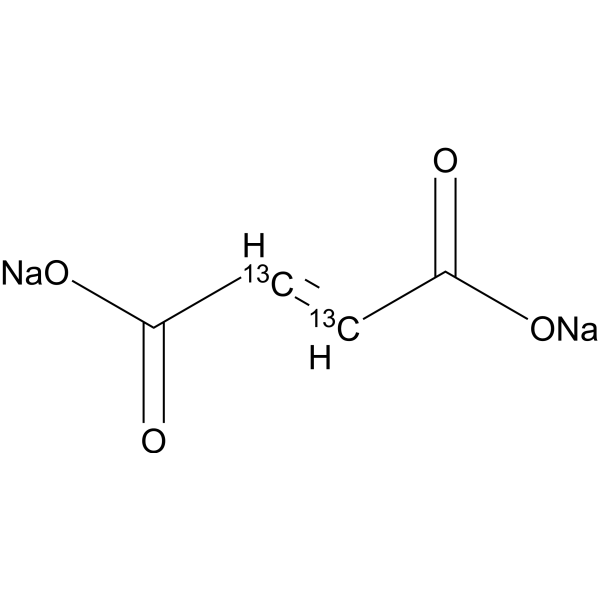 0 ImagesFumaric acid2,3-13C2 disodium is the 13C-labeled Fumaric acid (disodium) (HY-W015883A). Fumaric acid disodium is an unsaturated dicarbonic acid, an intermediate product of the citric acid cycle that provides intracellular energy in the form of ATP. Fumaric acid disodium exerts anti-inflammatory effects by inhibiting the NF-κB signaling pathway dependent on p38 MAPK. Fumaric acid disodium can be used in the study of pregnancy-induced hypertension.
-
O-Acetyl-L-serine hydrochloride (Standard)
 0 ImagesCat. No.: HY-101409ARCAS No.: 66638-22-0O-Acetyl-L-serine (hydrochloride) (Standard) is the analytical standard of O-Acetyl-L-serine (hydrochloride). This product is intended for research and analytical applications. O-Acetyl-L-serine hydrochloride is an endogenous metabolite.
-
Stachyose tetrahydrate (Standard)
 0 ImagesCat. No.: HY-113529RCAS No.: 10094-58-3Stachyose (tetrahydrate) (Standard) is the analytical standard of Stachyose (tetrahydrate). This product is intended for research and analytical applications. Stachyose tetrahydrate, a functional oligosaccharide, acts as a prebiotic. Stachyose tetrahydrate can prevent indirectly colon cancer cell growth by promoting the proliferation of probiotics or producing beneficial materials in the intestine.
-
Normetanephrine (Standard)
 0 ImagesCat. No.: HY-113517RCAS No.: 97-31-4Synonyms: (±)-Normetanephrine (Standard); DL-Normetanephrine (Standard)Normetanephrine (Standard) is the analytical standard of Normetanephrine. This product is intended for research and analytical applications. Normetanephrine is an endogenous metabolite present in Cerebrospinal_Fluid that can be used for the research of Hypertension.
-
N-Octadecyl-N'-propyl-sulfamide
 0 ImagesCat. No.: HY-124399CAS No.: 925891-74-3Peroxisome proliferator-activated receptors (PPARs) play an important role in regulating lipid and glucose metabolism, and oleoylethanolamide (OEA) is a natural ligand for PPARα. N-Octadecyl-N'-propyl-sulfamide is an analog of OEA and a potent activator of PPARα, with selective binding affinity for PPARα (EC50=100 nM, compared to 120 nM for OEA). N-Octadecyl-N'-propyl-sulfamide (10 mg/kg; ip) inhibits food intake and reduces body weight gain in rats. At a dose of 1 mg/kg, N-Octadecyl-N'-propyl-sulfamide induces satiety, thereby reducing food intake, body weight, and plasma triglyceride concentrations in free-feeding Wistar rats and obese Zucker (fa/fa) rats.




