



Endogenous Metabolite
Endogenous metabolites refer to the collective set of small-molecule chemical substances present within organelles, cells, organs, biological fluids, or entire organisms; their molecular weights are typically less than 1500 Da. These endogenous metabolites—including lipids, amino acids, short peptides, nucleic acids, carbohydrates, alcohols, and organic acids—not only participate in signal transduction governing genomic function but also receive upstream signals from the environment, thereby bridging the interrelationships among genotype, environment, and phenotype.
Based on their biological functions, microbial endogenous metabolites can be broadly classified into two categories: primary metabolites and secondary metabolites. Primary metabolites are the core molecules essential for supporting microbial growth and proliferation; they serve to provide energy to the microbes or act as precursors and cofactors for the synthesis of biological macromolecules. In contrast, microbial secondary metabolites are a class of low-molecular-weight products that are not strictly essential for microbial growth. Nevertheless, microbial secondary metabolites include numerous substances—such as antibiotics, anti-tumor agents, and cholesterol-lowering agents—that are of critical importance to human health[1][2][3]. Furthermore, the metabolome of a biological organism is influenced by a variety of endogenous factors, including age, sex, body composition, genetic background, and underlying pathological states. The small-molecule metabolites within an organism are diverse and highly distinct; their levels are typically subject to the synergistic regulation of a vast array of enzymes and transport proteins, undergoing processes of synthesis, transformation, degradation, and compartmentalized distribution. Metabolomics research based on endogenous metabolites has been widely applied in the fields of metabolic disorders, neurodegenerative diseases, cancer, cardiovascular diseases, and infectious diseases, where these metabolites hold potential utility as biomarkers or therapeutic targets[1][2][3].
References:
- [1]. Seyedsayamdost MR. Toward a global picture of bacterial secondary metabolism. J Ind Microbiol Biotechnol. 2019 Mar;46(3-4):301-311. [Content Brief]
- [2]. Ruiz B, et al. Production of microbial secondary metabolites: regulation by the carbon source. Crit Rev Microbiol. 2010 May;36(2):146-67. [Content Brief]
- [3]. Wishart DS. Metabolomics for Investigating Physiological and Pathophysiological Processes. Physiol Rev. 2019 Oct 1;99(4):1819-1875. [Content Brief]
Endogenous Metabolite Isoform Specific Products
All Product Categories
-
Endogenous Metabolite Related Products (8367)
Related Products (8367)

-
Antibodies (477)
-
Endogenous Metabolite Isoform Comparison
-
N-Acetyl-L-phenylalanine-13C2
 0 ImagesCat. No.: HY-Y0068SSynonyms: N-Acetylphenylalanine-13C2N-Acetyl-L-phenylalanine-13C2 (N-Acetylphenylalanine-13C2) is the 13C-labeled N-Acetyl-L-phenylalanine (HY-Y0068). N-Acetyl-L-phenylalanine (N-Acetylphenylalanine) is a principal acylamino acid. N-Acetyl-L-phenylalanine can be synthesized from L-phenylalanine and acetyl-CoA. N-Acetyl-L-phenylalanine can be used in kidney research.
-
Lactyl-CoA-d3
 0 ImagesCat. No.: HY-141540S1Lactyl-CoA-d3 is the deuterium labeled Lactyl-CoA (HY-141540). Lactyl-CoA is an acyl-CoA formally condensed from the sulfhydryl group of CoA and the carboxyl group of lactic acid, also known as lactyl-CoA. Lactyl-CoA is essential for the biosynthesis of biodegradable and biocompatible lactic acid-based copolymers.
-
Decanoyl-L-carnitine-d19
 0 ImagesCat. No.: HY-135035S1Synonyms: (-)-Decanoylcarnitine-d19Decanoyl-L-carnitine-d19 ((-)-Decanoylcarnitine-d19> is the deuterium labeled Decanoyl-L-carnitine (HY-135035). Decanoyl-L-carnitine ((-)-Decanoylcarnitine) is an endogenous metabolite. Decanoyl-L-carnitine can be used as a serum metabolic biomarkers as indicators in the progression of intravenous leiomyomatosis.
-
DPPC-13C
 0 ImagesCat. No.: HY-109506S10Synonyms: 129Y83-13CDPPC-13C3 (129Y83-13C) is the 13C-labeled DPPC (HY-109506). DPPC (129Y83) is a phosphoglyceride that can be used to prepare lipid monolayers, bilayers, and liposomes. DPPC is the main lipid component of pulmonary surfactant. Dppc-liposome can be effectively used as a delivery vector to induce an immune response against GSL antigen in mice.
-
Sucrose-13C12
 0 ImagesCat. No.: HY-W753763CAS No.: 1217464-95-3Synonyms: D-(+)-Saccharose-13C12Sucrose-13C12 (D-(+)-Saccharose-13C12) is the 13C-labeled Sucrose (HY-B1779). Sucrose (D-(+)-Saccharose) is a disaccharide which is composed of two monosaccharides, glucose and fructose. Sucrose can be applied in some animal models, including metabolic disease, obesity, diet on preference, and diabetes, et al.
-
DU717
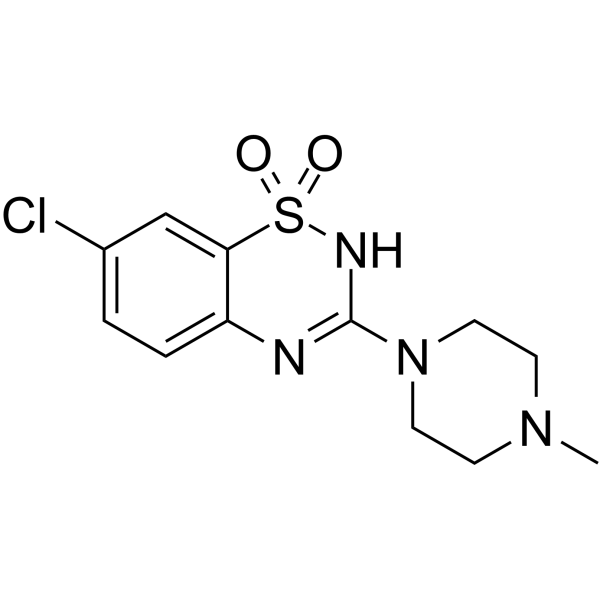 0 ImagesCat. No.: HY-U00182CAS No.: 59943-31-6DU-717 is an antihypertensive agent.
-
Tuftsin diacetate
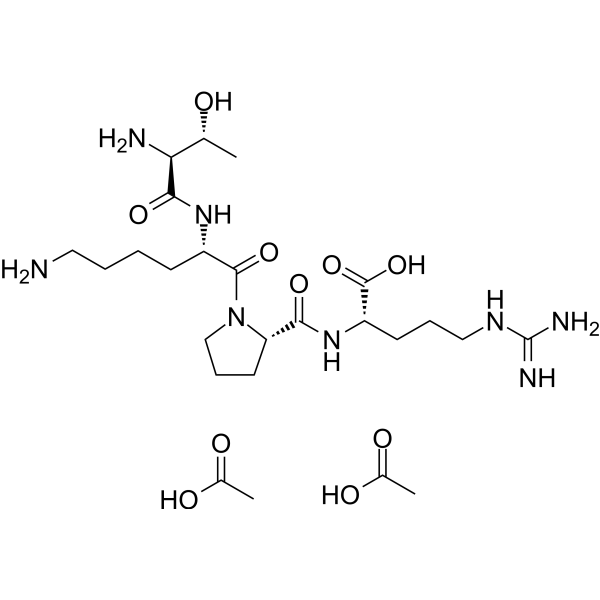 0 ImagesCat. No.: HY-P0240ACAS No.: 72103-53-8Tuftsin diacetate, a tetrapeptide, is a macrophage/microglial activator.




