



P-glycoprotein
P-gp; Pgp; Multidrug resistance protein 1; MDR1; ATP-binding cassette sub-family B member 1; ABCB1; Cluster of differentiation 243; CD243
P-glycoprotein (P-gp) also known as multidrug resistance protein 1 (MDR1) is an important protein of the cell membrane that pumps many foreign substances out of cells. More formally, it is an ATP-dependent efflux pump with broad substrate specificity. P-gp is extensively distributed and expressed in the intestinal epithelium where it pumps xenobiotics (such as toxins or drugs) back into the intestinal lumen, in liver cells where it pumps them into bile ducts, in the cells of the proximal tubular of the kidney where it pumps them into urine-conducting ducts, and in the capillary endothelial cells comprising the blood–brain barrier and blood-testis barrier, where it pumps them back into the capillaries. Some cancer cells also express large amounts of P-gp, which renders these cancers multi-drug resistant. P-gp is an ATP-dependent drug efflux pump for xenobiotic compounds with broad substrate specificity. It is responsible for decreased drug accumulation in multidrug-resistant cells and often mediates the development of resistance to anticancer drugs. This protein also functions as a transporter in the blood–brain barrier.
All Product Categories
-
P-glycoprotein Inhibitors
(276)
View all products
-
P-glycoprotein Agonists
(2)
View all products
-
P-glycoprotein Antagonist
(1)
View all products
-
P-glycoprotein Activators
(3)
View all products
-
P-glycoprotein Modulators
(24)
View all products
-
P-glycoprotein Inducer
(1)
View all products
-
P-glycoprotein Controls
(3)
View all products
-
P-glycoprotein Substrates
(22)
View all products
-
P-glycoprotein Ligand
(1)
View all products
-
P-glycoprotein Related Products (374)
Related Products (374)

-
Antibodies (3)
-
c-Met-IN-23
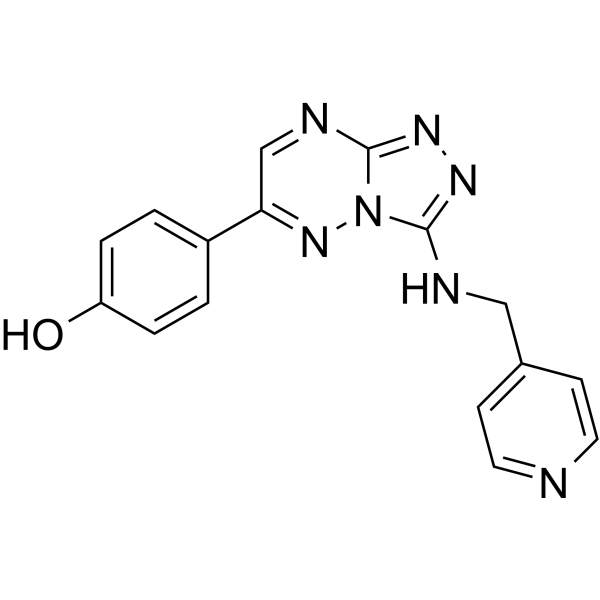 0 ImagesCat. No.: HY-161353CAS No.: 3032969-28-8c-Met-IN-23 (Compound 12g) is a c-Met inhibitor (IC50 = 0.052 μM for c-Met). c-Met-IN-23 also inhibits MDR1 and MRP1/2 pumps in the cancerous HepG2 and BxPC3 cells. c-Met-IN-23 is an anticancer agent.
-
MRS8288
 0 ImagesCat. No.: HY-181804MRS8288 is a ABCG2 and P-glycoprotein inhibitor, with an IC50 of 0.96 μM against ABCG2 and an IC50 of 1.39 μM against P-glycoprotein. MRS8288 inhibits the ATPase activity of ABCG2 and P-glycoprotein, and suppresses ABCG2-mediated substrate transport. MRS8288 is applicable for cancer research.
-
Niguldipine monohydrochloride
 0 ImagesCat. No.: HY-129841CAS No.: 119934-51-9Niguldipine monohydrochloride is a calcium channel blocker that inhibits P-glycoprotein and can be used in tumor research. Niguldipine monohydrochloride inhibits Cav 3.2, with an IC50 of 0.9 μM.
-
BRAFV600E/ABL2-IN-1
 0 ImagesCat. No.: HY-178382BRAFV600E/ABL2-IN-1 is a BRAFV600E (IC50 = 0.088 μM)/ABL2 (IC50 = 0.3 μM) dual inhibitor. BRAFV600E/ABL2-IN-1 can diminish P-glycoprotein expression. BRAFV600E/ABL2-IN-1 effectively inhibits p-CrkL (Abl2 signaling) and p-ERK1/2 (BRAFV600E pathway) in A375-R melanoma cells. BRAFV600E/ABL2-IN-1 causes cell cycle arrest. BRAFV600E/ABL2-IN-1 significantly increases the percentage of late apoptotic cells. BRAFV600E/ABL2-IN-1 can be used for the study of melanoma.
-
P-gp-IN-31
 0 ImagesCat. No.: HY-175522P-gp-IN-31 is a P-glycoprotein (P-gp) inhibitor with IC50 values of 0.42 μM for KB cells and 0.43 μM for MDR KBvin cells. P-gp-IN-31 can pass P-gp-mediated drug efflux mechanisms and shows collateral sensitivity via P-gp downregulation. P-gp-IN-31 inhibits cell proliferation, induces apoptosis and arrests the cell cycle at G2/M phase. P-gp-IN-31 can be used for the research of cancer, such as multidrug-resistant (MDR) malignancies.
-
MRP1-IN-2
 0 ImagesCat. No.: HY-179683MRP1-IN-2 (Compound 21) is a selective MRP1 inhibitor with a relatively weak inhibitory effect on P-gp. MRP1-IN-2 exhibits a strong accumulation effect of calcein, with its EC50 value being 177 nM. MRP1-IN-2 enhances the activity of Doxorubicin (HY-15142A) on drug-resistant cells. MRP1-IN-2 can be used for the study of multidrug-resistant cancers.

-
Isosilychristin
 0 ImagesCat. No.: HY-184830CAS No.: 77182-66-2Isosilychristin is a P-glycoprotein inhibitor with an IC50 of 25.9 μM. Isosilychristin downregulates the expression of transmembrane efflux pumps, exerts intracellular antioxidant effects, and inhibits NO production in macrophages. Isosilychristin regulates cell cycle progression, and exerts weak antiproliferative and colony formation inhibitory effects in prostate cancer cells. Isosilychristin reduces bacterial intercellular communication and reverses the drug resistance of Staphylococcus aureus. Isosilychristin can be used in studies related to prostate cancer, inflammation and bacterial infections.
-
10S,13aR-Antofine N-oxide
 0 ImagesCat. No.: HY-N17304CAS No.: 314744-17-710S,13aR-Antofine N-oxide is a phenanthroindolizidine N-oxide alkaloid and cytotoxic agent found in Cynanchum vincetoxicum. 10S,13aR-Antofine N-oxide exerts cytotoxic effects in drug-sensitive (KB-3-1, IC50 = 0.11 μM) and multi-drug-resistant (KB-V1, IC50 = 0.16 μM) carcinoma cells. 10S, 13aR-Antofine N-oxide acts as a poor substrate for the P-glycoprotein (P-170) efflux pump. 10S,13aR-Antofine N-oxide can be used for the research of cancers.
-
MK-1832
 0 ImagesCat. No.: HY-123793CAS No.: 935868-50-1MK-1832 (Compound 32) is a selective Kv1.5 inhibitor (IC50 = 86 nM). MK-1832 is a P-glycoprotein substrate. MK-1832 can be used in atrial fibrillation research.
-
P-gp inhibitor 30
 0 ImagesCat. No.: HY-178349P-gp inhibitor 30 is a potent P-gp inhibitor that reverses multidrug resistance in breast cancer by sensitizing resistant cells to Doxorubicin (ADM) (HY-15142). P-gp inhibitor 30 promotes apoptosis, induces autophagy, and suppresses proliferation, migration, and invasion of drug-resistant breast cancer cells when combined with ADM. P-gp inhibitor 30 inhibits breast tumor growth both in vitro and in vivo. P-gp inhibitor 30 can be used for drug-resistant breast cancer research.
-
Anticancer agent 50
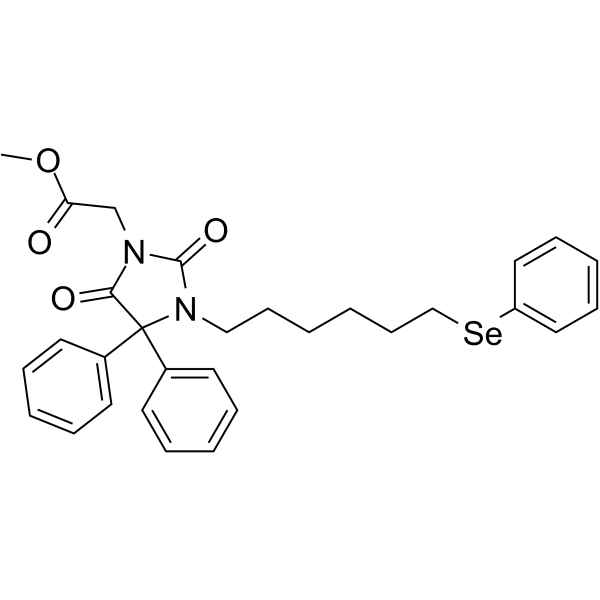 0 ImagesCat. No.: HY-146389CAS No.: 2487457-15-6Anticancer agent 50 (compound 6) is a potent ABCB1 efflux pump modulator. Anticancer agent 50 shows cytotoxic effects and antiproliferative effects. Anticancer agent 50 decreases the expression of cyclin D1 and induces p53 expression. Anticancer agent 50 has the potential for the research of T-lymphoma.
-
PROTAC PI3K/110β degrader-2
 0 ImagesCat. No.: HY-174469CAS No.: 3070438-79-5PROTAC PI3K/110β degrader-2 is a selective PI3K/p110β PROTAC degrader. PROTAC PI3K/110β degrader-2 can significantly degrade 110β protein and inhibit the expression of P-glycoprotein. PROTAC PI3K/110β degrader-2 can increase the level of reactive oxygen species (ROS). PROTAC PI3K/110β degrader-2 exerts anti-tumor effects by activating the endoplasmic reticulum stress (ERS)-mediated mitochondrial apoptosis pathway and inhibiting the AKT/Bcl-2 signaling pathway. PROTAC PI3K/110β degrader-2 can be used for research on cancer.
-
ABCB1-IN-2
 0 ImagesCat. No.: HY-163981ABCB1-IN-2 (compound 16q) is a functional inhibitor that can directly bind to the ABCB1 protein and stabilize its structure without affecting the expression and subcellular localization of ABCB1. ABCB1-IN-2 can increase the sensitivity of MCF-7/ADR cells to paclitaxel (PTX), increase the accumulation of PTX, and prevent the accumulation and excretion of luciferin Rh123 mediated by ABCB1. ABCB1-IN-2, as an ABCB1-mediated multidrug resistance (MDR) reversal agent, shows a strong ability to reverse MDR.
-
P-gp/BCRP-IN-2
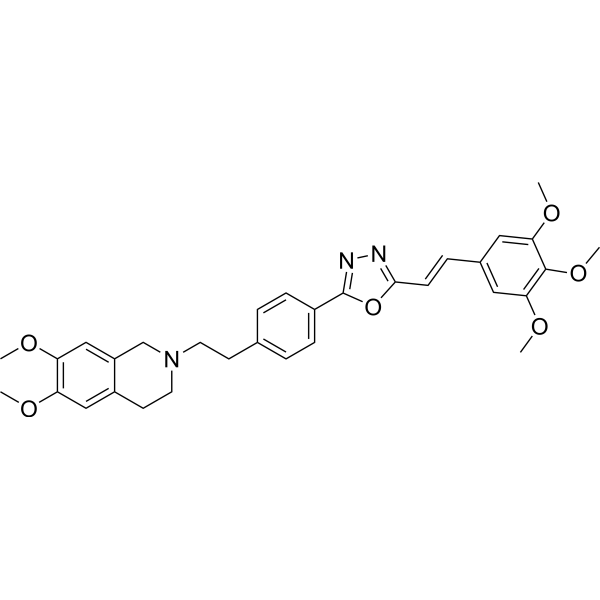 0 ImagesCat. No.: HY-155152CAS No.: 3052839-42-3P-gp/BCRP-IN-2 (compound 15) is an oxadiazole derivative and a dual inhibitor of the ABC transporter P-glycoprotein (IC50: 1.6 nM) and BCRP (IC50: 600 nM). P-gp/BCRP-IN-2 also enhances the anti-proliferative effects of Doxorubicin (HY-15142A) in drug-resistant human adenocarcinoma colon cancer cell lines HT29/DX and MDCK-MDR1 cells.
-
Anticancer agent 191
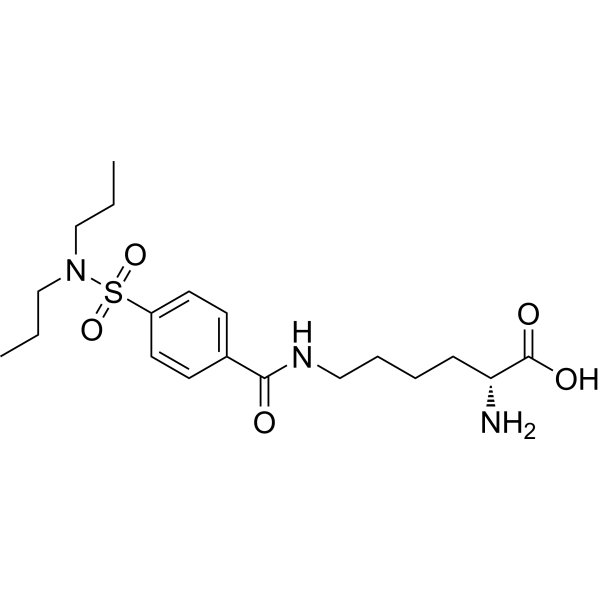 0 ImagesCat. No.: HY-157876Anticancer agent 191 (Compound 2) is a derivative of probenecid (HY-B0545). As a cancer cell efflux inhibitor, Anticancer agent 191 is designed to inhibit P-glycoprotein (P-gp), breast cancer resistance protein (BCRP), and/or multiple multidrug resistance proteins (MRPs). Anticancer agent 191 increases the accumulation of vinblastine in cancer cells, which is used for cancer research.
-
Bacopasaponin C (Standard)
 0 ImagesCat. No.: HY-N6015RCAS No.: 178064-13-6Bacopasaponin C (Standard) is the analytical standard of Bacopasaponin C (HY-N6015). This product is intended for research and analytical applications. Bacopasaponin C is an orally active natural glycoside. Bacopasaponin C can be isolated from Bacopa monniera. Bacopasaponin C inhibits Verapamil (HY-14275)-stimulated P-gp ATPase activity with an IC50 of 57.83 μg/mL. Bacopasaponin C has antitumor activity against sarcomas. Bacopasaponin C has antiparasitic activity against Leishmania donovani.
-
P-gp inhibitor 4
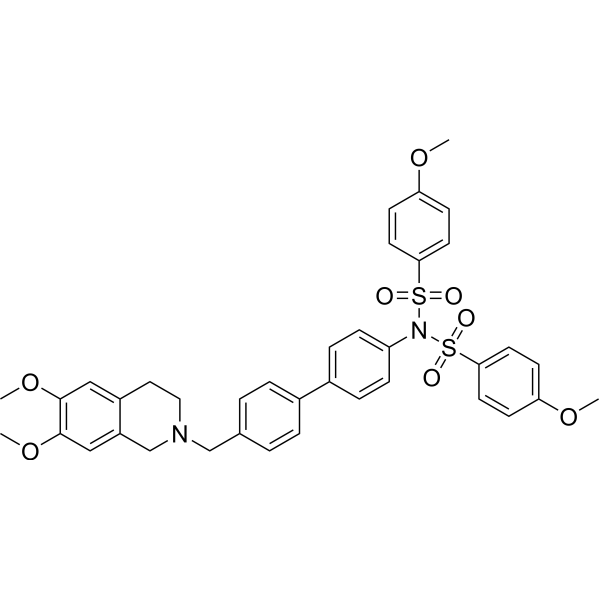 0 ImagesCat. No.: HY-146391CAS No.: 2652001-05-1P-gp inhibitor 4 (Compound 8b) is a selective P-glycoprotein modulator with an EC50 of 94 nM. P-gp inhibitor 4 increases agent transport across gastro-intestinal barrier and recovers doxorubicin toxicity in multidrug resistant cancer cells.
-
P-gp inhibitor 26
 0 ImagesCat. No.: HY-168186CAS No.: 3055666-79-7P-gp inhibitor 26 (Compound 7i) is a potent P-gp inhibitor. P-gp inhibitor 26 potently reverses P-gp-mediated multidrug resistance in K562/A02 cells.
-
(R)-Verapamil-d7 (hydrochloride)
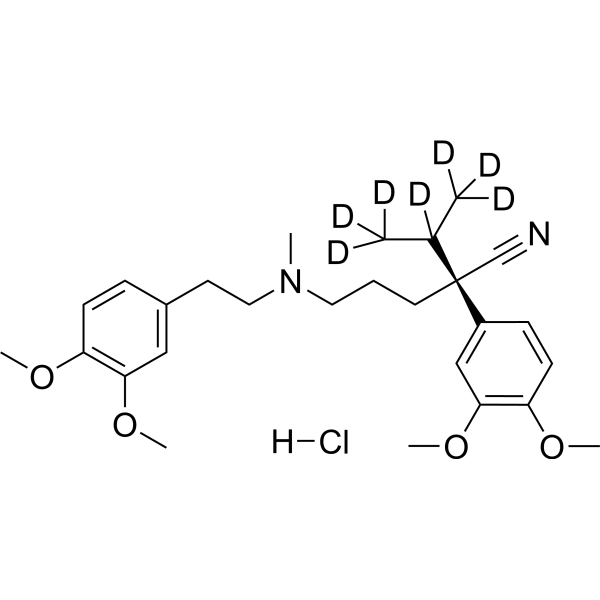 0 ImagesCat. No.: HY-135336SCAS No.: 2771315-76-3Synonyms: (R)-(+)-Verapamil-d7 (hydrochloride)(R)-Verapamil-d7 (hydrochloride) is a deuterium labeled (R)-Verapamil hydrochloride. (R)-Verapamil hydrochloride ((R)-(+)-Verapamil hydrochloride) is a P-Glycoprotein inhibitor. (R)-Verapamil hydrochloride blocks MRP1 mediated transport, resulting in chemosensitization of MRP1-overexpressing cells to anticancer agents.




