



Proteasome
Proteasomes are very large protein complexes inside all eukaryotes and archaea, and in some bacteria. In eukaryotes, they are located in the nucleus and the cytoplasm. The main function of the proteasome is to degrade unneeded or damaged proteins by proteolysis, a chemical reaction that breaks peptide bonds. Enzymes that carry out such reactions are called proteases. Proteasomes are part of a major mechanism by which cells regulate the concentration of particular proteins and degrade misfolded proteins. The degradation process yields peptides of about seven to eight amino acids long, which can then be further degraded into amino acids and used in synthesizing new proteins. Proteins are tagged for degradation with a small protein called ubiquitin. The tagging reaction is catalyzed by enzymes called ubiquitin ligases. Once a protein is tagged with a single ubiquitin molecule, this is a signal to other ligases to attach additional ubiquitin molecules. The result is a polyubiquitin chain that is bound by the proteasome, allowing it to degrade the tagged protein.
All Product Categories
-
Proteasome Inhibitors
(224)
View all products
-
Proteasome Activators
(10)
View all products
-
Proteasome Modulator
(1)
View all products
-
Proteasome Degraders
(3)
View all products
-
Proteasome Controls
(3)
View all products
-
Proteasome Substrates
(6)
View all products
-
Proteasome Ligands
(7)
View all products
-
Proteasome Related Products (292)
Related Products (292)

-
Antibodies (22)
-
PROTAC 20S proteasome subunit β5 degrader 2
 0 ImagesCat. No.: HY-169135PROTAC 20S proteasome subunit β5 degrader 2 is a PROTAC degrader targeting the 20S proteasome subunit β5, with a DC50 of 0.16 μM. PROTAC 20S proteasome subunit β5 degrader 2 forms a ternary complex with the CRBN E3 ligase, induces ubiquitination of the 20S proteasome subunit β5, and promotes its degradation via the proteasome. PROTAC 20S proteasome subunit β5 degrader 2 exerts antiproliferative effects in cancer cells and exhibits antitumor activity both in vitro and in vivo. It can be used for the research of pharyngeal cancer and drug-resistant multiple myeloma.
-
Z-Gly-Pro-Phe-Leu-CHO
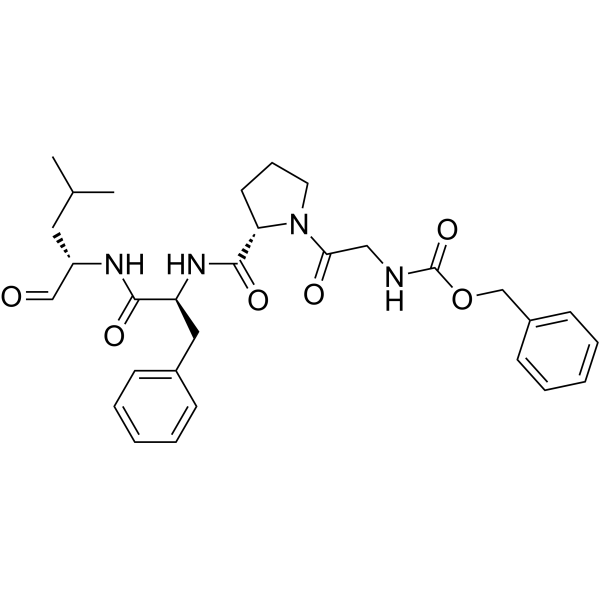 0 ImagesCat. No.: HY-P10007CAS No.: 159659-05-9Synonyms: Z-GPFL-CHOZ-Gly-Pro-Phe-Leu-CHO (Z-GPFL-CHO) is a tetrapeptide aldehyde that acts as a highly selective and potent proteasomal inhibitor (Ki = 1.5 µM for branched chain amino acid preferring, 2.3 µM for small neutral amino acid preferring, and 40.5 µM for chymotrypsin-like activities; IC50 = 3.1 µM for peptidyl-glutamyl peptide hydrolyzing activity).
-
Bz-VGR-AMC TFA
 0 ImagesCat. No.: HY-137897APurity: 98.47%Bz-VGR-AMC TFA is a fluorescent substrate for the trypsin-like activity of the 20S proteasome. Bz-VGR-AMCTFA can be used to measure the trypsin-like (β2) activity of the 20S proteasome (Ex/Em = 360/460 nm).
-
DD1
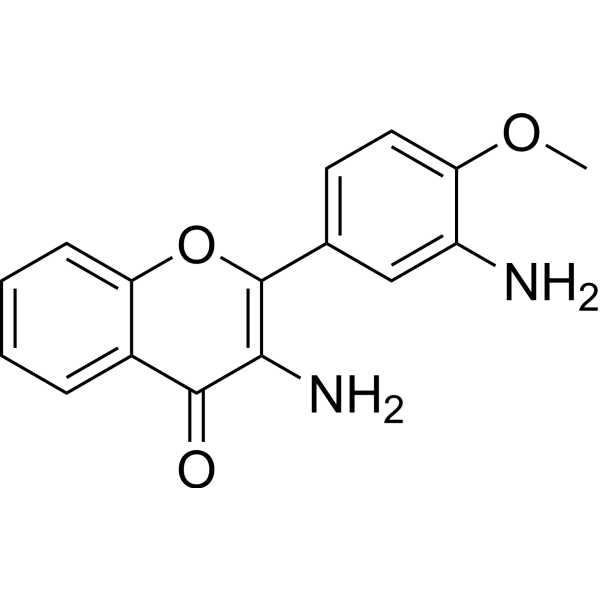 0 ImagesDD1, a proteasome inhibitor, targets Bax activation and P70S6K degradation during acute myeloid leukemia (AML) apoptosis. DD1 induces apoptosis in the caspase-dependent manner. DD1 induces mitochondrial membrane depolarization and Bad dephosphorylation.
-
NC-002
 0 ImagesCat. No.: HY-P11311CAS No.: 1356828-46-0NC-002, a cell-permeable peptide, is a Trypsin-like proteasome inhibitor without inhibition of lysosomal cysteine proteases. NC-002 is the epoxyketone derivative of Leupeptin (HY-18234). NC-002 sensitizes myeloma cells to Bortezomib (HY-10227) and Carfilzomib (HY-10455). NC-002 can be used for cancers research.
-
Cyclotheonellazole A
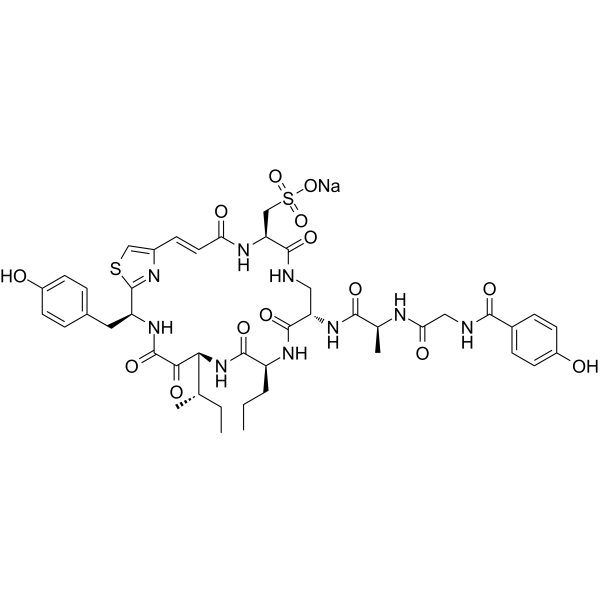 0 ImagesCat. No.: HY-P3356CAS No.: 2094993-48-1Cyclotheonellazole A is a natural macrocyclic peptide and a potent elastase inhibitor (IC50=0.034 nM). Cyclotheonellazole A inhibits chymotrypsin with an IC50 value of 0.62 nM.
-
Galeflaprit fumarate
 0 ImagesCat. No.: HY-131350ACAS No.: 3026790-19-9Synonyms: LXE408 fumarateGaleflaprit (LXE408) fumarate is an orally active, non-competitive and kinetoplastid-selective proteasome inhibitor.Galeflaprit fumarate has an IC50 of 0.04 μM for L. donovani proteasome and an EC50 of 0.04 μM for L. donovani. Galeflaprit fumarate has a low propensity to cross the blood brain barrier. Galeflaprit fumarate has the potential for visceral leishmaniasis (VL) research.
-
Isovalerylcarnitine-d9 chloride
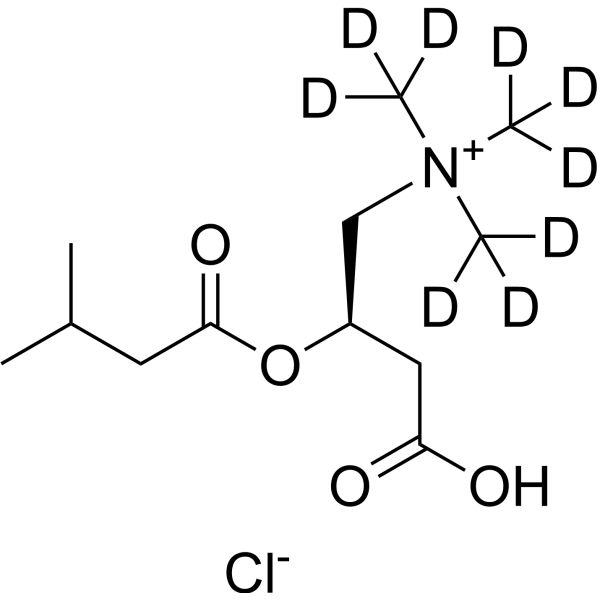 0 ImagesCat. No.: HY-145542SCAS No.: 1334532-23-8Isovalerylcarnitine-d9 chloride is the deuterium labeled Isovalerylcarnitine chloride (HY-145542). Isovalerylcarnitine chloride is a metabolite of leucine. Isovalerylcarnitine chloride can specifically activate calpain in human neutrophils. Isovalerylcarnitine chloride inhibits tumor cell proliferation and induces apoptosis. Elevated circulating levels of Isovalerylcarnitine chloride are negatively correlated with reduced lung cancer risk.
-
(+)-Catechin 3-gallate
 0 ImagesCat. No.: HY-N16453CAS No.: 25615-05-8(+)-Catechin 3-gallate is an orally active polyphenolic compound that acts as a non-selective proteasome inhibitor. (+)-Catechin 3-gallate exerts antitumor effects by inducing apoptosis and suppressing inflammatory cytokines. (+)-Catechin 3-gallate is promising for research of cancers (e.g., breast, prostate) and neurodegenerative diseases (e.g., Alzheimer’s).
-
UR238
 0 ImagesCat. No.: HY-180127CAS No.: 2728747-80-4UR238 is a proteasome inhibitor. UR238 reduces levels of the immunomodulator HE4. UR238 decreases PDL1 expression on cells. UR238 exhibits anticancer activity against epithelial ovarian cancer.
-
iso-VQA-ACC
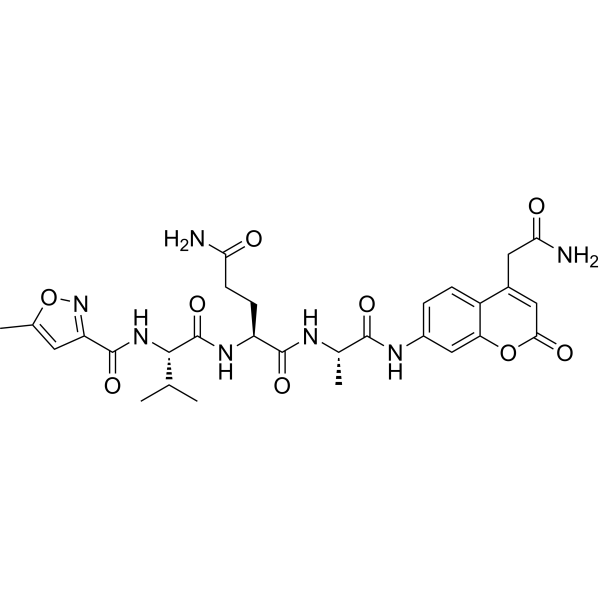 0 ImagesCat. No.: HY-P10003iso-VQA-ACC is a substrate for constitutive proteasome.
-
Z-Leu-Leu-Tyr-COCHO
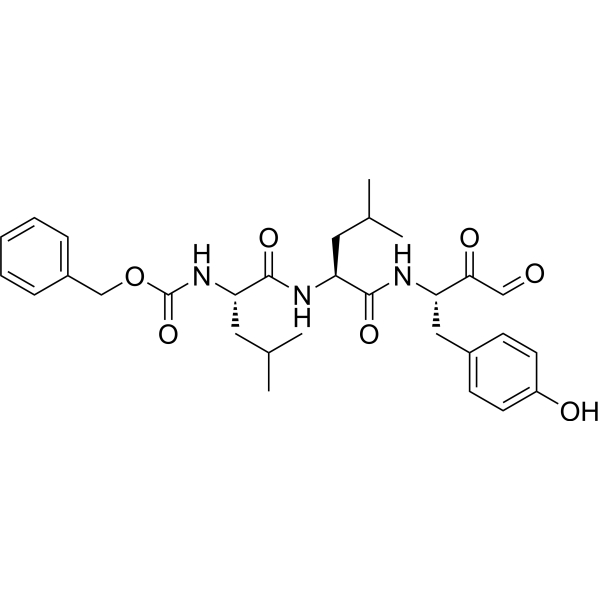 0 ImagesCat. No.: HY-P4291CAS No.: 204649-66-1Z-Leu-Leu-Tyr-COCHO is a potent chymotrypsin-like activity inhibitor with a Ki value of 3.0 nM.
-
JBIR-22
 0 ImagesCat. No.: HY-126743CAS No.: 1219095-76-7JBIR-22 is a protein-protein interaction inhibitor of proteasome assembly factor 3 homodimer, which has the activity of inhibiting this interaction and exerting long-term cytotoxicity against human cervical cancer cell lines, and its stereochemical structure has been determined by total synthesis.
-
MeOSuc-Gly-Leu-Phe-AMC
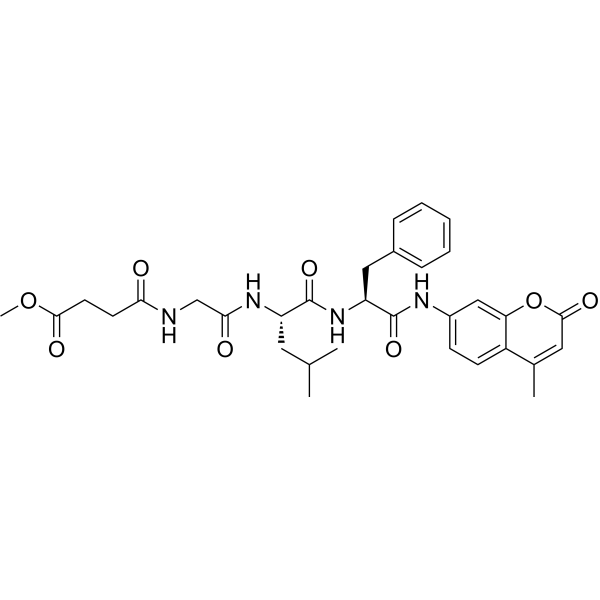 0 ImagesCat. No.: HY-P4348CAS No.: 201854-05-9MeOSuc-Gly-Leu-Phe-AMC is a peptide substrate of proteasomal.
-
CEP1612
 0 ImagesCat. No.: HY-117513CAS No.: 189036-01-9CEP1612 is a dipeptidyl proteasome inhibitor with the IC50 of 60 nM. CEP1612 induces p21(WAF1)and p27(KIP1) expression and cell apoptosis. CEP1612 shows anticancer activity in vivo.
-
RAFKBP12
 0 ImagesCat. No.: HY-181498CAS No.: 3132225-38-5RAFKBP12 is a FKBP12 CAP-TAC (proteinase complex cap-targeted chimera) degrader. RAFKBP12 demonstrates the feasibility of the CAP-TAC strategy, which enables proteasome-dependent degradation of FKBP12 that is independent of E3 ubiquitin ligases and protein ubiquitination.
-
PR-39
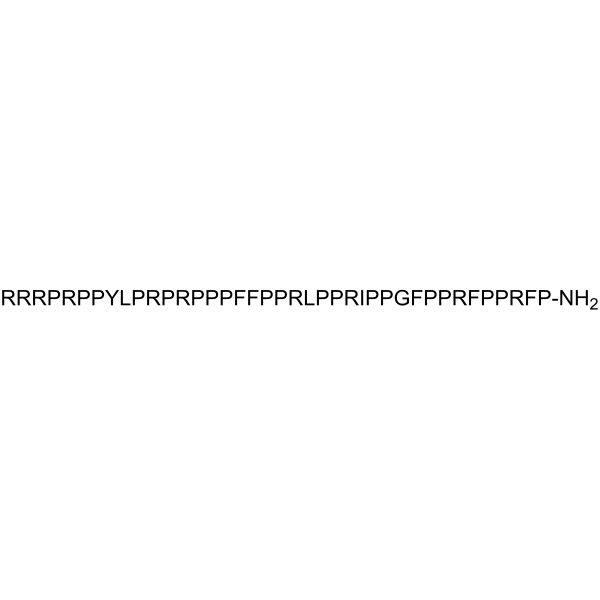 0 ImagesCat. No.: HY-P1259CAS No.: 139637-11-9PR-39, a natural proline- and arginine-rich antibacterial peptide, is a noncompetitive, reversible and allosteric proteasome inhibitor. PR-39 reversibly binds to the α7 subunit of the proteasome and blocks degradation of NF-κB inhibitor IκBα by the ubiquitin-proteasome pathway. PR-39 stimulates angiogenesis, inhibits inflammatory responses and significant reduces myocardial infarct size in mice.
-
Isoginkgetin (Standard)
 0 ImagesIsoginkgetin (Standard) is the analytical standard of Isoginkgetin. This product is intended for research and analytical applications. Isoginkgetin is a pre-mRNA splicing inhibitor inhibitor. Isoginkgetin also inhibits activities of both Akt, NF-κB and MMP-9. Isoginkgetin inhibits the activity of the 20S proteasome, induces apoptosis and activates autophagy.
-
SAP2-IN-1
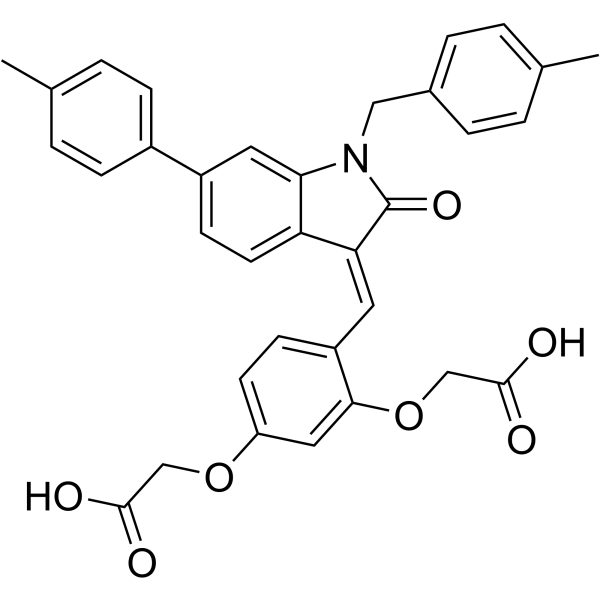 0 ImagesCat. No.: HY-151376CAS No.: 2512847-37-7
-
Az-NC-002
 0 ImagesCat. No.: HY-P11331CAS No.: 1356828-49-3Az-NC-002 is a Proteasome trypsin-like site (β2) and immunoproteasome β2i-specific active probe. Az-NC-002 has weak off-target effects with no significant inhibition for Cathepsin D (HY-P2750), but this inhibition reacts outside of the active site or influence on a small fraction of the enzyme.




