



SARS-CoV
SARS coronavirus
SARS-CoV is the coronavirus (CoV) that causes severe acute respiratory syndrome (SARS). CoVs are enveloped viruses with a positive-sense, single-stranded RNA and can cause health-threatening outbreaks by targeting human respiratory system, including not only SARS, but also Middle East respiratory syndrome (MERS) and SARS-CoV-2 (the cause of COVID-19).
CoVs have four main structural proteins: spike(S), membrane (M), envelope (E), and nucleocapsid (N) proteins. An S protein mediates the CoV entry into host cells by attaching to a cellular receptor (ACE2 for SARS-CoV and SARS-CoV-2, DPP4 for MERS-CoV), followed by fusion between virus and host cell membranes. Genome replication and subgenomic RNA transcription after entry carry on with the participation of many nonstructural proteins such as Mpro (main protease or 3CLpro), PLpro (papain-like protease) and RdRp (RNA-dependent RNA polymerase). Then the structural proteins are translated, assembled into mature virions, and released via vesicles by exocytosis. It is worth mentioning that a protease called TMPRSS2 (transmembrane protease, serine 2) play important roles throughout the whole life of CoVs (such as attachment, assembling and release) by cleaving S protein. All the proteins and subcellular structures participated in the life cycle of CoVs are promising targets for treatment of disease caused by CoVs.
All Product Categories
-
SARS-CoV Related Products (1184)
Related Products (1184)

-
Recombinant Proteins (195)

-
SARS-CoV-2 3CLpro-IN-3
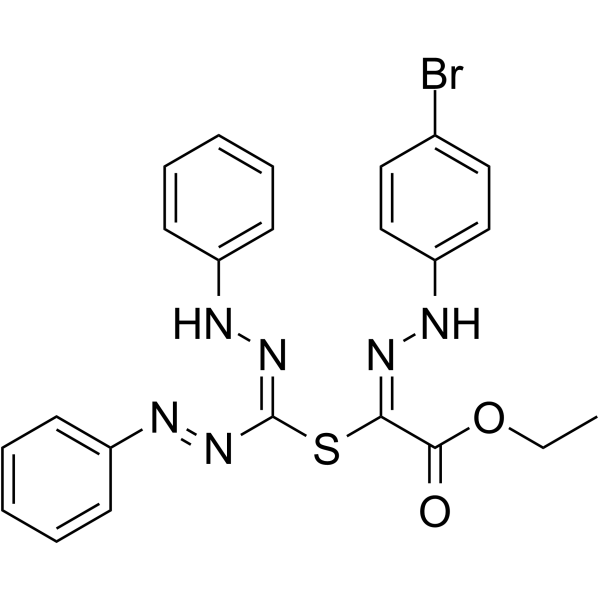 0 ImagesCat. No.: HY-147804CAS No.: 2505241-13-2SARS-CoV-2 3CLpro-IN-3 (Compound 3d) is a SARS CoV-2 3CLpro inhibitor with antiviral, antibacterial and antifungal activities.
-
YL1004
 0 ImagesCat. No.: HY-181661YL1004 is a potent, selective and orally active noncovalent inhibitor of SARS-CoV-2 papain-like protease (PLpro). YL1004 shows an IC50 of 17.5 nM and a Ki of 2.3 nM against PLpro, with an in vitro anti-SARS-CoV-2 EC50 of 0.08 μM-1.37 μM. YL1004 suppresses the proteolytic activity of PLpro and blocks its deubiquitinating and deISGylating effects to restore host innate antiviral immune signaling. YL1004 inhibits the replication of wild-type, Delta, Omicron variants and nirmatrelvir-resistant strains of SARS-CoV-2. YL1004 can be used for the research of COVID-19 (SARS-CoV-2 infection).
-
Ritonavir-d8
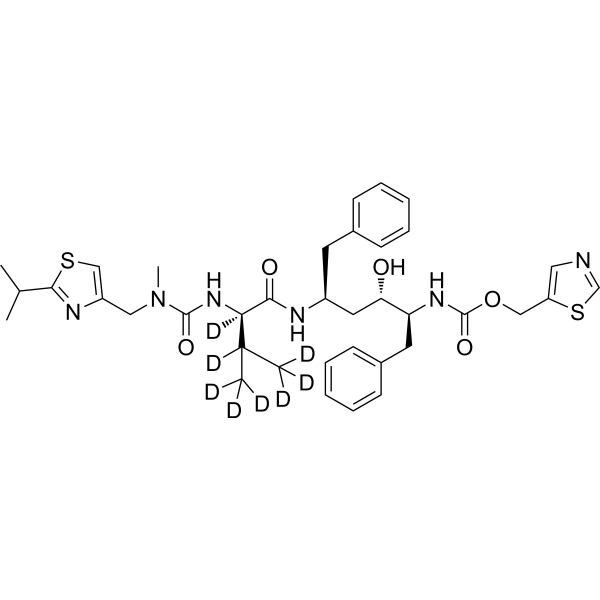 0 ImagesCat. No.: HY-90001S2Synonyms: ABT 538-d8; RTV-d8
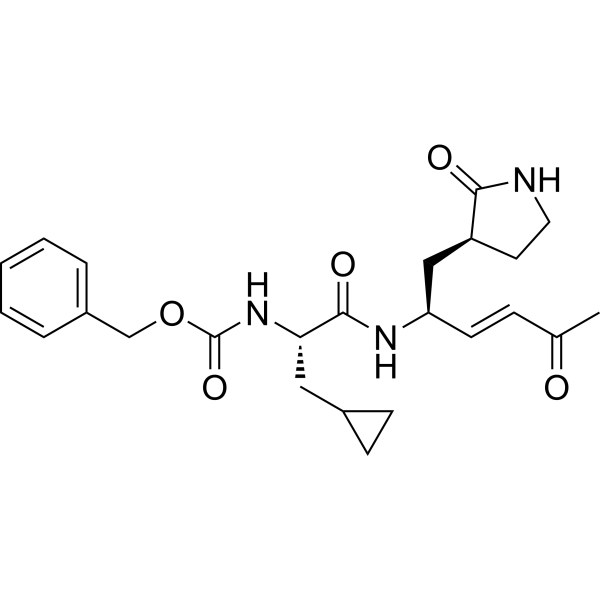

-
PROTAC SARS-CoV-2 Mpro degrader-2
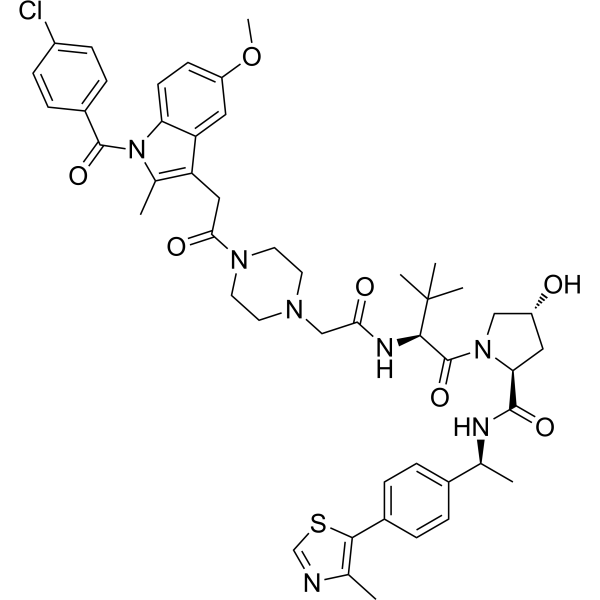 0 ImagesCat. No.: HY-157805CAS No.: 3057294-32-0PROTAC SARS-CoV-2 Mpro degrader-2 is a SARS-CoV-2 Mpro PROTAC degrader with a DC50 of 1.34 μM. PROTAC SARS-CoV-2 Mpro degrader-2 recruits the VHL E3 ligase to mediate ubiquitination and proteasomal degradation of SARS-CoV-2 Mpro, without inhibiting the catalytic activity of Mpro. PROTAC SARS-CoV-2 Mpro degrader-2 exhibits anti-SARS-CoV-2 activity in infected cells, as well as broad-spectrum antiviral activity against coronaviruses including HCoV-OC43 and HCoV-229E. PROTAC SARS-CoV-2 Mpro degrader-2 can be used in studies related to SARS-CoV-2 infection, HCoV-OC43 infection, and HCoV-229E infection.
-
SARS-CoV-2 3CLpro-IN-7
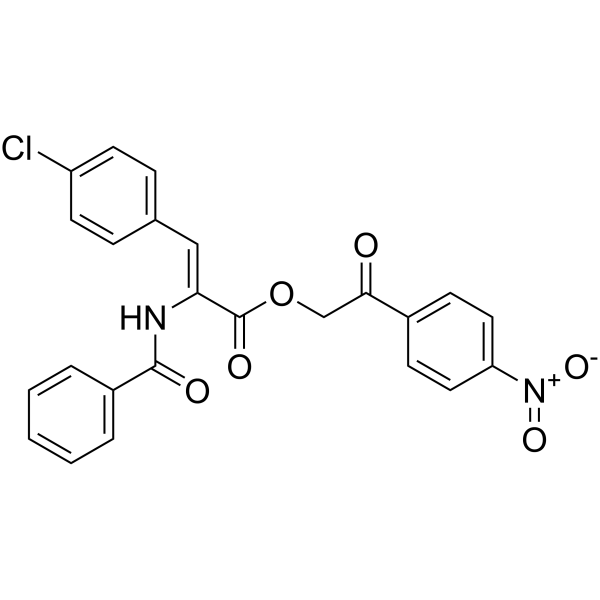 0 ImagesCat. No.: HY-152009CAS No.: 1164478-67-4SARS-CoV-2 3CLpro-IN-7 is a reversible covalent SARS-CoV-2 3CL protease inhibitor with an IC50 value of 1.4 µM.
-
SARS-CoV-2-IN-62
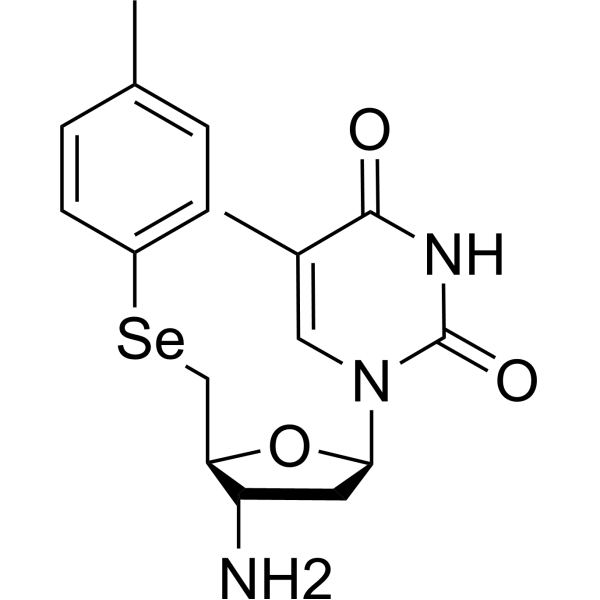 0 ImagesCat. No.: HY-156325CAS No.: 2350285-18-4SARS-CoV-2-IN-62 (Compound R3b) is an inhibitor of SARS-CoV-2 replication and has low cytotoxicity. SARS-CoV-2-IN-62 inhibits viral replication in Vero E6 cells and Calu-3 cells, with EC50 values of 2.97 μM and 3.82 μM, respectively.
-
Elopiprazole
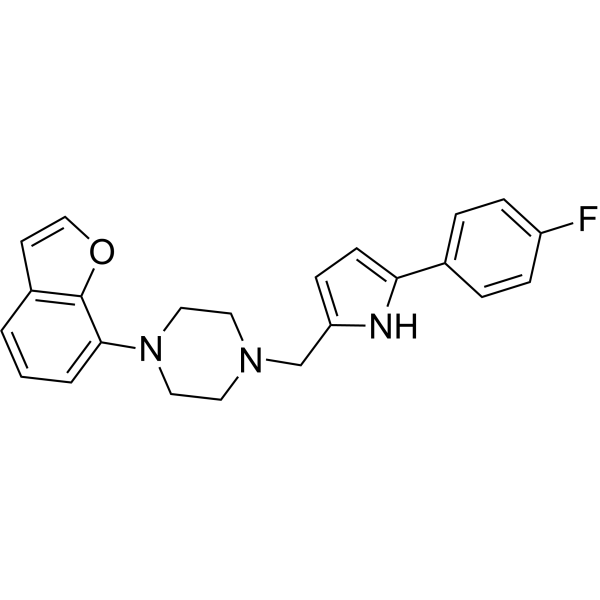 0 ImagesCat. No.: HY-133832CAS No.: 115464-77-2Elopiprazole can be used in study of neurological disease and SARS-CoV-2.

-
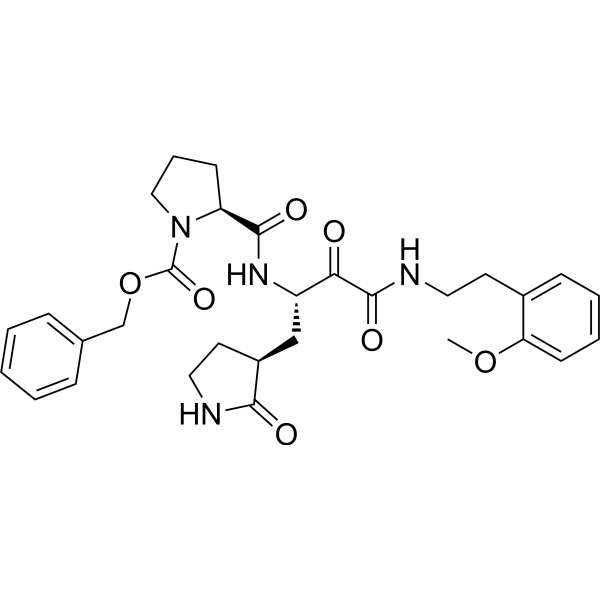
Leupeptin hemisulfate (Standard)
 0 ImagesLeupeptin hemisulfate (Standard) is the analytical standard of Leupeptin hemisulfate (HY-18234A). This product is intended for research and analytical applications. Leupeptin hemisulfate is a broad-spectrum protease inhibitor. Leupeptin hemisulfate inhibits serine, cysteine and threonine proteases, and regulates autophagy. Leupeptin hemisulfate reduces the expression levels of LC3B, iNOS, Cox-2, Beclin-1 and the level of endopeptidases; increases the levels of p62, Arg 1, Msr 1 and Mrc−1; and blocks the upregulation of p-PTEN, p-NF-κB, p-PI3K, p-Akt, p-p38 and ERK1/2. Leupeptin hemisulfate inhibits NO, ROS, proinflammatory cytokines, the IFN-γ/IL-10 ratio, phagolysosome fusion, mammalian lysosomal hydrolase activity and SARS-CoV-2 replication; and reverses impaired autophagic flux. Leupeptin hemisulfate is applicable to research related to chronic inflammatory diseases, edema, skin tumorigenesis, COVID-19 and respiratory infections.
-
NIP-22c
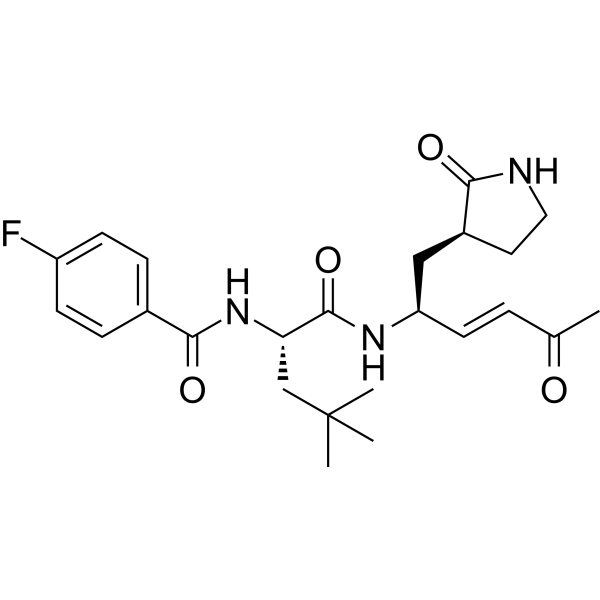
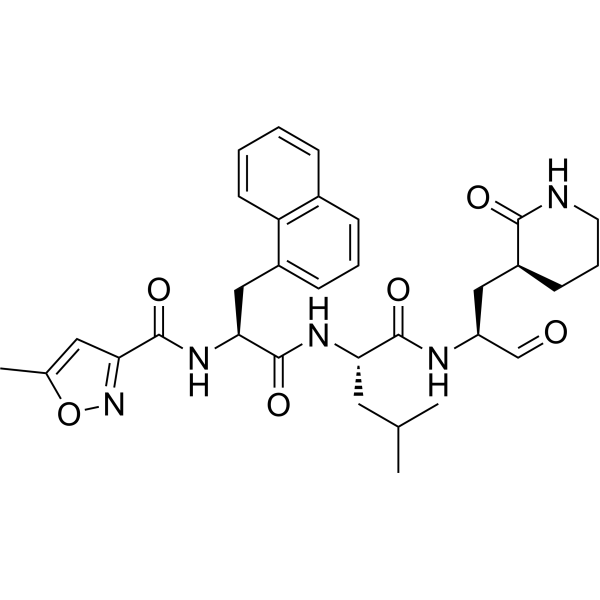 0 ImagesCat. No.: HY-162313CAS No.: 2309384-85-6NIP-22c is a novel coronavirus 3CLpro inhibitor. The EC50 for Verona, Calu3, Caco2 and HBTEC-ALI were 4.6, 1.1, 0.1 and 0.6 μM, respectively. NIP-22c has antiviral activity.
-
SARS-CoV-2 Mpro-IN-44
 0 ImagesCat. No.: HY-172960CAS No.: 3020713-53-2SARS-CoV-2 Mpro-IN-44 (Compound 25) is a broad-spectrum coronavirus main protease (Mpro) inhibitor. SARS-CoV-2 Mpro-IN-44 has inhibitory activity against a variety of high-risk coronaviruses (including SARS-CoV-2 and PEDV, etc.) (IC50: < 0.6 μM). SARS-CoV-2 Mpro-IN-44 achieves broad-spectrum inhibition of coronaviruses by enhancing the interaction with the conserved sites of Mpro. SARS-CoV-2 Mpro-IN-44 can be used for anti-coronavirus drug development.
-
F8-S43-S3
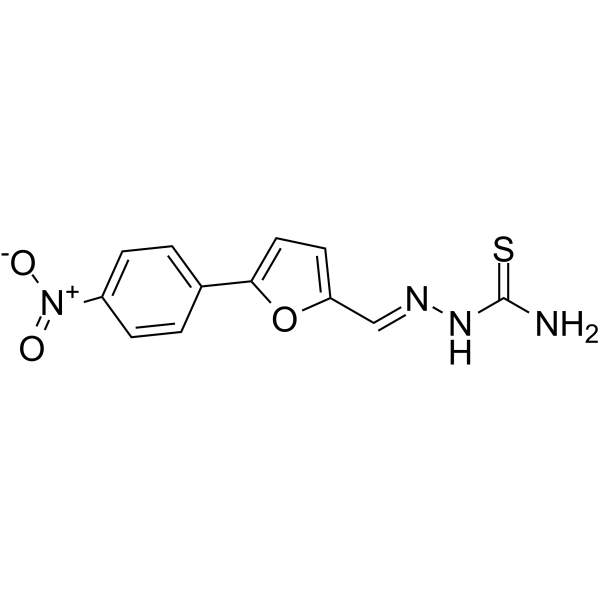 0 ImagesCat. No.: HY-147844CAS No.: 1632320-78-5F8-S43-S3 is an inhibitor of SARS-CoV-2 main protease, with an IC50 of 9.69 μM.
-
ASF-006 sodium
 0 ImagesCat. No.: HY-179634ASF-006 sodium, a tetrapodal tryptophan derivative, is a potent viral invasion inhibitor. ASF-006 sodium shows potent antiviral activity against different SARS-CoV-2 Omicron variants but not against the ancestral SARS-CoV.2 strain (Wuhan-Hu-1). ASF-006 sodium competitively inhibits receptor-binding domain (RBD)-ACE2 binding via an allosteric mechanism. ASF-006 sodium inhibits Omicron BA.1, Omicron XBB.1.5, respiratory syncytial virus (RSV) and Ebola virus infection with IC50s of 0.02 μM, 0.3 μM, 1.52 μM and 0.2 μM, respectively. ASF-006 sodium inhibits cell entry of both HIV and enterovirus A71[1].
-
Ivermectin B1a-d2-1
 0 ImagesCat. No.: HY-126937SIvermectin B1a-d2-1 is the deuterium labeled Ivermectin B1a (HY-126937). Ivermectin B1a, a derivative of Avermectin B1a (HY-15308), is a main component of Ivermectin (HY-15310). Ivermectin (MK-933) is a broad-spectrum anti-parasite agent. Ivermectin is a candidate therapeutic against SARS-CoV-2/COVID-19.
-
MWAC-3429
 0 ImagesCat. No.: HY-180578CAS No.: 2093677-54-2MWAC-3429 is a potent SARS-CoV-2 Nsp13 helicase inhibitor. MWAC-3429 inhibits SARS-CoV-2 and SARS-CoV1 with EC50s of 5.39 (nLuc assay) and 17.00 μM (CPE assay), respectively, while showing low cytotoxicity in A549-hACE2 cells (CC50 > 50 μM). MWAC-3429 can be used for SARS-CoV-infection research.




