



Drug Derivative
Drug derivative
Drug derivatives are derived from parent compounds. They replace or add atoms and groups through chemical reactions to optimize the various properties of the parent compound and reduce side effects. The application of drug derivatives provides a diverse compound library for drug research and development and accelerates the discovery of new drugs. For example, urea derivatives Glibenclamide can prolong the blood sugar-lowering effect of anti-diabetic drugs.
References:
- [1]. Vardanyan RS, et al. Fentanyl-related compounds and derivatives: current status and future prospects for pharmaceutical applications. Future Med Chem. 2014 Mar;6(4):385-412.x
- [2]. Ghosh AK, et al. Urea Derivatives in Modern Drug Discovery and Medicinal Chemistry. J Med Chem. 2020 Mar 26;63(6):2751-2788.x
All Product Categories
-
Drug Derivative Inhibitors
(12)
View all products
-
Drug Derivative Agonist
(1)
View all products
-
Drug Derivative Activator
(1)
View all products
-
Drug Derivative Chemical
(1)
View all products
-
Drug Derivative Inducer
(1)
View all products
-
Drug Derivative Controls
(38)
View all products
-
Drug Derivative Substrate
(1)
View all products
-
Drug Derivative Related Products (3977)
Related Products (3977)

-
α-L-Rhamnose monohydrate
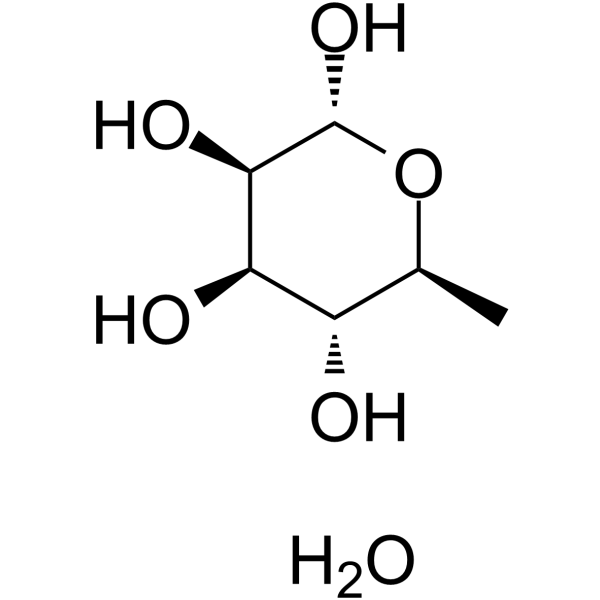 0 Imagesα-L-Rhamnose monohydrate is a neutral sugar present in plants, animals, viruses and bacteria. α-L-Rhamnose monohydrate is a ligand for α-L-rhamnose-recognizing lectin sites, trigger intracellular signaling pathways. α-L-Rhamnose monohydrate induces rhaE and rhaA expression as a specific carbon source in Aspergillus nidulans, while glucose inhibits its cellular uptake. α-L-Rhamnose monohydrate induces rapid and transient increases in intracellular free Ca2+ concentration in normal human dermal fibroblasts.
-
9-β-D-Arabinofuranosylguanine
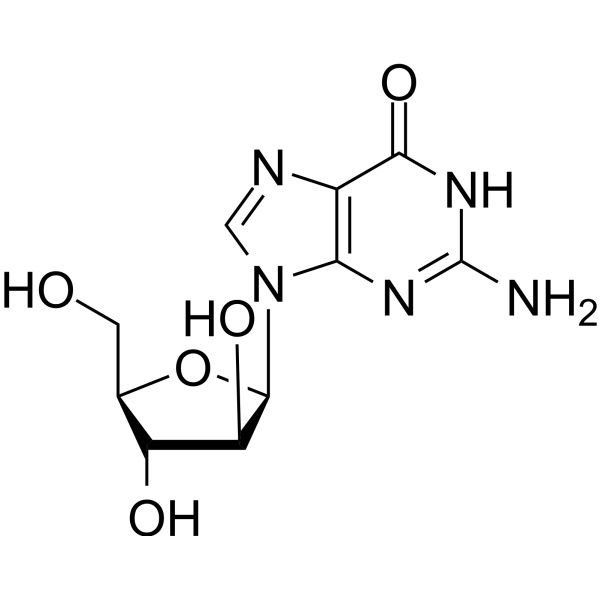 0 ImagesSynonyms: AraG
-
2-Hydroxy-6-methoxybenzoic acid
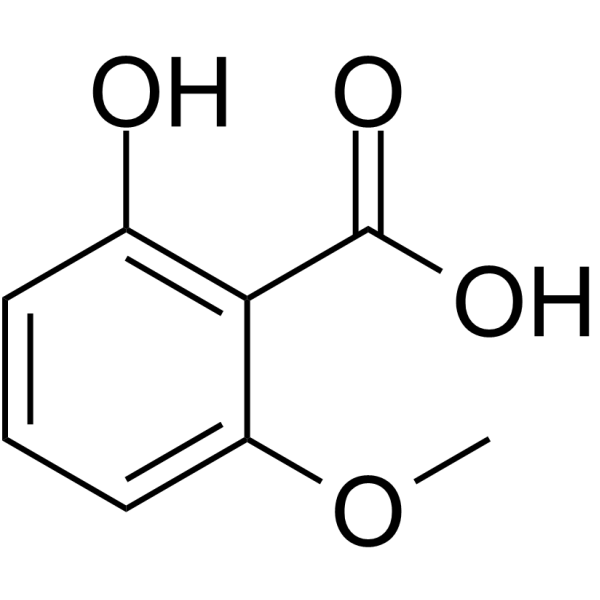 0 ImagesSynonyms: 6-Methoxysalicylic acid2-Hydroxy-6-methoxybenzoic acid (6-Methoxysalicylic acid) is an orally active derivative of Salicylic acid (HY-B0167). 2-Hydroxy-6-methoxybenzoic acid can be isolated from the plant Brickellia veronicifolia. 2-Hydroxy-6-methoxybenzoic acid has analgesic properties.
-
Rebaudioside I
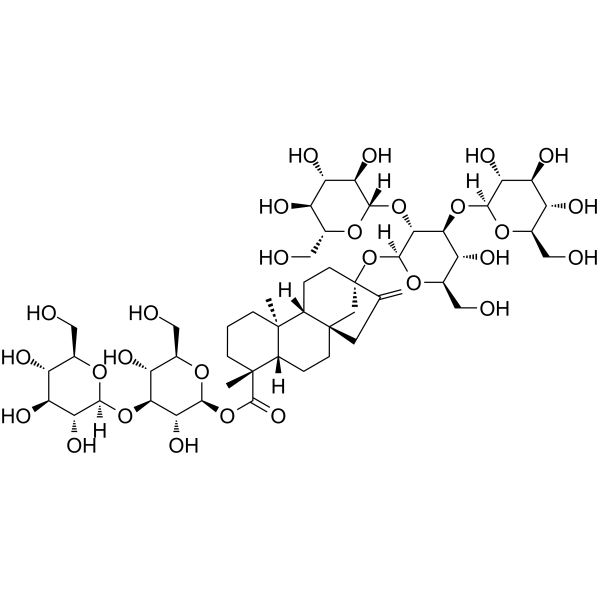 0 ImagesRebaudioside I is a natural non-caloric high-potency sweetener belonging to the steviol glycoside family, which can be isolated from Stevia rebaudiana Morita.
-
ACSL5-IN-1
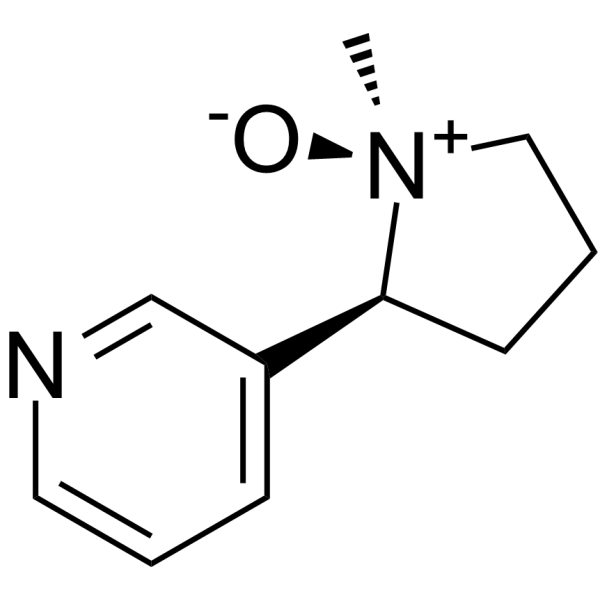
 0 ImagesCat. No.: HY-177704Purity: 99.88%ACSL5-IN-1 (Compound A) is an ACSL5 inhibitor with body weight-reducing activity. ACSL5-IN-1 inhibits ACSL5, an enzyme linked to fatty acid metabolism. ACSL5-IN-1 reduces body weight in diet-induced obesity mice. ACSL5-IN-1 can be used for the research of obesity, metabolic dysfunction-associated steatohepatitis, metabolic syndrome, non-alcoholic fatty liver disease, type 2 diabetes, acute myeloid leukemia, colorectal cancer, and breast cancer.
-
Petunidin chloride
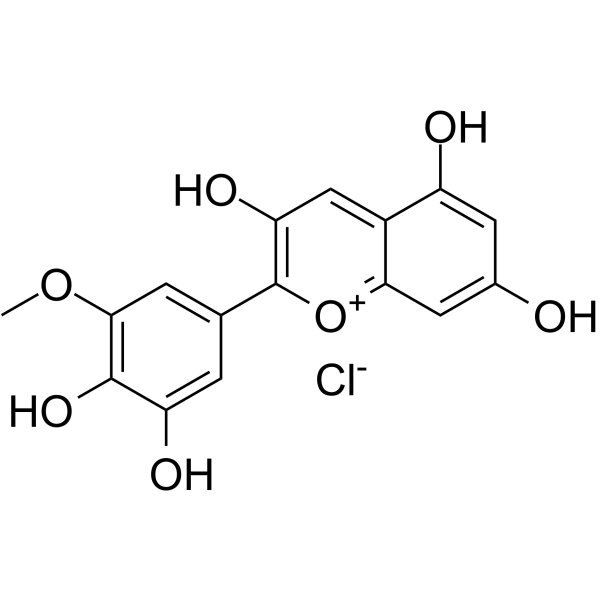 0 ImagesPetunidin chloride is an anthocyanin and also a pentoside (PEN) synthesis inhibitor. Petunidin chloride directly inhibits the synthesis of PEN without degrading or sequestering already synthesized PEN. Petunidin chloride can be used in studies related to PEN accumulation and advanced glycation associated with schizophrenia.
-
Himic anhydride
 0 ImagesHimic anhydride is an acid anhydride compound and sensitizer. Himic anhydride with cross-reactivity to hexahydrophthalic anhydride. Himic anhydride induces immunoglobulin E (IgE)-mediated sensitization and allergic immune responses. Himic anhydride can be used for the research of occupational asthma.
-
DOTAMTATE
 0 ImagesDOTAMTATE is a somatostatin analogue. DOTAMTATE marked 212Pb is promising for research of somatostatin receptor positive neuroendocrine tumors.
-
Duroquinone
 0 ImagesSynonyms: TetramethylquinoneDuroquinone (Tetramethylquinone) is a model compound of amphiphilic quinone, which can be used as an oxidative-reductive activity probe. Duroquinone can be easily reduced by biological systems to hydrogen peroxide (DQH₂) or semi-quinone free radicals (DQ•⁻). Duroquinone can freely pass through the cell membrane, facilitating the study of the electron transfer process inside and outside the cells. Duroquinone can be used to investigate the relationship between metabolism in the pulmonary circulation and endothelial cells.
-
1-Docosahexaenoyl-sn-glycero-3-phosphocholine
 0 Images1-Docosahexaenoyl-sn-glycero-3-phosphocholine is an ester product.
-
m-Iodophenol
 0 Imagesm-Iodophenol is a protaetia brevitarsis attractant.
-
Acibenzolar-S-methyl
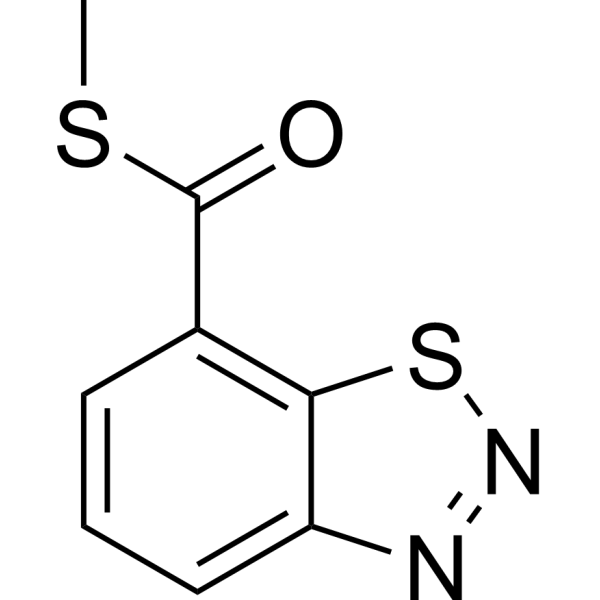 0 ImagesSynonyms: ASMAcibenzolar-S-methyl (ASM) is a synthetic analog of Salicylic acid (HY-B0167) and a plant activator. Acibenzolar‑S‑methyl induces increased activities of defense-related enzymes such as peroxidase and chitinase, activates stomatal defense responses and PR defense gene expression, induces the production of ROS, triggers local and systemic acquired resistance, and inhibits the proliferation of bacterial and fungal pathogens in plants. Acibenzolar‑S‑methyl can be used in studies related to plant infection.
-
N-Undecanoylglycine
 0 ImagesN-Undecanoylglycine is an ester product.
-
Alibendol
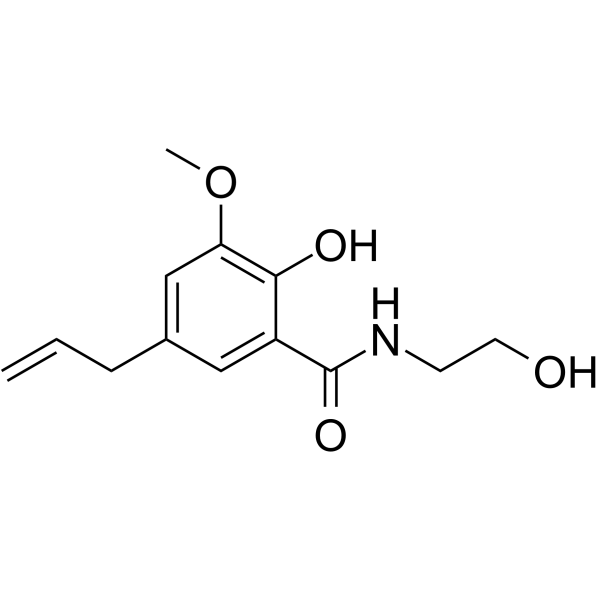 0 ImagesAlibendol can be taken orally. It has anti-spasmodic properties and promotes bile secretion, making it useful for research on digestive system issues like indigestion, nausea, vomiting, and constipation.
-
Isoxepac
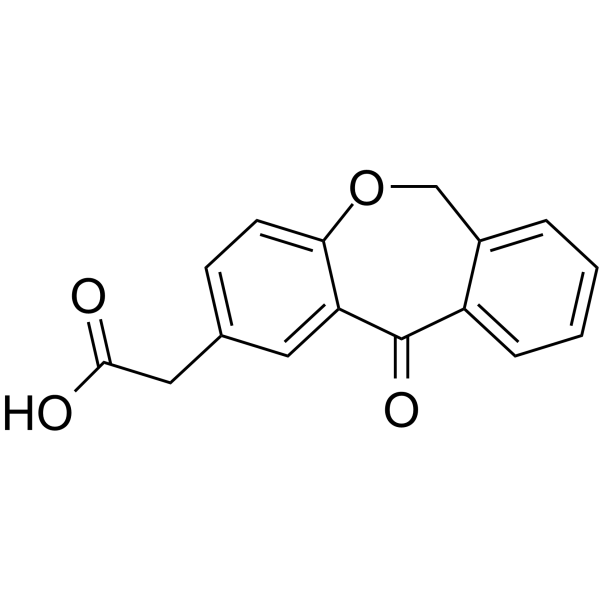 0 ImagesSynonyms: HP 549Isoxepac (HP 549) is an orally active non-steroidal anti-inflammatory agent. Isoxepac can inhibit Carrageenan (HY-125474) paw oedema, adjuvant-induced polyarthritis, and prostaglandin synthesis. Isoxepac (200 mg) has an analgesic effect after meniscectomy with a low incidence of side effects. Isoxepac can be used in the research of inflammatory (rheumatoid arthritis) and pain-related diseases.
-
Ironomycin
 0 ImagesIronomycin is a derivative of Salinomycin (HY-15597). Ironomycin exhibits selective inhibitory activity against mantle cell lymphoma (MCL) cells. Ironomycin blocks the cell cycle and induces apoptosis and ferroptosis. Ironomycin induces double-strand DNA breaks and activates the unfolded protein response (UPR), particularly the IRE1α signaling pathway accumulation. The combination of Ironomycin with Ibrutinib (HY-10997) shows a synergistic effect. Ironomycin can be used for the study of MCL.
-
9(S)-HODE
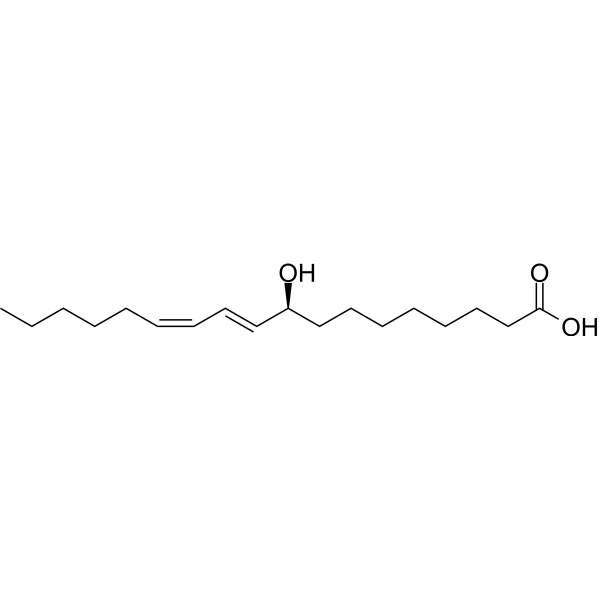 0 ImagesSynonyms: Alpha-dimorphecolic acid9(S)-HODE (Alpha-dimorphecolic acid) is the major active derivative of Linoleic acid (HY-N0729). 9(S)-HODE regulates the expression of miR-361-3p. 9(S)-HODE reduces cancer cell viability and induces cancer cell apoptosis. 9(S)-HODE can be used in the research of acute myeloid leukemia.
-
Pyrimidine-5-boronic acid pinacol ester
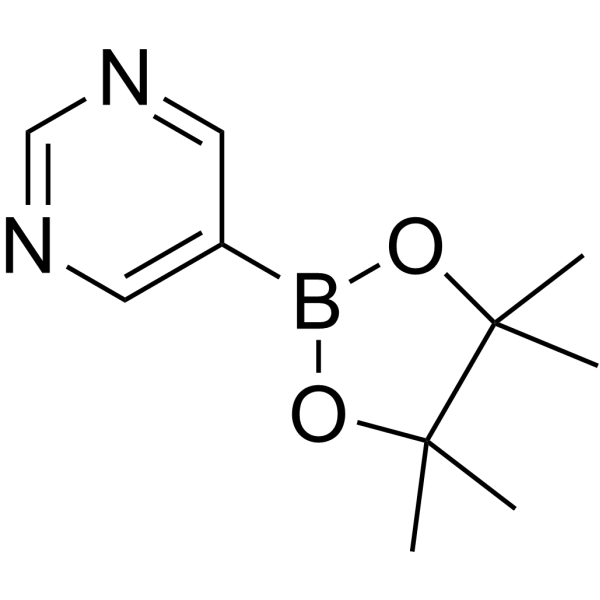 0 ImagesPyrimidine-5-boronic acid pinacol ester is a derivative of Boronic acid. Boronic acid is an intermediate commonly used in organic synthesis reactions and can be used as a key reagent in the Suzuki-Miyaura reaction. It generates organic free radicals through oxygen-mediated oxidation and exhibits potential mutagenic activity. Boronic acid is mainly used in research in the fields of drug synthesis and catalytic reactions. Pyrimidine-5-boronic acid pinacol ester serves as a building block in DNA-compatible one-pot click chemistry for synthesis of DNA-encoded libraries.



