



Drug Intermediate
Drug Iintermediate
Drug intermediates are used as raw materials for the production of bulk drugs, or they can refer to a material produced during synthesis of an API that must undergo further molecular change or processing before it becomes an API. Drug intermediates are hygienically formulated using high grade raw materials and they are used in the pharmaceutical and cosmetic industry[1][2].
References:
- [1]. Ma HC, et al. Homochiral Covalent Organic Framework for Catalytic Asymmetric Synthesis of a Drug Intermediate. J Am Chem Soc. 2020 Jul 22;142(29):12574-12578. [Content Brief]
- [2]. Ramachary D B, et al. Development of pharmaceutical drugs, drug intermediates and ingredients by using direct organo‐click reactions[J]. 2008.
All Product Categories
-
Drug Intermediate Related Products (4595)
Related Products (4595)

-
Thiazolidine
 0 ImagesThiazolidine is a five-membered heterocyclic compound containing sulfur and nitrogen heteroatoms. Thiazolidine is an important intermediate in organic synthesis. Thiazolidine derivatives possess diverse bioactivities, such as anti-tumor, antibacterial and insecticidal activities, and the capacity to reduce blood glucose levels.
-
1,8-Octanediol
 0 Images1,8-Octanediol is an aliphatic diol and also a monomer used in the synthesis of polyesters and polyurethanes. As a monomer, 1,8-Octanediol participates in the lipase-catalyzed bulk polycondensation with adipic acid for the synthesis of aliphatic polyesters. 1,8-Octanediol can be applied in relevant studies in fields such as material synthesis.
-
5-Fluoro-2-(4,4,5,5-tetramethyl-1,3,2-dioxaborolan-2-yl)benzyl acetate
 0 Images5-Fluoro-2-(4,4,5,5-tetramethyl-1,3,2-dioxaborolan-2-yl)benzyl acetate is a drug intermediate for synthesis of various active compounds.
-
tert-Butyl 4,7-diazaspiro[2.5]octane-7-carboxylate
![tert-Butyl 4,7-diazaspiro[2.5]octane-7-carboxylate](https://file.medchemexpress.com/product_pic/hy-60172.gif "Click to View tert-Butyl 4,7-diazaspiro[2.5]octane-7-carboxylate Product Detail") 0 ImagesCat. No.: HY-60172CAS No.: 886766-28-5tert-Butyl 4,7-diazaspiro[2.5]octane-7-carboxylate is a drug intermediate for synthesis of various active compounds.
0 ImagesCat. No.: HY-60172CAS No.: 886766-28-5tert-Butyl 4,7-diazaspiro[2.5]octane-7-carboxylate is a drug intermediate for synthesis of various active compounds.
-
3,5-Dihydroxyadamantan-1-yl methacrylate
 0 Images3,5-Dihydroxyadamantan-1-yl methacrylate is a drug intermediate for synthesis of various active compounds.
-
trans-1,4-Di(bromomethyl)cyclohexane
 0 ImagesCat. No.: HY-47683CAS No.: 57702-84-8trans-1,4-Di(bromomethyl)cyclohexane is a drug intermediate for synthesis of various active compounds.
-
2-{s-(4-Chlorophenyl)(4-Piperidinyloxy)Methyl}Pyridine
 0 Images2-{s-(4-Chlorophenyl)(4-Piperidinyloxy)Methyl}Pyridine is a drug intermediate for synthesis of various active compounds.
-
1,2,3,4-Tetramethylbenzene
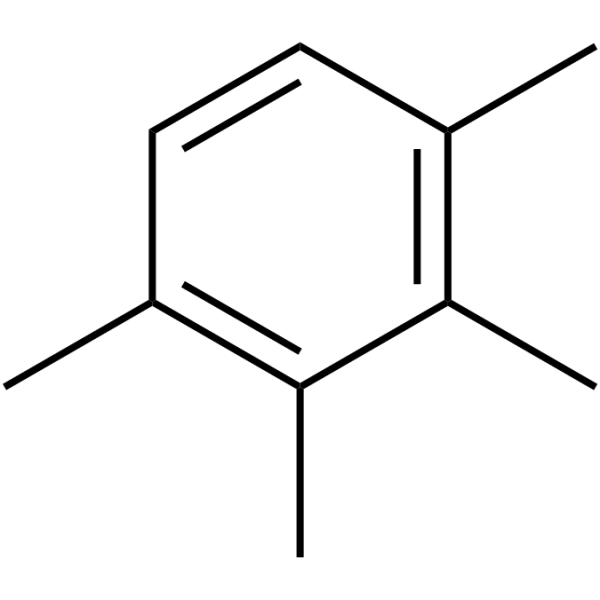 0 Images1,2,3,4-Tetramethylbenzene is an aromatic hydrocarbon. 1,2,3,4-Tetramethylbenzene can serve as a molecular marker indicating the input of photosynthetic sulfur bacteria (especially green sulfur bacteria) in ancient sedimentary environments, reflecting the static marine environment of the source rock deposition. 1,2,3,4-Tetramethylbenzene can also be used as a pharmaceutical intermediate.
-
4-Amino-3,3-dimethylbutanoic acid hydrochloride
 0 ImagesCat. No.: HY-41317CAS No.: 89584-21-44-Amino-3,3-dimethylbutanoic acid hydrochloride is a drug intermediate for synthesis of various active compounds.
-
1,3-Dimethylpiperidin-4-one
 0 Images1,3-Dimethylpiperidin-4-one is a drug intermediate for synthesis of various active compounds.
-
Vidarabine phosphate
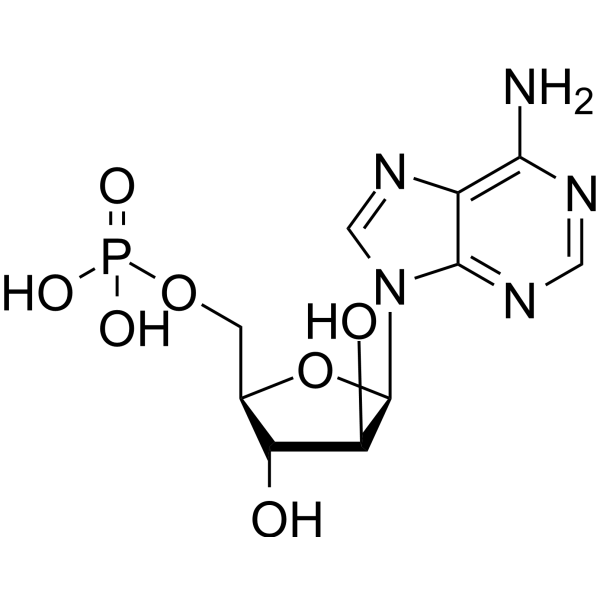 0 ImagesSynonyms: ara-AMP; ara-A 5'-monophosphateVidarabine phosphate (ara-AMP; ara-A 5'-monophosphate) is a purine nucleoside antiviral agent and a prodrug of Vidarabine (HY-B0277). Vidarabine phosphate is rapidly converted into the antiviral active Vidarabine in vivo, which selectively inhibits viral DNA polymerase and cellular ribonucleotide reductase, thereby blocking viral replication. Vidarabine phosphate also exhibits antifungal activity, induces late-stage cellular apoptosis, and causes cell cycle arrest. Vidarabine phosphate can be used in research related to severe chronic active Epstein-Barr virus (EBV) infection, herpes infection, and candidiasis.
-
tert-Butyl 3-formylpyrrolidine-1-carboxylate
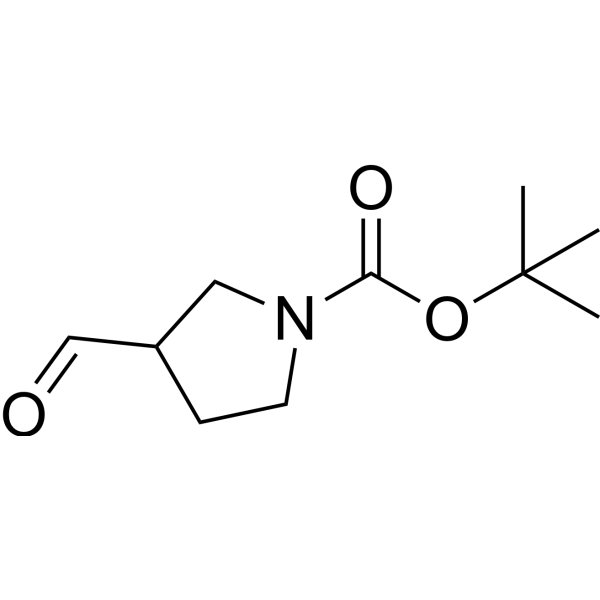 0 Imagestert-Butyl 3-formylpyrrolidine-1-carboxylate is a drug intermediate that can be used for the synthesis nonpeptidic αvβ6 Integrin inhibitors.
-
Ac-H-FluNox
 0 ImagesAc-H-FluNox is an acetylated cell-compatible prodrug of H-FluNox (HY-D2339). Ac-H-FluNox undergoes intracellular hydrolysis of its acetyl group by esterases to generate H-FluNox, which then undergoes a deoxygenation reaction with labile heme to form a fluorescent product. Ac-H-FluNox detects fluctuations of labile heme in living cells, acute labile heme release upon nitric oxide stimulation, and accumulation of labile heme following inhibition of heme export proteins.
-
2,6-Diaminopyridine
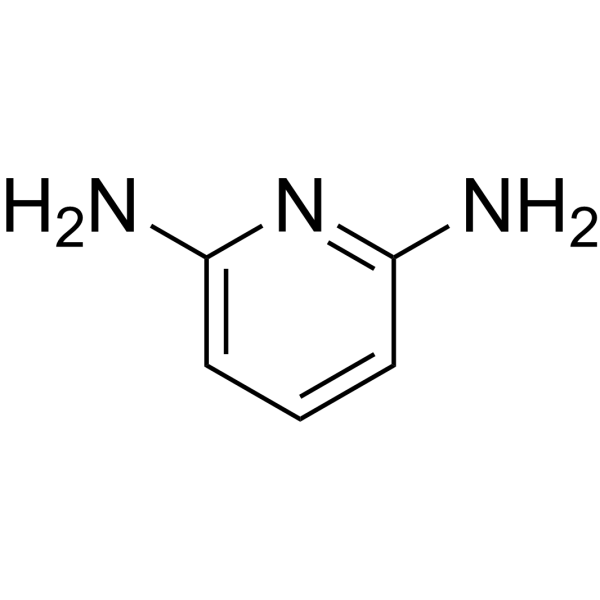 0 Images2,6-Diaminopyridine is an intermediate and coupling agent for hair dyes. 2,6-Diaminopyridine participates in organic synthesis reactions such as N-methylation and can bind metal ions by forming macrocyclic ligands through condensation with aldehydes. 2,6-Diaminopyridine can be used to synthesize the analgesic phenazopyridine hydrochloride (HY-B0985).
-
L-2-Aminobutyric acid
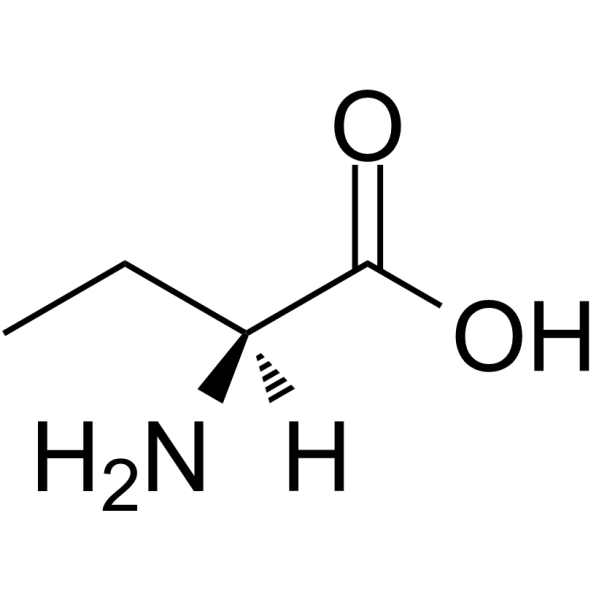 0 ImagesSynonyms: H-Abu-OHL-2-Aminobutyric acid (H-Abu-OH) is a non-proteinogenic amino acid that exists in human tissues and body fluids. L-2-Aminobutyric acid is formed by the transamination of oxobutyric acid. L-2-Aminobutyric acid can serve as a precursor for anticonvulsant and anti-tuberculosis agents and is a key intermediate in the chemical and pharmaceutical industries.



