



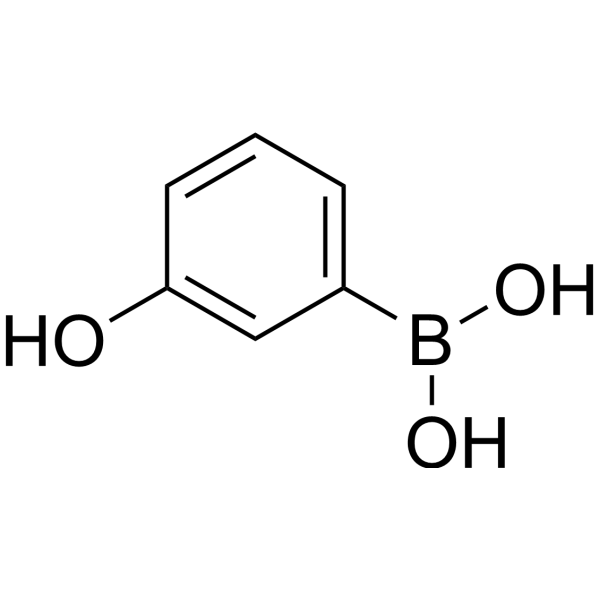
(3-Hydroxyphenyl)boronic acid

Based on 1 Customer Validation
(3-Hydroxyphenyl)boronic acid (3-Hydroxybenzeneboronic acid) is a drug intermediate that can be used for the synthesis of 17β-hydroxysteroid dehydrogenase type 1 inhibitors.
For research use only. We do not sell to patients.
- Purity : 99.90%
- CAS No.: 87199-18-6
- Formula: C6H7BO3
- Molecular Weight:137.93
-
Storage:Powder -20°C, 3 years , 4°C, 2 years ; In solvent -80°C, 6 months , -20°C, 1 month

To place orders, for customer services and technical support, please contact: MedChemExpress USA
Tel: 609-228-6898 E-mail: [email protected] [email protected]


-
 Biological Activity
-
Chemical Information
-
Solvent & Solubility
- Purity & Documentation
- References
-
 Help & FAQs


-
HY-W004091
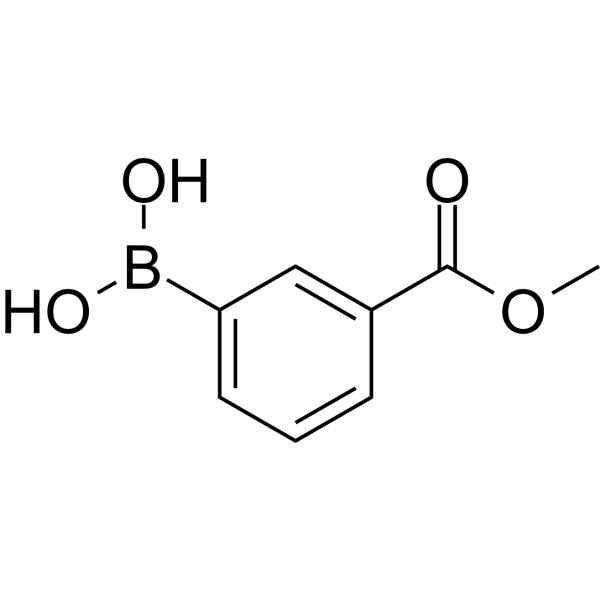
Methyl 3-boronobenzoate -
HY-W002908
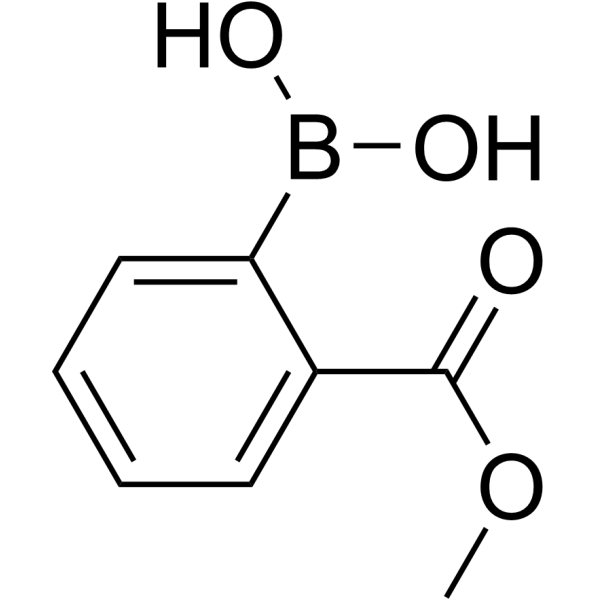
2-Methoxycarbonylphenylboronic acid -
HY-Y0395
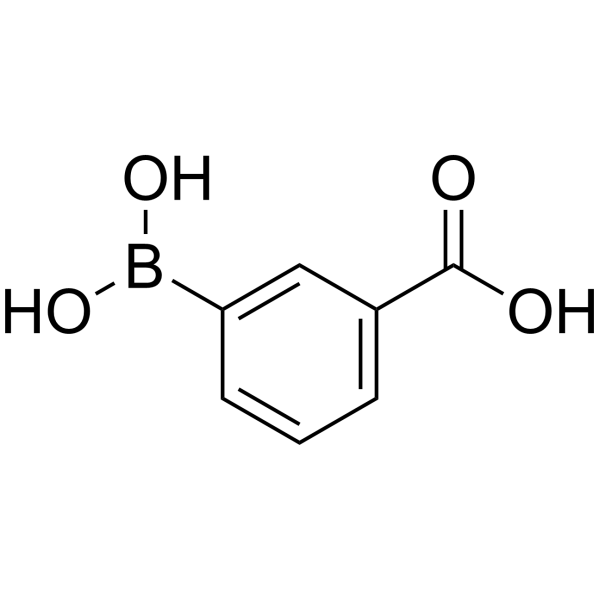
3-Carboxyphenylboronic acid -

HY-W017604
3-Aminophenylboronic acid -
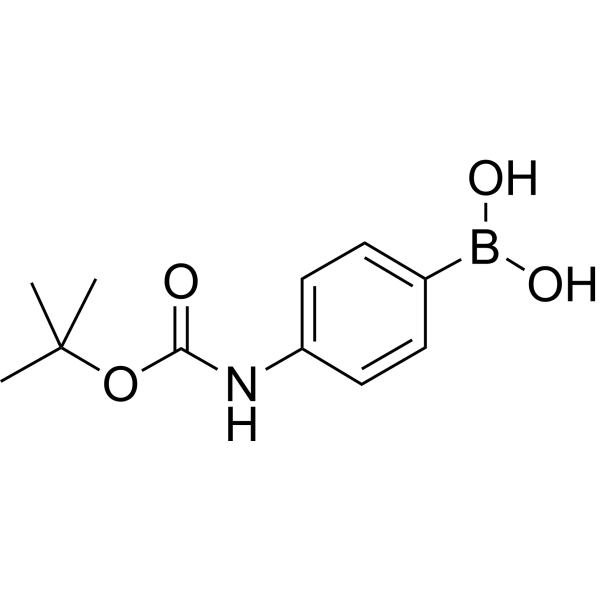
HY-W000923
(4-Boc-aminophenyl)boronic acid -
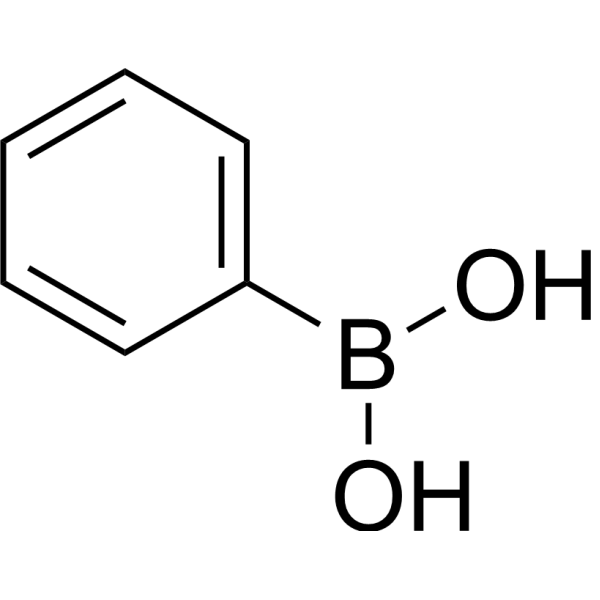
HY-W001090
Phenylboronic acid -
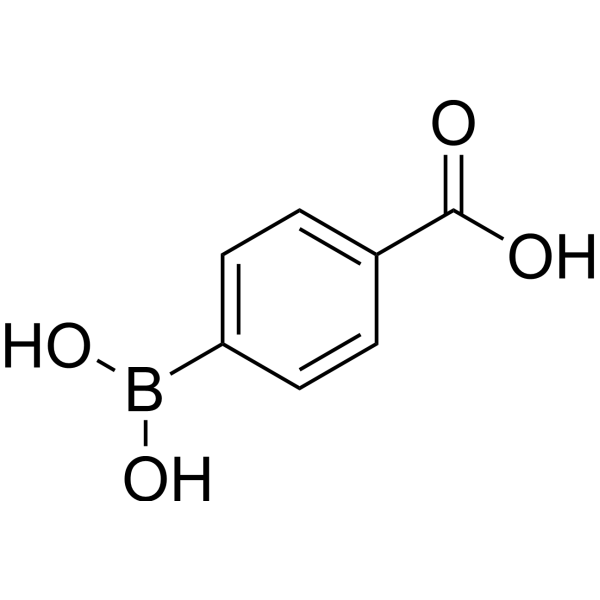
HY-75102
4-Boronobenzoic acid -
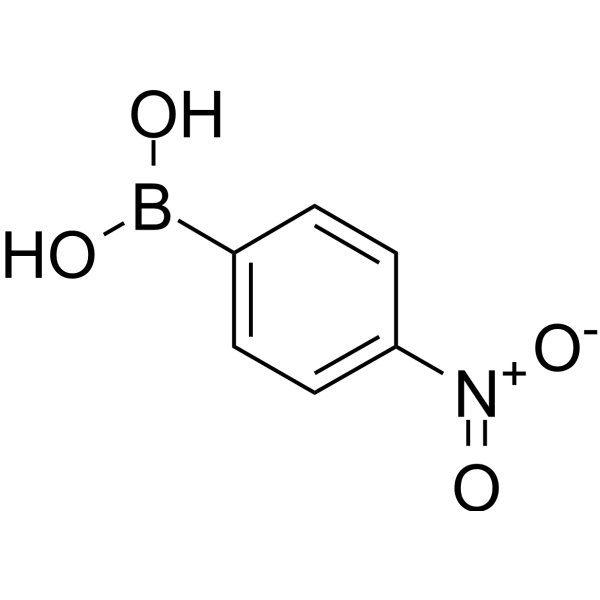
HY-50807
4-Nitrophenylboronic acid -
![[1,1'-Biphenyl]-4-ylboronic acid](https://file.medchemexpress.com/product_pic/hy-w002364.gif)
HY-W002364
[1,1'-Biphenyl]-4-ylboronic acid -
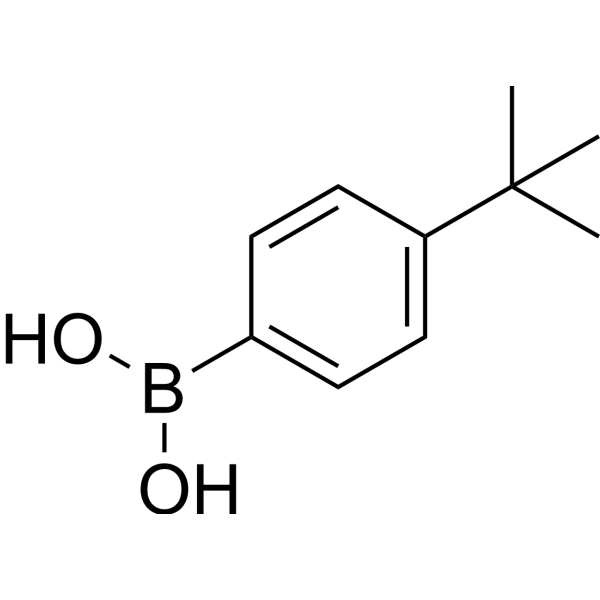
HY-W007389
4-tert-Butylphenylboronic acid -
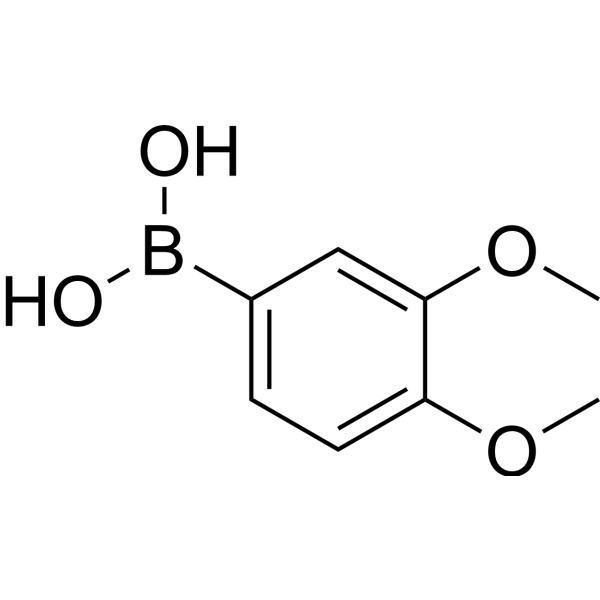
HY-32919
3,4-Dimethoxyphenylboronic acid -
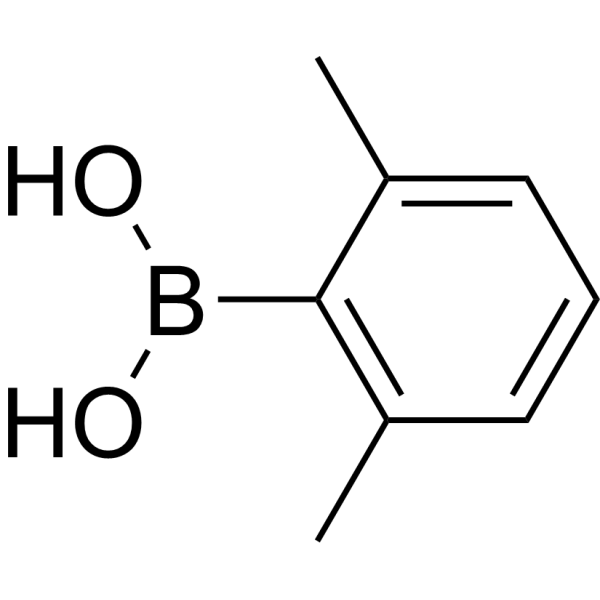
HY-W002725
2,6-Dimethylphenylboronic acid


Biological Activity
Description
Cellular Effect
|
Cell Line

|
Type | Value | Description | References |
|---|---|---|---|---|
| COS-7 | EC50 |
>1000 μM
Compound: 15
|
Agonist activity at human recombinant GPR81 transfected in african green monkey COS-7 cells after 20 mins by [35S]GTPgammaS binding assay
Agonist activity at human recombinant GPR81 transfected in african green monkey COS-7 cells after 20 mins by [35S]GTPgammaS binding assay
|
[PMID: 24900524] |
| COS-7 | EC50 |
>1000 μM
Compound: 15
|
Agonist activity at human recombinant GPR109a transfected in african green monkey COS-7 cells after 20 mins by [35S]GTPgammaS binding assay
Agonist activity at human recombinant GPR109a transfected in african green monkey COS-7 cells after 20 mins by [35S]GTPgammaS binding assay
|
[PMID: 24900524] |
In Vitro
17β-HSD (17β-Hydroxysteroid Dehydrogenases) is a class of NADPH/NAD+ dependent oxidoreductases that primarily catalyze the reversible conversion between the 17β-hydroxyl and ketone groups of steroid hormones, playing a crucial role in the synthesis, activation, and inactivation of steroids. The 17β-HSD family mainly belongs to the short-chain dehydrogenase/reductase (SDR) family, with the exception of 17β-HSD5 (AKR1C3), which belongs to the aldo-keto reductase (AKR) family. To date, 14 different mammalian 17β-HSDs have been identified, of which 12 are expressed in human tissues, exhibiting diverse tissue distributions, subcellular localizations, and catalytic preferences (oxidation or reduction). 17β-HSD1 primarily catalyzes the conversion of estrone (E1) to estradiol (E2) and is associated with breast cancer, prostate cancer, and endometriosis. 17β-HSD2 catalyzes the oxidation of E2 to E1, while also regulating the interconversion between androstenedione (A4) and testosterone (T), playing a role in osteoporosis. 17β-HSD3 promotes the conversion of A4 to T and is crucial for male sexual differentiation. 17β-HSD4 is involved in fatty acid β-oxidation and steroid hormone inactivation. Additionally, 17β-HSD5 participates in steroid hormone and prostaglandin synthesis, whereas 17β-HSD7 is involved in cholesterol and estrogen biosynthesis. 17β-HSD10 exhibits broad substrate specificity, contributing to the metabolism of fatty acids, bile acids, and neurosteroids, and has been implicated in Alzheimer's disease (AD). The development of selective inhibitors targeting specific 17β-HSD isoforms has become an important strategy in related disease research.
MedChemExpress (MCE) has not independently confirmed the accuracy of these methods. They are for reference only.


Chemical Information
-
CAS No. 87199-18-6
-
Appearance Solid
-
Molecular Weight 137.93
-
Formula C6H7BO3
-
Color Light yellow to yellow
-
SMILES
OB(C1=CC=CC(O)=C1)O
-
Synonyms
3-Hydroxybenzeneboronic acid
-
Shipping
Room temperature in continental US; may vary elsewhere.
-
Storage
Powder -20°C 3 years 4°C 2 years In solvent -80°C 6 months -20°C 1 month


Solvent & Solubility
In Vitro:
DMSO : 100 mg/mL (725.01 mM; Need ultrasonic; Hygroscopic DMSO has a significant impact on the solubility of product, please use newly opened DMSO)
Please refer to the solubility information to select the appropriate solvent. Once prepared, please aliquot and store the solution to prevent product inactivation from repeated freeze-thaw cycles.
Storage method and period of stock solution: -80°C, 6 months; -20°C, 1 month. When stored at -80°C, please use it within 6 months. When stored at -20°C, please use it within 1 month.
Please refer to the solubility information to select the appropriate solvent. Once prepared, please aliquot and store the solution to prevent product inactivation from repeated freeze-thaw cycles.
Storage method and period of stock solution: -80°C, 6 months; -20°C, 1 month. When stored at -80°C, please use it within 6 months. When stored at -20°C, please use it within 1 month.
Concentration (start) × Volume (start) = Concentration (final) × Volume (final)
In Vivo:
Select the appropriate dissolution method based on your experimental animal and administration route.
- For the following dissolution methods, please ensure to first prepare a clear stock solution using an In Vitro approach and then sequentially add co-solvents:
- To ensure reliable experimental results, the clarified stock solution can be appropriately stored based on storage conditions. As for the working solution for In Vivo experiments, it is recommended to prepare freshly and use it on the same day.
- The percentages shown for the solvents indicate their volumetric ratio in the final prepared solution. If precipitation or phase separation occurs during preparation, heat and/or sonication can be used to aid dissolution.
Add each solvent one by one: 10% DMSO 40% PEG300 5% Tween-80 45% Saline
Solubility: ≥ 2.5 mg/mL (18.13 mM); Clear solution
This protocol yields a clear solution of ≥ 2.5 mg/mL (saturation unknown).
Taking 1 mL working solution as an example, add 100 μL DMSO stock solution (25.0 mg/mL) to 400 μL PEG300, and mix evenly; then add 50 μL Tween-80 and mix evenly; then add 450 μL Saline to adjust the volume to 1 mL.
Preparation of Saline: Dissolve 0.9 g sodium chloride in ddH₂O and dilute to 100 mL to obtain a clear Saline solution.
Add each solvent one by one: 10% DMSO 90% (20% SBE-β-CD in Saline)
Solubility: ≥ 2.5 mg/mL (18.13 mM); Clear solution
This protocol yields a clear solution of ≥ 2.5 mg/mL (saturation unknown).
Taking 1 mL working solution as an example, add 100 μL DMSO stock solution (25.0 mg/mL) to 900 μL 20% SBE-β-CD in Saline, and mix evenly.
Preparation of 20% SBE-β-CD in Saline (4°C, storage for one week): 2 g SBE-β-CD powder is dissolved in 10 mL Saline, completely dissolve until clear.
In Vivo Dissolution Calculator
Please enter the basic information of animal experiments:
-
-
-
-
Recommended: Prepare an additional quantity of animals to account for potential losses during experiments.
Please enter your animal formula composition:
-
%DMSO +
Recommended: Keep the proportion of DMSO in working solution below 2% if your animal is weak.
-
%+
-
+%Tween-80 + +
-
%Saline +
The co-solvents required include: DMSO, . All of co-solvents are available by MedChemExpress (MCE). , Tween 80. All of co-solvents are available by MedChemExpress (MCE).
Working solution concentration: 0.22 mg/mL
Method for preparing stock solution: mg drug dissolved in μL DMSO. Stock solution concentration: mg/mL.
1. Take μL DMSO stock solution;
2. Add μL .
μL , mix evenly;
3. Then add μL Tween 80, mix evenly;
4. Then add μL
Please ensure that the stock solution in the first step is dissolved to a clear state, and add co-solvents in sequence. You can use ultrasonic heating (ultrasonic cleaner, recommended frequency 20-40 kHz), vortexing, etc. to assist dissolution.


Purity & Documentation
-
Data Sheet (281 KB)
-
SDS (393 KB)
- English - EN (393 KB)
- Français - FR (393 KB)
- Deutsch - DE (393 KB)
- Norwegian - NO (393 KB)
- Español - ES (393 KB)
- Swedish - SV (393 KB)
- Italian - IT (393 KB)
- Korean - KR (393 KB)
- Portuguese - PT (393 KB)
-
Handling Instructions (2659 KB)
References


Complete Stock Solution Preparation Table
Please refer to the solubility information to select the appropriate solvent. Once prepared, please aliquot and store the solution to prevent product inactivation from repeated freeze-thaw cycles.
Storage method and period of stock solution: -80°C, 6 months; -20°C, 1 month. When stored at -80°C, please use it within 6 months. When stored at -20°C, please use it within 1 month.
| Optional Solvent | Concentration Solvent Mass | 1 mg | 5 mg | 10 mg | 25 mg |
|---|---|---|---|---|---|
| DMSO | 1 mM | 7.2501 mL | 36.2503 mL | 72.5005 mL | 181.2514 mL |
| 5 mM | 1.4500 mL | 7.2501 mL | 14.5001 mL | 36.2503 mL | |
| 10 mM | 0.7250 mL | 3.6250 mL | 7.2501 mL | 18.1251 mL | |
| 15 mM | 0.4833 mL | 2.4167 mL | 4.8334 mL | 12.0834 mL | |
| 20 mM | 0.3625 mL | 1.8125 mL | 3.6250 mL | 9.0626 mL | |
| 25 mM | 0.2900 mL | 1.4500 mL | 2.9000 mL | 7.2501 mL | |
| 30 mM | 0.2417 mL | 1.2083 mL | 2.4167 mL | 6.0417 mL | |
| 40 mM | 0.1813 mL | 0.9063 mL | 1.8125 mL | 4.5313 mL | |
| 50 mM | 0.1450 mL | 0.7250 mL | 1.4500 mL | 3.6250 mL | |
| 60 mM | 0.1208 mL | 0.6042 mL | 1.2083 mL | 3.0209 mL | |
| 80 mM | 0.0906 mL | 0.4531 mL | 0.9063 mL | 2.2656 mL | |
| 100 mM | 0.0725 mL | 0.3625 mL | 0.7250 mL | 1.8125 mL |


(3-Hydroxyphenyl)boronic acid Related Classifications
HY-W002734 Related Classifications
 Powered by Bioz