



4-Boronobenzoic acid

Based on 1 Customer Validation
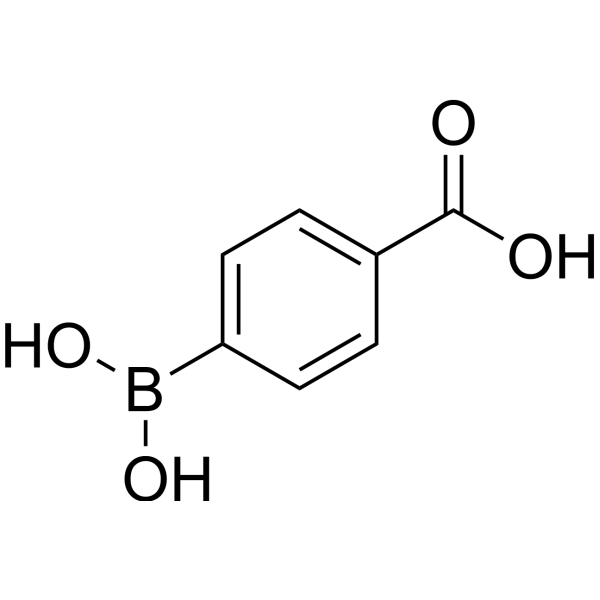
4-Boronobenzoic acid is an organic compound. 4-Boronobenzoic acid forms reversible cyclic boronate esters with molecules containing cis-vicinal diol structures (such as sialic acid) through the boron atom, achieving molecular recognition and binding. 4-Boronobenzoic acid can be used in research of breast cancer .
For research use only. We do not sell to patients.
- Purity : 99.81%
- CAS No.: 14047-29-1
- Formula: C7H7BO4
- Molecular Weight:165.94
-
Storage:Powder -20°C, 3 years , 4°C, 2 years ; In solvent -80°C, 6 months , -20°C, 1 month

To place orders, for customer services and technical support, please contact: MedChemExpress USA
Tel: 609-228-6898 E-mail: [email protected] [email protected]


-
 Biological Activity
-
Chemical Information
-
Solvent & Solubility
- Protocols
- Purity & Documentation
- References
-
 Help & FAQs


-
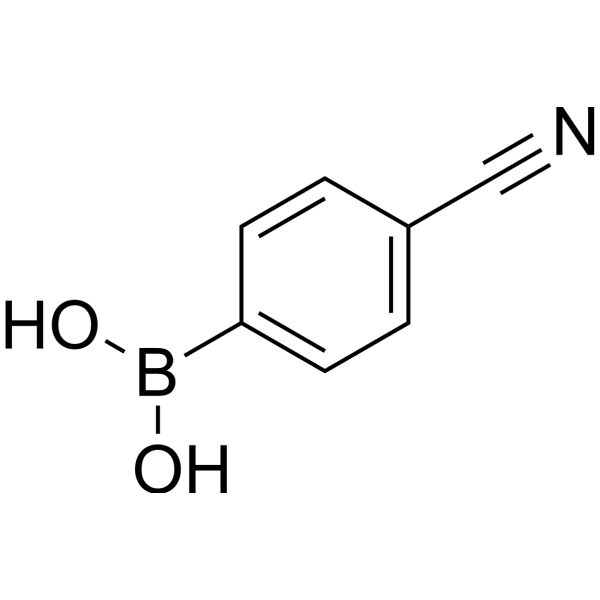
HY-32928
4-Cyanobenzeneboronic acidBoronic Acid Derivative -
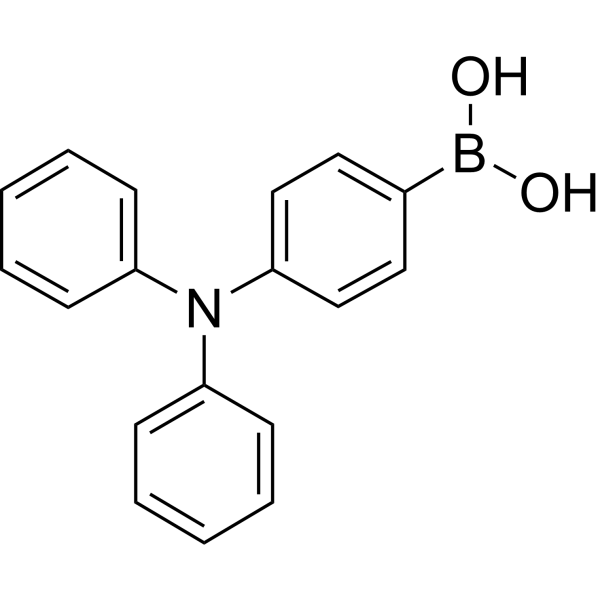
HY-W000896
4-(Diphenylamino)benzeneboronic acidBiochemical Reagent -
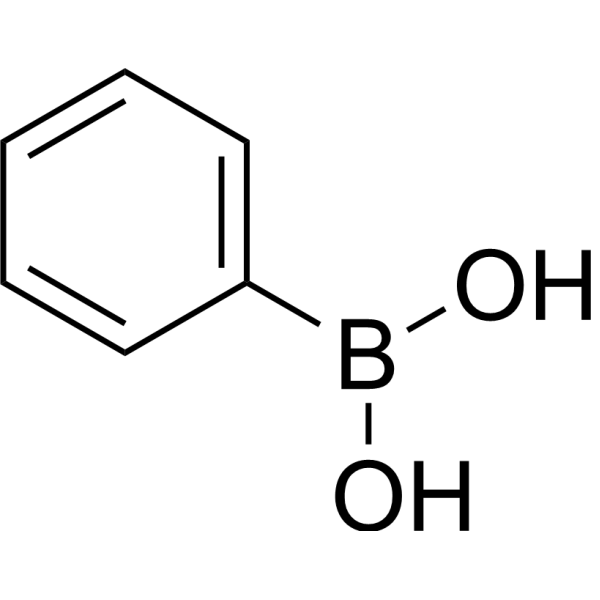
HY-W001090
Phenylboronic acidBiochemical Reagent -
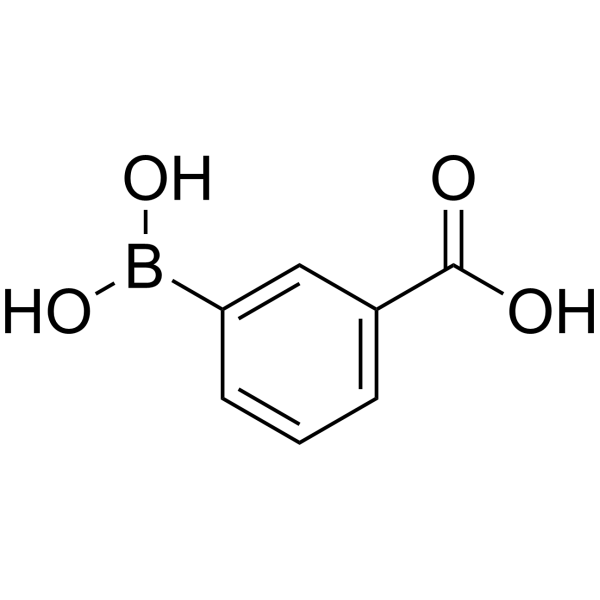
HY-Y0395
3-Carboxyphenylboronic acidBiochemical Assay Reagents -

HY-W017604
3-Aminophenylboronic acidPhenylboronic Acid Derivative -

HY-32933
4-Acetylphenylboronic acidCA II Inhibitor -
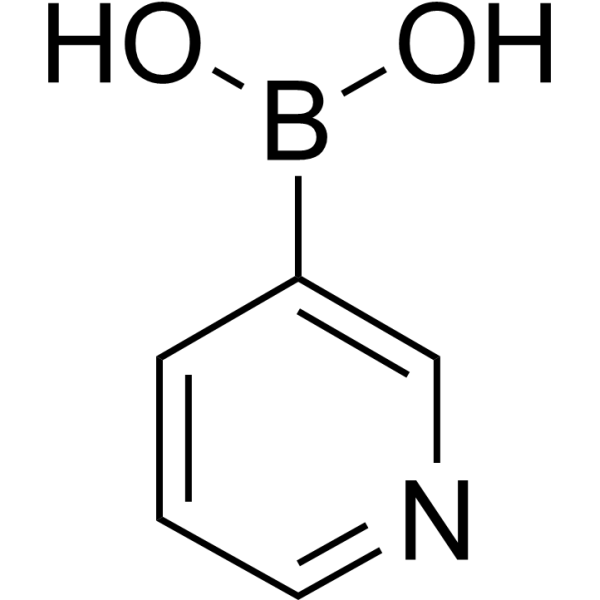
HY-75129
Pyridin-3-ylboronic acidSynthetic Intermediate -
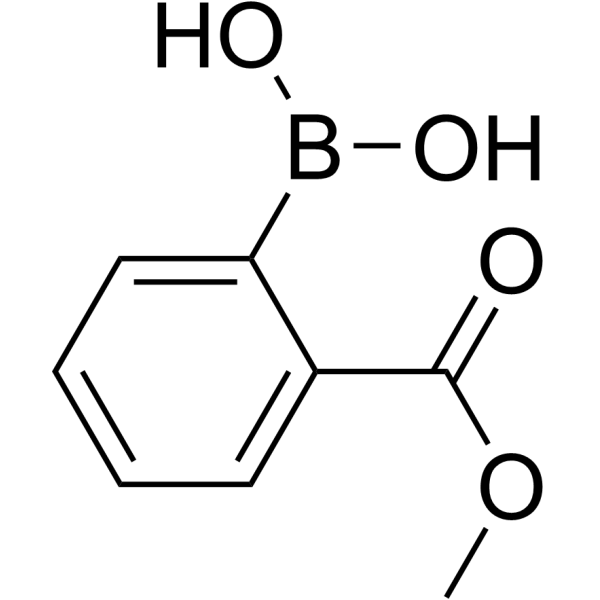
HY-W002908
2-Methoxycarbonylphenylboronic acidBiochemical Reagent -
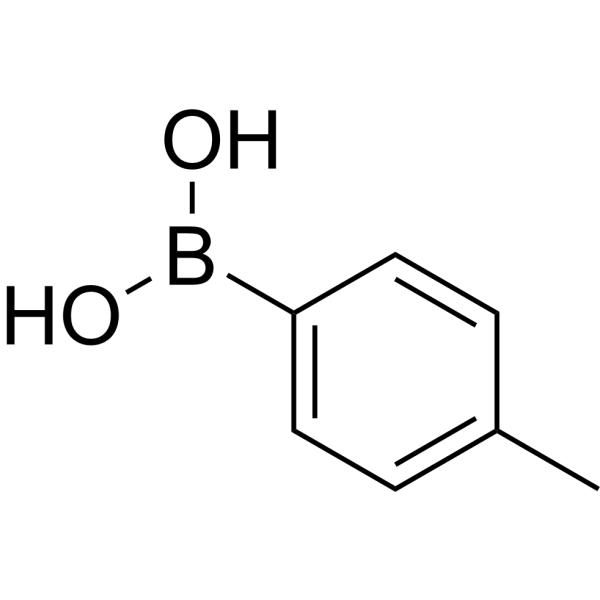
HY-21626
4-Tolylboronic acidBiochemical Assay Reagent -
HY-78494
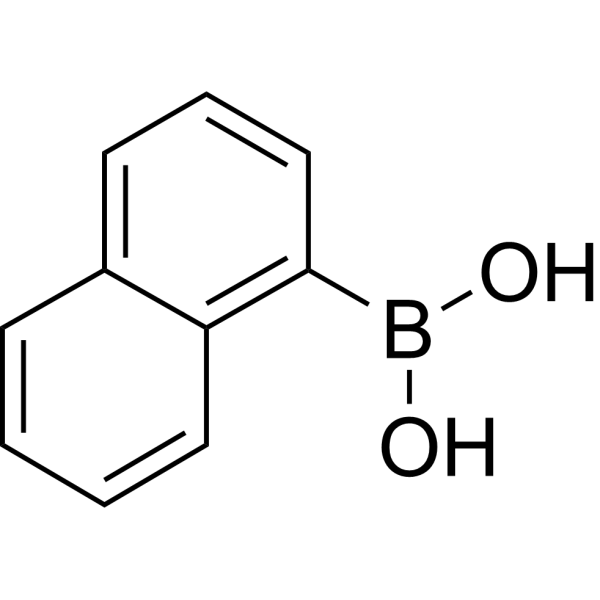
1-Naphthaleneboronic acidBiochemical Reagent -
HY-77738
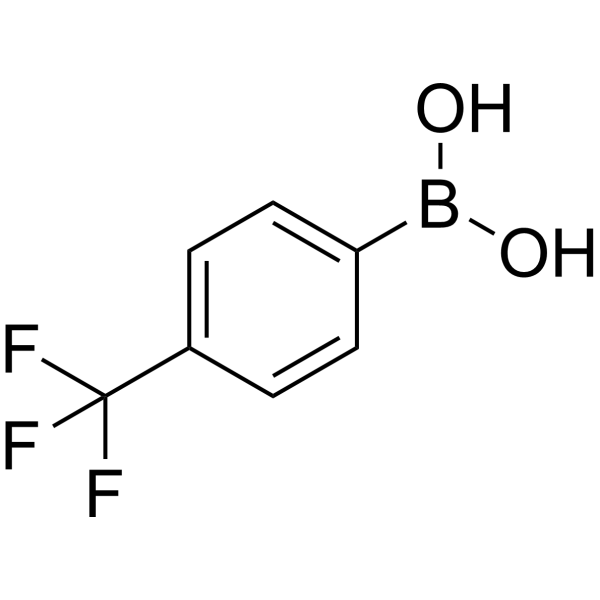
4-Trifluoromethylphenylboronic acidBiochemical Reagent -
HY-B1008
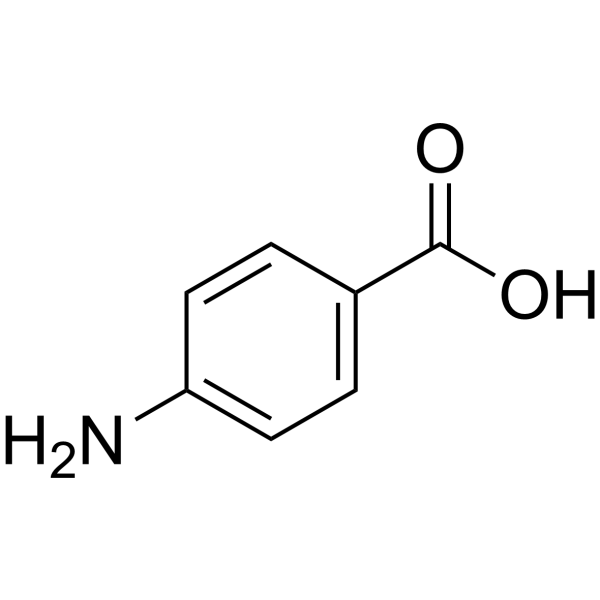
4-Aminobenzoic acidFolate Synthesis Intermediate


Biological Activity
Description
In Vivo
MedChemExpress (MCE) has not independently confirmed the accuracy of these methods. They are for reference only.


Chemical Information
-
CAS No. 14047-29-1
-
Appearance Solid
-
Molecular Weight 165.94
-
Formula C7H7BO4
-
Color White to off-white
-
SMILES
O=C(C1=CC=C(B(O)O)C=C1)O
-
Shipping
Room temperature in continental US; may vary elsewhere.
-
Storage
Powder -20°C 3 years 4°C 2 years In solvent -80°C 6 months -20°C 1 month


Solvent & Solubility
In Vitro:
DMSO : 100 mg/mL (602.63 mM; Need ultrasonic; Hygroscopic DMSO has a significant impact on the solubility of product, please use newly opened DMSO)
Please refer to the solubility information to select the appropriate solvent. Once prepared, please aliquot and store the solution to prevent product inactivation from repeated freeze-thaw cycles.
Storage method and period of stock solution: -80°C, 6 months; -20°C, 1 month. When stored at -80°C, please use it within 6 months. When stored at -20°C, please use it within 1 month.
Please refer to the solubility information to select the appropriate solvent. Once prepared, please aliquot and store the solution to prevent product inactivation from repeated freeze-thaw cycles.
Storage method and period of stock solution: -80°C, 6 months; -20°C, 1 month. When stored at -80°C, please use it within 6 months. When stored at -20°C, please use it within 1 month.
Concentration (start) × Volume (start) = Concentration (final) × Volume (final)
In Vivo:
Select the appropriate dissolution method based on your experimental animal and administration route.
- For the following dissolution methods, please ensure to first prepare a clear stock solution using an In Vitro approach and then sequentially add co-solvents:
- To ensure reliable experimental results, the clarified stock solution can be appropriately stored based on storage conditions. As for the working solution for In Vivo experiments, it is recommended to prepare freshly and use it on the same day.
- The percentages shown for the solvents indicate their volumetric ratio in the final prepared solution. If precipitation or phase separation occurs during preparation, heat and/or sonication can be used to aid dissolution.
Add each solvent one by one: 10% DMSO 40% PEG300 5% Tween-80 45% Saline
Solubility: ≥ 2.5 mg/mL (15.07 mM); Clear solution
This protocol yields a clear solution of ≥ 2.5 mg/mL (saturation unknown).
Taking 1 mL working solution as an example, add 100 μL DMSO stock solution (25.0 mg/mL) to 400 μL PEG300, and mix evenly; then add 50 μL Tween-80 and mix evenly; then add 450 μL Saline to adjust the volume to 1 mL.
Preparation of Saline: Dissolve 0.9 g sodium chloride in ddH₂O and dilute to 100 mL to obtain a clear Saline solution.
In Vivo Dissolution Calculator
Please enter the basic information of animal experiments:
-
-
-
-
Recommended: Prepare an additional quantity of animals to account for potential losses during experiments.
Please enter your animal formula composition:
-
%DMSO +
Recommended: Keep the proportion of DMSO in working solution below 2% if your animal is weak.
-
%+
-
+%Tween-80 + +
-
%Saline +
The co-solvents required include: DMSO, . All of co-solvents are available by MedChemExpress (MCE). , Tween 80. All of co-solvents are available by MedChemExpress (MCE).
Working solution concentration: 0.22 mg/mL
Method for preparing stock solution: mg drug dissolved in μL DMSO. Stock solution concentration: mg/mL.
1. Take μL DMSO stock solution;
2. Add μL .
μL , mix evenly;
3. Then add μL Tween 80, mix evenly;
4. Then add μL
Please ensure that the stock solution in the first step is dissolved to a clear state, and add co-solvents in sequence. You can use ultrasonic heating (ultrasonic cleaner, recommended frequency 20-40 kHz), vortexing, etc. to assist dissolution.

Protocols
-
Breast Cancer Modeling
Breast cancer is a heterogeneous cancer, and it has been distinguished into four subtypes: luminal A, luminal B, HER2-positive and basal-like. Molecular mutations, epigenetic alterations, hormone exposure and immune microenvironment are related to the progression of breast cancer.


Purity & Documentation
-
Data Sheet (271 KB)
-
SDS (396 KB)
- English - EN (396 KB)
- Français - FR (396 KB)
- Deutsch - DE (396 KB)
- Norwegian - NO (396 KB)
- Español - ES (396 KB)
- Swedish - SV (396 KB)
- Italian - IT (396 KB)
- Korean - KR (396 KB)
- Portuguese - PT (396 KB)
-
Handling Instructions (2659 KB)
References
[1]. Daze KD, et al. Synthesis of new trisulfonated calix[4]arenes functionalized at the upper rim, and their complexation with the trimethyllysine epigenetic mark. Org Lett. 2012 Mar 16;14(6):1512-5. [Content Brief]
[2]. Li F, et al. Spatiotemporally programmable cascade hybridization of hairpin DNA in polymeric nanoframework for precise siRNA delivery. Nat Commun. 2021 Feb 18;12(1):1138. [Content Brief]


Complete Stock Solution Preparation Table
Please refer to the solubility information to select the appropriate solvent. Once prepared, please aliquot and store the solution to prevent product inactivation from repeated freeze-thaw cycles.
Storage method and period of stock solution: -80°C, 6 months; -20°C, 1 month. When stored at -80°C, please use it within 6 months. When stored at -20°C, please use it within 1 month.
| Optional Solvent | Concentration Solvent Mass | 1 mg | 5 mg | 10 mg | 25 mg |
|---|---|---|---|---|---|
| DMSO | 1 mM | 6.0263 mL | 30.1314 mL | 60.2627 mL | 150.6569 mL |
| 5 mM | 1.2053 mL | 6.0263 mL | 12.0525 mL | 30.1314 mL | |
| 10 mM | 0.6026 mL | 3.0131 mL | 6.0263 mL | 15.0657 mL | |
| 15 mM | 0.4018 mL | 2.0088 mL | 4.0175 mL | 10.0438 mL | |
| 20 mM | 0.3013 mL | 1.5066 mL | 3.0131 mL | 7.5328 mL | |
| 25 mM | 0.2411 mL | 1.2053 mL | 2.4105 mL | 6.0263 mL | |
| 30 mM | 0.2009 mL | 1.0044 mL | 2.0088 mL | 5.0219 mL | |
| 40 mM | 0.1507 mL | 0.7533 mL | 1.5066 mL | 3.7664 mL | |
| 50 mM | 0.1205 mL | 0.6026 mL | 1.2053 mL | 3.0131 mL | |
| 60 mM | 0.1004 mL | 0.5022 mL | 1.0044 mL | 2.5109 mL | |
| 80 mM | 0.0753 mL | 0.3766 mL | 0.7533 mL | 1.8832 mL | |
| 100 mM | 0.0603 mL | 0.3013 mL | 0.6026 mL | 1.5066 mL |


4-Boronobenzoic acid Related Classifications
HY-75102 Related Classifications
 Powered by Bioz