



Fluorescent Dye
Fluorescence is a phenomenon of photoluminescence in luminescence. When an atom is irradiated by light, some electrons around the nucleus jump from their original orbitals to higher energy orbitals under the influence of light energy, i.e., from the ground state to the first or second excited single-line state, etc. Due to the instability of the first or second excited singlet state, the electron returns from the excited singlet state to the ground state accompanied by released energy, resulting in fluorescence.
Fluorescent dyes can be covalently bound or physically adsorbed in the structure of the substance. The fluorescence properties allow for the characterization, localization and quantitative analysis of the labeled object. Fluorescent dyes have shown great potential for the detection of proteins, nucleic acids, cells, and immunoassays, attributed to the advantages in non-radioactive contamination, simple experimental operation and easy observation.
Fluorescent dyes have penetrated many fields such as pharmacology, physiology, environmental science, and information science, as well as functional studies of proteins and drug screening.
All Product Categories
-
Fluorescent Dye Related Products (4894)
Related Products (4894)

-
Antibodies (4)
-
Cy5-bifunctional dye
 0 ImagesCy5-bifunctional dye is a bifunctional dye used for covalent labeling of primary amines on proteins or oligonucleotides (Ex/Em = 649 nm/670 nm). Cy5-bifunctional dye can label recombinant annexin-V to assess phosphatidylserine exposure on the cell surface via flow cytometry. Cy5-bifunctional dye can label anti-human IgG (H + L) secondary antibodies. Cy5-bifunctional dye is applicable to studies of glanders and melioidosis.
-
Hoechst S 769121
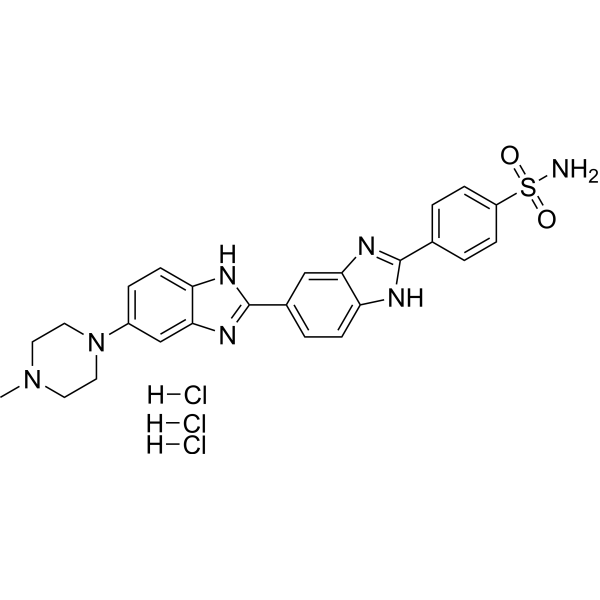 0 ImagesCat. No.: HY-15619CAS No.: 74681-68-8Synonyms: Nuclear yellowHoechst S 769121 is a marker dye in Hoechst series. Hoechst is A live nuclear marker dye. Hoechst binds to the grooves in the DNA double strand, which tends to be A/ T-rich DNA strand. Although it binds to all nucleic acids, the A/ T-rich double strand DNA significantly enhances fluorescence intensity Therefore,Hoechst dye can be used for living cell labeling. The fluorescence intensity of Hoechst dye increases with the increase of pH of solution.
-
DAF-FM DA (solution)
 0 ImagesCat. No.: HY-DY1048CAS No.: 254109-22-3DAF-FM DA (Diaminofluorescein-FM diacetate) (solution) is a fluorescent probe for the detection and bioimaging of nitric oxide (NO). DAF-FM DA spontaneously crosses the plasma membrane and is subsequently cleaved by esterases to generate intracellular DAF-FM (Ex/Em=495/515 nm) .
Solvent and concentration: DMSO: 2 mM
-
FD-1080
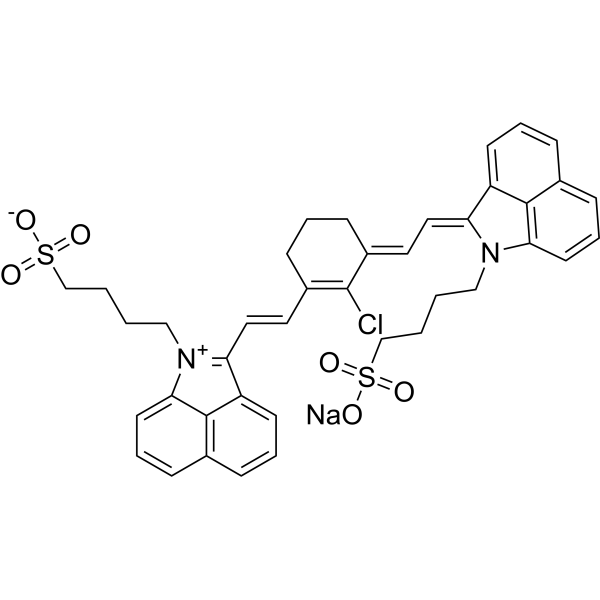 0 ImagesCat. No.: HY-133852CAS No.: 1151666-58-8FD-1080 is a fluorophore with both excitation and emission in the NIR-II region (Ex=1064 nm, Em=1080 nm). FD-1080 can be used for in vivo imaging.
-
BODIPY FL-EDA
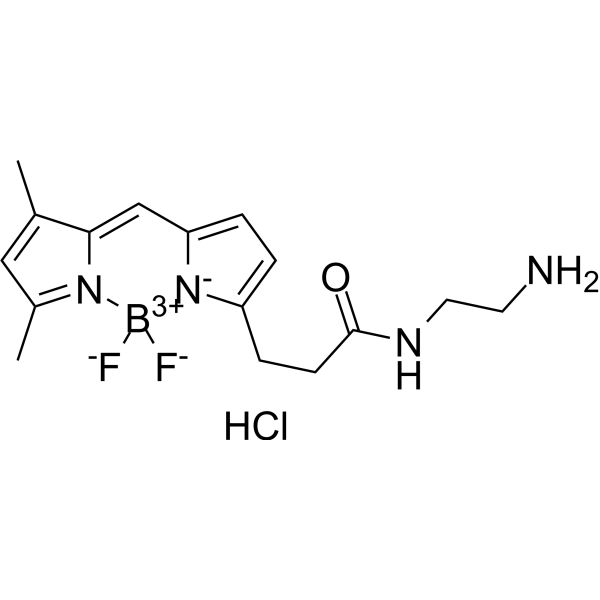 0 ImagesCat. No.: HY-D1603CAS No.: 209541-26-4BODIPY FL-EDA is a widely used fluorescent dye for quantitative analysis of nucleotides. BODIPY FL-EDA is an aliphatic amine analog that can react with aldehydes and ketones. BODIPY FL-EDA can be used to detect both modified and unmodified deoxynucleotides and to determine DNA damage and genomic DNA methylation through capillary electrophoresis with laser-induced fluorescence (CE-LIF). Additionally, it can be used for quantifying intracellular ATP levels. The excitation wavelength is 500 nm, and the emission wavelength is 510 nm.
-
ATTO 488
 0 ImagesATTO 488 is a hydrophilic rhodamine-based fluorescent dye with strong absorption and high fluorescence quantum yield. ATTO 488 is suitable for flow cytometry (FACS), fluorescence in situ hybridization (FISH) and most other labeling uses (Ex/Em: 500/520 nm).
-
Hydroxyphenyl Fluorescein (solution)
 0 ImagesCat. No.: HY-DY1035CAS No.: 359010-69-8Hydroxyphenyl Fluorescein (HPF) (solution) is a stable ROS fluorescent probe dye. Hydroxyphenyl Fluorescein has stronger specificity and stability than H2DCFDA (HY-D0940). Hydroxyphenyl Fluorescein can produce strong green fluorescence through hydroxyl radical reaction with intracellular peroxynitroso. Hydroxyphenyl Fluorescein can be applied for fluorescence microscopy, high-throughput imager, luciferase microplate reader or flow cytometry. Ex/Em=490/515 nm.
Solvent and concentration: DMSO: 10 mM
-
FBBBE
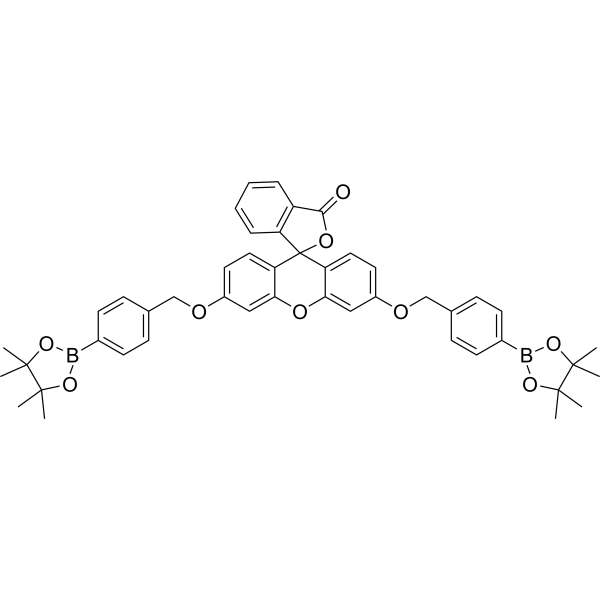 0 ImagesFBBBE is used to detect the production of H2O2 by cells. FBBBE can be triggered by intracellular H2O2 and converted to fluorescein, resulting in an increase in intracellular fluorescence (Ex=4480 nm, Em=512 nm).
-
AF 568 NHS ester
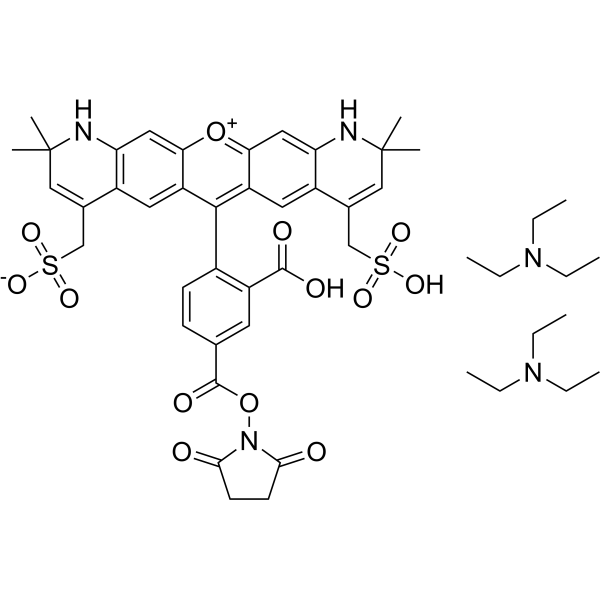 0 ImagesCat. No.: HY-D2178AF 568 NHS ester is a derivative of the orange fluorescent dye AF 568. AF 568 NHS ester is widely used in cell dyes, biological dyes, biomolecules and particle fluorescent labeling. AF 568 exhibits maximum absorption wavelength of 579 nm and the maximum emission wavelength of 603 nm.
-
Endotoxin Substrate
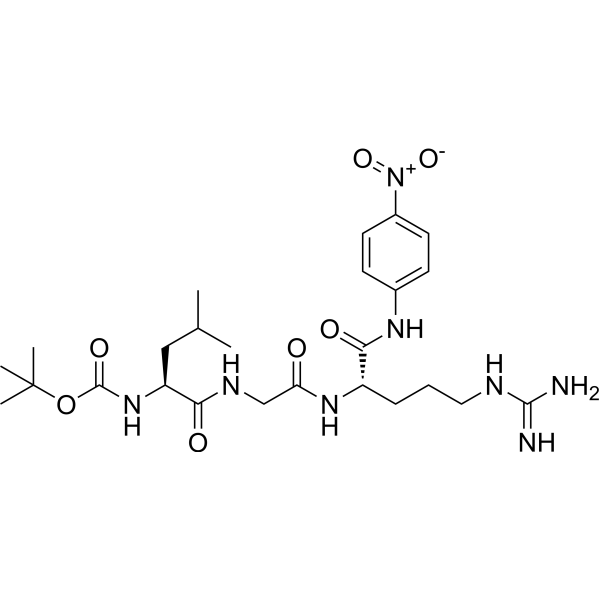 0 ImagesEndotoxin Substrate (Boc-LGR-pNA) is a chromogenic substrate can be used in quantitative assays of endotoxin.
-
SBI-477
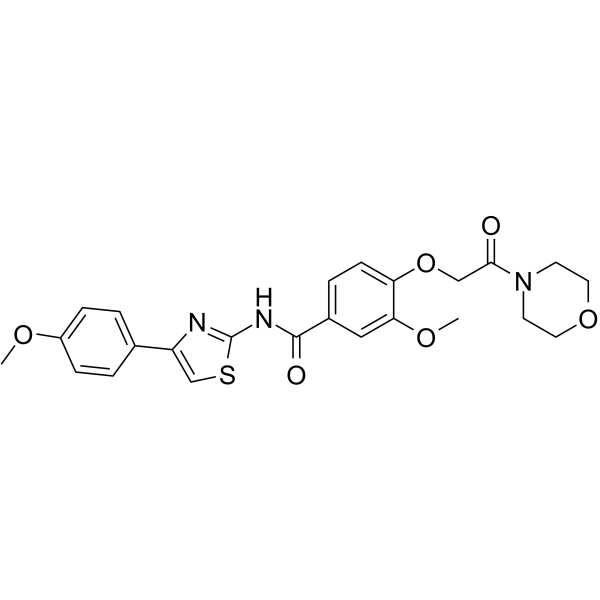 0 ImagesSBI-477 is a chemical probe that stimulates insulin signaling by deactivating the transcription factor MondoA. SBI-477 can lead to reduced expression of the insulin pathway suppressors thioredoxin-interacting protein (TXNIP) and arrestin domain-containing 4 (ARRDC4). SBI-477 coordinately inhibits triacylglyceride (TAG) synthesis and enhances basal glucose uptake in human skeletal myocytes.
-
Rhodamine 6G hydrazide
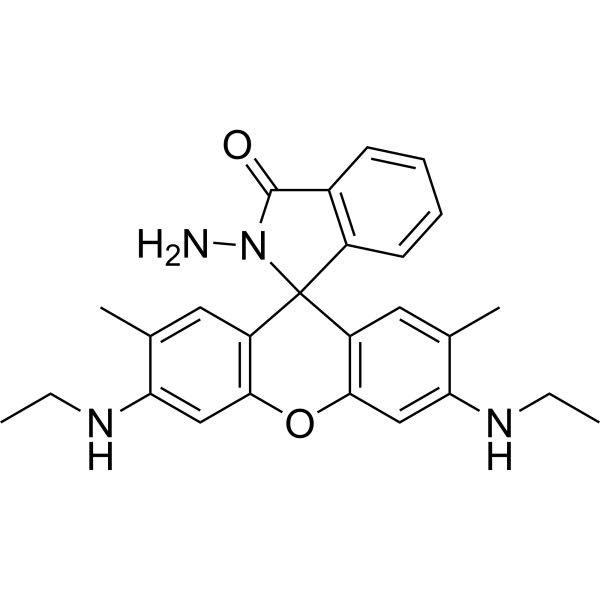 0 ImagesSynonyms: R6GHRhodamine 6G hydrazide (R6GH) is a fluorescent dye. Rhodamine 6G hydrazide can be used in selective colorimetric and fluorescent sensing.
-
EDANS (Standard)
 0 ImagesSynonyms: 1,5-EDANS (Standard)EDANS (1,5-EDANS) (Standard) is an analytical standard for EDANS. This product is intended for research and analytical applications. EDANS (1,5-EDANS) is a novel quenched fluorogenic substrate for the analysis of retroviral proteases by resonance energy transfer.
-
BODIPY FL hydrazide
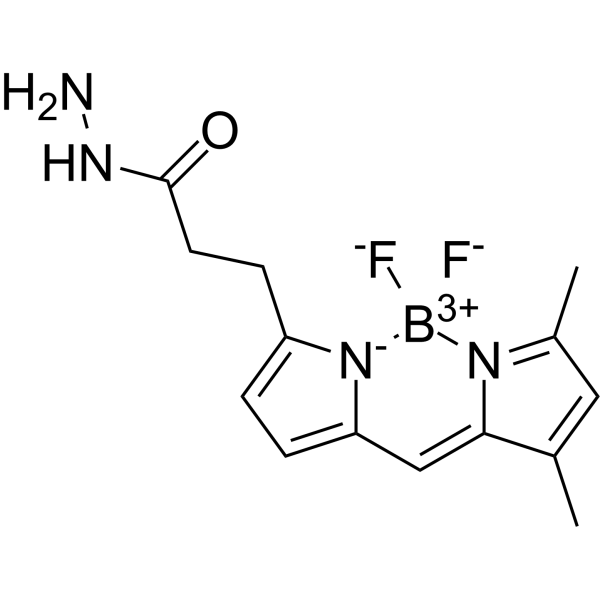 0 ImagesBODIPY FL Hydrazide is a green-fluorescent dye, BODIPY FL Hydrazide is reactive with aldehyde/ketone on polysaccharides and glycoproteins, yielding a reversible Schiff base product that can be transformed to a stable linkage using a reducing agent like sodium borohydride or sodium cyanoborohydride. (λex=495 nm, λem=516 nm).
-
MitoMark Red I
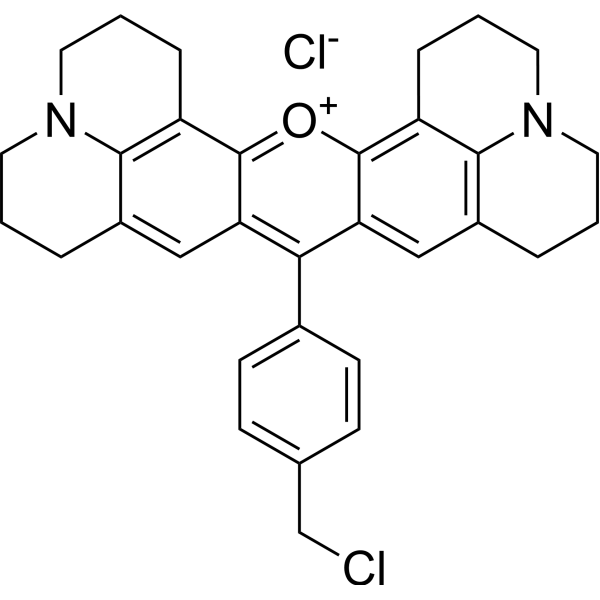 0 ImagesCat. No.: HY-D1116CAS No.: 167095-09-2MitoMark Red I is a fluorescent mitochondrial marker. MitoMark Red I is a red fluorescent dye which accumulates in mitochondria in viable cells and has an excitation wavelength of 578 nm and emission of 599 nm.
-
3-C12-NBD-cholesterol
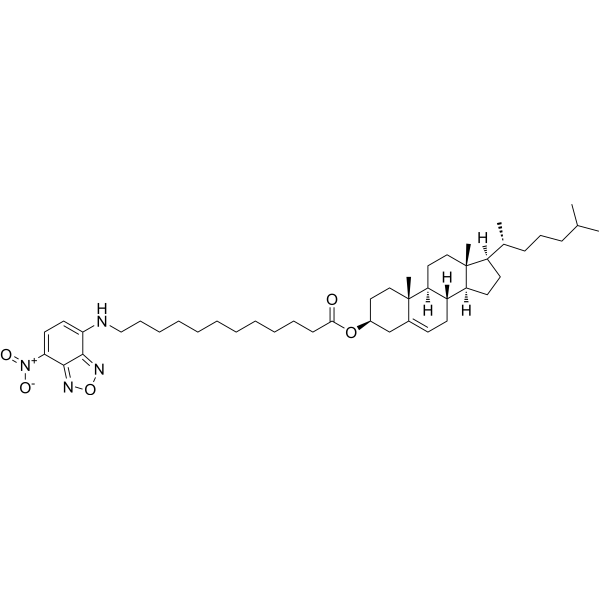 0 ImagesSynonyms: 3-Dodecanoyl-NBD-cholesterol3-C12-NBD-cholesterol is a fluorescent cholesterol analog that can be used for measuring membrane and intracellular trafficking dynamics.
-
Fura-2 pentapotassium
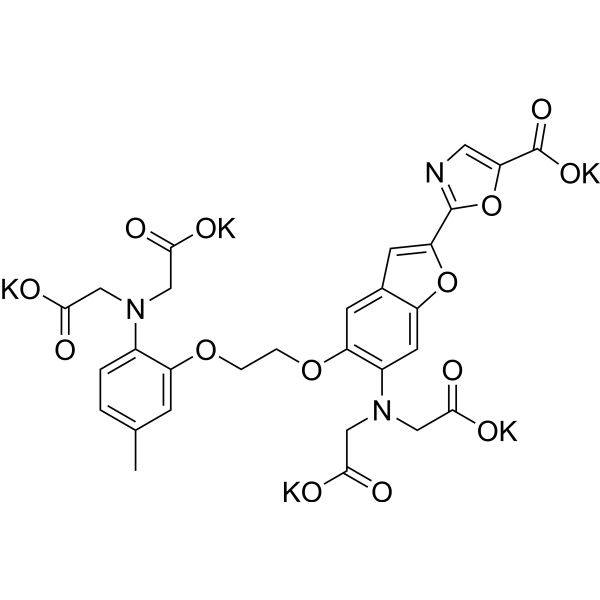 0 ImagesCat. No.: HY-D0110ACAS No.: 113694-64-7Fura-2 pentapotassium is a cell-impermeable scaled fluorescent dye that can be used for intracellular calcium imaging. Fura-2 pentapotassium has an emission wavelength of 510 nm and excitation wavelengths of 340 nm or 380 nm and the ratio of 340/380 fluorescence intensity is proportional to the intracellular Ca2+ level.




