



Fluorescent Dye
Fluorescence is a phenomenon of photoluminescence in luminescence. When an atom is irradiated by light, some electrons around the nucleus jump from their original orbitals to higher energy orbitals under the influence of light energy, i.e., from the ground state to the first or second excited single-line state, etc. Due to the instability of the first or second excited singlet state, the electron returns from the excited singlet state to the ground state accompanied by released energy, resulting in fluorescence.
Fluorescent dyes can be covalently bound or physically adsorbed in the structure of the substance. The fluorescence properties allow for the characterization, localization and quantitative analysis of the labeled object. Fluorescent dyes have shown great potential for the detection of proteins, nucleic acids, cells, and immunoassays, attributed to the advantages in non-radioactive contamination, simple experimental operation and easy observation.
Fluorescent dyes have penetrated many fields such as pharmacology, physiology, environmental science, and information science, as well as functional studies of proteins and drug screening.
All Product Categories
-
Fluorescent Dye Related Products (4889)
Related Products (4889)

-
Antibodies (4)
-
Fluorescein-5-maleimide (solution)
 0 ImagesCat. No.: HY-DY1088CAS No.: 75350-46-8Synonyms: N-(5-Fluoresceinyl)maleimide (solution)Fluorescein-5-maleimide (solution) (N-(5-Fluoresceinyl)maleimide (solution)) is a fluorescent dye. Fluorescein-5-maleimide can be used to detect the redox state of thiols in eukaryotic cells. Fluorescein-5-maleimide can label peptides and is used to detect negatively charged nanoparticles. Fluorescein-5-maleimide can also label actin to explore its interaction with cardiac myosin-binding protein C (cMyBP-C), which helps in developing small molecule modulators for heart failure. Fluorescein-5-maleimide can screen mutant proteins that contain cysteine residues. The excitation wavelength of Fluorescein-5-maleimide is 494 nm, and the emission wavelength is 519 nm.
Solvent and concentration: DMSO: 10 mM
-
Succinylated Wheat Germ Agglutinin (Biotinylated)
 0 ImagesCat. No.: HY-NP0189Synonyms: WGA (Biotinylated)Succinylated Wheat Germ Agglutinin (WGA) Biotinylated is a plant lectin that can be used as a probe to specifically bind biomolecules (such as polysaccharides, peptides, etc.).Succinylated Wheat Germ Agglutinin (WGA) Biotinylated is a biological material or organic compound that can be used in life science research.
-
Cy5-Polystyrene microsphere (20um)
 0 ImagesCat. No.: HY-D2401F1Cy5-Polystyrene microsphere (20um) is a Cy5 (HY-D0821)-labeled microsphere that can be used for bioimaging and drug delivery.
-
PYBG
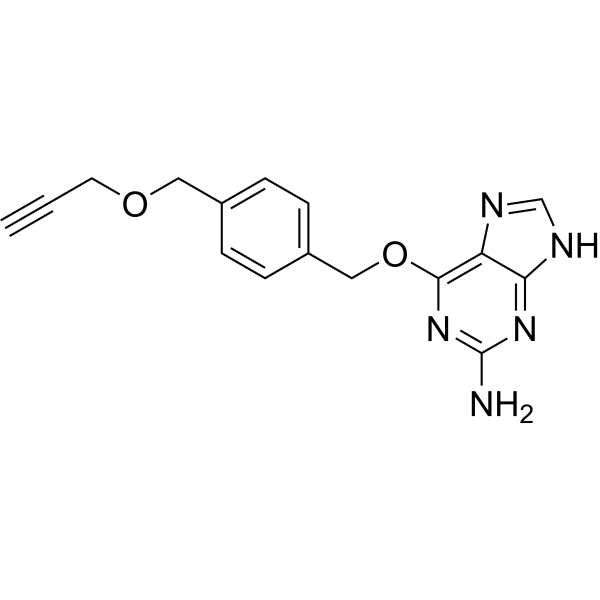 0 ImagesPYBG acts as a versatile precursor to be facilely conjugated with various fluorescent dyes through ‘Click chemistry’ and Sonogashira coupling reactions. PYBG is a click chemistry reagent, it contains an Alkyne group and can undergo copper-catalyzed azide-alkyne cycloaddition (CuAAc) with molecules containing Azide groups.
-
Cy7.5-COOH
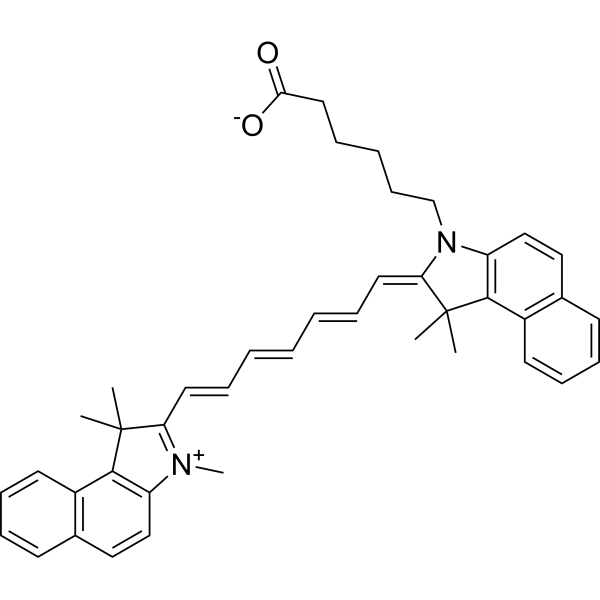 0 ImagesCat. No.: HY-D1883CAS No.: 1144107-81-2Cy7.5-COOH (compound 8f), a cyanine dye, is a highly fluorescent compound (Abs/Em = 781/808 nm). Cy7.5-COOH can be used as a fluorescent probe in a wide-range of applications such as DNA sequencing, flow cytometry and in vivo imaging.
-
NIR-641 N-succinimidyl ester
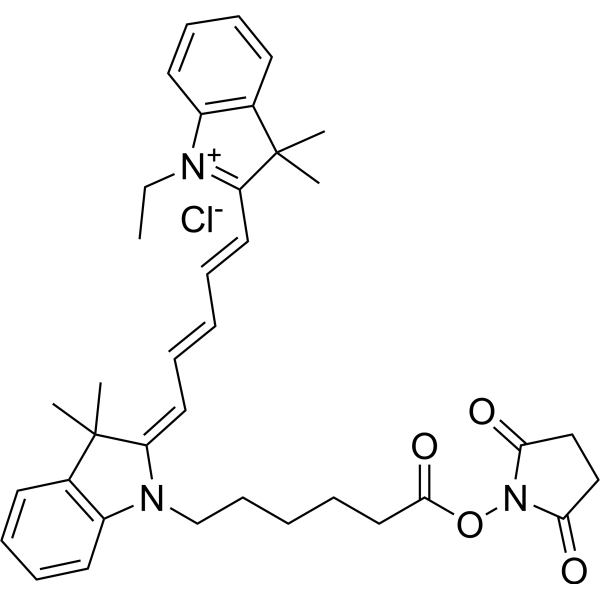 0 ImagesCat. No.: HY-D1514CAS No.: 190714-26-2NIR-641 N-succinimidyl ester is a fluorescent dye.
-
SEluc-2
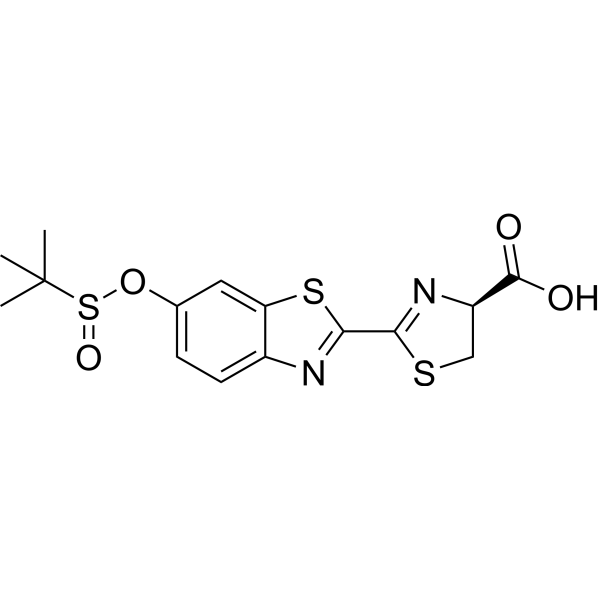 0 ImagesCat. No.: HY-138760CAS No.: 2421112-19-6SEluc-2 is a small-molecule probe based on the firefly luciferin. SEluc-2, a bioluminescent probe for the sensitive and selective detection of thiols in living cells.
-
C6 NBD Galactosylceramide
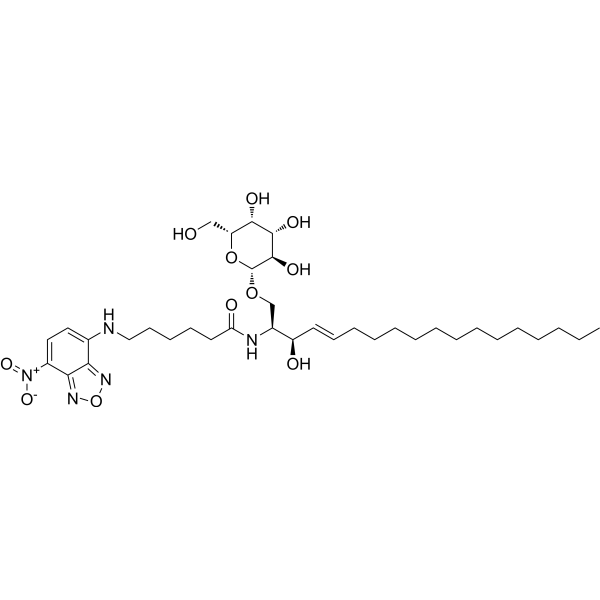 0 ImagesCat. No.: HY-D1575CAS No.: 170212-26-7C6 NBD galactosylceramide is an active derivative of galactosylceramide that is tagged with fluorescent C6 nitrobenzoxadiazole (C6 NBD). C6 NBD galactosylceramide can be used as a substrate for neutral β-glycosylceramidase (GCase) to study intracellular localization and metabolism of galactosylceramide (Ex=nm, Em=525).
-
Urdamycin A
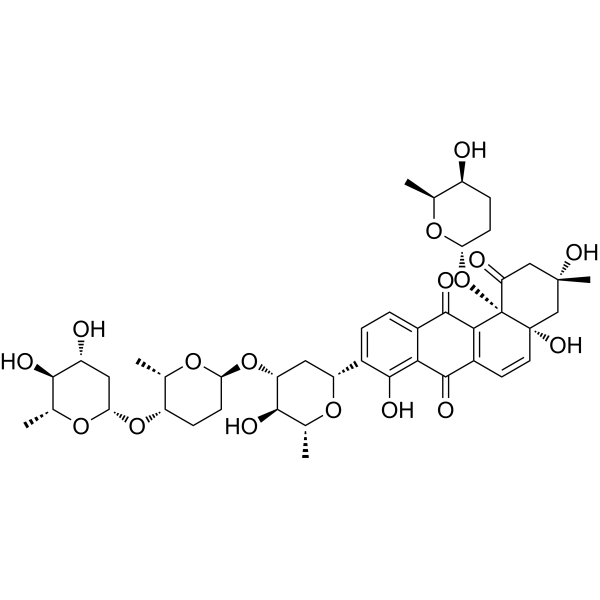 0 ImagesCat. No.: HY-N8502CAS No.: 98474-21-6Urdamycin A (Compound 3b) is an angucycline antibiotic that can be isolated from Streptomyces fradiae. Urdamycin A is an orange indicator with a change of the color to ultramarine blue at pH 7.7. Urdamycin A has anticancer activity with IC50s of 2.4 and 0.55 μg/mL in proliferation and stem cell assays, respectively.

-
AF488 DBCO
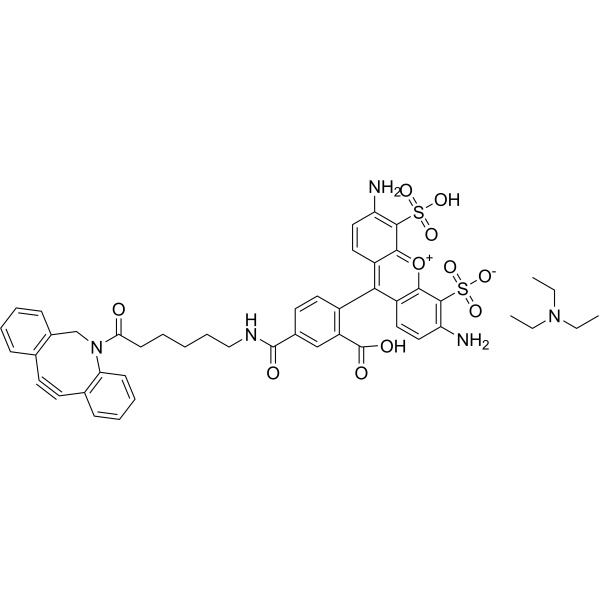 0 ImagesCat. No.: HY-D2171AF488 DBCO is a fluorescent dye and also a click chemistry reagent that can label azide-containing biomolecules. AF488 DBCO mediates the coupling reaction with azide-modified 2'-OMe RNA oligonucleotides. DBCO is a bioorthogonal partner of azides and enables covalent coupling without copper (Ex/Em = 470/520 nm).
-
Boc-Gln-Arg-Arg-AMC
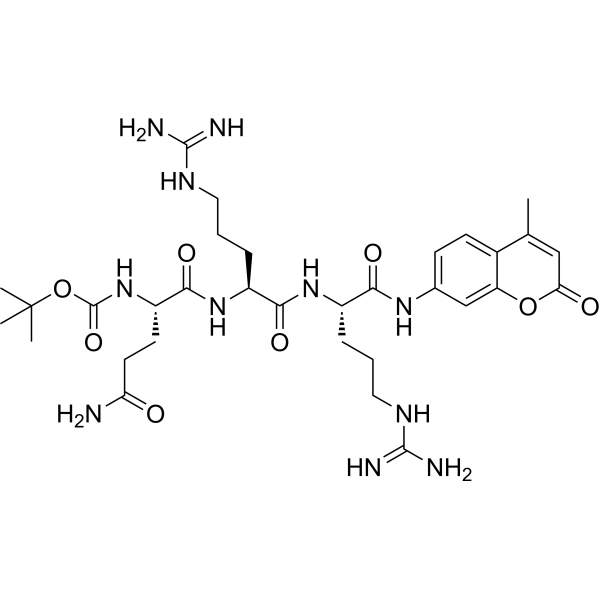 0 ImagesCat. No.: HY-P4323CAS No.: 109376-05-8Boc-Gln-Arg-Arg-AMC is a fluorogenic substrate for the determination of protease activity. Boc-Gln-Arg-Arg-AMC undergoes hydrolysis and releases the fluorescent product 7-amino-4-methylcoumarin (AMC). AMC is fluorescent under UV light and can emit a fluorescent signal.
-
FITC-PEG2000-FA
 0 ImagesCat. No.: HY-D2844BFITC-PEG2000-FA is a fluorescent dye composed of Folic acid (HY-16637) (FA), polyethylene glycol (PEG) and FITC (HY-66019). Fluorescent dye is linked to PEG and Folic acid through a specific chemical reaction to form a molecule with special properties. FITC-PEG2000-FA can be used for fluorescent labeling and imaging.
-
IR-775 chloride
 0 ImagesCat. No.: HY-W248590CAS No.: 199444-11-6IR-775 chloride is a cyanine dye with near-infrared absorption (Ex/Em = 775/795 nm). IR-775 chloride acts as a photosensitizer or photothermal agent, and induces apoptosis via generating ROS or exerting photothermal effects upon irradiation; its combination with 2-methoxyestradiol (HY-12033) inhibits SOD2 to enhance photodynamic therapy (PDT) efficacy, and its liposomal encapsulation enables phytotherapy-photothermal therapy (PTT) synergy. IR-775 chloride is applicable for investigating PDT/PTT and near-infrared fluorescence imaging in ovarian cancer and breast cancer.
-
Lyso-laurdan
 0 ImagesLyso-laurdan, a derivative of Laurdan (HY-D0080), is a fluorescent probe. Lyso-Laurdan accumulates in the lysosome via a morpholine group that is entrapped in lysosome via protonation to its cationic form in the acidic compartment. Lyso-laurdan is localized to lysosomes, allowing for the study of lysosomal membranes.
-
1-(Anilinocarbonyl)proline
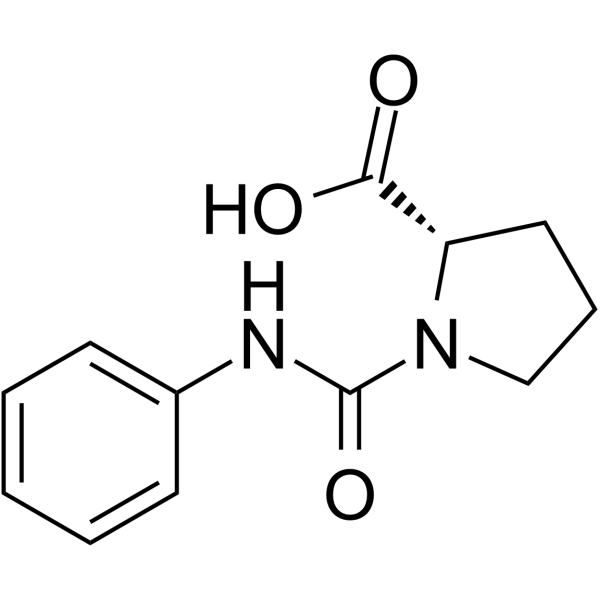 0 Images1-(Anilinocarbonyl)proline can be used to identify dual action probes in a cell model of Huntington.
-
MDCC
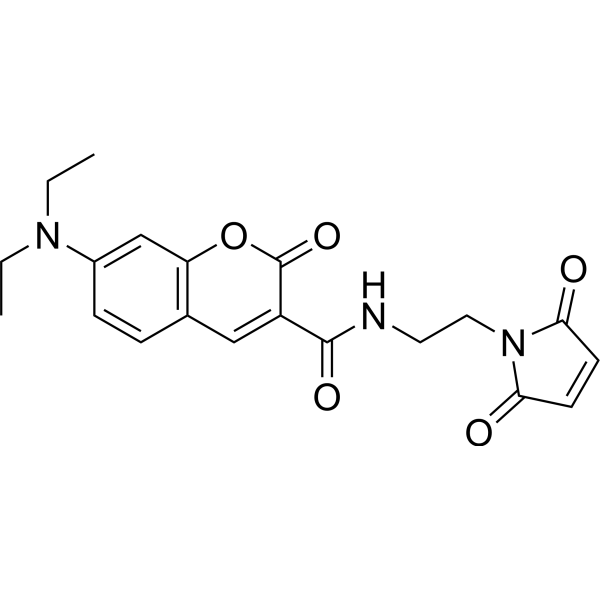 0 ImagesMDCC is a multifunctional dye. Dyes are important tools in biological experiments. They can help researchers observe and analyze cell structures, track biomolecules, evaluate cell functions, distinguish cell types, detect biomolecules, study tissue pathology and monitor microorganisms. Their applications range from basic scientific research to clinical A wide range of diagnostics. Dyes are also widely used in traditional fields such as textile dyeing, as well as in emerging fields such as functional textile processing, food pigments and dye-sensitized solar cells.
-
7-Aminocoumarin
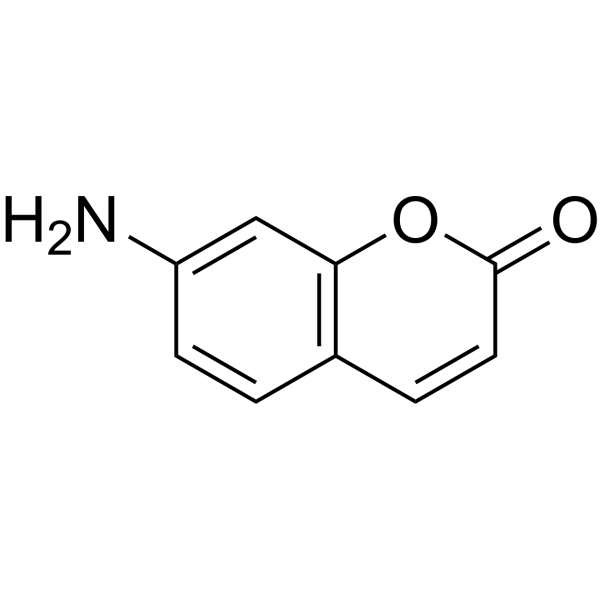 0 ImagesCat. No.: HY-W337618CAS No.: 19063-57-17-Aminocoumarin is highly fluorescent, acts as an optical brightener and fluorescent probe.
-
Fura-FF AM
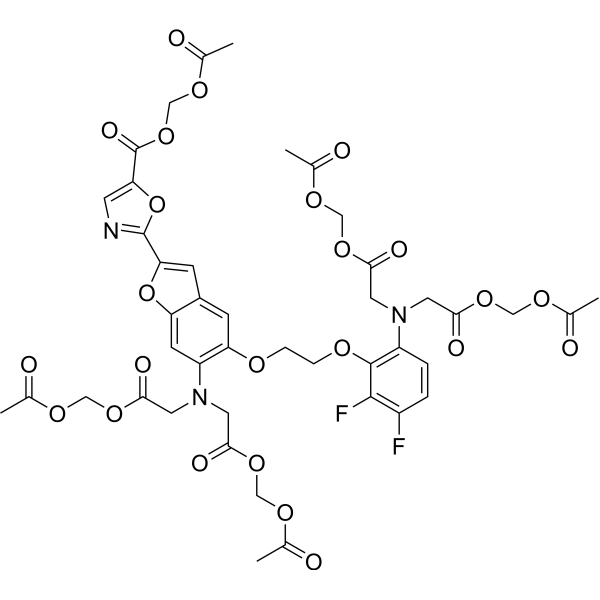 0 ImagesCat. No.: HY-130575CAS No.: 348079-12-9Fura-FF AM is a cell-permeable acetoxymethyl ester of fura-FF, a dluorescent calcium indicator. Fura-FF AM is hydrolyzed by intracellular esterases to release fura-FF in cells. Fura-FF is a difluorinated derivative of the calcium indicator fura-2. Compared to fura-2, fura-FF has a low affinity for calcium and is suitable for studying compartments with high concentrations of calcium.




