



GCGR
Glucagon Receptor
GCGR (glucagon receptor) is in the G protein-coupled receptor family, that is important in controlling blood glucose levels. The glucagon receptor is a 62 kDa protein that is activated by glucagon and is a member of the class B G-protein coupled family of receptors, coupled to G alpha i, Gs and to a lesser extent G alpha q. Stimulation of the receptor results in activation of adenylate cyclase and increased levels of intracellular cAMP. In humans, the glucagon receptor is encoded by the GCGR gene. Glucagon receptors are mainly expressed in liver and in kidney with lesser amounts found in heart, adipose tissue, spleen, thymus, adrenal glands, pancreas, cerebral cortex, and gastrointestinal tract.
All Product Categories
-
GCGR Related Products (196)
Related Products (196)

-
Recombinant Proteins (15)
-
Antibodies (3)
-
GLP-1R agonist 5
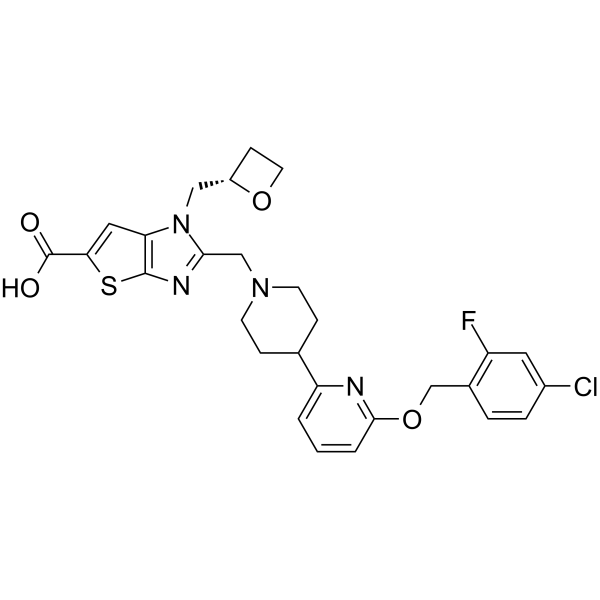 0 ImagesCat. No.: HY-144133CAS No.: 2749609-30-9GLP-1R agonist 5 is a potent GLP-1R agonist with an EC50 of <10 nM (WO2021259309A1, compound 35).
-
Helospectin II
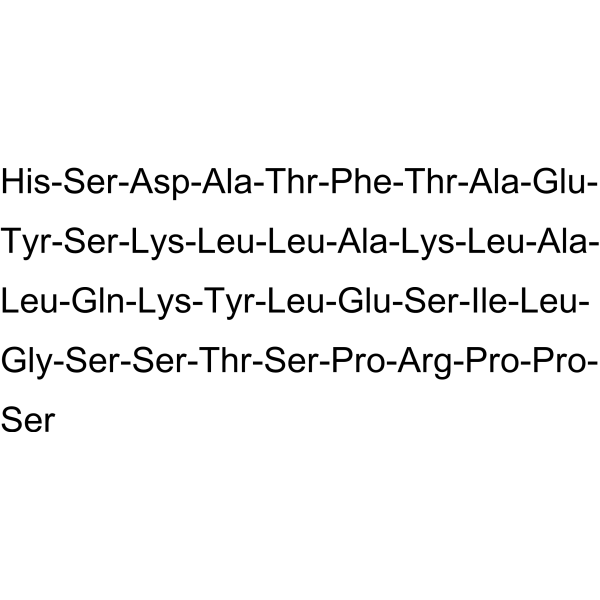 0 ImagesCat. No.: HY-P3050CAS No.: 93585-83-2Helospectin II is a neuropeptide of the vasoactive intestinal peptide (VIP) family. Helospectin II has vasodilatory and antihypertensive activities, and decreases blood pressure. Helospectin II is originally isolated from the salivary gland venom of the lizard Heloderma suspectum.
-
Biotinyl-Glucagon (1-29), human, bovine, porcine
 0 ImagesCat. No.: HY-P3621Biotinyl-Glucagon (1-29), human, bovine, porcine is a biotinylated glucagon. Glucagon is a peptide hormone, produced by α-cells of the pancreas, can increase concentration of glucose and fatty acids in the bloodstream.
-
UTG-4
 0 ImagesCat. No.: HY-P11487UTG-4 is a GLP-1R, GIPR, and GCGR agonist with EC50 values of 126.3 pM, 29.2 pM, and 250.2 pM, respectively. UTG-4 binds to HSA (Kd = 14.6 μM). UTG-4 effectively alleviates endothelial-mesenchymal transition. UTG-4 promotes weight loss, inhibits food intake, improves glucose tolerance, and has a significant anti-atherosclerotic effect.
-
GLP-1 receptor agonist 4
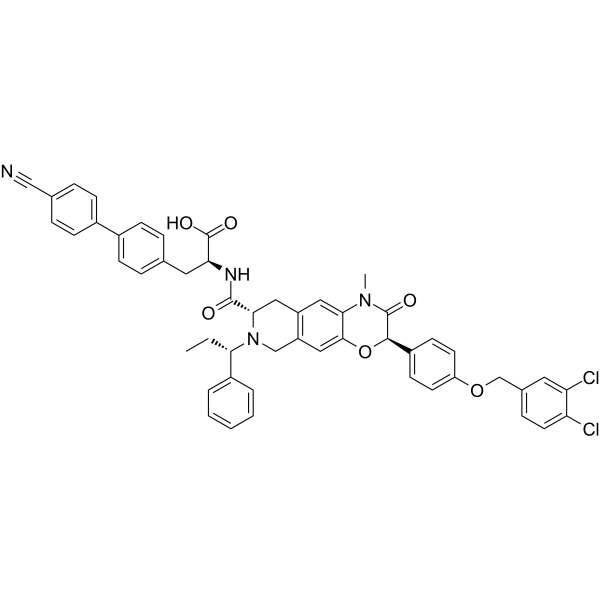 0 ImagesCat. No.: HY-129657CAS No.: 1187061-62-6GLP-1 receptor agonist 4 is a glucagon-like peptide-1 receptor (GLP-1R) agonist extracted from patent WO2009111700A2, compound 87, has an EC50 of 64.5 nM. GLP-1 receptor agonist 4 can be used in the research for treatment of diabetes.
-
GLP-1 receptor agonist 17-d3
 0 ImagesCat. No.: HY-172836SCAS No.: 3074098-20-4GLP-1 receptor agonist 17-d3 (Compound 701) is the deuterium labeled GLP-1R agonist 17 (HY-148212). GLP-1R agonist 17 is a GLP-1 receptor agonist that can be used for the research of cardiovascular metabolic diseases.
-
TC2
 0 ImagesCat. No.: HY-P11279TC2 is an efficient GIPR-preferring monomeric quadruple agonist that can respectively activate GIPR, GLP-1R, GcgR, and Y2R with IC50 values of 0.47, 2.1, 30, and 55 nM respectively. TC2 exhibits a significant GLP-1R preference, with a significant reduction in β-inhibitory protein 2 (βArr2) recruitment, while maintaining a strong cAMP signal. TC2 can be used for research on obesity and diabetes.
-
Exendin 4, biotin labeled
 0 ImagesCat. No.: HY-13443FSynonyms: Lys27(Biotin)-Exendin 4Exendin 4, biotin labeled is a biotin labeled Exendin 4 (HY-13443). Exendin 4 is a long-acting GLP-1 receptor agonist.
-
GCGR/GLP‐1 receptor agonist P1
 0 ImagesCat. No.: HY-P12143GCGR/GLP‐1 receptor agonist P1 is a dual GCGR/GLP-1R agonist. GCGR/GLP‐1 receptor agonist P1 activates human GCGR in vitro and induces the cyclic adenosine monophosphate (cAMP) signaling pathway. GCGR/GLP‐1 receptor agonist P1 is applicable to research related to type 2 diabetes and obesity.
-
GLP-1(28-36)amide TFA
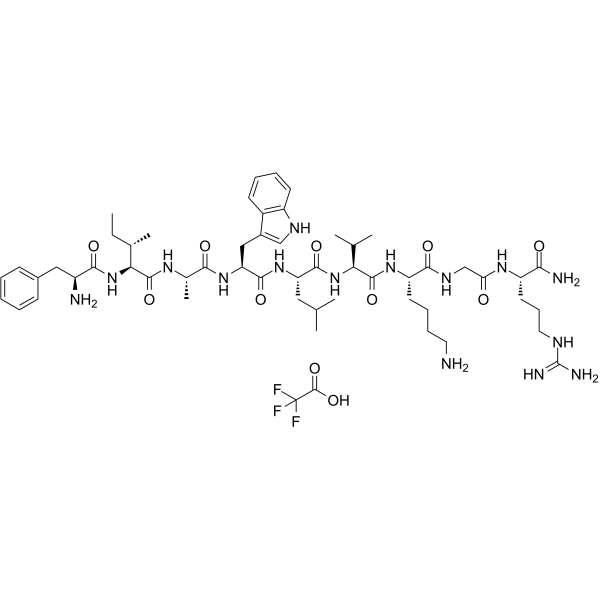 0 ImagesCat. No.: HY-P3101AGLP-1(28-36)amide TFA, a C-terminal nonapeptide of GLP-1, is a major product derived from the cleavage of GLP-1 by the neutral endopeptidase (NEP). GLP-1(28-36)amide TFA is an antioxidant and targets to mitochondrion, inhibits mitochondrial permeability transition (MPT). GLP-1(28-36)amide TFA has anti-diabetic and cardioprotection effects.
-
GCGR antagonist 3
 0 ImagesCat. No.: HY-169707CAS No.: 1421349-19-0GCGR antagonist 3 (example 1) is an antagonist of the glucagon receptor (GCGR) and can be used in diabetes research.
-
(Asp28)-Glucagon (1-29) (human, rat, porcine)
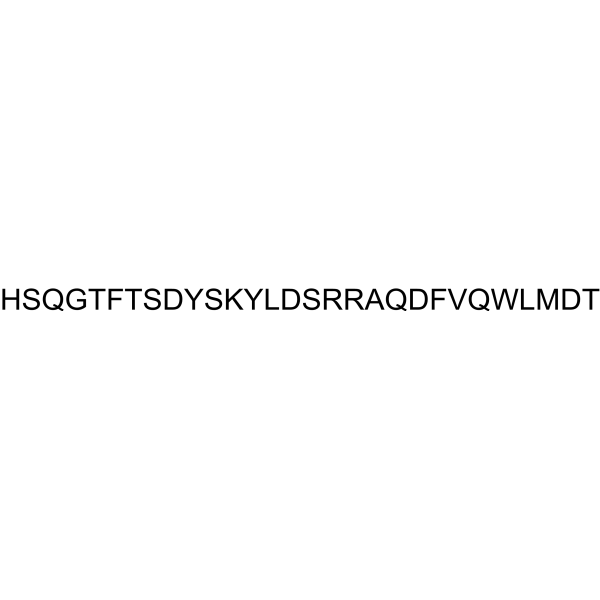 0 ImagesCat. No.: HY-P4389CAS No.: 1037751-81-7(Asp28)-Glucagon (1-29) (human, rat, porcine) is a glucagon analog and a GCGR agonist, with the Asn at position 28 replaced by Asp. (Asp28)-Glucagon (1-29) (human, rat, porcine) activates GCGR-mediated cAMP signaling, with EC50 values of 0.067 nM and 0.09 nM, respectively, and an EC50 of 7.99 nM for GLP-1R. (Asp28)-Glucagon (1-29) (human, rat, porcine) is useful for studies on glucagon receptor signaling, carbohydrate metabolism, and hypoglycemia.
-
PF-06293620
 0 ImagesCat. No.: HY-P992007Synonyms: RN909PF-06293620 (RN909) is a monoclonal antibody antagonist of the glucagon receptor. PF-06293620 produces dose-dependent, durable lowering of fasting plasma glucose and reduces HbA1c levels. PF-06293620 can be used for the research of type 2 diabetes mellitus.
-
OXM-7
 0 ImagesCat. No.: HY-P10337OXM-7 is a dual agonist of GLP-1R (EC50=0.024 nM) and GCGR (EC50=0.082 nM). OXM-7 can enhance glucose-stimulated insulin secretion and hepatic glucose output. OXM-7 lowers blood glucose levels. OXM-7 improves lipid metabolism.
-
LGD 6972 ammonium
 0 ImagesCat. No.: HY-12525BLGD-6972 ammonium is a selective and orally active glucagon receptor antagonist. LGD-6972 ammonium has the potential for type 2 diabetes research.
-
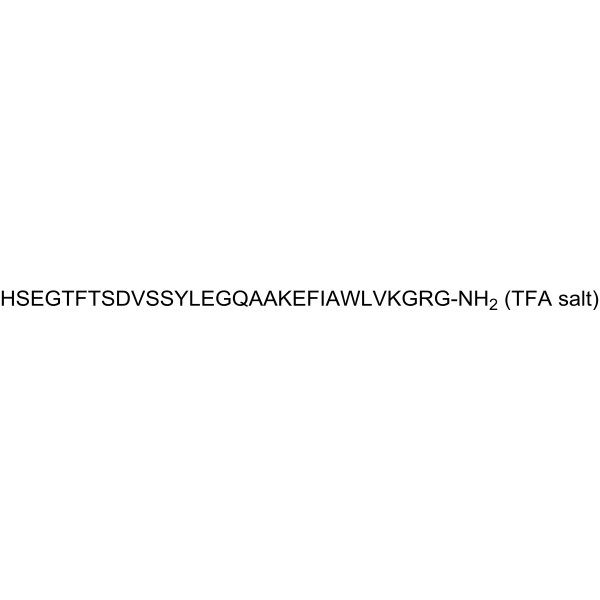
[Des-His1,Glu9] Glucagon
![[Des-His1,Glu9] Glucagon](https://file.medchemexpress.com/product_pic/hy-p3608.gif "Click to View [Des-His1,Glu9] Glucagon Product Detail") 0 ImagesCat. No.: HY-P3608CAS No.: 110121-11-4[Des-His1,Glu9] Glucagon is a potent glucagon receptor system peptide antagonist. [Des-His1,Glu9] Glucagon enhances the glucose-stimulated release of insulin from pancreatic islet cells. [Des-His1,Glu9] Glucagon can be used to research diabetes.
0 ImagesCat. No.: HY-P3608CAS No.: 110121-11-4[Des-His1,Glu9] Glucagon is a potent glucagon receptor system peptide antagonist. [Des-His1,Glu9] Glucagon enhances the glucose-stimulated release of insulin from pancreatic islet cells. [Des-His1,Glu9] Glucagon can be used to research diabetes.
-
GLP-1R agonist 32
 0 ImagesCat. No.: HY-171851CAS No.: 3047875-57-7GLP-1R agonist 32 (Compound 111) is an orally active and highly potent GLP-1R agonist with an EC50 value of 0.017 nM. GLP-1R agonist 32 exerts glucose-regulating activity by activating GLP-1R to stimulate cAMP production, promoting insulin secretion, inhibiting glucagon release, and delaying gastric emptying. GLP-1R agonist 32 is promising for research of type 2 diabetes, obesity, and related metabolic disorders.
-
TPM003
 0 ImagesCat. No.: HY-181709Synonyms: TG062TPM003 (TG062) is a triple agonist of GLP-1R, GIPR and GCGR, with EC50 values of 33.9, 12.5 and 92.9 pM, respectively. TPM003 suppresses appetite, regulates blood glucose, enhances insulin sensitivity, reduces gastrointestinal intolerance, promotes hepatic lipid mobilization and increases energy expenditure. TPM003 induces weight loss, improves metabolic parameters, reverses hepatic steatosis and optimizes liver function markers. TPM003 is applicable for research on obesity and non-alcoholic steatohepatitis.
-
[Ac-Tyr1,D-Phe2]GRF 1-29, amide (human)
![[Ac-Tyr1,D-Phe2]GRF 1-29, amide (human)](https://file.medchemexpress.com/product_pic/hy-p0211.gif "Click to View [Ac-Tyr1,D-Phe2]GRF 1-29, amide (human) Product Detail") 0 ImagesCat. No.: HY-P0211CAS No.: 93965-89-0[Ac-Tyr1,D-Phe2]GRF 1-29, amide (human), a growth hormone releasing factor (GRF) analogue, is a vasoactive intestinal peptide (VIP) antagonist.
0 ImagesCat. No.: HY-P0211CAS No.: 93965-89-0[Ac-Tyr1,D-Phe2]GRF 1-29, amide (human), a growth hormone releasing factor (GRF) analogue, is a vasoactive intestinal peptide (VIP) antagonist.




