



iGluR
Ionotropic glutamate receptors
iGluR (ionotropic glutamate receptor) is a ligand-gated ion channel that is activated by the neurotransmitter glutamate. iGluR are integral membrane proteins compose of four large subunits that form a central ion channel pore. Sequence similarity among all known glutamate receptor subunits, including the AMPA, kainate, NMDA, and δ receptors.
AMPA receptors are the main charge carriers during basal transmission, permitting influx of sodium ions to depolarise the postsynaptic membrane. NMDA receptors are blocked by magnesium ions and therefore only permit ion flux following prior depolarisation. This enables them to act as coincidence detectors for synaptic plasticity. Calcium influx through NMDA receptors leads to persistent modifications in the strength of synaptic transmission.
iGluR Isoform Specific Products
All Product Categories
-
iGluR Inhibitors
(130)
View all products
-
iGluR Agonists
(131)
View all products
-
iGluR Antagonists
(347)
View all products
-
iGluR Activators
(35)
View all products
-
iGluR Modulators
(93)
View all products
-
iGluR MDM2 Inhibitor
(1)
View all products
-
iGluR Controls
(5)
View all products
-
iGluR Ligands
(3)
View all products
-
iGluR Related Products (828)
Related Products (828)

-
Antibodies (11)
-
iGluR Isoform Comparison
-
NMDA receptor potentiator-1
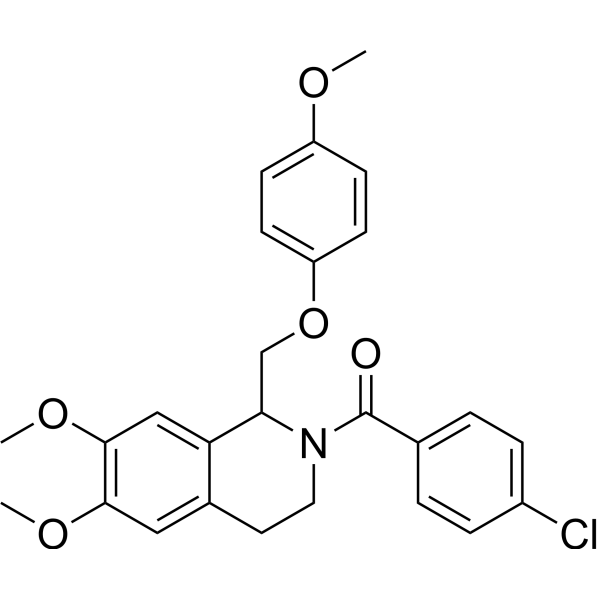 0 ImagesCat. No.: HY-147352CAS No.: 486427-18-3NMDA receptor potentiator-1 (Compound 1368) is a subunit selective NMDA receptor potentiator with IC50s of 4 μM and 5 μM against NR2C and NR2D expression, respectively.
-
(R)-Lanicemine-d5
 0 ImagesCat. No.: HY-108235S1Synonyms: (R)-AZD6765-d5(R)-Lanicemine-d5 ((R)-AZd6765-d5) is the deuterium labeled (R)-Lanicemine (HY-108235C). (R)-Lanicemine ((R)-AZD6765) is the less active R-enantiomer of Lanicemine. Lanicemine (AZD6765) is a low-trapping NMDA channel blocker (Ki of 0.56-2.1?μM for NMDA receptor; IC50s of 4-7?μM and 6.4 μM in CHO and Xenopus oocyte cells, respectively). Antidepressant effects.
-
UK-315716
 0 ImagesCat. No.: HY-108200CAS No.: 197077-52-4UK-315716 is an NMDA receptor antagonist. UK-315716 has a synergistic neuroprotective effect. UK-315716 can be used for research on neurological diseases such as stroke and headache.
-
Tacrine hydrochloride (Standard)
 0 ImagesTacrine (hydrochloride) (Standard) is the analytical standard of Tacrine (hydrochloride). This product is intended for research and analytical applications. Tacrine hydrochloride is a potent inhibitor of both AChE and BChE, with IC50s of 31 nM and 25.6 nM, respectively. Tacrine hydrochloride is also a NMDAR inhibitor, with an IC50 of 26 μM. Tacrine hydrochloride can be used for the research of Alzheimer’s disease.
-
Otaplimastat hydrochloride
 0 ImagesCat. No.: HY-109097ACAS No.: 1176758-02-3Synonyms: SP-8203 hydrochlorideOtaplimastat (SP-8203) hydrobromide, a matrix metalloproteinase (MMP) inhibitor, blocks N-methyl-D-aspartate (NMDA) receptor-mediated excitotoxicity in a competitive manner. Otaplimastat hydrobromide also exhibits anti-oxidant activity. Otaplimastat hydrobromide can be used for the research of brain ischemic injury.
-
N-Acetylglycyl-D-glutamic acid
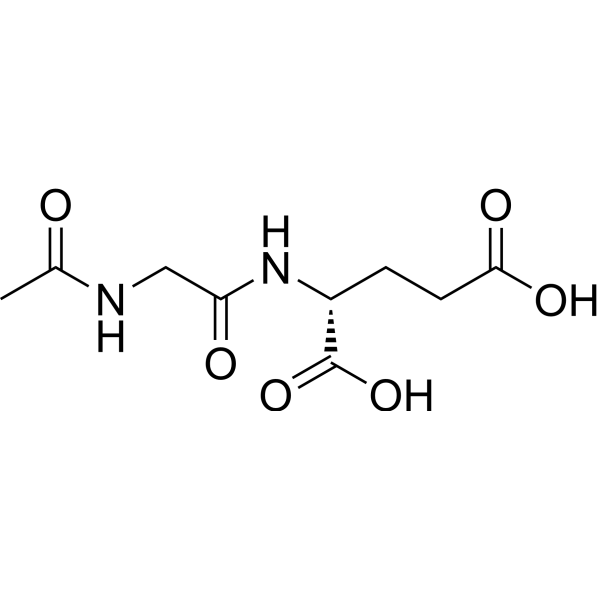 0 ImagesCat. No.: HY-100922CAS No.: 135701-69-8N-Acetylglycyl-D-glutamic acid is a peptide with excitatory effect. N-Acetylglycyl-D-glutamic acid induces seizures in mice.
-
NMDA receptor modulator 4
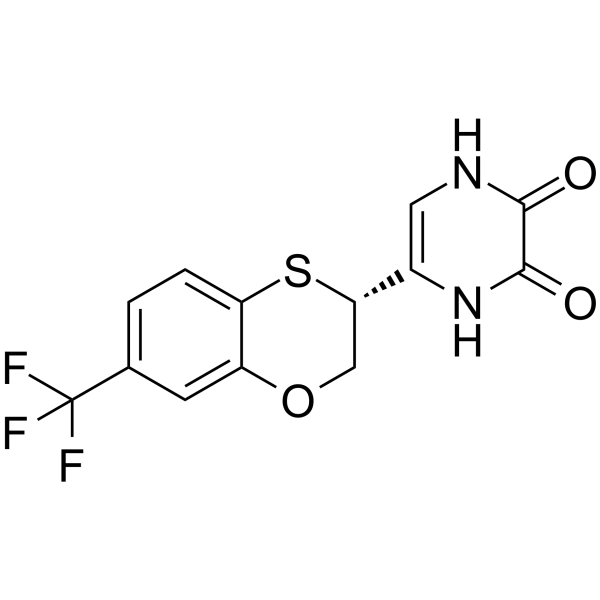 0 ImagesCat. No.: HY-143393CAS No.: 2758256-71-0NMDA receptor modulator 4 (Compound 169) is a potent NMDA receptor modulator. NMDA receptor modulator 4 can be used for neurological disorder research.
-
Indole-2-carboxylic acid-13C
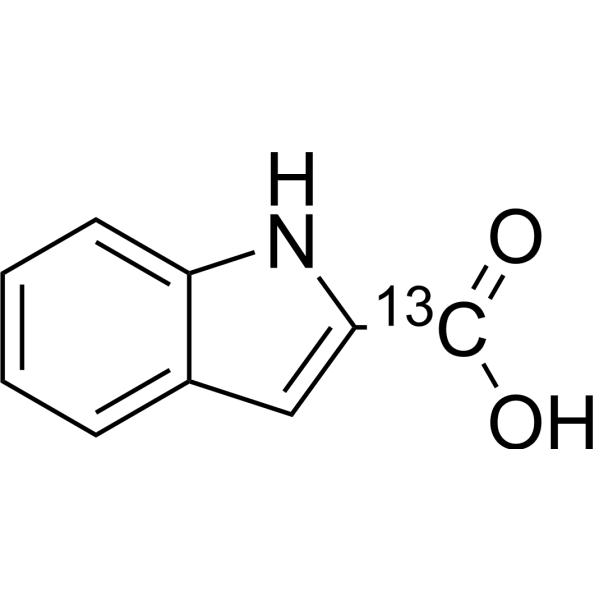 0 ImagesCat. No.: HY-I0096SCAS No.: 1216839-31-4Indole-2-carboxylic acid-13C is the 13C-labeled Indole-2-carboxylic acid. Indole-2-carboxylic acid is a strong inhibitor of lipid peroxidation. Indole-2-carboxylic acid (I2CA) specifically and competitively inhibits the potentiation by glycine of NMDA-gated current.
-
L-Aspartic acid-13C-1
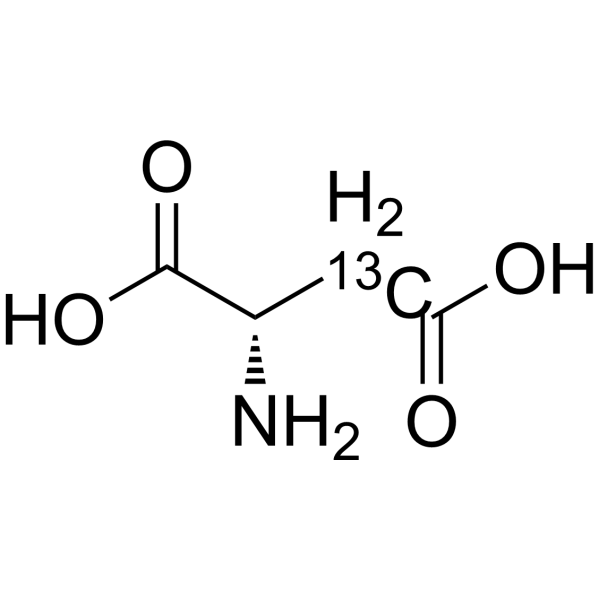 0 ImagesCat. No.: HY-N0666S10CAS No.: 68261-19-8Synonyms: [3-13C]Aspartic acidL-Aspartic acid-13C-1 ([3-13C]Aspartic acid) is the 13C-labeled L-Aspartic acid (HY-N0666). L-Aspartic acid is a NMDA receptor agonist and acidic amino acid. L-Aspartic acid has no independent analgesic activity. L-Aspartic acid can antagonize the analgesic effects of D-Aspartic acid and Morphine. L-Aspartic acid regulates polymorph transformation, crystal growth/aggregation and nucleation processes of calcium carbonate, and can serve as a biomineralization template. L-Aspartic acid promotes burst firing of central neurons. L-Aspartic acid can be used in studies related to cerebral ischemia and epilepsy.
-
Orphenadrine hydrochloride (Standard)
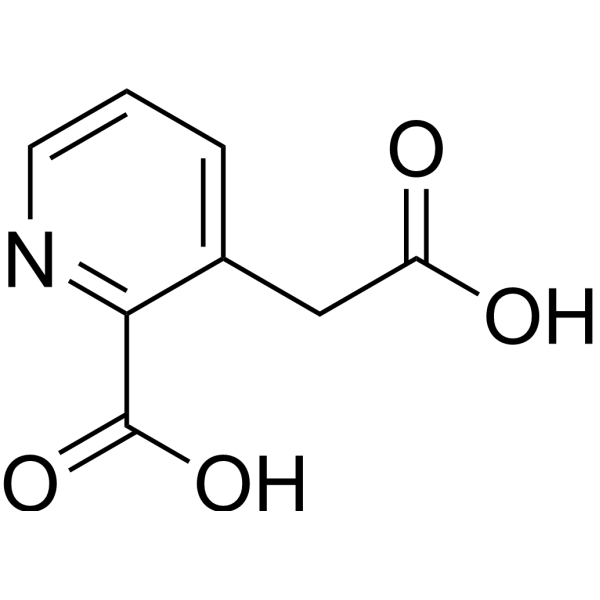
 0 ImagesOrphenadrine (hydrochloride) (Standard) is the analytical standard of Orphenadrine (hydrochloride). This product is intended for research and analytical applications. Orphenadrine hydrochloride is an orally active and non-competitive NMDA receptor antagonist (crosses the blood-brain barrier) with a Ki of 6.0 μM. Orphenadrine hydrochloride relieves stiffness, pain and discomfort due to muscle strains, sprains or other injuries. Orphenadrine hydrochloride is also used to relieve tremors associated with parkinson's disease. Orphenadrine citrate has good neuroprotective properties, can be used in studies of neurodegenerative diseases.
-
3-Methoxyeticyclidine hydrochloride
 0 ImagesCat. No.: HY-W7242213-Methoxyeticyclidine hydrochloride is a phencyclidine-type compound that has binding affinity for the N-methyl-D-aspartate receptor. 3-Methoxyeticyclidine hydrochloride has a certain degree of toxicity.
-
EGIS-8332
 0 ImagesCat. No.: HY-114975CAS No.: 220725-87-1EGIS-8332 is a non-competitive AMPA receptor antagonist. EGIS-8332 inhibits AMPA currents in rat cerebellar Purkinje cells and inhibited the AMPA- and Quisqualate-induced excitotoxicity in primary cultures of telencephalon neurons (IC50 = 5.1-9.0 μM). EGIS-8332 exhibits anticonvulsant and neuroprotective effects. EGIS-8332 can be used for the research of neurological disease.
-
threo-Ifenprodil hemitartrate
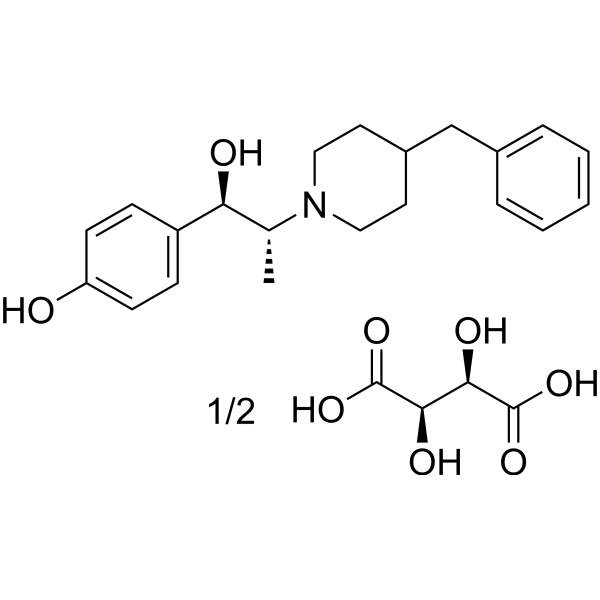 0 ImagesCat. No.: HY-107708CAS No.: 1312991-83-5threo Ifenprodil hemitartrate is a σ receptor agonist, with Kis of 59.1 and 2 nM for σ1 and σ2 receptors, respectively. threo Ifenprodil hemitartrate is also a NR2B subunit-selective NMDA receptor antagonist (IC50=0.22 μM). threo Ifenprodil hemitartrate is a hERG potassium channel inhibitor, with an IC 50 of 88 nM, showing antiarrhythmic activity.
-
YM 900
 0 ImagesCat. No.: HY-15070CAS No.: 143151-35-3YM 900 is an AMPA receptor antagonist.
-
NMDA receptor modulator 3
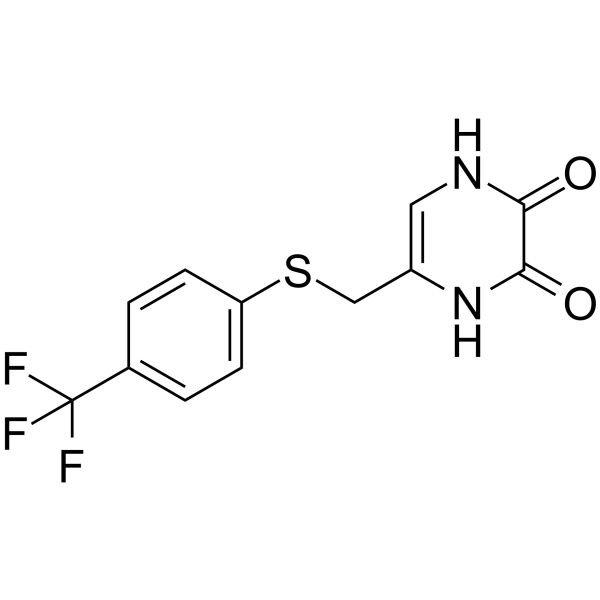 0 ImagesCat. No.: HY-143391CAS No.: 2758256-02-7NMDA receptor modulator 3 (Compound 99) is a potent NMDA receptor modulator. NMDA receptor modulator 3 can be used for neurological disorder research.
-
EGIS-9637
 0 ImagesCat. No.: HY-182410CAS No.: 220669-66-9EGIS-9637 is a non-competitive AMPA antagonist and acylated dihydro-2,3-benzodiazepine class member.
-
L-703717
 0 ImagesCat. No.: HY-105413CAS No.: 142326-92-9L-703717 is a NMDA receptor antagonist. L-703717 preferentially binds to cerebellar-specific NMDA receptors consisting of a GluRepsilon3 subunit and eventually accumulates in rodent cerebellum. L-703717 can be used for the research of neurological disease.
-
Lanicemine-d5 dihydrochloride
 0 ImagesCat. No.: HY-108235AS1Synonyms: AZD6765-d5 dihydrochloride; ARL 15896AR-d5Lanicemine-d5 dihydrochloride (AZd6765-d5 dihydrochloride) is the deuterium labeled Lanicemine dihydrochloride (HY-108235A). Lanicemine (AZD6765) dihydrochloride is a low-trapping NMDA channel blocker (Ki of 0.56-2.1 μM for NMDA receptor; IC50s of 4-7 μM and 6.4 μM in CHO and Xenopus oocyte cells, respectively). Antidepressant effects.
-
NMDA receptor modulator 9
 0 ImagesCat. No.: HY-175508NMDA receptor modulator 9 is an orally active NMDA receptor positive allosteric modulator (PAM). NMDA receptor modulator 9 enhances GluN2A receptor activity. NMDA receptor modulator 9 demonstrates significant antidepressant-like effects in chronic restraint stress (CRS)-induced depression mice. NMDA receptor modulator 9 can be used for the study of depression.




