nAChR
Nicotinic acetylcholine receptors
nAChRs (nicotinic acetylcholine receptors) are neuron receptor proteins that signal for muscular contraction upon a chemical stimulus. They are cholinergic receptors that form ligand-gated ion channels in the plasma membranes of certain neurons and on the presynaptic and postsynaptic sides of theneuromuscular junction. Nicotinic acetylcholine receptors are the best-studied of the ionotropic receptors. Like the other type of acetylcholine receptor-the muscarinic acetylcholine receptor (mAChR)-the nAChR is triggered by the binding of the neurotransmitter acetylcholine (ACh). Just as muscarinic receptors are named such because they are also activated by muscarine, nicotinic receptors can be opened not only by acetylcholine but also by nicotine —hence the name "nicotinic".
All Product Categories
-
nAChR 관련 제품 (482)
관련 제품 (482)

-
Antibodies (5)
-
Pyrantel hydrochloride
 0 ImagesCat. No.: HY-12641BCAS No.: 26155-20-4Pyrantel hydrochloride is an orally active antiparasitic agent. Pyrantel hydrochloride induces spastic paralysis in parasites via actions on neural and muscular cholinergic receptors as a nicotinic acetylcholine receptor (nAChR) agonist. Pyrantel hydrochloride eliminates both immature and mature endoparasites in horses. Pyrantel hydrochloride can be used in research related to parasitic infections.
-
DMAB-anabaseine dihydrochloride
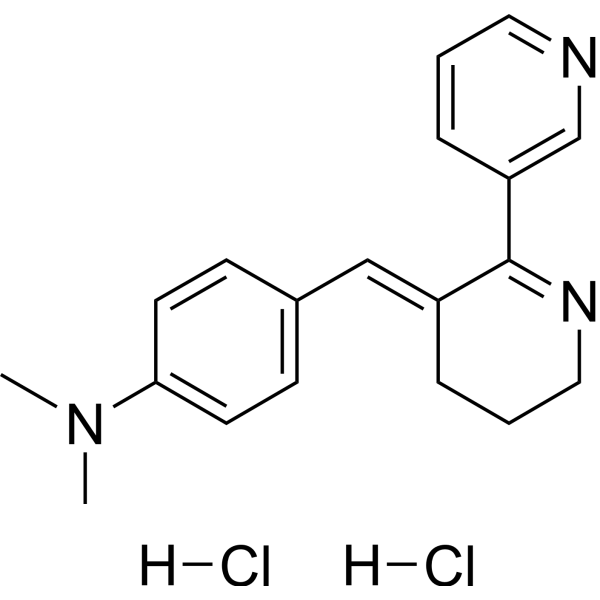 0 ImagesCat. No.: HY-107671CAS No.: 154149-38-9DMAB-anabaseine dihydrochloride is a selective nicotinic α7 receptor partial agonist and an α4β2 nAChR antagonist. DMAB-anabaseine dihydrochloride shows cognition-enhancing effects.
-
JWX-A0108
 0 ImagesCat. No.: HY-182707CAS No.: 2055045-42-4JWX-A0108 is a selective human α7 nAChR positive allosteric modulator with an EC50 of 4.35 μM. JWX-A0108 potentiates α7 nAChR currents only in the presence of acetylcholine, with no direct activating effect or alteration of desensitization. JWX-A0108 enhances hippocampal GABAergic synaptic transmission by increasing spontaneous inhibitory postsynaptic currents. JWX-A0108 reduces the brain expression levels of IL-1β, TNF-α, and IL-6 by blocking the NF-κB signaling pathway, and reduces microglial activation by downregulating Iba1. JWX-A0108 effectively improves cognitive deficits, neuroinflammation, and hippocampal neuronal damage in mouse models of schizophrenia and Alzheimer's disease. JWX-A0108 can be used for research related to schizophrenia and Alzheimer's disease.
-
PAM-2
 0 ImagesCat. No.: HY-180400CAS No.: 1426293-61-9PAM-2 is a potent, orally active, CNS-penetrant selective α7 nAChR positive allosteric modulator (human α7 nAChR EC50: 39 μM, rat α7 nAChR EC50: 12 μM) with anti-nociceptive and anti-inflammatory activity. PAM-2 exhibits selectivity over α9α10 nAChR (IC50 = 174 μM) and CaV2.2 channel (IC50 = 89 μM). PAM-2 decreases Streptozotocin (STZ) (HY-13753)- and Oxaliplatin (HY-17371)-inducned nuroparhic pain in mice by α7 nAChR potentiation. PAM-2 can be used for the research of neuropathic pain.
-
DBO-83 dihydrochloride
 0 ImagesCat. No.: HY-130432CAS No.: 195211-53-1DBO-83 dihydrochloride is a brain-penetrant nicotinic acetylcholine receptor (nAChR) agonist. DBO-83 dihydrochloride activates peripheral nicotinic acetylcholine receptors to evoke non-stimulated ileum contractions. DBO-83 dihydrochloride shows antinociceptive and anti-amnesic activities.
-
VMY-2-95
 0 ImagesCat. No.: HY-120946CAS No.: 1434047-61-6VMY-2-95 is an oral active and blood-brain barrier (BBB) penetrant α4β2 nicotinic acetylcholine receptor desensitizer. VMY-2-95 can be used for study of depression or addiction.
-
AS3580239
 0 ImagesCat. No.: HY-188047AS3580239 is a positive allosteric modulator of skeletal muscle-type nicotinic acetylcholine receptor (m-nAChR). AS3580239 promotes acetylcholine (ACh) signaling via m-nAChR, causing a leftward shift of the ACh concentration-response curve. AS3580239 enhances electrically stimulated isometric contraction of the extensor digitorum longus (EDL) muscle. AS3580239 improves neurotransmission and enhances muscle strength. AS3580239 can be used for research on myasthenia gravis.
-
Succinylcholine iodide
 0 ImagesSuccinylcholine iodide (Suxamethonium iodide) is a depolarizing neuromuscular blocker with rapid onset and short duration of action. Succinylcholine iodide also acts as an agonist of the Acetylcholine receptor. Succinylcholine iodide is used for emergency airway management.
-
Asoxime dimesylate
 0 ImagesCat. No.: HY-106901BCAS No.: 144252-71-1Synonyms: HI-6 dimesylateAsoxime dimesylate (HI-6 dimesylate) is an orally active thiosemicarbazone-based antidote. Asoxime dimesylate is a reversible inhibitor of AChE, and its core mechanism of action is to re-activate AChE inhibited by nerve toxins, thereby restoring the cholinergic nerve function. Asoxime dimesylate significantly restores the function of poisoned muscles without reactivating AChE. Asoxime dimesylate is an antagonist of acetylcholine receptors (AChRs), including nicotinic receptor and α7 nAChR. Asoxime dimesylate can serve as an effective immunomodulator, improving the immune effect of the nervous system.
-
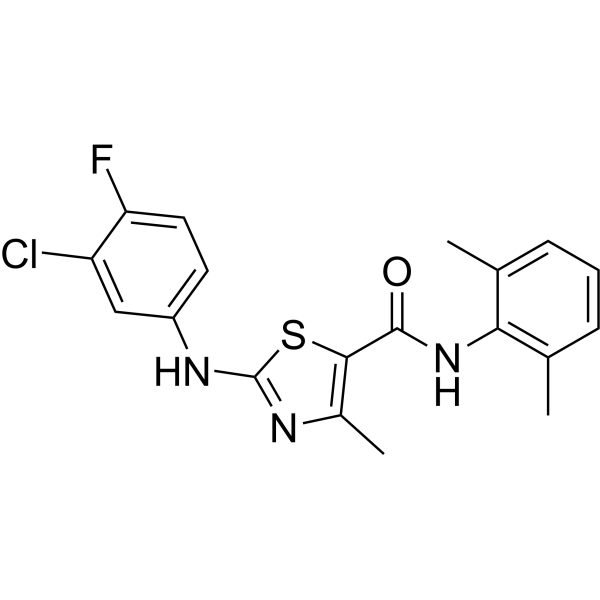
TTFB
 0 ImagesCat. No.: HY-46286CAS No.: 352560-76-0Synonyms: N-(4-tert-butyl-1,3-thiazol-2-yl)-3-fluorobenzamideTTFB (N-(4-tert-butyl-1,3-thiazol-2-yl)-3-fluorobenzamide) is a selective, non-competitive zinc-activated channel (ZAC) antagonist. TTFB inhibits Zn2+- and H+-induced ZAC currents with IC50 values of 3 μM and 8.5 μM, respectively, and has an IC50 of 4.7 μM against spontaneous activity. TTFB shows no significant agonistic, antagonistic or modulatory activity towards representative classical Cys-loop receptors including m5-HT3AR, hα3β4 nAChR, hα1β2γ2S GABAAR and hα1 GlyR. TTFB can be used to investigate the physiological and pathological functions of ZAC.
-
Galanthamine-d3 hydrobromide
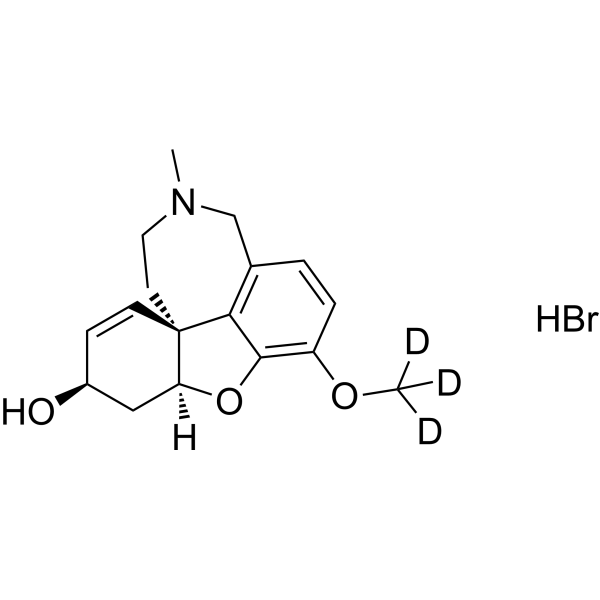 0 ImagesCat. No.: HY-A0009SSynonyms: Galantamine-d3 hydrobromideGalanthamine-d3 (hydrobromide) is deuterium labeled Galanthamine (hydrobromide). Galanthamine hydrobromide (Galantamine hydrobromide) is a selective, reversible, competitive, alkaloid AChE inhibitor, with an IC50 of 0.35 μM. Galanthamine hydrobromide is a potent allosteric potentiating ligand (APL) of human α3β4, α4β2, α6β4 nicotinic receptors ( nAChRs). Galanthamine hydrobromide is developed for the research of Alzheimer's disease (AD).
-
Lobeline sulfate
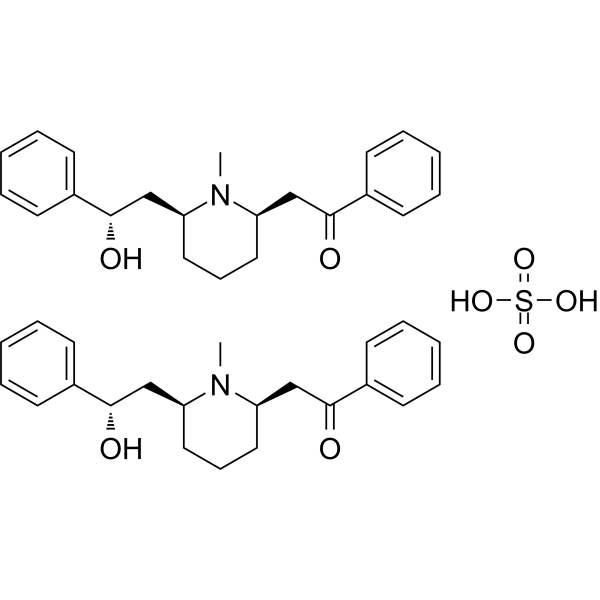 0 ImagesLobeline (α-Lobeline) sulfate is a brain-penetrant nicotinic receptor agonist. Lobeline sulfate increases dopamine (DA) release by inhibiting DA uptake into synaptic vesicles, and altering presynaptic DA storage. Lobeline sulfate is effective in smoking cessation.
-
(Rac)-Lonafarnib
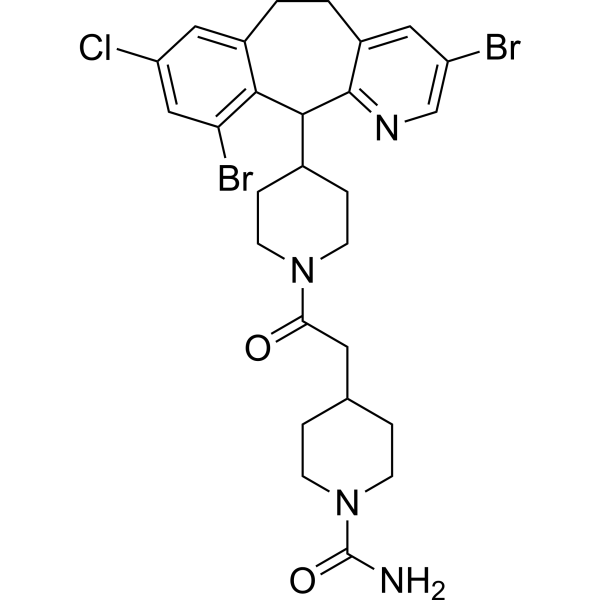 0 ImagesCat. No.: HY-15136BCAS No.: 193275-86-4Synonyms: Sch66336 racemate(Rac)-Lonafarnib (Sch66336 racemate) is an isomer of Lonafarnib (HY-15136). Lonafarnib (Sch66336) is an orally active, blood-brain barrier penetrant farnesyltransferase (FPTase) inhibitor. Lonafarnib increases the phosphorylation levels of Akt, CaMKII and CREB, upregulates BDNF expression in the hippocampus, elevates the content of α7nAChR on cell membranes, and blocks the isoprenylation of H-Ras. Lonafarnib repairs synapses and reverses spatial memory deficits in Aβ1-42 model mice. Lonafarnib inhibits RSV fusion and replication, and alleviates virus-induced lung injury. Lonafarnib activates the lysosomal and autophagic pathways, and reduces the phosphorylation and aggregation of tau. Lonafarnib acts synergistically with Sorafenib (HY-10201) to promote apoptosis, and inhibits the proliferation and invasion of melanoma cells. Lonafarnib inhibits the farnesylation of progerin, repairs nuclear membrane defects, and activates the cGAS-STING-STAT1 signaling pathway. Lonafarnib can be used in research related to diseases including Alzheimer's disease, viral infections, melanoma, and progeria.

-
A85380
 0 ImagesCat. No.: HY-14312CAS No.: 161416-98-4
-
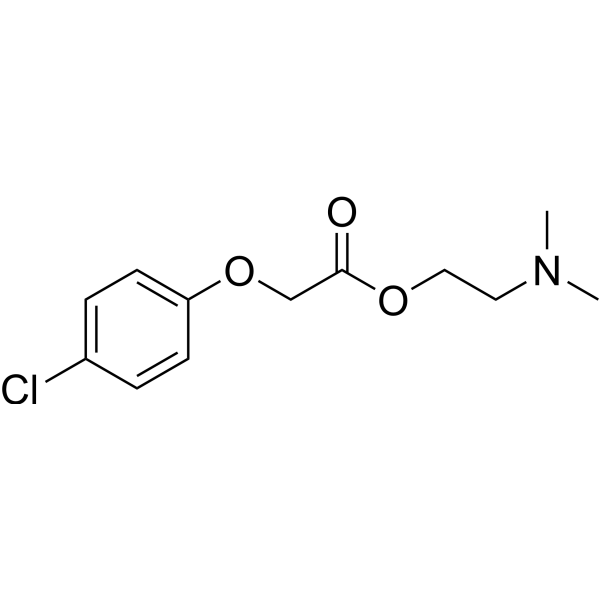
Mecamylamine hydrochloride (Standard)
 0 ImagesMecamylamine (hydrochloride) (Standard) is the analytical standard of Mecamylamine (hydrochloride). This product is intended for research and analytical applications. Mecamylamine hydrochloride is an orally active, nonselective, noncompetitive nAChR antagonist. Mecamylamine hydrochloride is also a ganglionic blocker. Mecamylamine hydrochloride can across the blood-brain barrier. Mecamylamine hydrochloride can be used in the research of neuropsychiatric disorders, hypertension, antidepressant area.
-
Lupanine perchlorate
 0 ImagesLupanine (D-Lupanine) perchlorate is a natural ketonic derivative of Sparteine (HY-W008350)with a ganglioplegic activity. Lupanine perchlorate shows binding affinity for nicotinic receptor with a Ki value of 500 nM.
-
Sulfoxaflor-d3
 0 ImagesCat. No.: HY-118504SSulfoxaflor-d3 is the deuterium labeled Sulfoxaflor (HY-118504). Sulfoxaflor is an orally active full agonist of insect nicotinic acetylcholine receptors (nAChRs), targeting the α-bungarotoxin-insensitive nAChR1 and nAChR2 subtypes. Sulfoxaflor binding to nACh is not inhibited by d-Tubocurarine (HY-125901), but is partially inhibited by Mecamylamine (HY-B1395A). Sulfoxaflor induces inward currents by activating nAChRs, leading to insect neurotoxicity. Sulfoxaflor can be used in the research of agricultural pest control, pesticide toxicology, insect neural receptor pharmacology, etc.