1. シグナル伝達
  2. Anti-infection
  3. Penicillin-binding protein (PBP)

Penicillin-binding protein (PBP)

Penicillin-binding proteins (PBPs) are enzymes that play an important role in the cell membrane and cell wall of bacteria. They are primarily involved in the synthesis of the bacterial cell wall and are essential for maintaining the structure and function of bacteria. PBPs promote cell wall synthesis by catalyzing the crosslinking of peptidoglycans, ensuring that bacteria can withstand external pressures and maintain their morphology. PBPs are expressed in both gram-positive and gram-negative bacteria, but their types and functions may vary between species. Penicillin-binding proteins are important targets for a variety of bacterial infections, such as pneumonia, meningitis, and septicemia[1].

Penicillin-binding protein (PBP) 関連製品 (77):

製品番号 製品名 製品効果 純度 構造式
  • HY-121329
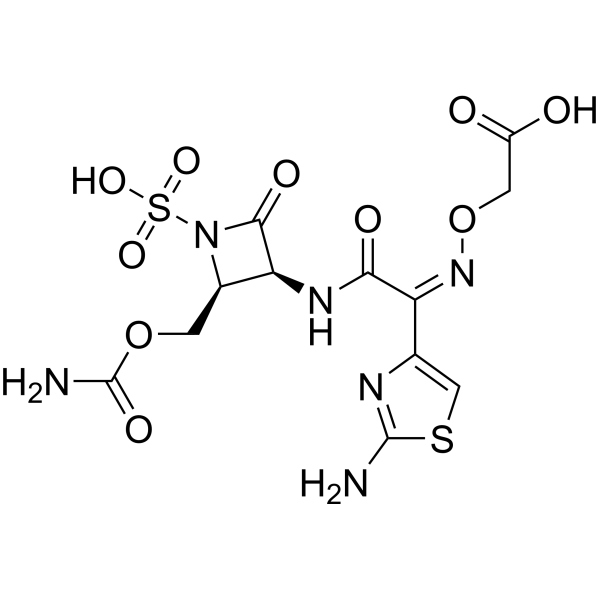
    Carumonam
    Carumonam (AMA-1080; Ro 17-2301) is a sulfonated monocyclic β-Lactam Antibiotic, targeting to penicillin-binding protein (PBP). Carumonam exerts highly activity against Enterobacteriaceae, Pseudomonas aeruginosa, and Haemophilus influenzae, while it weakly and even inactively inhibits Streptococcus pneumoniae and Staphylococcus aureus. Carumonam is resistant to beta-lactamase-mediated hydrolysis.
    Carumonam
  • HY-174459
    Anti-MRSA agent 31 Inhibitor
    Anti-MRSA agent 31 (Compound 6) is an anti-methicillin-resistant Staphylococcus aureus (MRSA) agent with a MIC of 97 μg/mL and a MBC of 781.25 μg/mL. Anti-MRSA agent 31 has a potent antibacterial activity and a strong Binding Protein 2a (PBP2a) inhibitory activity.
    Anti-MRSA agent 31
  • HY-N7101S
    Cefpodoxime proxetil-d7
    Cefpodoxime proxetil-d7 (U-76-d7,252-d7; CS-807-d7) is the deuterium labeled Cefpodoxime Proxetil (HY-N7101). Cefpodoxime Proxetil is an orally active broad spectrum third-generation cephalosporin with potent antibacterial activity against both Gram-positive and Gram-negative bacteria including staphylococci, streptococci, Haemophilus influenzae, Neisseria gonorrhoeae, Escherichia coli, Klebsiella pnuemoniae, Citrobacter spp, and Proteus spp. Cefpodoxime Proxetil binds to penicillin binding proteins (PBPs), which inhibits peptidoglycan synthesis, finally results in interfering bacterial cell wall biosynthesis. Cefpodoxime Proxetil can be used against skin structure infections, acute otitis media, pharyngitis, tonsillitis, upper respiratory tract infection, urinary tract infections and sexually transmitted diseases.
    Cefpodoxime proxetil-d<sub>7</sub>
  • HY-B1923A
    Piperacillin hydrate
    Piperacillin hydrate is a semisynthetic broad-spectrum β-lactam antibiotic which exhibits potent bactericidal activity against Gram-negative bacteria as well as select Gram-positive strains through penicillin-binding proteins. Piperacillin hydrate is most commonly used in combination with the β-lactamase inhibitor Tazobactam (HY-B1418).
    Piperacillin hydrate
  • HY-B0200AR
    Cephalexin hydrochloride (Standard)
    Cephalexin (hydrochloride) (Standard) is the analytical standard of Cephalexin (hydrochloride). This product is intended for research and analytical applications. Cephalexin (Cefalexin) hydrochloride is a potent, orally active new semisynthetic cephalosporin antibiotic with a broad antibacterial spectrum. Cephalexin (Cefalexin) hydrochloride has antibacterial activity against a wide variety of gram-positive and gram-negative bacteria. Cephalexin (Cefalexin) hydrochloride targets penicillin-binding proteins (PBPs) to inhibit bacterial cell wall assembly. Cephalexin (Cefalexin) hydrochloride is used for the research of pneumonia, strep throat, and bacterial endocarditis, et al[1][2].
    Cephalexin hydrochloride (Standard)
  • HY-A0111B
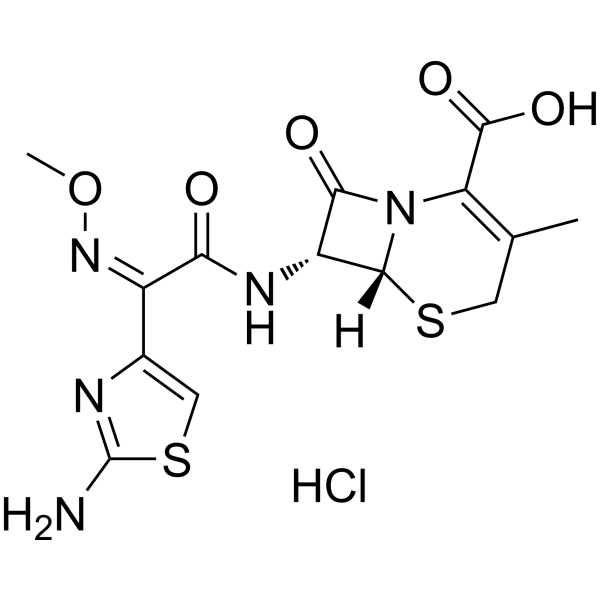
    Cefetamet hydrochloride Ligand
    Cefetamet (Ro 15-8074) hydrochloride is a cephalosporin antibiotic and the active metabolite of Cefetamet pivoxil (HY-B1894A). Cefetamet hydrochloride binds to bacterial penicillin-binding protein (PBP) (IC50 for PBP3 in Escherichia coli W3110 is 2.5 μg/mL). Cefetamet hydrochloride has significant activity against Gram-negative bacteria such as Enterobacteriaceae, Neisseria species, and Haemophilus influenzae, as well as Gram-positive bacteria such as Streptococcus. Cefetamet hydrochloride kills and lyses Treponema pallidum. Cefetamet hydrochloride can be used in the research of respiratory tract, urinary tract, ear, nose and throat infections, and syphilis.
    Cefetamet hydrochloride
  • HY-B0200BR
    Cephalexin monohydrate (Standard)
    Cephalexin (monohydrate) (Standard) is the analytical standard of Cephalexin (monohydrate). This product is intended for research and analytical applications. Cephalexin (Cefalexin) monohydrate is a potent, orally active new semisynthetic cephalosporin antibiotic with a broad antibacterial spectrum. Cephalexin (Cefalexin) monohydrate has antibacterial activity against a wide variety of gram-positive and gram-negative bacteria. Cephalexin (Cefalexin) monohydrate targets penicillin-binding proteins (PBPs) to inhibit bacterial cell wall assembly. Cephalexin (Cefalexin) monohydrate is used for the research of pneumonia, strep throat, and bacterial endocarditis, et al.
    Cephalexin monohydrate (Standard)
  • HY-B0396R
    Tebipenem pivoxil (Standard)
    Tebipenem pivoxil (Standard) is the analytical standard of Tebipenem pivoxil. This product is intended for research and analytical applications. Tebipenem pivoxil (L084) is an orally active antibiotic against a variety of pathogenic bacteria. Tebipenem pivoxil binds penicillin-binding protein (PBP), thereby inhibiting cell wall synthesis[1].
    Tebipenem pivoxil (Standard)
  • HY-139744
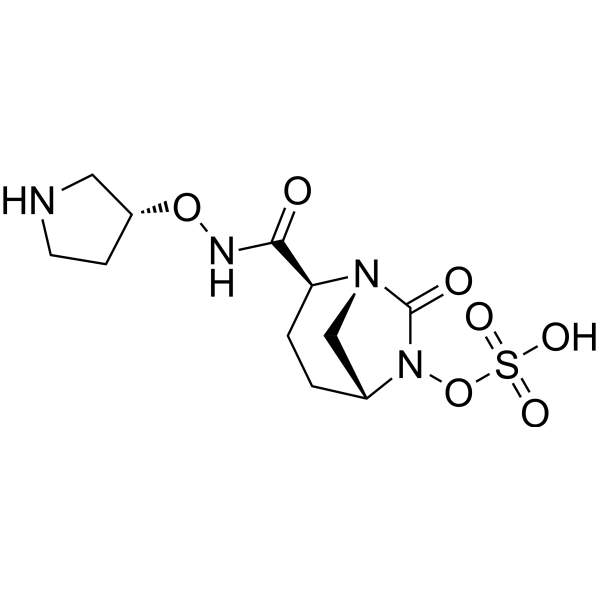
    FPI-1465
    FPI-1465 acts a dual inhibitor of serine-β-Lactamases and Penicillin-binding proteins (PBPs).FPI-1465 inhibits PBP2 (IC50=1.0 µg/mL). FPI-1465 exhibits activity against β-lactamase CTX-M-15 and OXA-48 with Kds of 0.011 and 5.3 µM, respectively.
    FPI-1465
  • HY-B0198AR
    Cefaclor monohydrate (Standard)
    Cefaclor (monohydrate) (Standard) is the analytical standard of Cefaclor (monohydrate). This product is intended for research and analytical applications. Cefaclor is a well-absorbed orally active cephalosporin antibiotic. Cefaclor can specifically bind to specific for penicillin-binding protein 3 (PBP3). Cefaclor can be used for the research of depression and kinds of infections caused by bacteria, such as respiratory tract infections, bacterial bronchitis, pharyngitis and skin infections.
    Cefaclor monohydrate (Standard)
  • HY-W743473
    Cefetamet-d3 Ligand
    Cefetamet-d3 (Ro 15-8074-d3; Deacetoxycefotaxime-d3) is the deuterium labeled Cefetamet (HY-A0111). Cefetamet (Ro 15-8074) is a cephalosporin antibiotic and the active metabolite of Cefetamet pivoxil (HY-B1894A). Cefetamet binds to bacterial penicillin-binding protein (PBP) (IC50 for PBP3 in Escherichia coli W3110 is 2.5 μg/mL). Cefetamet has significant activity against Gram-negative bacteria such as Enterobacteriaceae, Neisseria species, and Haemophilus influenzae, as well as Gram-positive bacteria such as Streptococcus. Cefetamet kills and lyses Treponema pallidum. Cefetamet can be used in the research of respiratory tract, urinary tract, ear, nose and throat infections, and syphilis.
    Cefetamet-d<sub>3</sub>
  • HY-150063
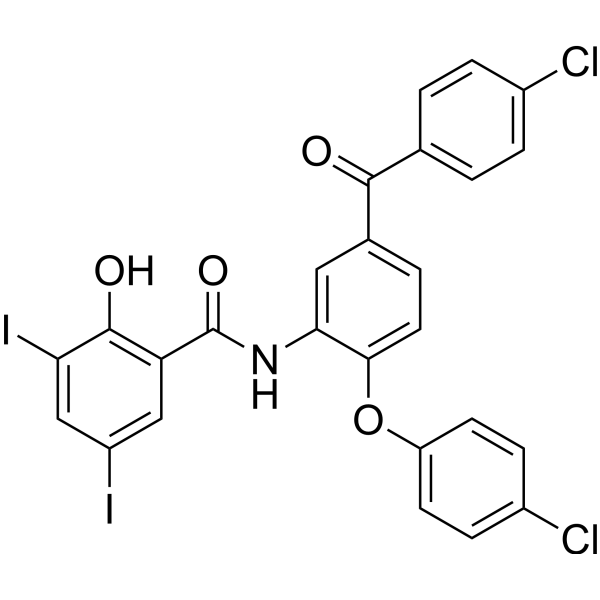
    Antibacterial agent 116
    Antibacterial agent 116 is a benzophenone-containing salicylanilide compound. Antibacterial agent 116 has potent antibacterial activity by inhibiting the peptidoglycan formation. Antibacterial agent 116 is used as a photoaffinity probe to label Acinetobacter baumannii penicillin-binding protein (PBP1b), block the propagation pathway to disrupt the growth of peptidoglycan chain.
    Antibacterial agent 116
  • HY-121544AR
    Methicillin sodium hydrate (Standard)
    Methicillin (sodium hydrate) (Standard) is the analytical standard of Methicillin (sodium hydrate). This product is intended for research and analytical applications. Methicillin sodium hydrate is a narrow-spectrum β-lactam antibiotic, acts by inhibiting penicillin-binding proteins (PBPs). Methicillin sodium hydrate is active against Staphylococcus aureus and Staphylococcus epidermidis that are resistant to other penicillins. Methicillin sodium hydrate can be used for the research of skin infections, osteomyelitis, and endocarditis.
    Methicillin sodium hydrate (Standard)
  • HY-19234
    FK-041 Ligand
    FK-041 is an orally active cephalosporin antibiotic with high affinity for penicillin-binding proteins (PBPs). FK-041 exhibits broad-spectrum antibacterial activity, exerting potent antibacterial effects against Gram-positive bacteria, most Gram-negative bacteria, anaerobes, and so on. FK-041 also shows good efficacy against some drug-resistant strains such as penicillin-resistant Streptococcus pneumoniae. FK-041 is an antibacterial agent and can be used in the research of infectious diseases.
    FK-041
  • HY-117736
    Ro 09-1428 Inhibitor
    Ro 09-1428 is a broad-spectrum parenteral cephalosporin. Ro 09-1428 has potent antibacterial activities against Pseudomonas aeruginosa and Acinetobacter caloaceticus, with MIC90s of 0.39 and 6.25 μg/mL, respectively, better than Ceftazidime (HY-B0593). Additionally, Ro 09-1428 shows high activity against Escherichia coli, Kkbsielia pneumoniae, Proteus mirabilis, P. aeruginosa, staphylococci, and more. Ro 09-1428 preferentially attacks PBP 3 for target in E. coli and P. aeruginosa, which is promising for research of septicemias and serious P. aeruginosa infections.
    Ro 09-1428
  • HY-114780
    Lactivicin
    Lactivicin is a non-beta-lactam antibiotic showing beta-lactam action through binding to penicillin-binding protein (PBP). Lactivicin is moderately active against a wide range of Gram-negative bacteria and highly active against Gram-positive bacteria.
    Lactivicin
  • HY-W740053
    Meropenem sodium
    Meropenem sodium is a carbapenem antibiotic with broad-spectrum antibacterial activity. Meropenem sodium has activity against susceptible and resistant N. gonorrhoeae (MIC value of 0.02-0.06 mg/mL), H. influenzae (MIC value of 0.03-0.12 mg/mL), and H. ducreyi (MIC value of 0.015-0.12 mg/mL).
    Meropenem sodium
  • HY-181715
    PBP1b-IN-1 Inhibitor
    PBP1b-IN-1 is a penicillin-binding protein inhibitor, with an IC50 of 0.042 μM against PBP1b of Streptococcus pneumoniae and an IC50 of 7.6 μM against PBP3 of Escherichia coli. PBP1b-IN-1 exerts antibacterial activity by targeting penicillin-binding proteins to inhibit bacterial peptidoglycan cross-linking. PBP1b-IN-1 can be used in studies related to bacterial infections.
    PBP1b-IN-1
  • HY-106095
    DQ 2556 Inhibitor
    DQ 2556 is a semi-synthetic cephalosporin antibiotic. DQ-2556 exhibits significant activity against both Gram-positive and Gram-negative bacteria, particularly Gram-positive bacteria and Enterobacteriaceae infections. DQ 2556 exerts its bactericidal effect by interfering with cell division. DQ-2556 has a strong affinity for the penicillin-binding proteins (PBPs) of Escherichia coli: PBP1A/1B (IC₅₀ = 0.57-0.73 μg/mL) and PBP3 (IC₅₀ = 0.088 μg/mL). DQ-2556 demonstrates significant in vivo protective effects. DQ-2556 can be used in the development of injectable cephalosporins.
    DQ 2556
  • HY-A0111A
    Cefetamet sodium Ligand
    Cefetamet (Ro 15-8074) sodium is a cephalosporin antibiotic and the active metabolite of Cefetamet pivoxil (HY-B1894A). Cefetamet sodium binds to bacterial penicillin-binding protein (PBP) (IC50 for PBP3 in Escherichia coli W3110 is 2.5 μg/mL). Cefetamet sodium has significant activity against Gram-negative bacteria such as Enterobacteriaceae, Neisseria species, and Haemophilus influenzae, as well as Gram-positive bacteria such as Streptococcus. Cefetamet sodium kills and lyses Treponema pallidum. Cefetamet sodium can be used in the research of respiratory tract, urinary tract, ear, nose and throat infections, and syphilis.
    Cefetamet sodium