



Penicillin-binding protein (PBP) Ligand
-
Cefetamet
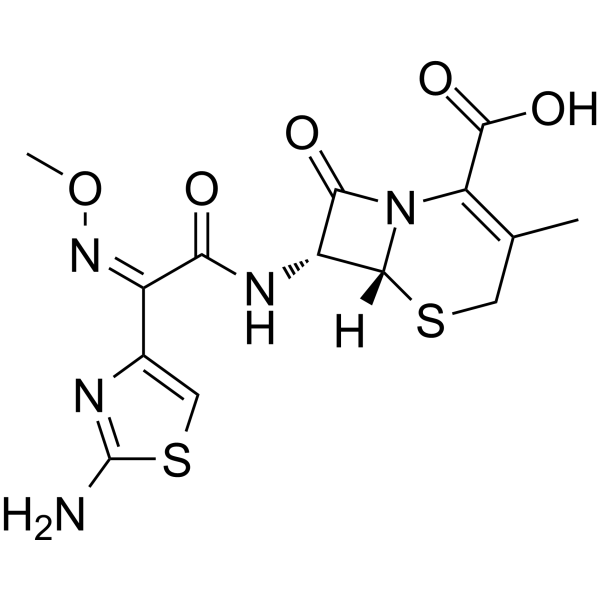 0 ImagesSynonyms: Ro 15-8074; Deacetoxycefotaxime
Cefetamet (Ro 15-8074) is a cephalosporin antibiotic and the active metabolite of Cefetamet pivoxil (HY-B1894A). Cefetamet binds to bacterial penicillin-binding protein (PBP) (IC50 for PBP3 in Escherichia coli W3110 is 2.5 μg/mL). Cefetamet has significant activity against Gram-negative bacteria such as Enterobacteriaceae, Neisseria species, and Haemophilus influenzae, as well as Gram-positive bacteria such as Streptococcus. Cefetamet kills and lyses Treponema pallidum. Cefetamet can be used in the research of respiratory tract, urinary tract, ear, nose and throat infections, and syphilis.
-
Cefetamet hydrochloride
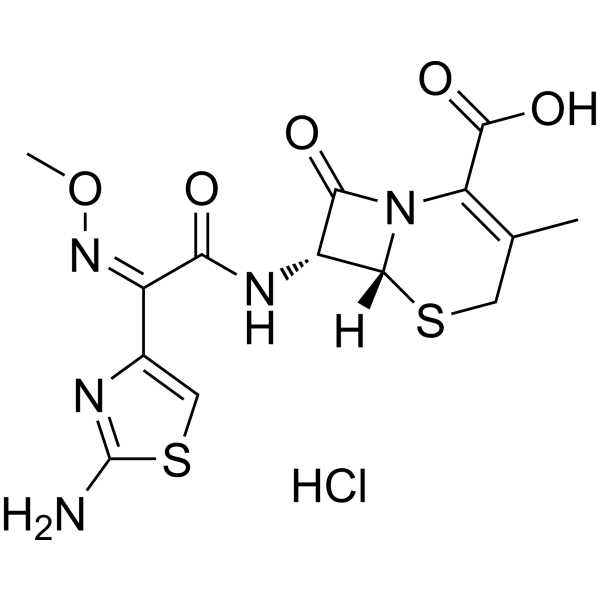 0 ImagesCat. No.: HY-A0111BCAS No.: 724438-16-8Synonyms: Ro 15-8074 hydrochloride; Deacetoxycefotaxime hydrochloride
Cefetamet (Ro 15-8074) hydrochloride is a cephalosporin antibiotic and the active metabolite of Cefetamet pivoxil (HY-B1894A). Cefetamet hydrochloride binds to bacterial penicillin-binding protein (PBP) (IC50 for PBP3 in Escherichia coli W3110 is 2.5 μg/mL). Cefetamet hydrochloride has significant activity against Gram-negative bacteria such as Enterobacteriaceae, Neisseria species, and Haemophilus influenzae, as well as Gram-positive bacteria such as Streptococcus. Cefetamet hydrochloride kills and lyses Treponema pallidum. Cefetamet hydrochloride can be used in the research of respiratory tract, urinary tract, ear, nose and throat infections, and syphilis.
-
Cefetamet-d3
 0 ImagesCat. No.: HY-W743473Synonyms: Ro 15-8074-d3; Deacetoxycefotaxime-d3
Cefetamet-d3 (Ro 15-8074-d3; Deacetoxycefotaxime-d3) is the deuterium labeled Cefetamet (HY-A0111). Cefetamet (Ro 15-8074) is a cephalosporin antibiotic and the active metabolite of Cefetamet pivoxil (HY-B1894A). Cefetamet binds to bacterial penicillin-binding protein (PBP) (IC50 for PBP3 in Escherichia coli W3110 is 2.5 μg/mL). Cefetamet has significant activity against Gram-negative bacteria such as Enterobacteriaceae, Neisseria species, and Haemophilus influenzae, as well as Gram-positive bacteria such as Streptococcus. Cefetamet kills and lyses Treponema pallidum. Cefetamet can be used in the research of respiratory tract, urinary tract, ear, nose and throat infections, and syphilis.
-
Antibacterial agent 343
 0 ImagesCat. No.: HY-183291
Antibacterial agent 343 (Compound 47) is an Antibacterial agent. Antibacterial agent 343 binds to the allosteric site of PBP2a to open its active site. Antibacterial agent 343 disrupts bacterial cell membranes, leading to protein leakage. Antibacterial agent 343 interacts with DNA and inhibits replication and transcription. Antibacterial agent 343 induces ROS accumulation. Antibacterial agent 343 exhibits antibacterial activity against MRSA, Staphylococcus aureus, and Enterococcus faecalis. Antibacterial agent 343 can be used for the research of methicillin-resistant Staphylococcus aureus infections.
-
FK-041
 0 ImagesCat. No.: HY-19234CAS No.: 163009-62-9
FK-041 is an orally active cephalosporin antibiotic with high affinity for penicillin-binding proteins (PBPs). FK-041 exhibits broad-spectrum antibacterial activity, exerting potent antibacterial effects against Gram-positive bacteria, most Gram-negative bacteria, anaerobes, and so on. FK-041 also shows good efficacy against some drug-resistant strains such as penicillin-resistant Streptococcus pneumoniae. FK-041 is an antibacterial agent and can be used in the research of infectious diseases.
-
Cefetamet sodium
 0 ImagesCat. No.: HY-A0111ACAS No.: 65243-25-6Synonyms: Ro15-8074/001; Deacetoxycefotaxime sodium
Cefetamet (Ro 15-8074) sodium is a cephalosporin antibiotic and the active metabolite of Cefetamet pivoxil (HY-B1894A). Cefetamet sodium binds to bacterial penicillin-binding protein (PBP) (IC50 for PBP3 in Escherichia coli W3110 is 2.5 μg/mL). Cefetamet sodium has significant activity against Gram-negative bacteria such as Enterobacteriaceae, Neisseria species, and Haemophilus influenzae, as well as Gram-positive bacteria such as Streptococcus. Cefetamet sodium kills and lyses Treponema pallidum. Cefetamet sodium can be used in the research of respiratory tract, urinary tract, ear, nose and throat infections, and syphilis.
-
(E)-Cefodizime
 0 ImagesCat. No.: HY-Z7592CAS No.: 97180-26-2Synonyms: (E)-THR-221
(E)-Cefodizime ((E)-THR-221) is an antibiotic. (E)-Cefodizime can selectively bind to penicillin-binding proteins (PBPs) and inhibit the synthesis of the bacterial cell wall, thereby exerting antibacterial activity. (E)-Cefodizime is promising for research of various bacterial infectious diseases, such as for preoperative infection prophylaxis.
-
BC-1175
 0 ImagesCat. No.: HY-107053CAS No.: 635292-67-0Synonyms: CB-181963
BC-1175 (CB-181963) is a novel cephalosporin and antibacterial agent. CB-181963 displays strong binding to altered PBP 2a. CB-181963 demonstrates marked efficacy against MRSA, Klebsiella pneumoniae, Streptococcus pneumoniae, and Escherichia coli.
-
Cefetamet (Standard)
 0 ImagesCat. No.: HY-A0111RCAS No.: 65052-63-3Synonyms: Ro 15-8074 (Standard); Deacetoxycefotaxime (Standard)
Cefetamet (Standard) is the analytical standard of Cefetamet (HY-A0111). This product is intended for research and analytical applications. Cefetamet (Ro 15-8074) is a cephalosporin antibiotic and the active metabolite of Cefetamet pivoxil (HY-B1894A). Cefetamet binds to bacterial penicillin-binding protein (PBP) (IC50 for PBP3 in Escherichia coli W3110 is 2.5 μg/mL). Cefetamet has significant activity against Gram-negative bacteria such as Enterobacteriaceae, Neisseria species, and Haemophilus influenzae, as well as Gram-positive bacteria such as Streptococcus. Cefetamet kills and lyses Treponema pallidum. Cefetamet can be used in the research of respiratory tract, urinary tract, ear, nose and throat infections, and syphilis.



