



Penicillin-binding protein (PBP) Inhibitor
- 1
- 2
-
Piperacillin sodium (Standard)
 0 ImagesCat. No.: HY-B1286RCAS No.: 59703-84-3Synonyms: Sodium piperacillin (Standard)
Piperacillin (sodium) (Standard) is the analytical standard of Piperacillin (sodium). This product is intended for research and analytical applications. Piperacillin sodium is a semisynthetic broad-spectrum β-lactam antibiotic which exhibits potent bactericidal activity against Gram-negative bacteria as well as select Gram-positive strains through penicillin-binding proteins. Piperacillin is most commonly used in combination with the β-lactamase inhibitor Tazobactam.
-
Piperacillin sodium
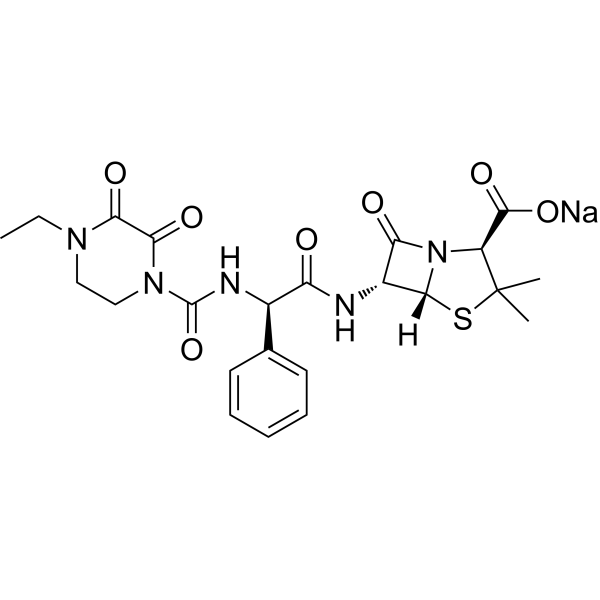 0 ImagesSynonyms: Sodium piperacillin
Piperacillin sodium is a semisynthetic broad-spectrum β-lactam antibiotic which exhibits potent bactericidal activity against Gram-negative bacteria as well as select Gram-positive strains through penicillin-binding proteins. Piperacillin is most commonly used in combination with the β-lactamase inhibitor Tazobactam.
-
Moenomycin complex
 0 Images
Moenomycin complex is a class of antibacterial agents and PBP inhibitors, with Kd values ranging from 94 nM to 1690 nM against various bacterial PBPs. Moenomycin complex inhibits bacterial growth by blocking the transglycosylase activity of class A penicillin-binding proteins (PBPs). Moenomycin complex is used in the research of bacterial infections.
-
Cefditoren
 0 Images
Cefditoren is a broad-spectrum oral active cephalosporin that acts as a penicillin-binding protein (PBP) inhibitor. Cefditoren binds to specific PBPs in Gram-positive and Gram-negative bacteria, thereby inhibiting cell wall synthesis. Cefditoren also reduces serum levels of the inflammatory biomarkers IL-6 and KL-6. Cefditoren can be used in research related to acute exacerbation of chronic bronchitis, pharyngitis-tonsillitis, uncomplicated skin and skin structure infections, respiratory tract infections, acute pyelonephritis, and enterococcal endocarditis.
-
Cefozopran hydrochloride
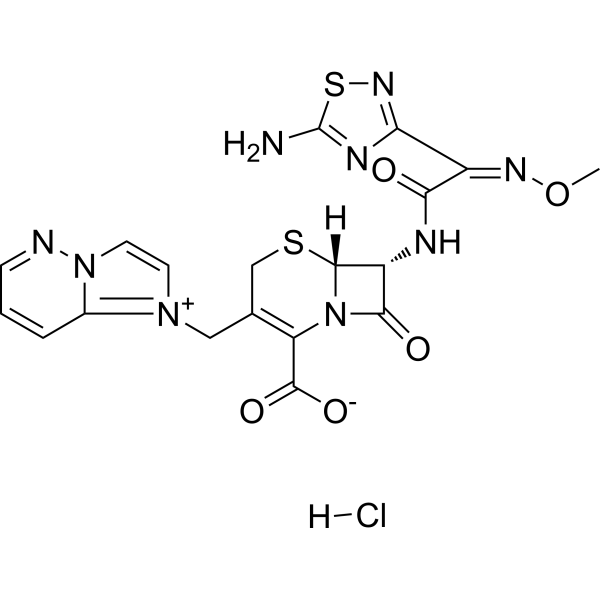 0 ImagesCat. No.: HY-B0771ACAS No.: 113981-44-5Synonyms: SCE-2787 hydrochloride
Cefozopran (SCE-2787) hydrochloride is a potent antibiotic with broad-spectrum antibacterial activity. Cefozopran hydrochloride binds PBPs, induces cell wall destruction, cell elongation, filamentation, irregular septa formation, and bactericidal, bacteriolytic activity. Cefozopran hydrochloride reduces bacterial counts and eradicates bacteria in mouse respiratory, urinary, and thigh muscle infections. Cefozopran hydrochloride can be used for the research of bacterial infections.
-
Norcyclizine
 0 ImagesCat. No.: HY-W013376CAS No.: 841-77-0Synonyms: 1-(Diphenylmethyl)piperazine; 1-Benzhydrylpiperazine
Norcyclizine is a piperazine compound that can be used for the synthesis of antimicrobial agents. 1-Benzhydrylpiperazine derivatives have been found to enhance the antibacterial activity of β-lactam antibiotics (Oxacillin, HY-B0925A) against Methicillin (HY-121544)-resistant Staphylococcus aureus (MRSA). This enhancement is likely achieved by inhibiting the allosteric site of PBP2a. Additionally, 1-Benzhydrylpiperazine can also serve as a pharmacological scaffold for the synthesis of anticancer agents.
-
Cefozopran
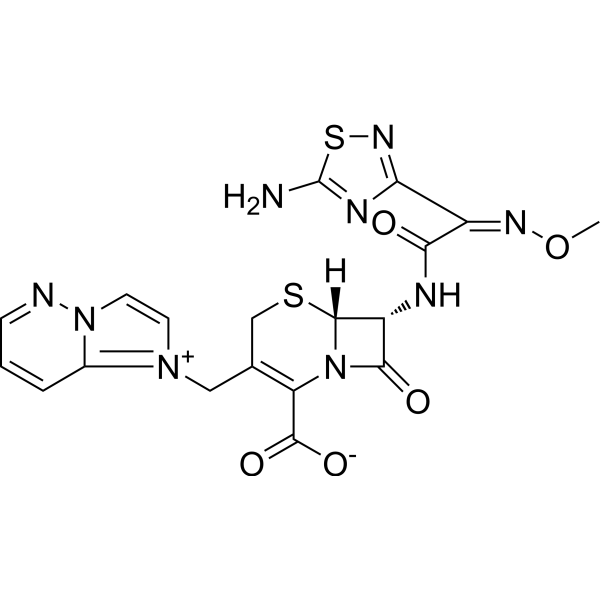 0 ImagesCat. No.: HY-B0771CAS No.: 113359-04-9Synonyms: SCE-2787
Cefozopran (SCE-2787) is a potent antibiotic with broad-spectrum antibacterial activity. Cefozopran binds PBPs, induces cell wall destruction, cell elongation, filamentation, irregular septa formation, and bactericidal, bacteriolytic activity. Cefozopran reduces bacterial counts and eradicates bacteria in mouse respiratory, urinary, and thigh muscle infections. Cefozopran can be used for the research of bacterial infections.
-
Anti-MRSA agent 31
 0 ImagesCat. No.: HY-174459
Anti-MRSA agent 31 (Compound 6) is an anti-methicillin-resistant Staphylococcus aureus (MRSA) agent with a MIC of 97 μg/mL and a MBC of 781.25 μg/mL. Anti-MRSA agent 31 has a potent antibacterial activity and a strong Binding Protein 2a (PBP2a) inhibitory activity.
-
Castalagin
 0 ImagesCat. No.: HY-N20707CAS No.: 24312-00-3
Castalagin is an orally active natural product with multiple biological activities including antibacterial activity against bacteria and anti-leishmanial activity against Leishmania aethiopica. Castalagin exhibits inhibitory activity against PARP1 and DNA topoisomerase II, with an IC50 of 0.86 μM for bovine PARP1. Castalagin reduces poly (ADP-ribosyl) ation modification in cells. Castalagin binds to the cell envelope of Ruminococcus bromii, increases the ratio of CD8+/FOXP3+CD4+ T cells in the tumor microenvironment, and acts as a prebiotic to enhance the activity of anti-PD-1 therapy. Castalagin induces morphological changes in Leishmania aethiopica promastigotes and inhibits their proliferation. Castalagin inhibits PBP2a-mediated peptidoglycan layer stabilization, disrupts bacterial peptidoglycan assembly, and inhibits and disintegrates bacterial biofilms. Castalagin can be used in research related to diseases such as cancer, leishmaniasis, and bacterial infections.
-
Diphenicillin
 0 ImagesSynonyms: Ancillin free acid; 2-Biphenylyl penicillin free acid; SKF-12141 free acid
Diphenicillin (Ancillin (free acid); 2-Biphenylyl penicillin (free acid); SKF-12141 (free acid)) is a Penicillinase (HY-E70012)- resistant penicillin with antibacterial activity. Diphenicillin shows good antibacterial effects against Gram-positive cocci. Diphenicillin is promising for research of infectious diseases caused by Gram-positive cocci such as staphylococci, pneumococci, and group A streptococci.
-
Ro 09-1428
 0 ImagesCat. No.: HY-117736CAS No.: 134452-47-4
Ro 09-1428 is a broad-spectrum parenteral cephalosporin. Ro 09-1428 has potent antibacterial activities against Pseudomonas aeruginosa and Acinetobacter caloaceticus, with MIC90s of 0.39 and 6.25 μg/mL, respectively, better than Ceftazidime (HY-B0593). Additionally, Ro 09-1428 shows high activity against Escherichia coli, Kkbsielia pneumoniae, Proteus mirabilis, P. aeruginosa, staphylococci, and more. Ro 09-1428 preferentially attacks PBP 3 for target in E. coli and P. aeruginosa, which is promising for research of septicemias and serious P. aeruginosa infections.
-
GT-055
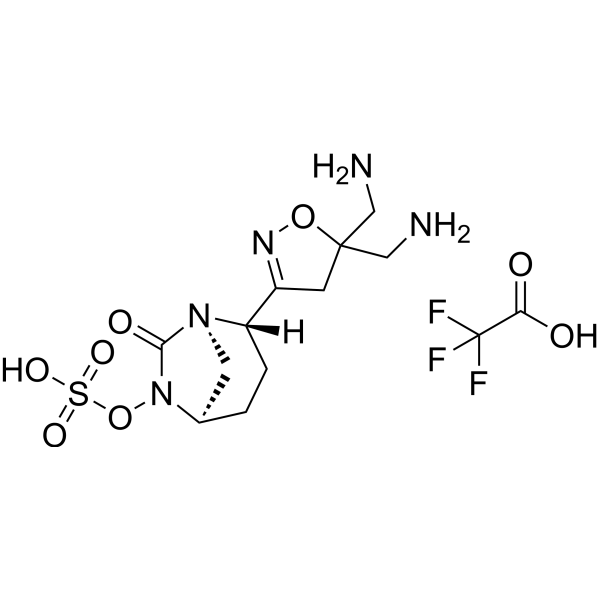 0 ImagesCat. No.: HY-139699CAS No.: 2842084-52-8Synonyms: LCB18-055
GT-055 (LCB18-055) is a broad-spectrum β-lactamase inhibitor and penicillin-binding protein 2 (PBP2) inhibitor. GT-055 inactivates β-lactamase, protects GT-1 from hydrolysis, and binds tightly to PBP2, thereby inhibiting cell wall biosynthesis. GT-055 can be used for research on bacterial infections.
-
VNRX-14079
 0 ImagesCat. No.: HY-183080CAS No.: 2872654-37-8
VNRX-14079 is an antibacterial agent and PBP2 inhibitor, with an IC50 value of 1.7 μM against wild-type Neisseria gonorrhoeae PBP2. VNRX-14079 forms a covalent bond with Ser310 of PBP2, interacts with multiple residues of PBP2 to stabilize the complex, and induces an inward conformational change of the β3-β4 loop in chimeric PBP2. VNRX-14079 exhibits antibacterial activity against Ceftriaxone (HY-B0712)-resistant Neisseria gonorrhoeae strains. VNRX-14079 can be used in the research of gonorrhea.
-
PBP1b-IN-1
 0 ImagesCat. No.: HY-181715
PBP1b-IN-1 is a penicillin-binding protein inhibitor, with an IC50 of 0.042 μM against PBP1b of Streptococcus pneumoniae and an IC50 of 7.6 μM against PBP3 of Escherichia coli. PBP1b-IN-1 exerts antibacterial activity by targeting penicillin-binding proteins to inhibit bacterial peptidoglycan cross-linking. PBP1b-IN-1 can be used in studies related to bacterial infections.
-
DQ 2556
 0 ImagesCat. No.: HY-106095CAS No.: 102253-70-3
DQ 2556 is a semi-synthetic cephalosporin antibiotic. DQ-2556 exhibits significant activity against both Gram-positive and Gram-negative bacteria, particularly Gram-positive bacteria and Enterobacteriaceae infections. DQ 2556 exerts its bactericidal effect by interfering with cell division. DQ-2556 has a strong affinity for the penicillin-binding proteins (PBPs) of Escherichia coli: PBP1A/1B (IC₅₀ = 0.57-0.73 μg/mL) and PBP3 (IC₅₀ = 0.088 μg/mL). DQ-2556 demonstrates significant in vivo protective effects. DQ-2556 can be used in the development of injectable cephalosporins.
-
Antibacterial agent 351
 0 ImagesCat. No.: HY-184284CAS No.: 2798832-23-0
Antibacterial agent 351 is a broad-spectrum antibacterial agent. Antibacterial agent 351 binds to the allosteric site of PBP2a, induces conformational changes, and reduces the level of PBP2a in MRSA. Antibacterial agent 351 acts as a DNA intercalator to interfere with bacterial DNA function. Antibacterial agent 351 disrupts bacterial redox homeostasis via excessive production of ROS and RNS, depletes intracellular GSH, induces lipid peroxidation, and triggers bacterial cell death. Antibacterial agent 351 enhances the activity of Metronidazole (HY-B0318) against anaerobic bacteria and extends the antibacterial spectrum of Metronidazole to aerobic bacteria. Antibacterial agent 351 can be used in the research of bacterial infections (including MRSA infections).
-
Anti-MRSA agent 35
 0 ImagesCat. No.: HY-178108
Anti-MRSA agent 35 (Compound 6b) is an anti-MRSA agent. Anti-MRSA agent 35 significantly inhibits MRSA biofilm formation, suppresses penicillin-binding protein (PBP2a) expression and induces mecA virulence gene mutation. Anti-MRSA agent 35 has potent bactericidal and fungicidal activities with MIC50s of 7.8-31.25 μg/mL for gram positive bacteria, gram-negative bacteria and Fungi. .
-
Cefozopran dihydrochloride
 0 ImagesCat. No.: HY-W740077CAS No.: 1262200-57-6Synonyms: SCE-2787 dihydrochloride
Cefozopran (SCE-2787) dihydrochloride is a potent antibiotic with broad-spectrum antibacterial activity. Cefozopran dihydrochloride binds PBPs, induces cell wall destruction, cell elongation, filamentation, irregular septa formation, and bactericidal, bacteriolytic activity. Cefozopran dihydrochloride reduces bacterial counts and eradicates bacteria in mouse respiratory, urinary, and thigh muscle infections. Cefozopran dihydrochloride can be used for the research of bacterial infections.
-
AM-112
 0 ImagesCat. No.: HY-165460CAS No.: 414858-51-8
AM-112 is a β-lactamase (β-lactamase) inhibitor and antibacterial agent, with IC50 values ranging from 0.0002 μg/mL to 0.67 μg/mL against class A, C, and D β-lactamase. By inhibiting PBP2, the penicillin-binding protein of E. coli, and protecting Ceftazidime (HY-B0593) from enzymatic hydrolysis, AM-112 significantly enhances the antibacterial efficacy of Ceftazidime against Gram-negative bacteria, enterococci, and staphylococci. AM-112 exhibits favorable pharmacokinetic properties and acid-base stability. AM-112 can be used for the research of bacterial infections.
-
YU253434
 0 ImagesCat. No.: HY-182396CAS No.: 2408801-88-5
YU253434 is a PBP3 inhibitor with an IC50 of 2.5 μM against Pseudomonas aeruginosa PBP3. YU253434 contains a siderophore domain that facilitates its uptake into the periplasmic space of Gram-negative bacilli. YU253434 exhibits antibacterial activity against multidrug-resistant Gram-negative bacilli. YU253434 can be used in studies of multidrug-resistant Gram-negative bacterial infections.
- 1
- 2



