



TREM receptor
Triggering receptors expressed on myeloid cells
The Triggering Receptor Expressed on Myeloid cells (TREM) family consists of several receptors expressed on the surface of myeloid cells, among which TREM-1 and TREM-2 are the most extensively studied. TREM-1 acts as an amplifier of immune responses, significantly enhancing the responses of macrophages and neutrophils to bacteria and fungi, and promoting the release of inflammatory cytokines such as TNF-α and IL-1β, thus playing a crucial role in acute inflammation and infection responses. Modulating TREM-1 signaling can alleviate the severity of sepsis. TREM-2 helps regulate immune responses by promoting the anti-inflammatory and repair functions of macrophages, maintaining tissue stability, particularly in neural tissues, where the function of TREM-2 is closely associated with slowing the progression of neurodegenerative diseases like Alzheimer’s disease.
The Triggering Receptor Expressed on Myeloid cells interacts with its adaptor protein DAP12 to initiate signaling pathways, including those involving the tyrosine kinase Syk, which in turn activates a variety of downstream cellular responses, including the production of inflammatory cytokines, enhancement of cell survival signals, and reorganization of the cytoskeleton. The Triggering Receptor Expressed on Myeloid cells and their adaptor proteins are not only crucial for understanding immune regulation mechanisms but also provide new targets for the study of various diseases, including inflammatory and neurodegenerative diseases[1].
TREM receptor Isoform Specific Products
All Product Categories
-
TREM receptor Inhibitors
(19)
View all products
-
TREM receptor Agonists
(8)
View all products
-
TREM receptor Antagonist
(1)
View all products
-
TREM receptor Activators
(2)
View all products
-
TREM receptor Modulator
(1)
View all products
-
TREM receptor Controls
(2)
View all products
-
TREM receptor Ligand
(1)
View all products
-
TREM receptor Related Products (37)
Related Products (37)

-
TREM receptor Isoform Comparison
- 1
- 2
-
EOS006215
 0 ImagesCat. No.: HY-P991621Purity: 98.47%Synonyms: EOS-215EOS006215 (EOS-215) is a humanized monoclonal antibody targeting TREM-2. EOS006215 competes with TREM2 ligands, prevents TREM2 multimerization, and blocks downstream signaling. EOS006215 inhibits efferocytosis, reprograms transcriptomic profiles of monocyte-derived macrophages, alters metabolism and immune response genes, and increases pro-inflammatory marker secretion. EOS006215 reduces metastasis burden, delays tumor growth, and reprograms the tumor microenvironment to overcome anti-PD-1 resistance. EOS006215 can be used for the research of triple negative breast cancer and colorectal cancer.
-
LR-17
 0 ImagesCat. No.: HY-P11077CAS No.: 1256099-50-9Synonyms: TLT-1 (94-110)LR-17 (TLT-1 (94-110)), a 17-aa peptide, is a TREM-1 inhibitor. LR-17 shows anti-inflammatory effects that can reduce the secretion of pro-inflammatory cytokines induced by Lipopolysaccharides (HY-D1056) (LPS). LR-17 can be used for the study of sepsis.
-
DNL-919 (Human IgG1)
 0 ImagesCat. No.: HY-P991442Synonyms: TAK-920DNL-919 (TAK-920) is a human IgG1 monoclonal antibody (mAb) targeting TREM-2. DNL-919 can be used in Alzheimer's disease research. Recommended isotype control: Human IgG1 kappa, Isotype Control (HY-P99001).
-
Anti-Mouse TREM2 Antibody (178)
 0 ImagesCat. No.: HY-P991754Purity: 98.92%Anti-Mouse TREM2 Antibody (178) is an antibody targeting mouse TREM2, which blocks the binding of ligands to TREM2 and inhibits TREM2-mediated signaling pathways. Anti-Mouse TREM2 Antibody (178) inhibits the tumor growth of MCA/1956 sarcoma in mice. Anti-Mouse TREM2 Antibody (178) enhances IFNγ production by intratumoral CD8+ T cells and TNFα production by intratumoral CD4+ T cells. Anti-Mouse TREM2 Antibody (178) can be used in the research of sarcoma, colorectal cancer and breast tumors. The recommended isotype control is Rat IgG2a kappa, Isotype Control (HY-P990679).
-
Bortezomib-d8
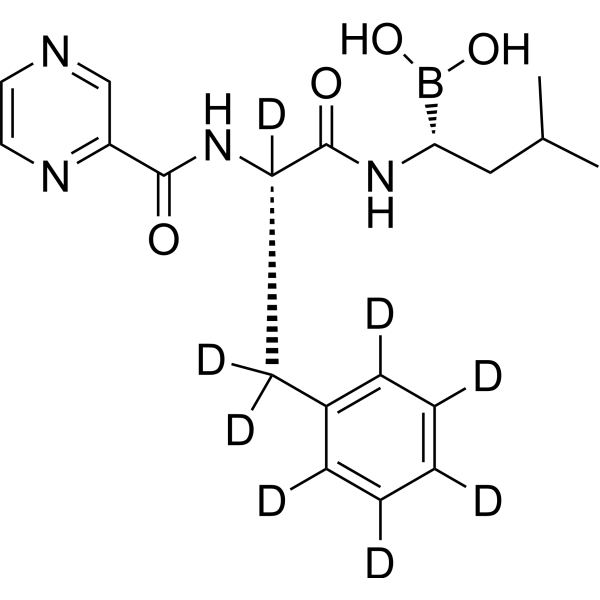 0 ImagesCat. No.: HY-10227SSynonyms: PS-341-d8; LDP-341-d8; NSC 681239-d8Bortezomib-d8 is the deuterium labeled Bortezomib. Bortezomib (PS-341) is a reversible and selective proteasome inhibitor, and potently inhibits 20S proteasome (Ki=0.6 nM) by targeting a threonine residue. Bortezomib disrupts the cell cycle, induces apoptosis, and inhibits NF-κB. Bortezomib is the first proteasome inhibitor anticancer agent. Bortezomib can be used for the study of multiple myeloma (MM). Bortezomib effectively inhibits TREM2 expression in tumor-associated macrophages (TAMs).
-
T2M-010
 0 ImagesCat. No.: HY-178324CAS No.: 364611-21-2T2M-010 is a potent, brain-penetrant TREM2 agonist (Kd = 0.83 μM). T2M-010 activates receptor-proximal signaling, inducing SYK phosphorylation in TREM2-expressing cells, and promotes microglial phagocytosis. T2M-010 can be used for the study of protective microglial responses relevant to Alzheimer’s disease (AD).
-
Anti-TREM2 Antibody (AL2p-58)
 0 ImagesCat. No.: HY-P991174
-
Sutacimig
 0 ImagesSynonyms: HMB-001Sutacimig (HMB-001) is a humanized antibody of the (H-γ4_L-κ)_(H-γ4_L-κ) format that targets FⅦa/TREML1. One arm of Sutacimig binds to endogenous FVIIa, thereby prolonging the half-life of FVIIa and increasing its accumulation in the bloodstream, while the other arm binds to TLT-1, which is exclusively expressed on the surface of activated platelets. This localizes endogenous FVIIa to activated platelets, further enhancing the activity of FVIIa. Sutacimig enhances Thrombin generation, fibrin formation, and the formation of stable fibrin-platelet networks at sites of vascular injury. Sutacimig can be used in studies related to Glanzmann thrombasthenia.
-
LP17 (human)
 0 ImagesCat. No.: HY-P10938CAS No.: 887973-05-9LP17 (human) is a TREM1 antagonist peptide with anti-inflammatory and anti-cancer effects.
-
Anti-Mouse TREM2 Antibody (4D9)
 0 ImagesCat. No.: HY-P992513Anti-Mouse TREM2 Antibody (4D9) is a monoclonal antibody targeting TREM2. Anti-Mouse TREM2 Antibody (4D9) enhances microglial signaling, induces reversible morphological changes in microglia, converts microglia into a metabolically responsive state, and increases the state diversity of microglia. Anti-Mouse TREM2 Antibody (4D9) can be used in studies related to Alzheimer's disease.
-
AL044
 0 ImagesCat. No.: HY-P991905AL044 is an antibody targeting MS4A family proteins. AL044 can mimic the protective effects of MS4A gene variants, thereby increasing the expression of both sTREM2 and membrane-bound TREM2 in cells. AL044 is applicable for research on Alzheimer's disease.
-
TREM2 modulator-1
 0 ImagesCat. No.: HY-182756CAS No.: 3070235-71-8TREM2 modulator-1 is a TREM2 modulator with an EC50 categorized as A and Emax of ++, and can be found in relevant research contexts. TREM2 modulator-1 modulates Triggering Receptor Expressed on Myeloid Cells 2. TREM2 modulator-1 can be used for the research of neurodegenerative diseases.
-
Bortezomib (GMP)
 0 ImagesCat. No.: HY-10227GSynonyms: PS-341 (GMP); LDP-341 (GMP); NSC 681239 (GMP)Bortezomib (GMP) (PS-341 (GMP)) is Bortezomib (HY-10227) produced by using GMP guidelines. GMP small molecules works appropriately as an auxiliary reagent for cell therapy manufacture. Bortezomib (PS-341) is a reversible and selective proteasome inhibitor, and potently inhibits 20S proteasome (Ki=0.6 nM) by targeting a threonine residue. Bortezomib disrupts the cell cycle, induces apoptosis, and inhibits NF-κB. Bortezomib is the first proteasome inhibitor anticancer agent. Bortezomib can be used for the study of multiple myeloma (MM). Bortezomib effectively inhibits TREM2 expression in tumor-associated macrophages (TAMs).
-
NOTA-COG1410
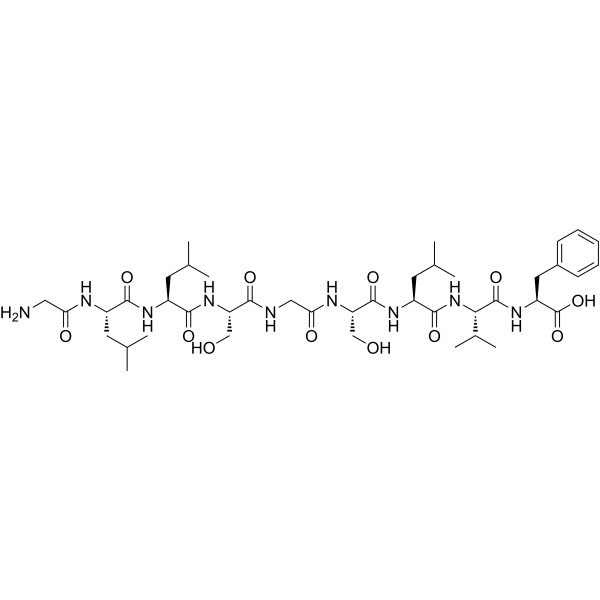
 0 ImagesCat. No.: HY-P10220CAS No.: 2914099-35-5NOTA-COG1410 forms triggering receptor expressed on myeloid cells 2 (TREM2) targeting ligand. NOTA-COG1410 is capable of being labelled with 68Gallium (68Ga) for discovery and diagnosis of digestive system tumors through positron emission tomography/computed tomography (PET/CT). NOTA-COG1410 can be used for the synthesis/research of Radionuclide-Drug Conjugates (RDCs).
-
CEL383
 0 ImagesCat. No.: HY-P992331Purity: 98.93%CEL383 is a human monoclonal antibody targeting TREM1. CEL383 blocks the TREM1 signaling pathway, thereby alleviating inflammation and reducing the levels of inflammatory mediators. CEL383 can be used in research related to inflammatory bowel disease.
-
Hecubine
 0 ImagesCat. No.: HY-N9164CAS No.: 62874-52-6Hecubine is a monoterpene indole alkaloid found in Ervatamia ocinalis. Hecubine activates TREM2 expression, reduces LPS (HY-D1056)-stimulated inammatory cytokines (TNF-α、IL-6、IL-1β) overexpression, as well as suppresses the levels of TLR4-, MyD88-, MAPK/PI3K/AKT- and NF-κB-related proteins. Hecubin also exhibits antioxidative effect, reduces ROS production and activates of the Nrf2/HO-1 pathway. Hecubine rescues LPS-induced behavioral deficits in zebrash larvae. Hecubine can be used for the research of neural inflammation-associated central nervous system diseases.
- 1
- 2



