



TREM-1
TREM-1 (Triggering Receptor Expressed on Myeloid Cells-1) is an immunoglobulin superfamily receptor predominantly expressed on myeloid cells, where it functions as a potent amplifier of innate inflammatory responses through activation of monocytes, macrophages, and neutrophils[1][2]. Mechanistically, TREM-1 cooperates with pattern-recognition receptor pathways and amplifies signals induced by NACHT-LRR (NLR) receptors, thereby promoting inflammatory cytokine production and downstream immune activation[2]. Through this signaling function, TREM-1 acts as a central regulator of inflammation in both infectious and sterile disease settings, including sepsis, inflammatory disorders, cardiovascular disease, neuroinflammatory conditions, and multiple cancers[1][3][4]. In disease models, dysregulated TREM-1 signaling contributes to pathological inflammatory amplification, while modulation of the pathway alters disease progression and immune responses[1][3][4]. Compared with related members of the TREM family, TREM-1 is primarily characterized as a pro-inflammatory receptor that enhances myeloid-cell activation rather than mediating the specialized microglial functions commonly associated with TREM-2, making TREM-1 a distinct target for studies of innate immune amplification[2]. For experimental applications, TREM-1 inhibition using peptide antagonists such as LP17 has been reported to reduce inflammatory pathology and tissue damage in preclinical models, whereas agonistic anti-TREM-1 antibodies have been used to investigate host-defense mechanisms, microbial clearance, and immune regulation in inflammatory disease models[1][5]. These characteristics have established TREM-1 as a widely studied molecular target for mechanistic investigation and therapeutic intervention in inflammation-driven diseases[1][3][4].
References:
- [1]. Trivedi N, et al. Triggering Receptor Expressed on Myeloid Cells-1 (TREM-1) in Inflammation and Disease: Mechanisms, Therapeutic Potential, and Future Directions. Int J Mol Sci. 2025 Oct 25;26(21):10386. doi: 10.3390/ijms262110386. PMID: 41226426; PMCID: PMC12608911. [Content Brief]
- [2]. Colonna M. The biology of TREM receptors. Nat Rev Immunol. 2023 Sep;23(9):580-594. doi: 10.1038/s41577-023-00837-1. Epub 2023 Feb 7. PMID: 36750615; PMCID: PMC9904274. et al. The biology of TREM receptors. Nat Rev Immunol. 2023 Sep;23(9):580-594. [Content Brief]
- [3]. Zhang C, et al. The role of triggering receptor expressed on myeloid cells-1 (TREM-1) in central nervous system diseases. Mol Brain. 2022 Oct 22;15(1):84. [Content Brief]
- [4]. Al Sawy E R, et al. TREM-1 receptor: A key player in inflammatory diseases[J]. Current Molecular Pharmacology, 2026, 19(1): 41-47.
- [5]. Seo DH, et al. Triggering Receptor Expressed on Myeloid Cells-1 Agonist Regulates Intestinal Inflammation via Cd177+ Neutrophils. Front Immunol. 2021 Mar 9;12:650864. [Content Brief]
All Product Categories
-
TREM-1 Related Products (5)
Related Products (5)

-
TREM-1 inhibitory peptide GF9
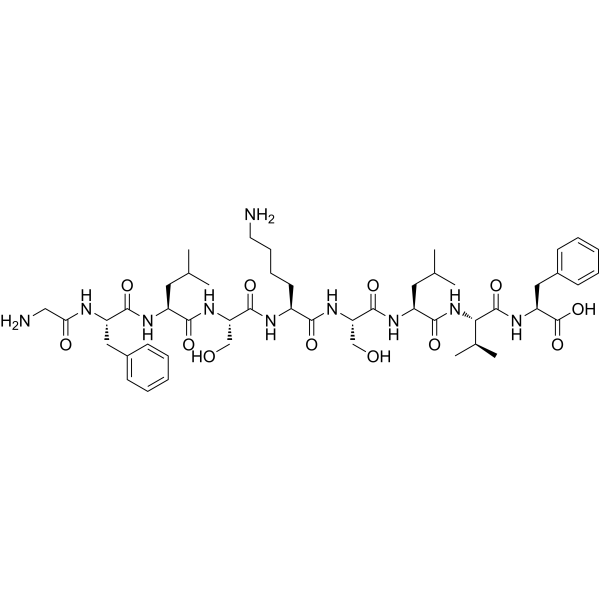 0 ImagesSynonyms: Human TREM-1(213-221)TREM-1 inhibitory peptide GF9 (Human TREM-1 (213-221)) is a TREM-1 inhibitor. TREM-1 inhibitory peptide GF9 blocks the TREM-1 signaling pathway via a ligand-independent mechanism, spontaneously inserts into the cell membrane to dissociate TREM-1 from DAP-12, and functions through the Signaling Chain Homooligomerization (SCHOOL) model. TREM-1 inhibitory peptide GF9 reduces the levels of TNFα, IL-1β, IL-6, and M-CSF. TREM-1 inhibitory peptide GF9 inhibits tumor growth, prolongs the survival of mice with pancreatic cancer models, ameliorates collagen-induced arthritis, and exerts protective effects on bone and cartilage simultaneously. TREM-1 inhibitory peptide GF9 can be used in research related to arthritis, pancreatic cancer, retinopathy, alcoholic liver disease, and liver cancer.
-
TREM2 agonist-3
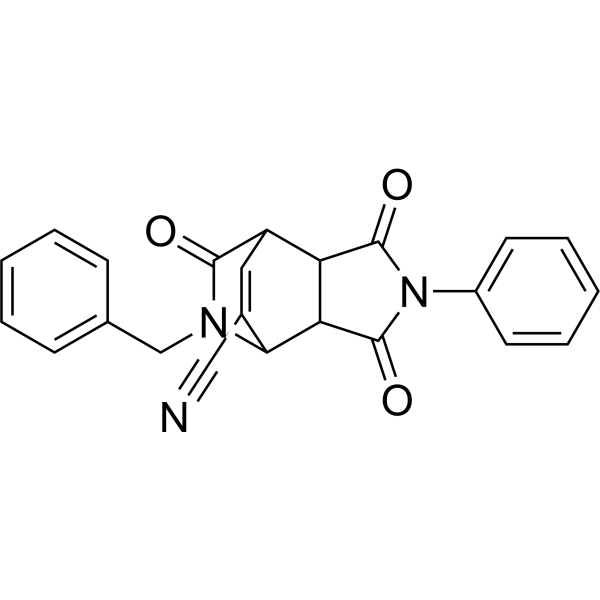
 0 ImagesCat. No.: HY-174369Purity: 99.39%TREM2 agonist-3 (Compound 4i) is a TREM2 agonist with a KD value of 19.0 µM. The KD value of TREM2 agonist-3 for TREM1 is 39.8 µM. TREM2 agonist-3 induces an increase in phosphorylated SYK levels. TREM2 agonist-3 can be used in the research of neurodegenerative diseases and other diseases associated with TREM2 dysfunction.
-
PY159
 0 ImagesCat. No.: HY-P990650Purity: 98.44%PY159 is a humanized antibody targeting TREM1/CD354. PY159 reprograms immunosuppressive intratumoral myeloid cells towards an inflammatory, anti-tumor phenotype, promotes anti-tumor immune responses, upregulates monocyte activation markers, and induces proinflammatory cytokines. PY159 can be used for the research of platinum-resistant ovarian cancer, advanced solid tumors, and advanced refractory solid tumors.
-
CEL383
 0 ImagesCat. No.: HY-P992331Purity: 98.93%CEL383 is a human monoclonal antibody targeting TREM1. CEL383 blocks the TREM1 signaling pathway, thereby alleviating inflammation and reducing the levels of inflammatory mediators. CEL383 can be used in research related to inflammatory bowel disease.



