



TREM-2
TREM2 (Triggering Receptor Expressed on Myeloid Cells 2) is an innate immune receptor predominantly expressed by microglia and functions as a critical regulator of microglial activation, phagocytosis, metabolic fitness, and tissue surveillance in the central nervous system[1][2]. Mechanistically, TREM2 coordinates microglial responses to lipid-associated and neurodegenerative cues and supports the transition of microglia toward disease-associated functional states that maintain tissue homeostasis during stress and injury[1][3]. The TREM2-APOE pathway has emerged as a key regulatory axis controlling disease-associated microglia, linking lipid metabolism, immune signaling, and neurodegenerative responses[1][4]. In neurodegenerative disease models, particularly Alzheimer’s disease, TREM2 regulates microglial responses to amyloid pathology, promotes plaque-associated microglial activation, and supports protective barrier formation around amyloid deposits[5][6]. Genetic studies further demonstrate that loss-of-function variants, including the R47H variant, impair ligand binding, phagocytosis, and downstream transcriptional responses while increasing susceptibility to Alzheimer’s disease[5]. Compared with other members of the TREM receptor family, TREM2 is distinguished by its central role in microglial biology and neurodegeneration-associated immune adaptation rather than primarily amplifying acute inflammatory responses[1]. TREM2 also regulates cellular metabolism, including lipid handling and bioenergetic capacity, which are required for sustained microglial function under pathological conditions[2][7]. For experimental applications, TREM2-targeting agonistic antibodies have been shown to enhance microglial metabolism, proliferation, and protective responses in preclinical neurodegeneration models, supporting their utility for mechanistic studies of microglial immunobiology[1][7].
References:
- [1]. Colonna M. The biology of TREM receptors. Nat Rev Immunol. 2023 Sep;23(9):580-594. doi: 10.1038/s41577-023-00837-1. Epub 2023 Feb 7. PMID: 36750615; PMCID: PMC9904274. et al. The biology of TREM receptors. Nat Rev Immunol. 2023 Sep;23(9):580-594. [Content Brief]
- [2]. Ulland TK, et al. TREM2 - a key player in microglial biology and Alzheimer disease. Nat Rev Neurol. 2018 Nov;14(11):667-675. [Content Brief]
- [3]. Kot A, et al. Exosomal miRNA Profiling in Vitreous Humor in Proliferative Diabetic Retinopathy. Cells. 2022 Dec 28;12(1):123. [Content Brief]
- [4]. Kiros M, et al. Trends in HIV-1 pretreatment drug resistance and HIV-1 variant dynamics among antiretroviral therapy-naive Ethiopians from 2003 to 2018: a pooled sequence analysis. Virol J. 2023 Oct 25;20(1):243. [Content Brief]
- [5]. Rabezanahary H, et al. Live virus neutralizing antibodies against pre and post Omicron strains in food and retail workers in Québec, Canada. Heliyon. 2024 May 21;10(10):e31026. [Content Brief]
- [6]. Qin Q, et al. TREM2, microglia, and Alzheimer's disease. Mech Ageing Dev. 2021 Apr;195:111438. [Content Brief]
- [7]. Feiten AF, et al. TREM2 expression level is critical for microglial state, metabolic capacity and efficacy of TREM2 agonism. Nat Commun. 2026;17(1):2002. [Content Brief]
-
TREM-2 Related Products (19)
Related Products (19)

- 1
-
IA9
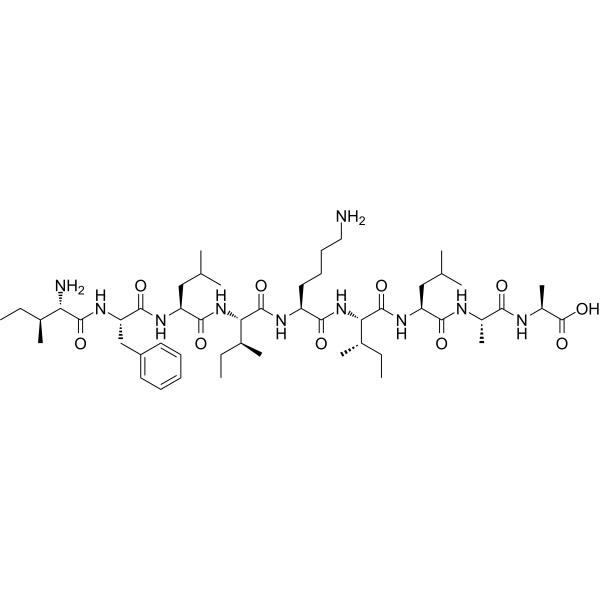 0 ImagesCat. No.: HY-P10136Synonyms: human TREM-2 182-190IA9 (human TREM-2 182-190) is a potent, CNS-penetrant TREM-2 inhibitor. IA9 can diminish the release of proinflammatory cytokines and suppress joint inflammation and damage in a Collagen (HY-P5003)-induced arthritis (CIA) mouse model. IA9 can be used for neuroinflammation PET imaging. IA9 can be used for Rheumatoid arthritis (RA) and neuroinflammation research.
-
AL002
 0 ImagesCat. No.: HY-P991220AL002 is a humanized monoclonal IgG1 antibody and a blood-brain barrier-permeable TREM2 modulator. AL002 binds to TREM2 on the surface of microglia, promotes TREM2 clustering and the formation of the TREM2-DAP12 complex, activates the TREM2 signaling pathway and PI3K cascade, and induces TREM2 internalization and degradation. AL002 is applicable to research related to Alzheimer's disease.
-
TREM2 agonist-5
 0 ImagesTREM2 agonist-5 is the microglial lipid-sensing receptor (TREM2) agonist with a Kd of 71.36 μM. TREM2 agonist-5 is a racemic structural analog of the TREM2 agonist VG-3927 and exhibits superior microglial phagocytosis and activates TREM2 signaling in HEK293-hTREM2/DAP12 cells. TREM2 agonist-5 displays a superior in vitro pharmacokinetic profile to VG-3927. TREM2 agonist-5 can used for the study of Alzheimer’s disease.
-
IA9 TFA
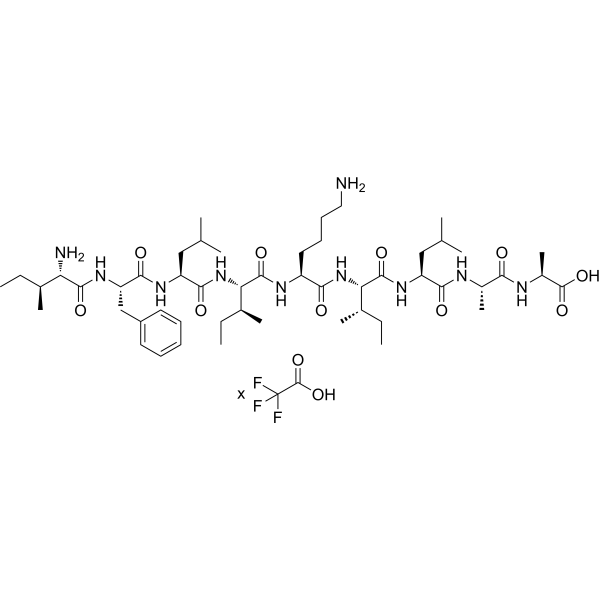 0 ImagesCat. No.: HY-P10136APurity: 98.90%Synonyms: human TREM-2 182-190 TFAIA9 TFA (human TREM-2 182-190 TFA) is a potent, CNS-penetrant TREM-2 inhibitor. IA9 TFA can diminish the release of proinflammatory cytokines and suppress joint inflammation and damage in a Collagen (HY-P5003)-induced arthritis (CIA) mouse model. IA9 TFA can be used for neuroinflammation PET imaging. IA9 TFA can be used for Rheumatoid arthritis (RA) and neuroinflammation research.
-
TREM2 agonist-3
 0 ImagesCat. No.: HY-174369Purity: 99.39%TREM2 agonist-3 (Compound 4i) is a TREM2 agonist with a KD value of 19.0 µM. The KD value of TREM2 agonist-3 for TREM1 is 39.8 µM. TREM2 agonist-3 induces an increase in phosphorylated SYK levels. TREM2 agonist-3 can be used in the research of neurodegenerative diseases and other diseases associated with TREM2 dysfunction.
-
As48
 0 ImagesCat. No.: HY-182702CAS No.: 1214405-38-5As48 is a selective TREM2 agonist with a KD value of 12.48 μM in TRIC binding assay. As48 binds near the TREM2 cleavage region, forms hydrogen bonds with Gly68, reduces conformational flexibility in regions 58-102, restricts protease accessibility to the cleavage site. As48 activates SYK phosphorylation, enhances microglial phagocytosis, and induces downstream calcium signaling in TREM2-expressing cells. As48 inhibits TREM2 ectodomain shedding without affecting ADAM10/17 protease activities. As48 can be used for the research of Alzheimer's disease.
-
DNL-919 (ATV)
 0 ImagesCat. No.: HY-P992516DNL-919 ATV is a brain-penetrant TREM2 agonist. DNL-919 ATV induces responsive microglial cell state changes and modulates microglial biomarkers. DNL-919 ATV can be used for the research of Alzheimer's disease.
-
PY314
 0 ImagesCat. No.: HY-P990651PY314 is a humanized antibody targeting TREM2. PY314 binds TREM2 on tumor-associated macrophages, depletes TREM2-high tumor-associated macrophages, reduces pro-tumorigenic M2 macrophage infiltration, increases CD8+ T cell, NK cell, and M1 macrophage infiltration, creates a proinflammatory tumor microenvironment, and promotes antitumor immune responseS. PY314 can be used for the research of platinum-resistant ovarian cancer, advanced solid tumors, breast cancer, and advanced refractory solid tumors.
-
VHB937
 0 ImagesCat. No.: HY-P991734Purity: 99.65%VHB937 is a potent and selective TREM2 agonist, a human monoclonal antibody, with sub-nanomolar affinity. VHB937 enhances TREM2 surface expression and downstream signaling, such as Syk phosphorylation and calcium mobilization. VHB937 exhibits robust neuroprotective effects in vivo, significantly reducing pathology and pro-inflammatory markers across a broad range of animal models of neuroinflammation and neurodegeneration. VHB937 can be used for neurodegenerative diseases research.
-
TREM2 agonist-4
 0 ImagesCat. No.: HY-174378Purity: 99.81%TREM2 agonist-4 (Compound 4a) is a TREM2 agonist with a Kd value of 45.9 μM. TREM2 agonist-4 can activate downstream signaling pathways of TREM2 and enhance the phagocytic function of microglia. TREM2 agonist-4 can be used in the research of neurodegenerative diseases such as Alzheimer's disease.
-
EOS006215
 0 ImagesCat. No.: HY-P991621Purity: 98.47%Synonyms: EOS-215EOS006215 (EOS-215) is a humanized monoclonal antibody targeting TREM-2. EOS006215 competes with TREM2 ligands, prevents TREM2 multimerization, and blocks downstream signaling. EOS006215 inhibits efferocytosis, reprograms transcriptomic profiles of monocyte-derived macrophages, alters metabolism and immune response genes, and increases pro-inflammatory marker secretion. EOS006215 reduces metastasis burden, delays tumor growth, and reprograms the tumor microenvironment to overcome anti-PD-1 resistance. EOS006215 can be used for the research of triple negative breast cancer and colorectal cancer.
-
DNL-919 (Human IgG1)
 0 ImagesCat. No.: HY-P991442Synonyms: TAK-920DNL-919 (TAK-920) is a human IgG1 monoclonal antibody (mAb) targeting TREM-2. DNL-919 can be used in Alzheimer's disease research. Recommended isotype control: Human IgG1 kappa, Isotype Control (HY-P99001).
-
Anti-Mouse TREM2 Antibody (178)
 0 ImagesCat. No.: HY-P991754Purity: 98.92%Anti-Mouse TREM2 Antibody (178) is an antibody targeting mouse TREM2, which blocks the binding of ligands to TREM2 and inhibits TREM2-mediated signaling pathways. Anti-Mouse TREM2 Antibody (178) inhibits the tumor growth of MCA/1956 sarcoma in mice. Anti-Mouse TREM2 Antibody (178) enhances IFNγ production by intratumoral CD8+ T cells and TNFα production by intratumoral CD4+ T cells. Anti-Mouse TREM2 Antibody (178) can be used in the research of sarcoma, colorectal cancer and breast tumors. The recommended isotype control is Rat IgG2a kappa, Isotype Control (HY-P990679).
-
Anti-TREM2 Antibody (AL2p-58)
 0 ImagesCat. No.: HY-P991174
-
Anti-Mouse TREM2 Antibody (4D9)
 0 ImagesCat. No.: HY-P992513Anti-Mouse TREM2 Antibody (4D9) is a monoclonal antibody targeting TREM2. Anti-Mouse TREM2 Antibody (4D9) enhances microglial signaling, induces reversible morphological changes in microglia, converts microglia into a metabolically responsive state, and increases the state diversity of microglia. Anti-Mouse TREM2 Antibody (4D9) can be used in studies related to Alzheimer's disease.
-
AL044
 0 ImagesCat. No.: HY-P991905AL044 is an antibody targeting MS4A family proteins. AL044 can mimic the protective effects of MS4A gene variants, thereby increasing the expression of both sTREM2 and membrane-bound TREM2 in cells. AL044 is applicable for research on Alzheimer's disease.
-
TREM2 modulator-1
 0 ImagesCat. No.: HY-182756CAS No.: 3070235-71-8TREM2 modulator-1 is a TREM2 modulator with an EC50 categorized as A and Emax of ++, and can be found in relevant research contexts. TREM2 modulator-1 modulates Triggering Receptor Expressed on Myeloid Cells 2. TREM2 modulator-1 can be used for the research of neurodegenerative diseases.
-
NOTA-COG1410
 0 ImagesCat. No.: HY-P10220CAS No.: 2914099-35-5NOTA-COG1410 forms triggering receptor expressed on myeloid cells 2 (TREM2) targeting ligand. NOTA-COG1410 is capable of being labelled with 68Gallium (68Ga) for discovery and diagnosis of digestive system tumors through positron emission tomography/computed tomography (PET/CT). NOTA-COG1410 can be used for the synthesis/research of Radionuclide-Drug Conjugates (RDCs).
-
Hecubine
 0 ImagesCat. No.: HY-N9164CAS No.: 62874-52-6Hecubine is a monoterpene indole alkaloid found in Ervatamia ocinalis. Hecubine activates TREM2 expression, reduces LPS (HY-D1056)-stimulated inammatory cytokines (TNF-α、IL-6、IL-1β) overexpression, as well as suppresses the levels of TLR4-, MyD88-, MAPK/PI3K/AKT- and NF-κB-related proteins. Hecubin also exhibits antioxidative effect, reduces ROS production and activates of the Nrf2/HO-1 pathway. Hecubine rescues LPS-induced behavioral deficits in zebrash larvae. Hecubine can be used for the research of neural inflammation-associated central nervous system diseases.
- 1



