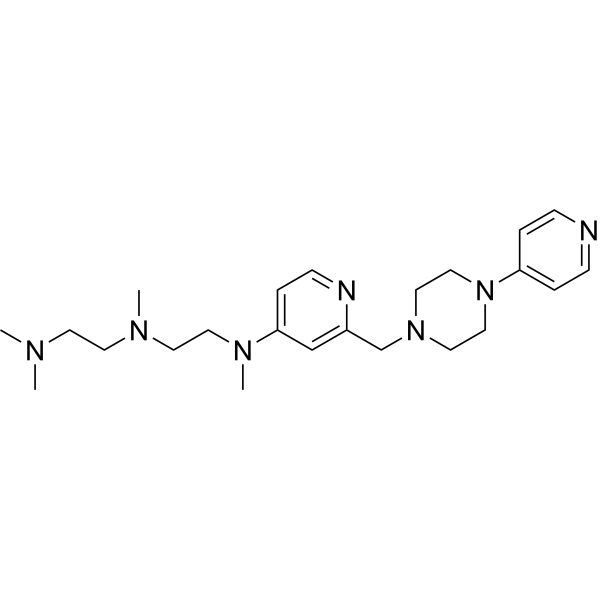
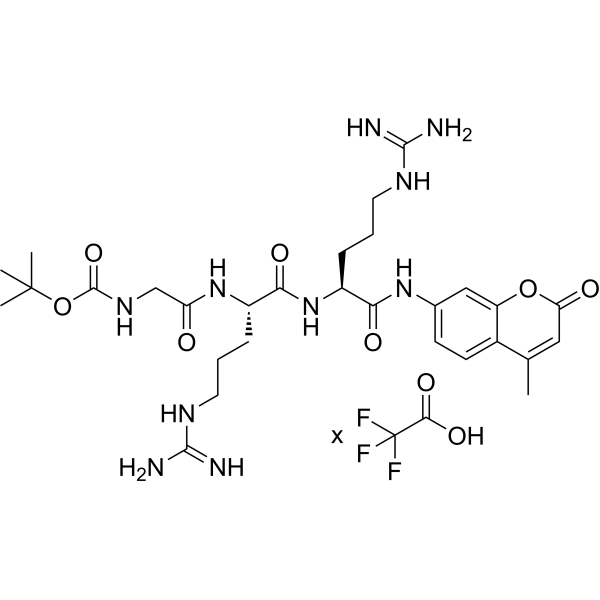
Virus Protease
Viral proteases are enzymes encoded by the genetic material (DNA or RNA) of viral pathogens. Viral proteases catalyze the cleavage of specific peptide bonds in viral polyprotein precursors or in cellular proteins. Viral proteases may use different catalytic mechanisms involving either serine, cysteine or aspartic acid residues to attack the scissile peptide bond. Selective recognition of these sequence patterns by a complementary substrate binding site of the enzyme ensures a high degree of specific recognition and cleavage.
Severe acute respiratory syndrome coronavirus 2 (SARS-CoV-2), is the cause of the respiratory illness coronavirus disease 2019 (COVID-19). Initial spike protein priming by transmembrane protease, serine 2 (TMPRSS2) is essential for entry of SARS-CoV-2. After a SARS-CoV-2 virion attaches to a target cell, the cell's protease TMPRSS2 cuts open the spike protein of the virus, exposing a fusion peptide.
All Product Categories
-
Virus Protease Related Products (404)
Related Products (404)

-
Antibodies (1)
-
PROTAC 3CPro degrader-1
 0 ImagesCat. No.: HY-187716PROTAC 3CPro degrader-1 is a picornavirus 3C protease (3CPro) PROTAC degrader with an DC50 value of 0.16 μM. PROTAC 3CPro degrader-1 directly inhibits the catalytic function of 3CPro, induces degradation via the ubiquitin-proteasome pathway, and binds to CRBN to form a ternary complex. PROTAC 3CPro degrader-1 inhibits viral replication, degrades drug-resistant EV71 3CPro mutants, and exhibits broad-spectrum activity against multiple picornavirus 3CPro variants. PROTAC 3CPro degrader-1 can be used in studies related to picornavirus infections.
-
Palmatine chloride (Standard)
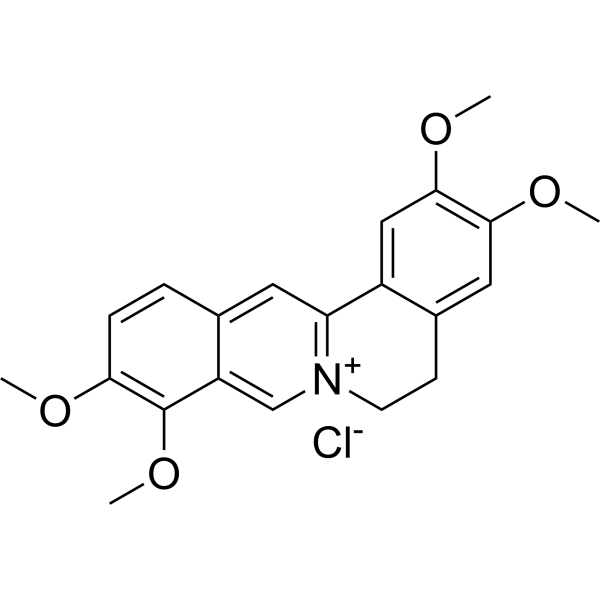 0 ImagesPalmatine (chloride) (Standard) is the analytical standard of Palmatine (chloride). This product is intended for research and analytical applications. Palmatine chloride is an orally active and irreversible indoleamine 2,3-dioxygenase 1 (IDO-1) inhibitor with IC50s of 3 μM and 157μM against HEK 293-hIDO-1 and rhIDO-1, respectively. Palmatine chloride can also inhibit West Nile virus (WNV) NS2B-NS3 protease in an uncompetitive manner with an IC50 of 96 μM. Palmatine chloride shows anti-cancer, anti-oxidation, anti-inflammatory, neuroprotection, antibacterial, anti-viral activities.
-
2-Hydroxy-4-methylbenzenesulphonic acid ammonium
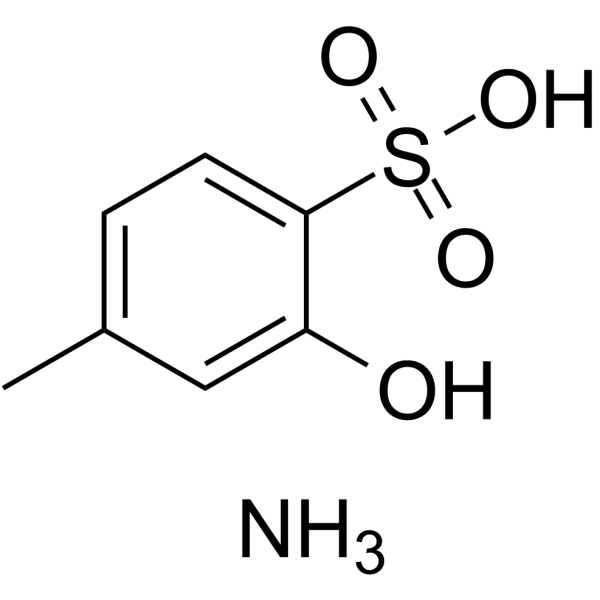 0 Images2-Hydroxy-4-methylbenzenesulphonic acid ammonium is an impurity of Policresulen. Policresulen is a potent NS2B/NS3 protease inhibitor with an IC50 of 0.48 μg/mL. Policresulen effectively inhibits the replication of DENV2 virus in BHK-21 cells with an IC50 of 4.99 μg/mL. Policresulen acted as a competitive inhibitor of the protease, and slightly affected the protease stability.
-
PROTAC SARS-CoV-2 Mpro degrader-4
 0 ImagesCat. No.: HY-174233PROTAC SARS-CoV-2 Mpro degrader-4 is a SARS-CoV-2 MPro PROTAC degrader with antiviral activity, with a DC50 value of 4.7 μM. PROTAC SARS-CoV-2 Mpro degrader-4 induces MPro ubiquitination and proteasomal degradation, and inhibits SARS-CoV-2 replication. PROTAC SARS-CoV-2 Mpro degrader-4 can be used in the research of coronavirus infections.

-
AD06
 0 ImagesCat. No.: HY-184147AD06 is a SARS-CoV-2 main protease (Mpro) inhibitor with an IC50 of 163.3 nM. AD06 undergoes nucleophilic attack by deprotonated Cys145, thereby blocking viral replication. AD06 inhibits the activity of wild-type SARS-CoV-2 and shows no significant cytotoxicity in mammalian cells. AD06 can be used in studies related to SARS-CoV-2 infection.

-
JMX0207
 0 ImagesCat. No.: HY-184048CAS No.: 33580-97-1JMX0207 is an orally active flavivirus NS2B-NS3 protease inhibitor. JMX0207 showed an IC50-SLC of 1.3 μM for blocking NS2B-NS3 protein interaction and an IC50-pro of 8.2 μM for inhibiting protease catalytic activity.. JMX0207 directly binds viral NS3 protease at the NS2B-NS3 interface with a Kd of 1.1 μM, blocks viral polyprotein precursor processing, suppresses viral RNA replication and viral protein production. JMX0207 can be used for the study of Zika virus infection and Dengue virus infection.
-
YL1004
 0 ImagesCat. No.: HY-181661YL1004 is a potent, selective and orally active noncovalent inhibitor of SARS-CoV-2 papain-like protease (PLpro). YL1004 shows an IC50 of 17.5 nM and a Ki of 2.3 nM against PLpro, with an in vitro anti-SARS-CoV-2 EC50 of 0.08 μM-1.37 μM. YL1004 suppresses the proteolytic activity of PLpro and blocks its deubiquitinating and deISGylating effects to restore host innate antiviral immune signaling. YL1004 inhibits the replication of wild-type, Delta, Omicron variants and nirmatrelvir-resistant strains of SARS-CoV-2. YL1004 can be used for the research of COVID-19 (SARS-CoV-2 infection).
-
L-Lysine-15N-1 dihydrochloride
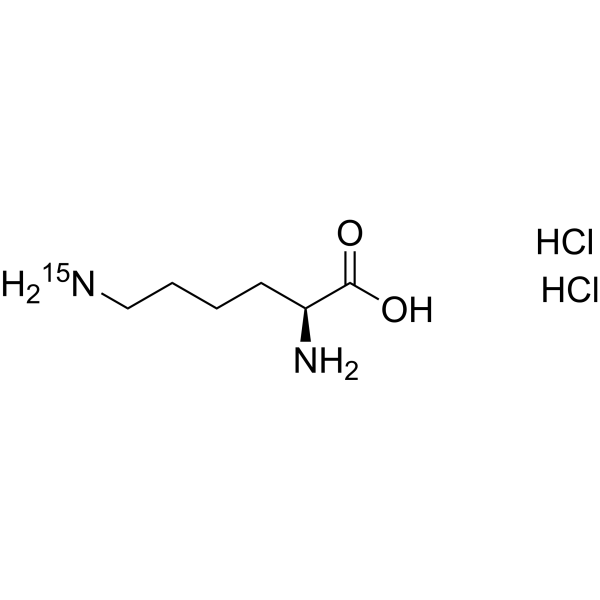 0 ImagesCat. No.: HY-N0469S2Purity: 98.0%L-Lysine-15N-1 (dihydrochloride) is the 15N-labeled L-Lysine. L-lysine is an essential amino acid with important roles in connective tissues and carnitine synthesis, energy production, growth in children, and maintenance of immune functions.

-
PROTAC SARS-CoV-2 Mpro degrader-2
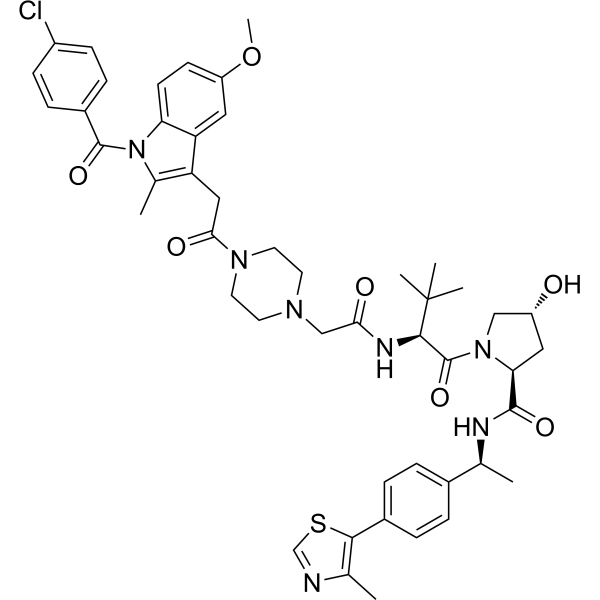 0 ImagesCat. No.: HY-157805CAS No.: 3057294-32-0PROTAC SARS-CoV-2 Mpro degrader-2 is a SARS-CoV-2 Mpro PROTAC degrader with a DC50 of 1.34 μM. PROTAC SARS-CoV-2 Mpro degrader-2 recruits the VHL E3 ligase to mediate ubiquitination and proteasomal degradation of SARS-CoV-2 Mpro, without inhibiting the catalytic activity of Mpro. PROTAC SARS-CoV-2 Mpro degrader-2 exhibits anti-SARS-CoV-2 activity in infected cells, as well as broad-spectrum antiviral activity against coronaviruses including HCoV-OC43 and HCoV-229E. PROTAC SARS-CoV-2 Mpro degrader-2 can be used in studies related to SARS-CoV-2 infection, HCoV-OC43 infection, and HCoV-229E infection.
-
NS2B/NS3-IN-4
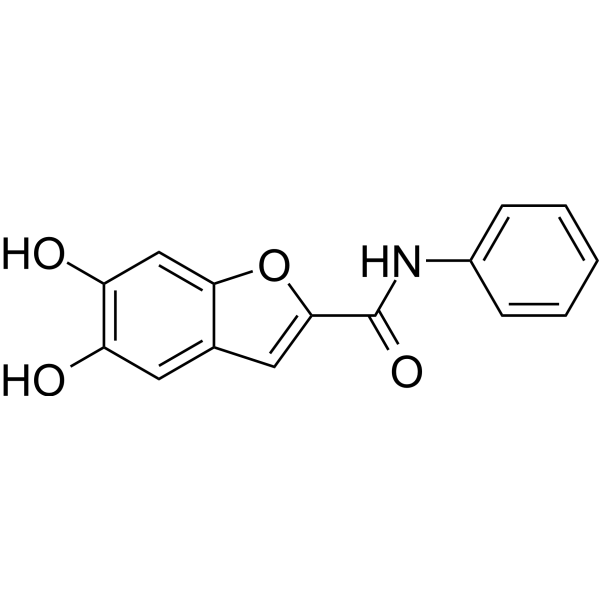 0 ImagesCat. No.: HY-144736CAS No.: 2910757-30-9NS2B/NS3-IN-4 (Compound 34e) is an allosteric DENV2 and ZIKV NS2B/NS3 protease inhibitor with IC50 values of 0.69 µM and 1.04 µM against DENV2 and ZIKV NS2B/NS3 proteases, respectively.
-
NS2B/NS3-IN-6
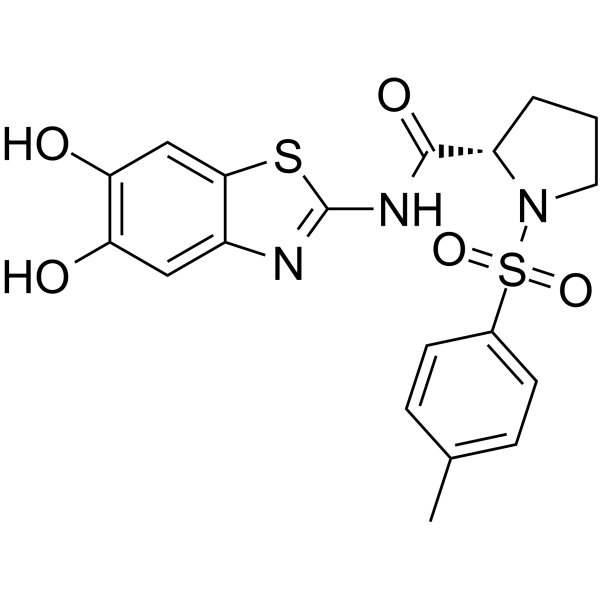 0 ImagesCat. No.: HY-144742CAS No.: 2459657-57-7NS2B/NS3-IN-6 (Compound 1a) is an allosteric DENV and ZIKV NS2B/NS3 protease inhibitor with IC50 values of 2.23 µM and 25.2 µM against ZIKV and DENV proteases, respectively.
-
SARS-CoV-2 Mpro-IN-44
 0 ImagesCat. No.: HY-172960CAS No.: 3020713-53-2SARS-CoV-2 Mpro-IN-44 (Compound 25) is a broad-spectrum coronavirus main protease (Mpro) inhibitor. SARS-CoV-2 Mpro-IN-44 has inhibitory activity against a variety of high-risk coronaviruses (including SARS-CoV-2 and PEDV, etc.) (IC50: < 0.6 μM). SARS-CoV-2 Mpro-IN-44 achieves broad-spectrum inhibition of coronaviruses by enhancing the interaction with the conserved sites of Mpro. SARS-CoV-2 Mpro-IN-44 can be used for anti-coronavirus drug development.
-
Anthraquinone-d8
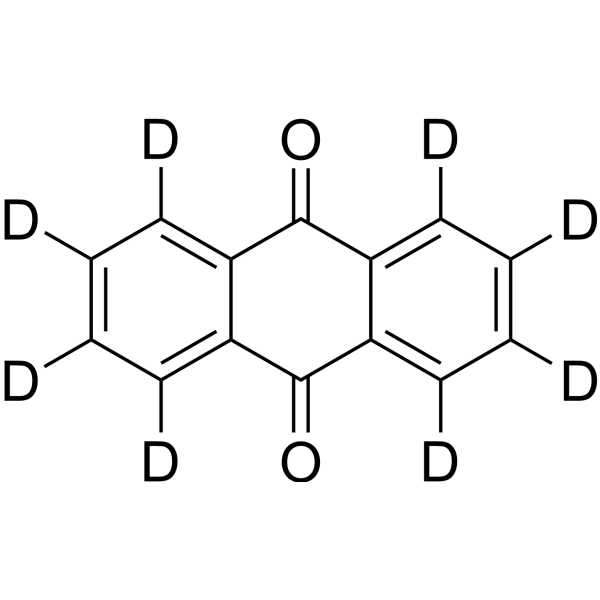 0 ImagesCat. No.: HY-N0354SCAS No.: 10439-39-1Anthraquinone-d8 is the deuterium labeled Anthraquinone[1]. Anthraquinone is used as a precursor for dye formation.
-
Abz-Gly-Leu-Lys-Arg-Gly-Gly-3-(NO2)Tyr
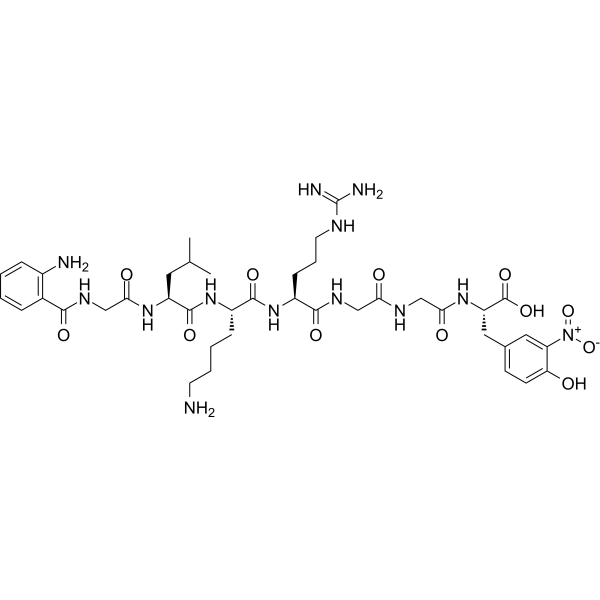 0 ImagesCat. No.: HY-P5312Abz-Nle-Lys-Arg-Arg-Ser-3-(NO2)Tyr is a WNV NS2B-NS3 protease substrate. Abz-Nle-Lys-Arg-Arg-Ser-3-(NO2)Tyr is used for WNV NS2B-NS3 protease substrate peptide selective inhibitor development.
-
Bardoxolone methyl-d3
 0 ImagesCat. No.: HY-13324SSynonyms: RTA 402-d3; NSC 713200-d3; CDDO Methyl ester-d3Bardoxolone methyl-d3 (RTA 402-d3) is the deuterated-labeled Bardoxolone methyl (HY-13324). Bardoxolone methyl (RTA 402) is an orally active and blood-brain-barrier-penetrant activator of Nrf2 and an inhibitor of SARS-CoV-2 3CL protease. Bardoxolone methyl inhibits SARS-CoV-2 replication in Vero cells with an EC50 value of 0.29 μM. Bardoxolone methyl increases levels of pNrf2 and HO-1, inhibits inflammatory mediators like pNFκB and MCP-1. Bardoxolone methyl activates the Nrf2 pathway to enhance antioxidant and anti-inflammatory responses, inhibits viral replication, and improves mitochondrial function. Bardoxolone methyl can be used in research on chemotherapy-induced neuropathic pain (CINP), COVID-19, and chronic kidney disease (CKD).