



c-Fos Antibody (YA506)
(Synonyms: G0S7, FOS, Protein c-Fos, Cellular oncogene fos, G0/G1 switch regulatory protein 7, Proto-oncogene c-Fos, Transcription factor AP-1 subunit c-Fos)Based on 2 publication(s) in Google Scholar
c-Fos Antibody (YA506) is a Rabbit-derived and non-conjugated IgG monoclonal antibody, targeting to c-Fos.
-
Host:
Rabbit
-
Isotype:
IgG
-
Application:
WB, IHC-P, ICC/IF
-
Reactivity :
Human, Rat
-
Formulation:
Supplied in 1*TBS (pH7.4), 0.05% BSA and 40% Glycerol. Preservative: 0.05% Sodium Azide.
-
Conjugation:
Non-conjugated


To place orders, for customer services and technical support, please contact: MedChemExpress USA
Tel: 609-228-6898 E-mail: [email protected] [email protected]



Publications Citing Use of MedChemExpress (MCE) c-Fos Antibody (YA506)
More

Applications
| Application |
WB

WB: Western Blot
|
IHC-P
IHC-P: Immunohistochemistry-Paraffin
|
ICC/IF
ICC/IF: Immunocytochemistry/
Immunofluorescence |
|---|---|---|---|
| Dilution Ratio | 1:500 | 1:50-1:200 | 1:100 |


Product Details
c-Fos Antibody (YA506) is a Rabbit-derived and non-conjugated IgG monoclonal antibody, targeting to c-Fos.
-
Host Rabbit

-
Clonality Recombinant,Monoclonal

-
Species ReactivityHuman, Rat
-
Observed Molecular WeightObserved band size: 41/55 kDa
Note: Due to possible protein modifications or aggregation, the molecular weight should be confirmed by actual measurement, and the predicted value is for reference only.

-
Calculated Molecular Weight Predicted band size: 41 kDa

Entrez Gene: 2353 Human ; 14281 Mouse ; 314322 Rat
SwissProt: P01100 Human ; P01101 Mouse ; P12841 Rat
OMIM: 164810 Human
Synthetic peptide corresponding to Human c-Fos.AA range:231-268.
Endogenous
Protein A affinity purified.
Non-conjugated
Unmodified
IgG


Product Properties
-
Appearance
Solution
-
Formulation
Supplied in 1*TBS (pH7.4), 0.05% BSA and 40% Glycerol. Preservative: 0.05% Sodium Azide.
-
Concentration
Batch-dependent, Please check the COA for the concentration of each lot. Check Lot Concentration
-
Storage & Stability
Stored at -20°C for 1 year. Avoid repeated freeze / thaw cycles.
-
Shipping
Shipping with blue ice.


Publications (2)
-
Journal Impact Factor
-
Most Recent
-
Sci Rep
Enhancement of melanoma aggressiveness via p38-MAPK, HIF-1α pathways, and metabolic reprogramming induced by Candida albicans. [Abstract]2025 Nov 17;15(1):40227. PMID: 41249785


Verification Images
-
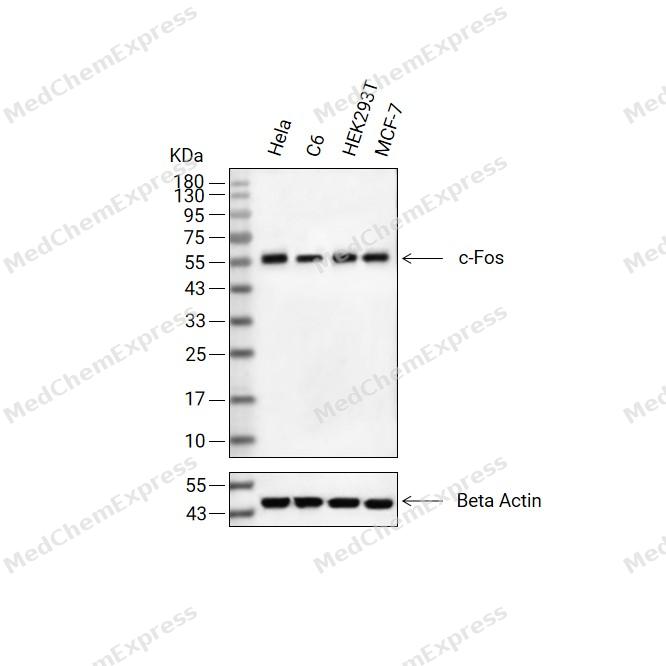 Western blot analysis of extracts from Hela(lane 2(20μg) , C6 (lane 3(20μg) ,HEK293T(lane 4(20μg)and MCF-7( lane 5(20μg) using c-Fos Antibody (HY-P80081). Proteins were transferred to a PVDF membrane and blocked with 5% non-fat milk in TBST for 2 hour at room temperature. The primary antibody ( 1/500) and Loading control antibody (Beta Actin, HY-P80993,1/10000) was used in 5% non-fat milk in TBST at 4°C overnight. Goat Anti-Rabbit IgG-HRP Secondary Antibody (HY-P8001,1/10,000) was used for 1 hour at room temperature.
 -
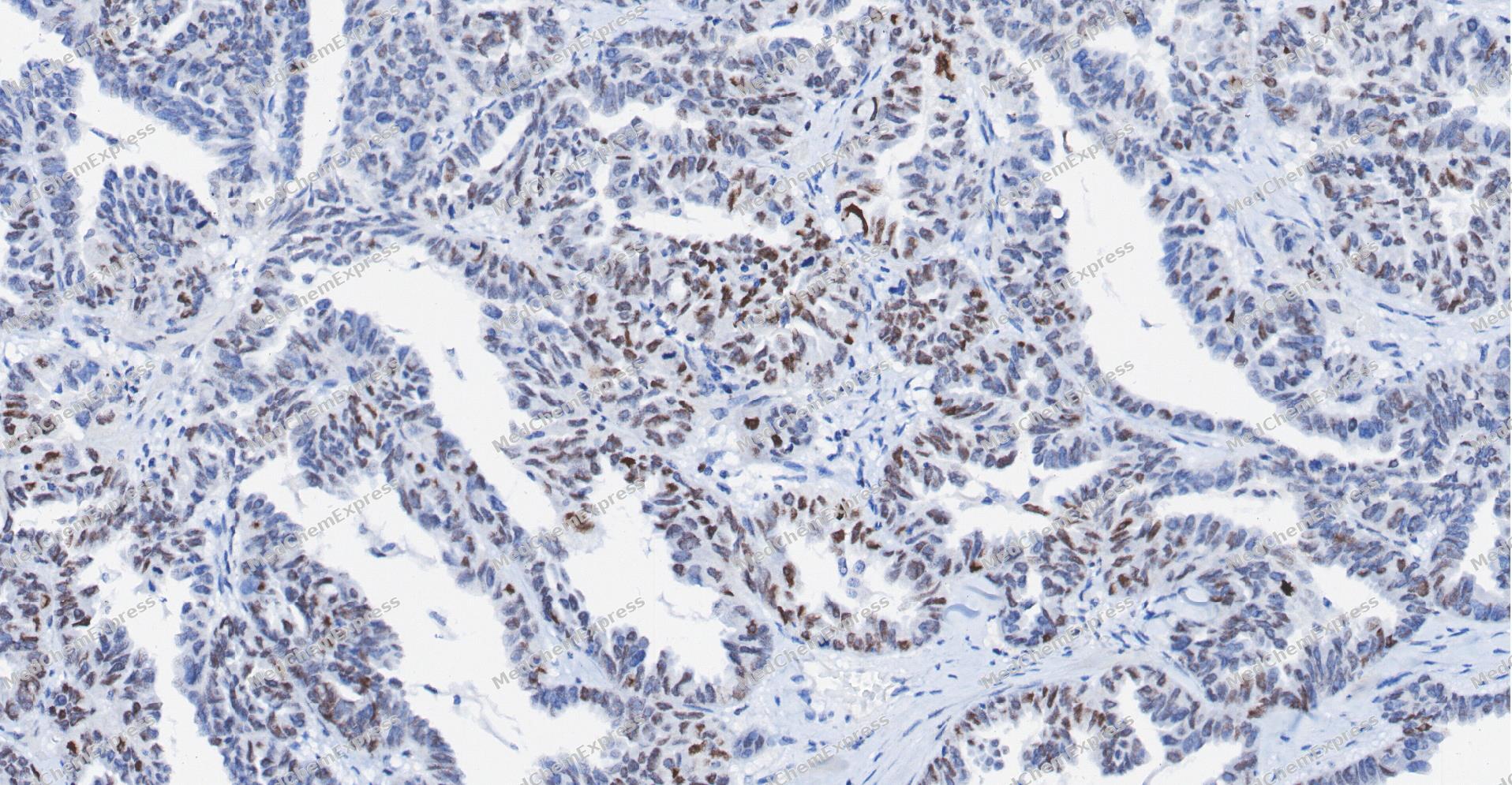 Immunohistochemical analysis of paraffin-embedded human ovarian carcinoma tissue using c-Fos antibody was performed. The section was pretreated using high-temperature and high-pressure mediated EDTA antigen retrieval buffer (pH 9.0), for 5 minutes. The tissues were incubated with primary antibody (HY-P80081, 1:100 dilution) at room temperature for 60 minutes. Detection was performed using an HRP conjugated compact polymer system. DAB was used as the chromogen. The tissues were counterstained with hematoxylin and mounted with neutral balsam mounting medium.
 -
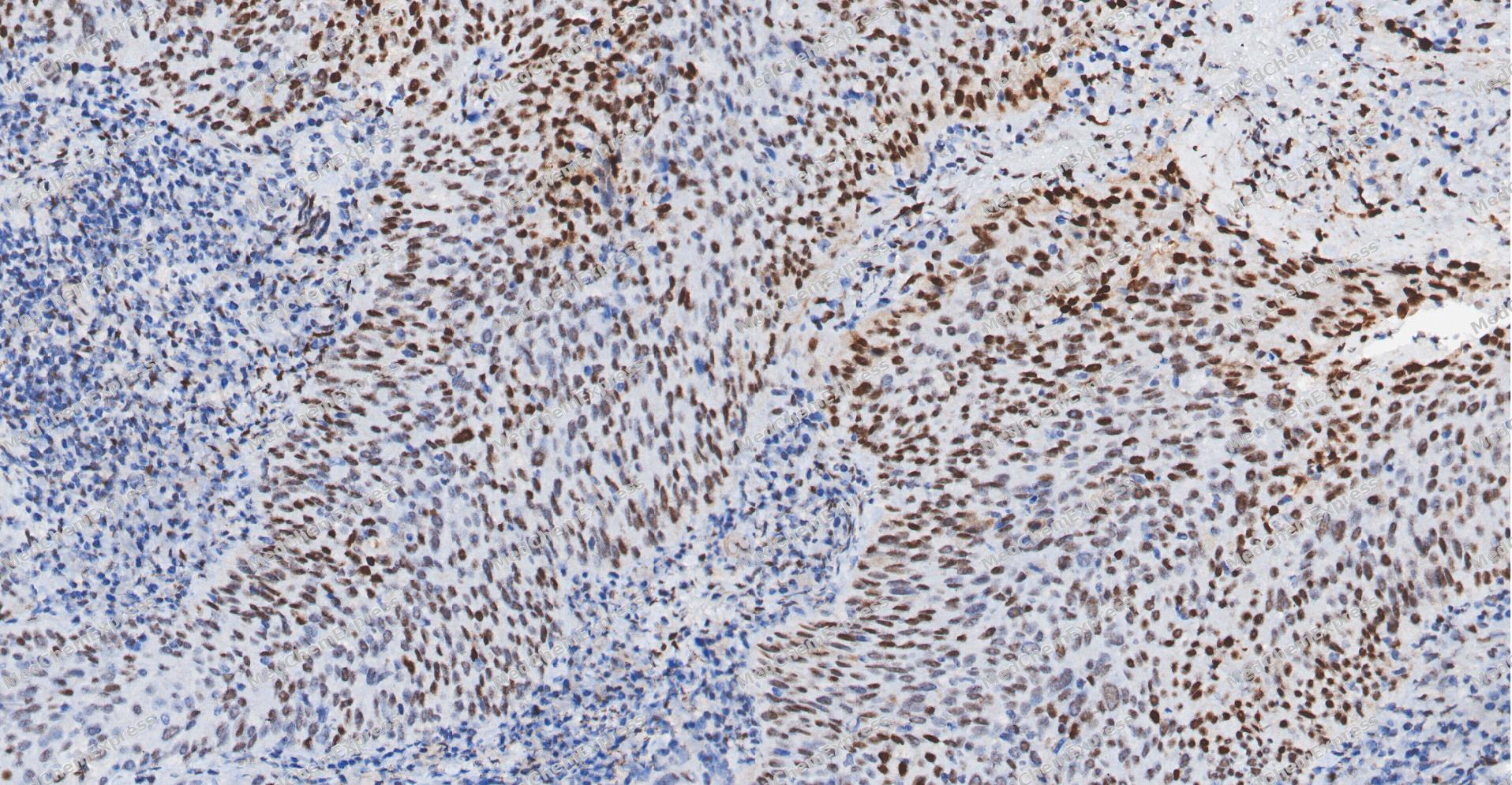 Immunohistochemical analysis of paraffin-embedded human Cervical Carcinoma tissue using c-Fos antibody was performed. The section was pretreated using high-temperature and high-pressure mediated EDTA antigen retrieval buffer (pH 9.0), for 5 minutes. The tissues were incubated with primary antibody (HY-P80081, 1:100 dilution) at room temperature for 60 minutes. Detection was performed using an HRP conjugated compact polymer system. DAB was used as the chromogen. The tissues were counterstained with hematoxylin and mounted with neutral balsam mounting medium.
 -
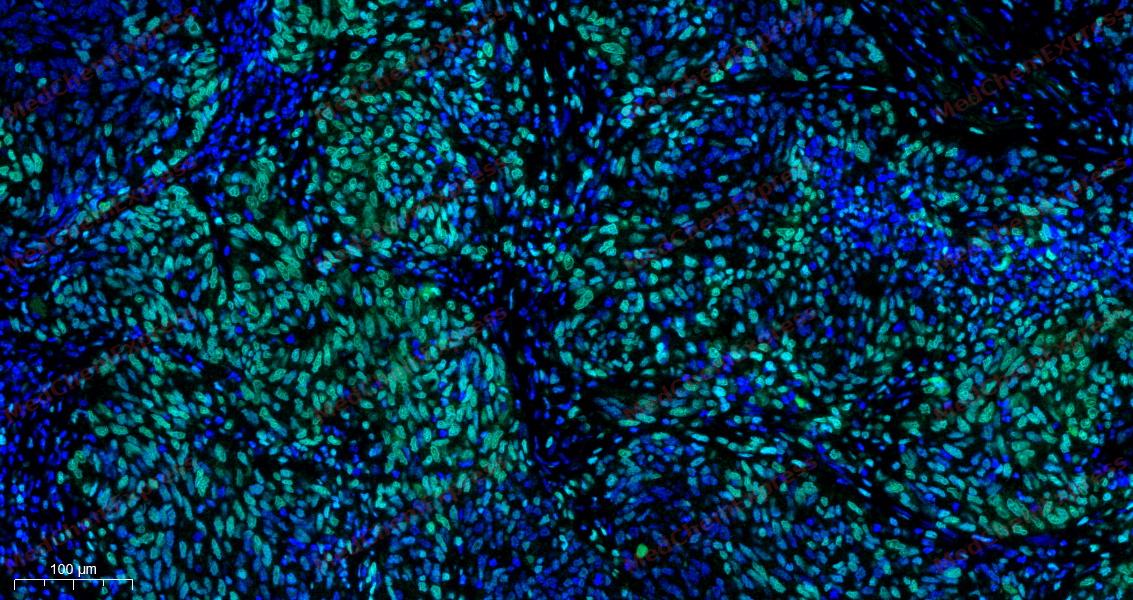 Tyramide signaling amplification based immunofluorescence was performed on paraffin-embedded human ovarian carcinoma (sample 1) tissue using c-Fos antibody. Antigen retrieval was performed in EDTA buffer pH 9.0 (95 °C, 20 min) followed by cooling to RT. Then incubated with primary antibody (HY-P80081, 1:100 dilution) at room temperature for 60 minutes and HRP conjugated secondary antibody for 10 minutes. Fluorescence was then developed with TSA520 . The tissues were counterstained with DAPI and mounted with Anti-fade mounting medium.
 -
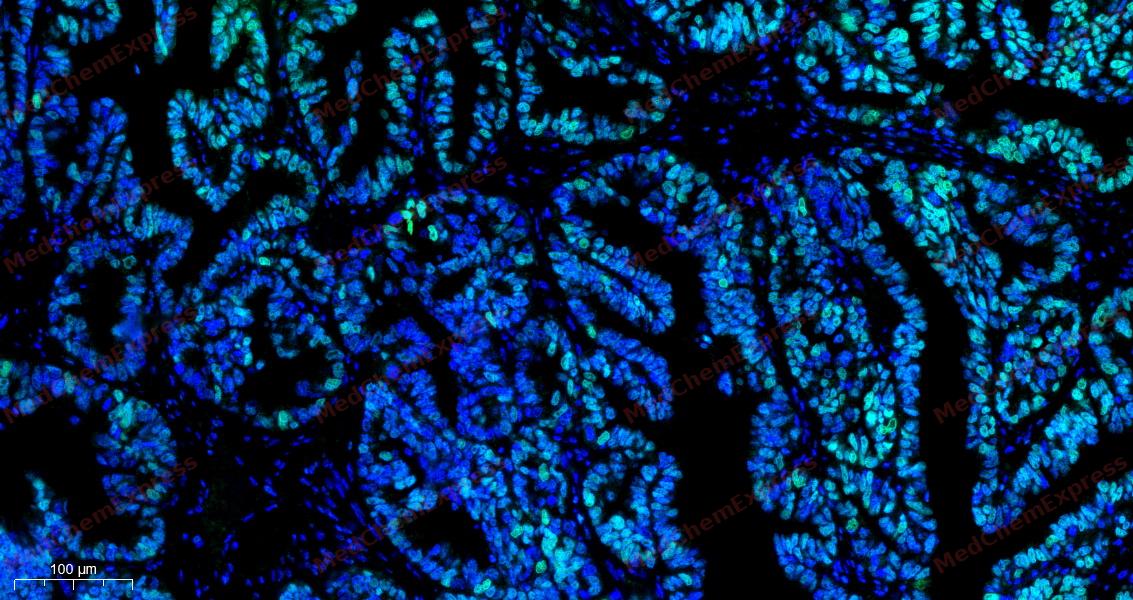 Tyramide signaling amplification based immunofluorescence was performed on paraffin-embedded human ovarian carcinoma (sample 2) tissue using c-Fos antibody. Antigen retrieval was performed in EDTA buffer pH 9.0 (95 °C, 20 min) followed by cooling to RT. Then incubated with primary antibody (HY-P80081, 1:100 dilution) at room temperature for 60 minutes and HRP conjugated secondary antibody for 10 minutes. Fluorescence was then developed with TSA520 . The tissues were counterstained with DAPI and mounted with Anti-fade mounting medium.


Background
-
Function
c-Fos is an immediate-early gene product and transcription factor that functions as a central mediator of stimulus-dependent gene expression, linking transient extracellular signals to long-term cellular responses through regulation of downstream target genes[1]. Mechanistically, c-Fos belongs to the Fos family and forms the activator protein-1 (AP-1) transcription factor complex through dimerization with Jun family proteins, thereby regulating genes involved in cellular differentiation, proliferation, development, plasticity, and survival[4][3][2]. c-Fos expression is rapidly induced by neuronal activity, calcium- and cAMP-dependent signaling, and other environmental stimuli, making it a widely used molecular marker of cellular activation and stimulus-transcription coupling in experimental systems[1][3]. In disease and experimental models, c-Fos has been extensively employed to map activated neuronal populations during seizures, learning, memory formation, and behavioral responses, providing a framework for investigating neural circuit function and activity-dependent transcriptional programs[1][3]. Compared with related Fos family members, including FosB, Fra-1 (FOSL1), and Fra-2 (FOSL2), c-Fos contains a C-terminal transactivation domain and exhibits distinctive transcriptional regulatory properties within AP-1 complexes[4]. For experimental applications, c-Fos is primarily used as an activity-dependent biomarker rather than a direct pharmacological target, enabling quantitative assessment of cellular activation, neural network recruitment, and stimulus-responsive signaling pathways in neuroscience and molecular biology research[3][5].
-
Subcellular Localization
Nucleus; Endoplasmic reticulum; Cytoplasm, cytosol
-
Subunit
Heterodimer; with JUN (By similarity). Component of the SMAD3/SMAD4/JUN/FOS complex required for synergistic TGF-beta-mediated transcription at the AP1 promoter site (PubMed:9732876). Interacts with SMAD3; the interaction is weak even on TGF-beta activation (PubMed:9732876). Interacts with MAFB (By similarity). Interacts with TSC22D3 (via N-terminus); this interaction inhibits the binding of active AP1 to its target DNA (By similarity). Interacts with CDS1 and PI4K2A (By similarity). Interacts (via bZIP domain and leucine-zipper region) with the multiprotein chromatin-remodeling complexes SWI/SNF: SWI/SNF-A (BAF) subunits SMARCB1, SMARCC2 and SMARCD1 (By similarity). Interacts (via bZIP domain and leucine-zipper region) with ARID1A (By similarity)
-
SwissProt ID
-
Synonyms
G0S7, FOS, Protein c-Fos, Cellular oncogene fos, G0/G1 switch regulatory protein 7, Proto-oncogene c-Fos, Transcription factor AP-1 subunit c-Fos
-
Research Field
Neuroscience
Documentation
-
Data Sheet (261 KB)
-
SDS (252 KB)
- English - EN (252 KB)
- Français - FR (252 KB)
- Deutsch - DE (252 KB)
- Norwegian - NO (252 KB)
- Español - ES (252 KB)
- Swedish - SV (252 KB)
- Italian - IT (252 KB)
- Korean - KR (252 KB)
- Portuguese - PT (252 KB)
-
User Guide for Antibodies (1077 KB)
References
[2]. Curran T, et al. Fos: an immediate-early transcription factor in neurons. J Neurobiol. 1995 Mar;26(3):403-12. [Content Brief]
[4]. Srivastava SK, et al. Genetic regulation of spy gene expression in Escherichia coli in the presence of protein unfolding agent ethanol. Gene. 2014 Sep 10;548(1):142-8. [Content Brief]
[5]. Cruz-Mendoza F, et al. Immediate early gene c-fos in the brain: focus on glial cells. Brain Sci. 2022;12(6):687. [Content Brief]
[6]. Lara Aparicio SY, et al. Current opinion on the use of c-Fos in neuroscience. NeuroSci. 2022;3(4):687-702. [Content Brief]

 Powered by Bioz
