



IKZF3 Antibody (YA2116)
(Synonyms: IKZF3; ZNFN1A3; Zinc finger protein Aiolos; Ikaros family zinc finger protein 3)
Based on 1 Customer Validation
IKZF3 Antibody (YA2116) is a Rabbit-derived and non-conjugated IgG monoclonal antibody, targeting to IKZF3.
-
Host:
Rabbit
-
Isotype:
IgG
-
Application:
WB, IHC-P, ICC/IF, FC
-
Reactivity :
Human, Mouse, Rat
-
Formulation:
Supplied in 50mM Tris-Glycine(pH 7.4), 0.15M NaCl, 40%Glycerol, 0.01% sodium azide and 0.05% BSA.
-
Conjugation:
Non-conjugated


To place orders, for customer services and technical support, please contact: MedChemExpress USA
Tel: 609-228-6898 E-mail: [email protected] [email protected]





Applications
| Application |
WB

WB: Western Blot
|
IHC-P
IHC-P: Immunohistochemistry-Paraffin
|
ICC/IF
ICC/IF: Immunocytochemistry/
Immunofluorescence |
FC
FC: Flow Cytometry
|
|---|---|---|---|---|
| Dilution Ratio | 1:500-1:1000 | 1:50-1:100 | 1:50-1:200 | 1:50-1:100 |


Product Details
IKZF3 Antibody (YA2116) is a Rabbit-derived and non-conjugated IgG monoclonal antibody, targeting to IKZF3.
-
Host Rabbit

-
Clonality Recombinant,Monoclonal

-
Species ReactivityHuman, Mouse, Rat
-
Observed Molecular WeightObserved band size: 70 kDa
Note: Due to possible protein modifications or aggregation, the molecular weight should be confirmed by actual measurement, and the predicted value is for reference only.

-
Calculated Molecular Weight Predicted band size: 58 kDa

Entrez Gene: 22806 Human ; 22780 Mouse ; 303511 Rat
SwissProt: Q9UKT9 Human ; O08900 Mouse ;
OMIM: 619437 Human
A synthesized peptide derived from human IKZF3 aa1-26.
Endogenous
Affinity Purified
Non-conjugated
Unmodified
IgG


Product Properties
-
Appearance
Solution
-
Formulation
Supplied in 50mM Tris-Glycine(pH 7.4), 0.15M NaCl, 40%Glycerol, 0.01% sodium azide and 0.05% BSA.
-
Concentration
Batch-dependent, Please check the COA for the concentration of each lot. Check Lot Concentration
-
Storage & Stability
Stored at -20°C for 1 year. Avoid repeated freeze / thaw cycles.
-
Shipping
Shipping with blue ice.


Verification Images
-
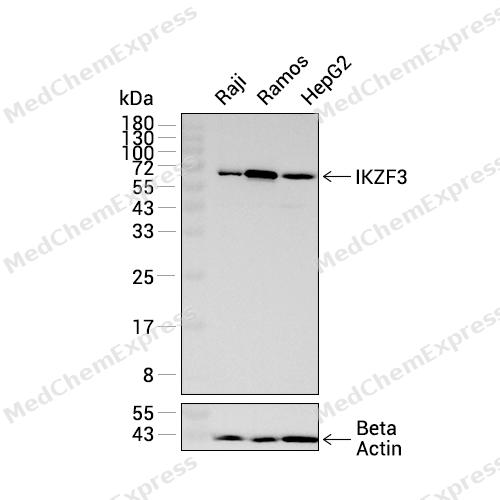 Western blot analysis was performed on extracts from Raji (lane 1, 15 μg), Ramos (lane 2, 15 μg), and HepG2 (lane 3, 15 μg) using IKZF3 Rabbit mAb.Proteins were transferred to a PVDF membrane and blocked with 5% non-fat milk in TBST at 4°C overnight.The primary antibody (1:1000 dilution) and the loading control antibody (beta-Actin, HY-P83730, 1:20000 dilution) were incubated in 5% non-fat milk in TBST for 1 hour at 37°C.Goat Anti-Rabbit IgG-HRP Secondary Antibody (1:20000 dilution) was then applied for 40 minutes at 37°C.
 -
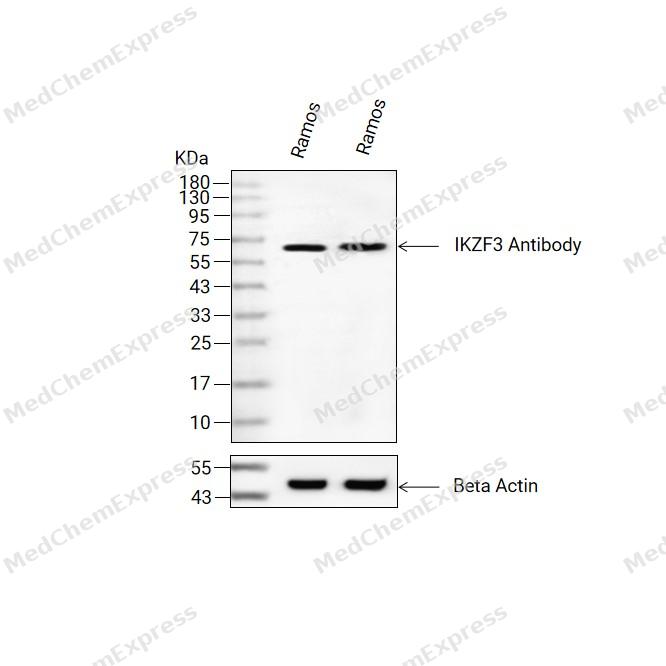 Western blot analysis of extracts from Ramos(lane 2(20ug) and Ramos(lane 3(40ug) using IKZF3 Antibody(HY-P82371) Rabbit mAb. Proteins were transferred to a PVDF membrane and blocked with 5% non-fat milk in TBST for 2 hour at room temperature. The primary antibody (1/1000) and Loading control antibody (Beta Actin, HY-P83730, 1/10000) was used in 5% non-fat milk in TBST at 4°C overnight. Goat Anti-Mouse/Rabbit IgG-HRP Secondary Antibody (1/10000) was used for 1 hour at room temperature.
 -
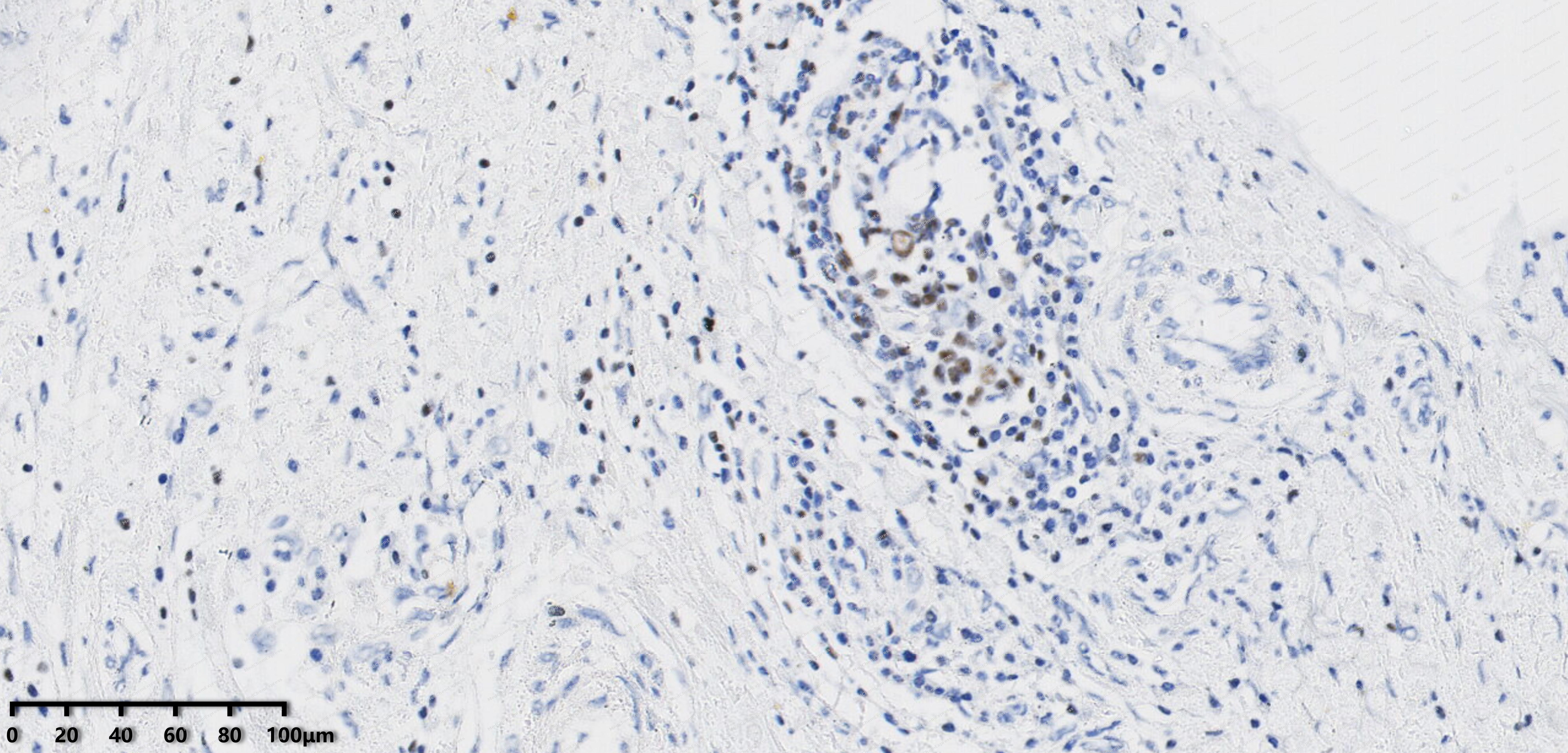 Immunohistochemical analysis of paraffin-embedded human gastric cancer tissue using IKZF3 antibody was performed. The section was pretreated using high-temperature mediated EDTA antigen retrieval buffer (pH 9.0), for 20 minutes. The tissues were incubated with primary antibody (HY-P82371, 1:100 dilution) at room temperature for 20 minutes. Detection was performed using an HRP conjugated compact polymer system. DAB was used as the chromogen. The tissues were counterstained with hematoxylin and mounted with neutral balsam mounting medium.
 -
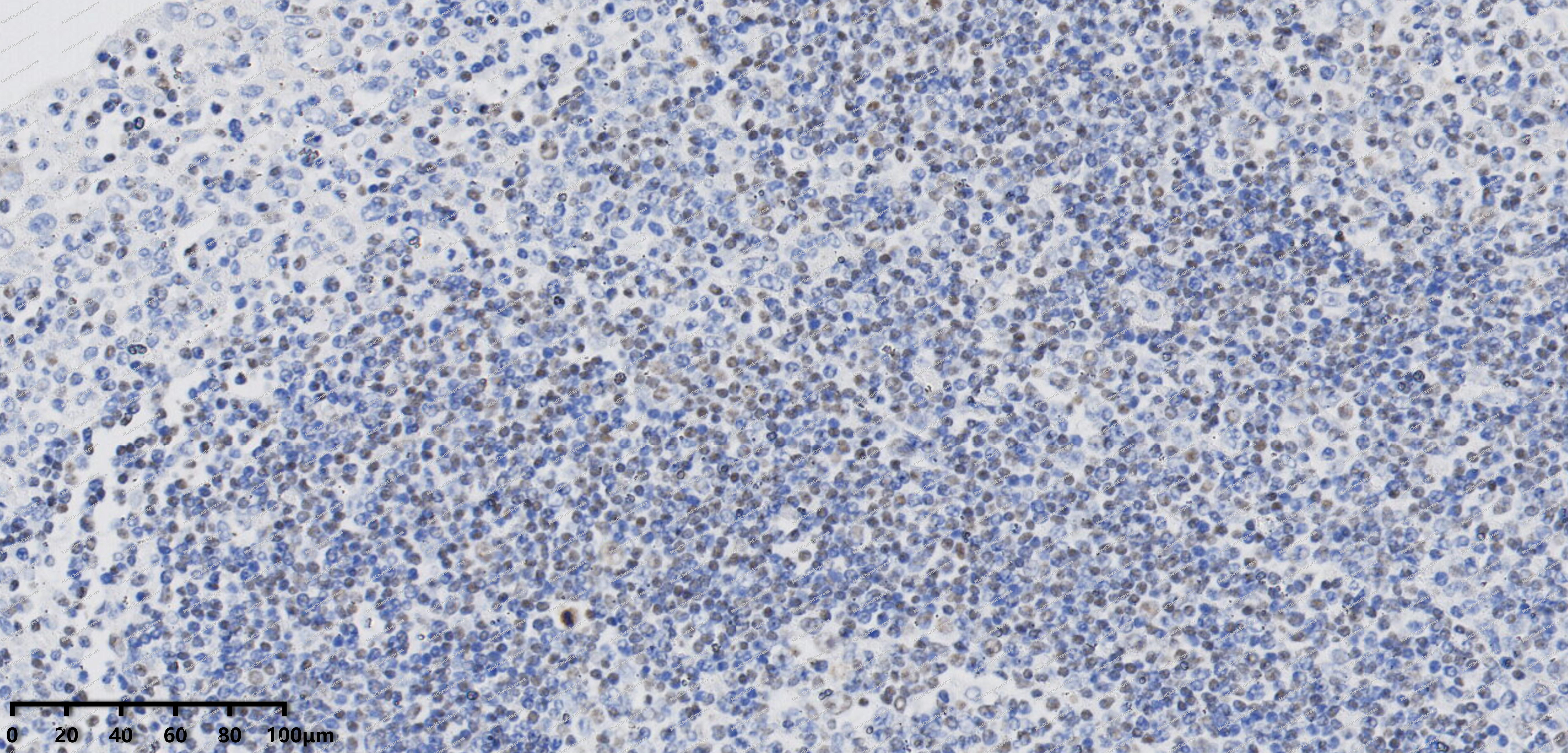 Immunohistochemical analysis of paraffin-embedded human Kimura's disease tissue using IKZF3 antibody was performed. The section was pretreated using high-temperature mediated EDTA antigen retrieval buffer (pH 9.0), for 20 minutes. The tissues were incubated with primary antibody (HY-P82371, 1:100 dilution) at room temperature for 20 minutes. Detection was performed using an HRP conjugated compact polymer system. DAB was used as the chromogen. The tissues were counterstained with hematoxylin and mounted with neutral balsam mounting medium.
 -
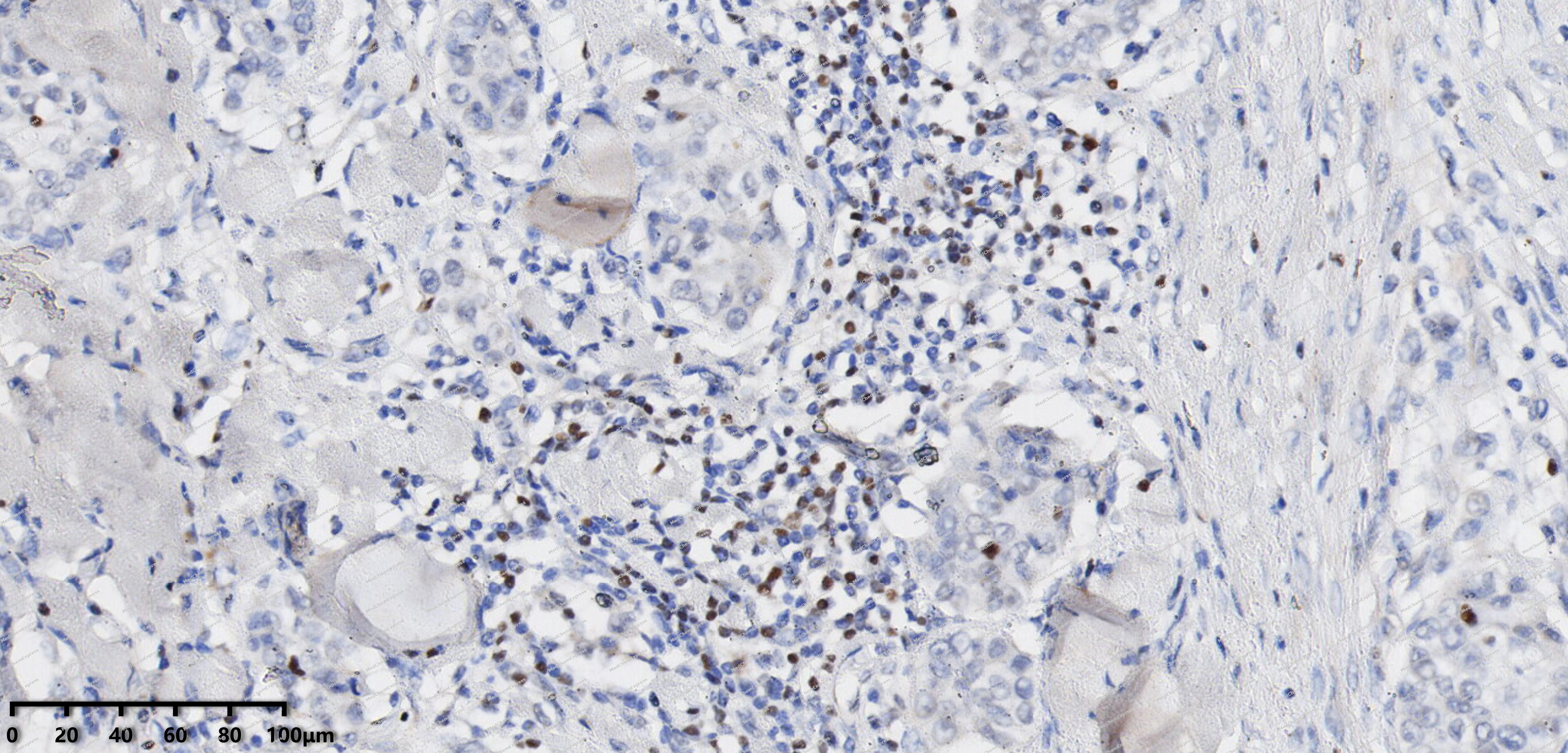 Immunohistochemical analysis of paraffin-embedded human Mucoepidermoid carcinoma tissue using IKZF3 antibody was performed. The section was pretreated using high-temperature mediated EDTA antigen retrieval buffer (pH 9.0), for 20 minutes. The tissues were incubated with primary antibody (HY-P82371, 1:100 dilution) at room temperature for 20 minutes. Detection was performed using an HRP conjugated compact polymer system. DAB was used as the chromogen. The tissues were counterstained with hematoxylin and mounted with neutral balsam mounting medium.
 -
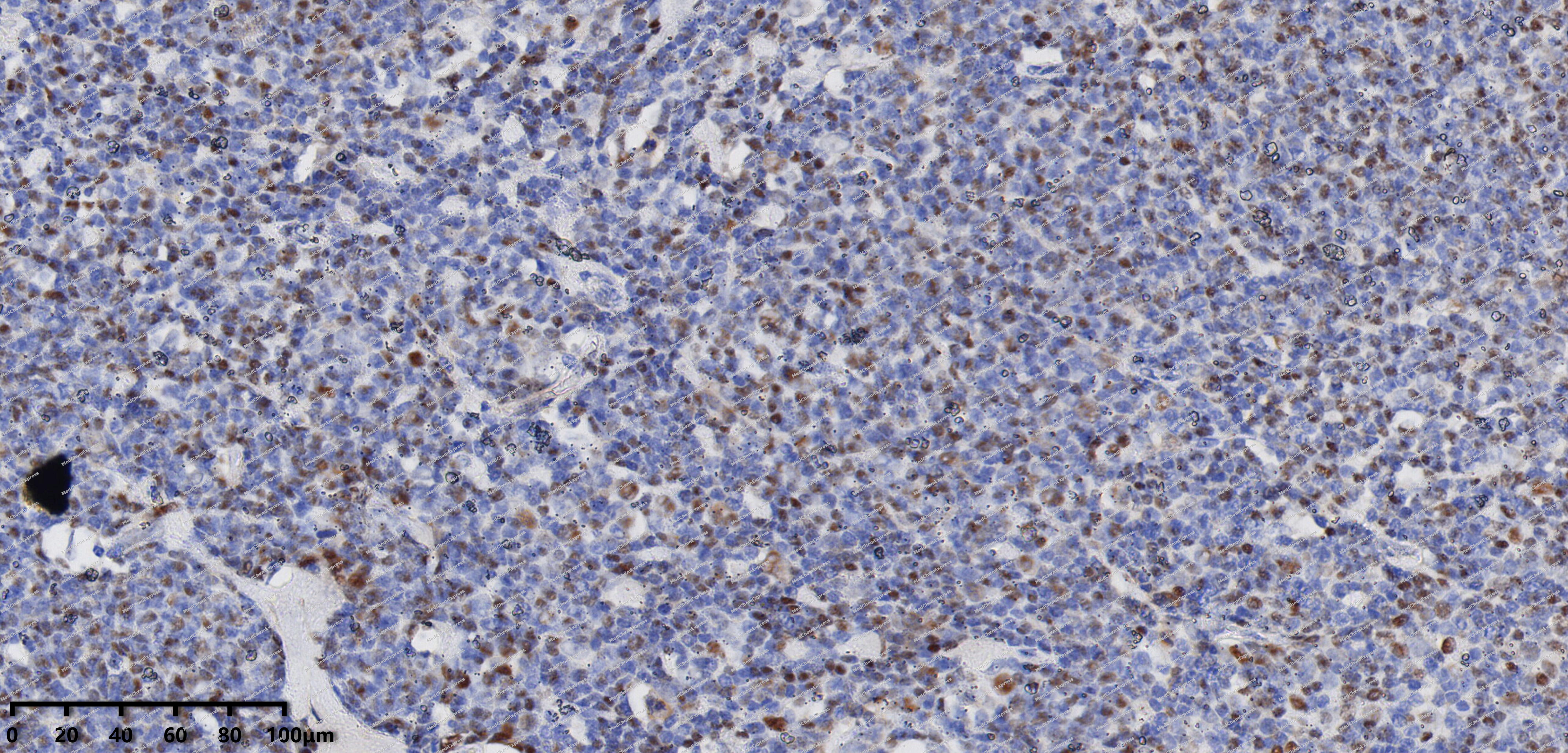 Immunohistochemical analysis of paraffin-embedded human Follicular Lymphoma tissue using IKZF3 antibody was performed. The section was pretreated using high-temperature mediated EDTA antigen retrieval buffer (pH 9.0), for 20 minutes. The tissues were incubated with primary antibody (HY-P82371, 1:100 dilution) at room temperature for 20 minutes. Detection was performed using an HRP conjugated compact polymer system. DAB was used as the chromogen. The tissues were counterstained with hematoxylin and mounted with neutral balsam mounting medium.
 -
 Flow cytometric analysis of 1X10⁶ Jurkat cells labeling IKZF3 Antibody (HY-P82371, red). Cells were fixed with 4% paraformaldehyde and permeabilised with 90% methanol. Then stained with the primary antibody at 1/100 dilution for an hour at 4℃. AF488-conjugated Goat Anti-Rabbit IgG H&L (HY-P8002) was used as the secondary antibody at 1/1,000 dilution for 30 minutes at 4℃. Rabbit IgG Isotype Control (HY-P80879, blue) was used as the isotype control, cells without incubation with primary antibody were used as the unlabeled control (black).
 -
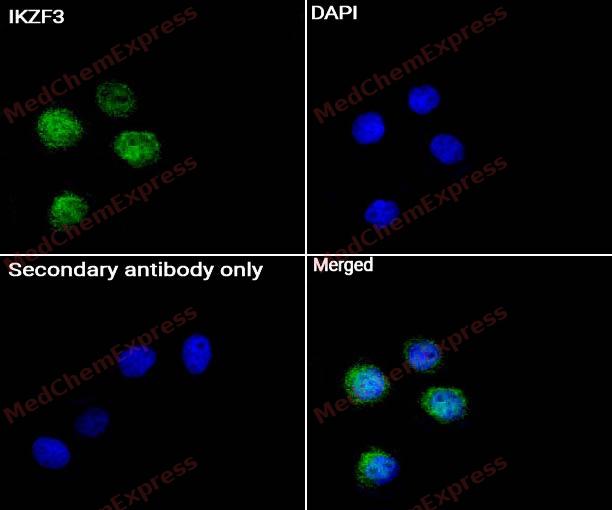 Immunocytochemistry analysis of Jurkat cells labeling IKZF3 Antibody (HY-P82371) at 1/50 dilution. Cells were fixed in 4% paraformaldehyde for 15 minutes at room temperature, permeabilized with 0.1% Triton X-100 for 10 minutes at room temperature, then blocked with BSA for Immunol Staining for 10 min at room temperature. Cells were then incubated with IKZF3 Antibody (HY-P82371) at 1/50 dilution in BSA for Immunol Staining at 4 ℃ Overnight. AF488-conjugated AffiniPure Goat Anti-Rabbit IgG H&L(HY-P8002, Green) was used as the secondary antibody at 1/1,000 dilution. PBS instead of the primary antibody was used as the secondary antibody only control. The Nuclear counterstain was DAPI (Blue).
 -
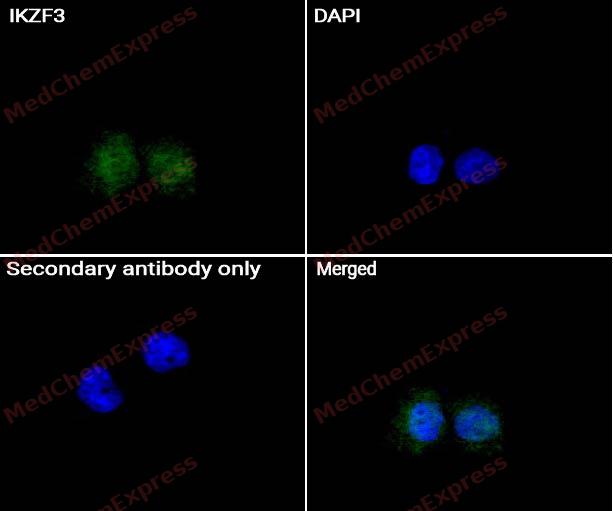 Immunocytochemistry analysis of Jurkat cells labeling IKZF3 Antibody (HY-P82371) at 1/150 dilution. Cells were fixed in 4% paraformaldehyde for 15 minutes at room temperature, permeabilized with 0.1% Triton X-100 for 10 minutes at room temperature, then blocked with BSA for Immunol Staining for 10 min at room temperature. Cells were then incubated with IKZF3 Antibody (HY-P82371) at 1/150 dilution in BSA for Immunol Staining at 4 ℃ Overnight. AF488-conjugated AffiniPure Goat Anti-Rabbit IgG H&L(HY-P8002, Green) was used as the secondary antibody at 1/1,000 dilution. PBS instead of the primary antibody was used as the secondary antibody only control. The Nuclear counterstain was DAPI (Blue).


Background
-
Function
IKZF3 (Aiolos) is a zinc finger transcription factor essential for lymphocyte maturation and transcriptional regulation in hematopoietic cells[1]. Mechanistically, IKZF3 represses the expression of activating ligands such as MICA and PVR/CD155 in multiple myeloma (MM) cells, acting through direct promoter binding and interaction with IRF4. In disease models, IKZF3 expression influences both tumor progression and immune cell function; high IKZF3 in T-cells correlates with superior overall survival in MM patients treated with immunomodulatory drugs (IMiDs) [2]. Loss or degradation of IKZF3 by cereblon-targeting agents like lenalidomide and iberdomide modulates IL-2 production and B cell differentiation, highlighting its role in adaptive immunity[3][4][5]. Compared with IKZF1, IKZF3 exhibits distinct transcriptional targets and is critical for plasmablast differentiation in systemic lupus erythematosus (SLE) [6][5]. Hotspot mutations in IKZF3 (e.g., L162R) alter DNA binding specificity, hyperactivating B cell receptor signaling and promoting chronic lymphocytic leukemia (CLL), distinguishing its oncogenic potential from other Ikaros family members[7]. Experimental inhibition of IKZF3 with small molecules, such as the SMO antagonist SANT-1 or natural compounds like baicalein, demonstrates suppressed tumor cell proliferation and altered cell cycle progression, offering translational relevance for therapeutic targeting[8][9]. Detection of IKZF3 protein using label-free immunosensors enables sensitive monitoring of MM patients under IMiD treatment[10].
-
Subcellular Localization
Nucleus; Cytoplasm; Nucleus; Nucleus; Nucleus; Nucleus; Cytoplasm; Cytoplasm
-
Expression
Tissue_specificity:Expressed most strongly in peripheral blood leukocytes, the spleen, and the thymus
Induction:Up-regulated by TGFB1 and 2,3,7,8-tetrachlorodibenzo-p-dioxin (TCDD) in activated AHR T-cells -
Isoforms & Post-Translational Modification
Q9UKT9 has 16 isomers: Q9UKT9-1: 58023 Da (predicted); Q9UKT9-2: 51632 Da (predicted); Q9UKT9-3: 53401 Da (predicted); Q9UKT9-4: 53743 Da (predicted); Q9UKT9-5: 47010 Da (predicted); Q9UKT9-6: 49121 Da (predicted); Q9UKT9-7: 54417 Da (predicted); Q9UKT9-8: 49795 Da (predicted); Q9UKT9-9: 47958 Da (predicted); Q9UKT9-10: 41567 Da (predicted); Q9UKT9-11: 36945 Da (predicted); Q9UKT9-12: 32665 Da (predicted); Q9UKT9-13: 42730 Da (predicted); Q9UKT9-14: 30029 Da (predicted); Q9UKT9-15: 51880 Da (predicted); Q9UKT9-16: 29973 Da (predicted).
Phosphorylation on tyrosine residues induced by IL2 is required for dissociation from HRAS and nuclear translocation of IKZF3 in T-cells. Phosphorylation on tyrosine residues induced by IL4 is required for dissociation from Bcl-X(L) in T-cells -
Subunit
Homodimer. Heterodimer with other IKAROS family members. Interacts with IKZF4 and IKZF5. Interacts with IKZF1.
-
SwissProt ID
-
Synonyms
IKZF3; ZNFN1A3; Zinc finger protein Aiolos; Ikaros family zinc finger protein 3
-
Research Field
Epigenetics and Nuclear Signaling


Documentation
-
Data Sheet (263 KB)
-
SDS (251 KB)
- English - EN (251 KB)
- Français - FR (251 KB)
- Deutsch - DE (251 KB)
- Norwegian - NO (251 KB)
- Español - ES (251 KB)
- Swedish - SV (251 KB)
- Italian - IT (251 KB)
- Korean - KR (251 KB)
- Portuguese - PT (251 KB)
-
User Guide for Antibodies (1077 KB)
References
[1]. Fionda C, et al. The IMiDs targets IKZF-1/3 and IRF4 as novel negative regulators of NK cell-activating ligands expression in multiple myeloma. Oncotarget. 2015 Sep 15;6(27):23609-30. [Content Brief]
[3]. Krönke J, et al. Lenalidomide induces degradation of IKZF1 and IKZF3. Oncoimmunology. 2014 Jul 3;3(7):e941742. [Content Brief]
[4]. Awwad MHS, et al. The prognostic and predictive value of IKZF1 and IKZF3 expression in T-cells in patients with multiple myeloma. Oncoimmunology. 2018 Aug 1;7(10):e1486356. [Content Brief]
[5]. Abdulkarim H, et al. Development of Label-Free Impedimetric Immunosensors for IKZF1 and IKZF3 Femtomolar Detection for Monitoring Multiple Myeloma Patients Treated with Lenalidomide. Sci Rep. 2020 Jun 26;10(1):10424. [Content Brief]
[6]. Ali M, et al. IKZF3 promotes gastric cancer progression via Hedgehog signaling activation and is targetable by SANT-1. Acta Biochim Biophys Sin (Shanghai). 2025 Aug 4;58(2):369-382. [Content Brief]
[7]. Liu XP, et al. Baicalein Inhibits Proliferation of Myeloma U266 Cells by Downregulating IKZF1 and IKZF3. Med Sci Monit. 2018 May 5;24:2809-2817. [Content Brief]
[8]. Hermans A, et al. A 3D-Printed and Freely Available Device to Measure the Zebrafish Optokinetic Response Before and After Injury. Zebrafish. 2024 Apr;21(2):144-148. [Content Brief]
[10]. Lazarian G, et al. A hotspot mutation in transcription factor IKZF3 drives B cell neoplasia via transcriptional dysregulation. Cancer Cell. 2021 Mar 8;39(3):380-393.e8. [Content Brief]

 Powered by Bioz
