



Chronic Lymphocytic Leukemia
-
Chronic Lymphocytic Leukemia (32)

- 1
- 2
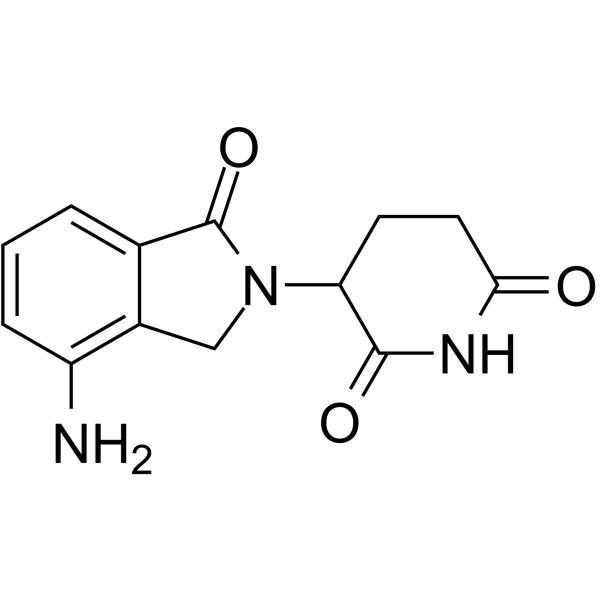
- Formula: C13H13N3O3
- Molecular Weight: 259.26
Lenalidomide (CC-5013) is an orally active immunomodulatory agent that binds CRBN as a molecular glue to alter substrate specificity, inducing ubiquitination and proteasome-dependent degradation of IKZF1, IKZF3 and CK1α. Lenalidomide induces apoptosis by degrading IKZF1/3, and activates p53 by degrading CK1α. Lenalidomide promotes IL-2 release and effector functions of CD8+ T/NK cells, while inhibiting TNF-α secretion and M1-type pyroptosis. Lenalidomide can be used in research related to hematological malignancies, acute liver failure and acute kidney injury.
- Molecular Weight: 7699 (free acid)

- Molecular Weight: 146.32 kDa
Obinutuzumab (GA101) a Type II CD20 humanized IgG1 monoclonal antibody in development for non-Hodgkin lymphoma.

- Molecular Weight: 146.28 kDa
Epcoritamab (GEN3013) is an bispecific IgG1 antibody redirecting T-cells toward CD3×CD20+ tumor cells. Epcoritamab induces potent T-cell-mediated cytotoxicity towards B-cell NHL cell lines.

- Molecular Weight: 146.44 kDa
Ianalumab (VAY-736) is a human, decarboxylated antibody against BAFF-R. Ianalumab can block the interaction between BAFF and BAFF-R and antagonize the apoptosis protection mediated by BAFF. Ianalumab exerts antibody-dependent cytotoxic (ADCC), depending on effector cell activation mediated by immune receptor tyrosine activation motif (ITAM).
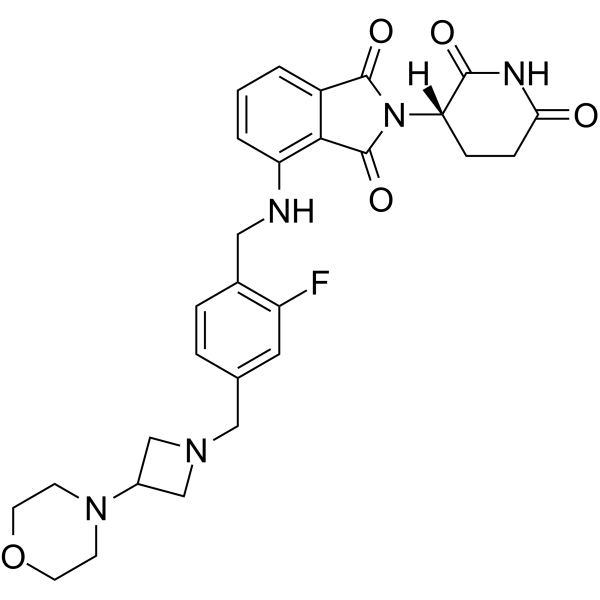
- Formula: C28H30FN5O5
- Molecular Weight: 535.57
Golcadomide (CC-99282) is a blood-brain barrier-permeable, orally active Cereblon (CRBN) E3 ligase modulator. Golcadomide induces Cereblon to form a closed active conformation, thereby recruiting and triggering the ubiquitin-mediated proteasomal degradation of transcription factors IKZF1, IKZF3, Ikaros and Aiolos. Golcadomide is applicable to research related to relapsed or refractory non-Hodgkin lymphoma, chronic lymphocytic leukemia/small lymphocytic lymphoma, and diffuse large B-cell lymphoma.
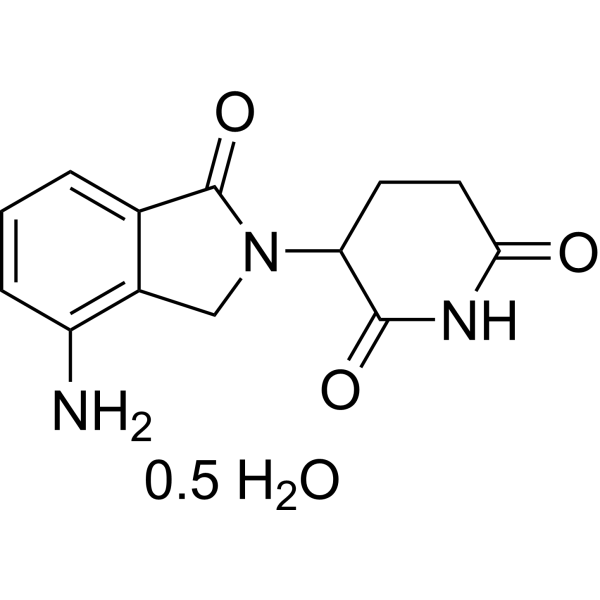
- Formula: C13H14N3O3.5
- Molecular Weight: 268.27
Lenalidomide hemihydrate (CC-5013 hemihydrate) is an orally active immunomodulatory agent that binds CRBN as a molecular glue to alter substrate specificity, inducing ubiquitination and proteasome-dependent degradation of IKZF1, IKZF3 and CK1α. Lenalidomide hemihydrate induces apoptosis by degrading IKZF1/3, and activates p53 by degrading CK1α. Lenalidomide hemihydrate promotes IL-2 release and effector functions of CD8+ T/NK cells, while inhibiting TNF-α secretion and M1-type pyroptosis. Lenalidomide hemihydrate can be used in research related to hematological malignancies, acute liver failure and acute kidney injury.

- Formula: C42H47N7O8
- Molecular Weight: 777.86
JP-163-16 is a NF-κB RelA/p65 PROTAC degrader that recruits CRBN. JP-163-16 selectively induces RelA/p65 degradation via the ubiquitin-proteasome pathway, exerts cytotoxicity and induces apoptosis in cancer cells, while showing low toxicity to non-malignant lymphocytes. JP-163-16 can be used for the research of chronic lymphocytic leukemia, triple-negative breast cancer and multiple myeloma.

- Molecular Weight: 146.2 kDa
Selicrelumab is an agonist CD40 antibody, induces changes in the tumor microenvironment. Selicrelumab can be used for the research of pancreatic cance and neoadjuvant study.
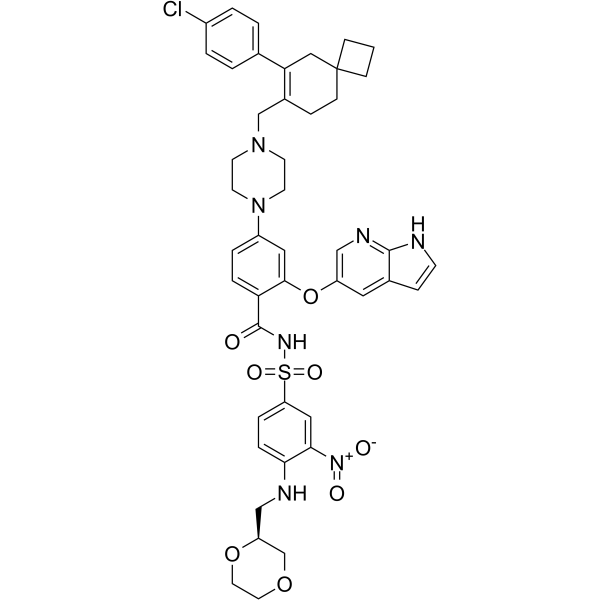
- Formula: C45H48ClN7O8S
- Molecular Weight: 882.42
Lisaftoclax is an orally active, selective BCL-2 inhibitor with a Ki of < 0.1 nM against human BCL-2. Lisaftoclax selectively binds to BCL-2, disrupts the BCL-2:BIM complex, and antagonizes the antiapoptotic function of BCL-2. Lisaftoclax induces BAX/BAK-dependent, caspase-mediated apoptosis, upregulates the pro-death proteins BIM and Noxa, and downregulates mitochondrial respiratory function and ATP production. Lisaftoclax can be used in the research of hematological malignancies including chronic lymphocytic leukemia, multiple myeloma, and diffuse large B-cell lymphoma.

- Formula: C27H23N7O4
- Molecular Weight: 509.52
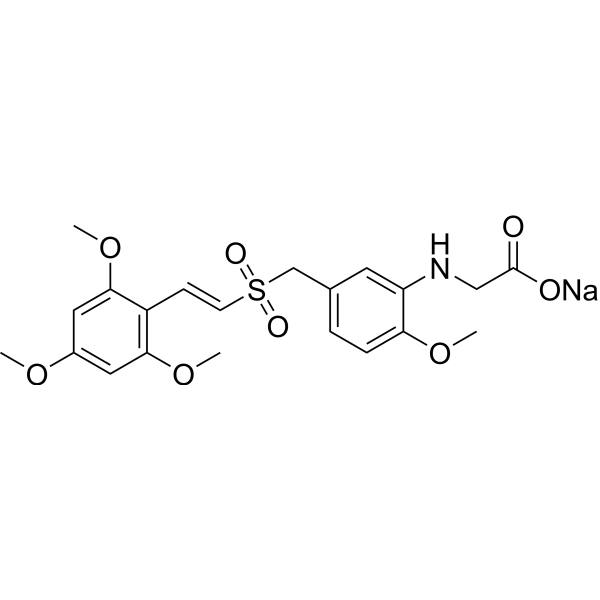
- Formula: C21H24NNaO8S
- Molecular Weight: 473.47
Rigosertib sodium (ON-01910 sodium) is a multi-kinase inhibitor and a selective anti-cancer agent, which induces apoptosis by inhibition the PI3K/Akt pathway, promotes the phosphorylation of histone H2AX and induces G2/M arrest in cell cycle. Rigosertib sodium is a selective and non-ATP-competitive inhibitor of PLK1 with an IC50 of 9 nM.
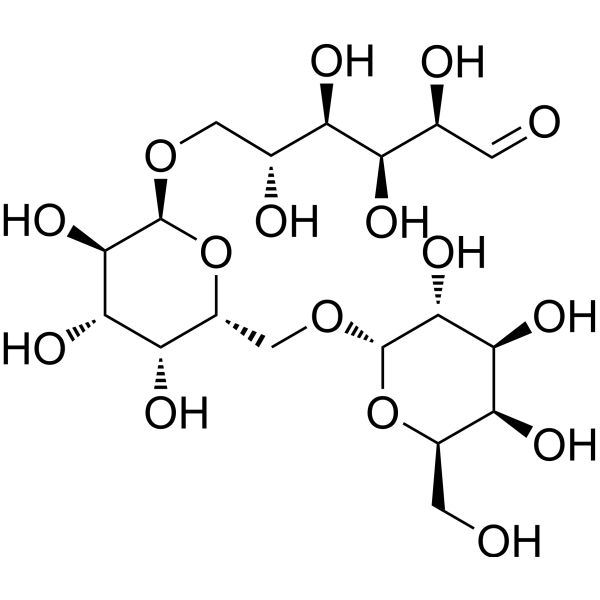
- Formula: C18H32O16
- Molecular Weight: 504.44
Manninotriose is a natural functional trisaccharide composed of three mannose molecules. Manninotriose binds to dihydrofolate reductase via hydrogen bond formation with Arg28. Manninotriose binds to thymidylate synthase via hydrogen bond formation with Arg50. Manninotriose acts as a membrane protectant and helps improve stress tolerance. Manninotriose can be used in research related to acute lymphoblastic leukemia.

- Formula: C13H13N3O3
- Molecular Weight: 259.26
Lenalidomide (Standard) (CC-5013 (Standard)) is the analytical standard of Lenalidomide (HY-A0003). This product is intended for research and analytical applications. Lenalidomide (CC-5013) is an orally active immunomodulatory agent that binds CRBN as a molecular glue to alter substrate specificity, inducing ubiquitination and proteasome-dependent degradation of IKZF1, IKZF3 and CK1α. Lenalidomide induces apoptosis by degrading IKZF1/3, and activates p53 by degrading CK1α. Lenalidomide promotes IL-2 release and effector functions of CD8+ T/NK cells, while inhibiting TNF-α secretion and M1-type pyroptosis. Lenalidomide can be used in research related to hematological malignancies, acute liver failure and acute kidney injury.
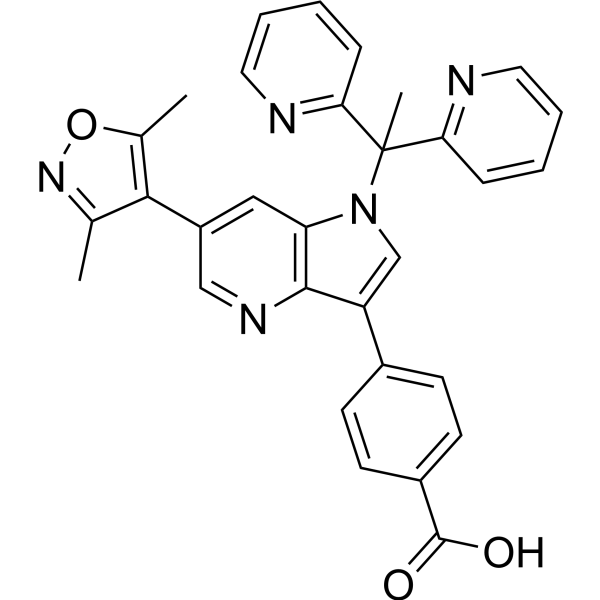
- Formula: C31H25N5O3
- Molecular Weight: 515.56
Zavabresib (OPN-2853; PLX2853; BET-IN-16) is an orally active inhibitor of the BET family of proteins. Zavabresib blocks bromodomain-mediated interactions, reduces BRD4 enrichment at the regulatory regions of transcription factors in T cells, exerts tumor growth inhibitory effects, and enhances the efficacy of immunotherapy. Zavabresib is applicable to research on chronic lymphocytic leukemia, castration-resistant prostate cancer, diffuse large B-cell lymphoma, colon adenocarcinoma, and myelofibrosis.
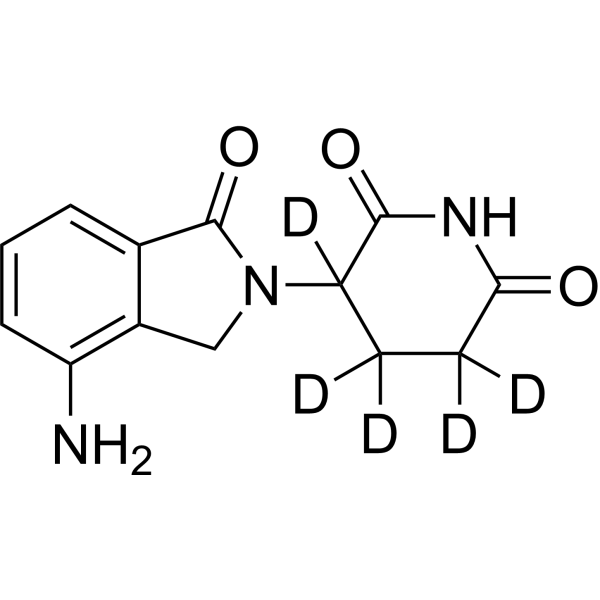
- Formula: C13H8D5N3O3
- Molecular Weight: 264.29
Lenalidomide-d5 (CC-5013-d5) is the d5-labeled Lenalidomide (HY-A0003). Lenalidomide (CC-5013) is an orally active immunomodulatory agent that binds CRBN as a molecular glue to alter substrate specificity, inducing ubiquitination and proteasome-dependent degradation of IKZF1, IKZF3 and CK1α. Lenalidomide induces apoptosis by degrading IKZF1/3, and activates p53 by degrading CK1α. Lenalidomide promotes IL-2 release and effector functions of CD8+ T/NK cells, while inhibiting TNF-α secretion and M1-type pyroptosis. Lenalidomide can be used in research related to hematological malignancies, acute liver failure and acute kidney injury.

- Formula: C18H26Cl2N6O
- Molecular Weight: 413.34
PRT-060318 (PRT318) dihydrochloride is a potent, selective and orally active tyrosine kinase Syk inhibitor with an IC50 of 3 nM. PRT-060318 dihydrochloride suppresses chronic lymphocytic leukemia (CLL) B cell activation and migration, and induces apoptosis. PRT-060318 dihydrochloride prevents Heparin (HY-17567)-induced thrombocytopenia and thrombosis in a transgenic mouse model. PRT-060318 dihydrochloride can be used for CLL and thrombus research.
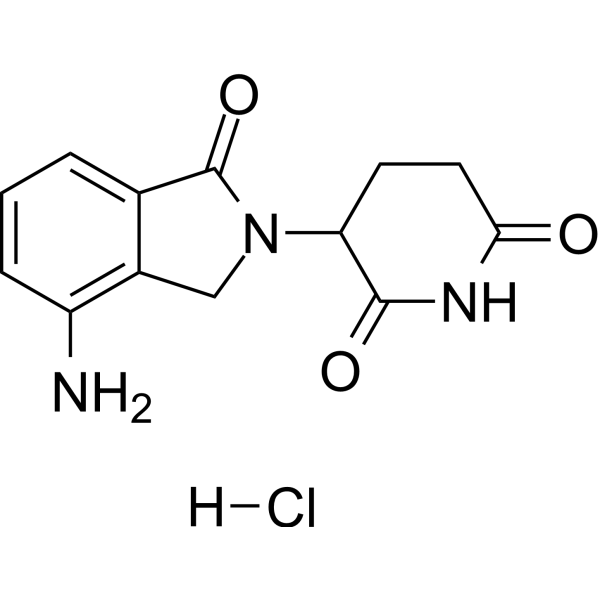
- Formula: C13H14ClN3O3
- Molecular Weight: 295.72
Lenalidomide hydrochloride (CC-5013 hydrochloride) is an orally active immunomodulatory agent that binds CRBN as a molecular glue to alter substrate specificity, inducing ubiquitination and proteasome-dependent degradation of IKZF1, IKZF3 and CK1α. Lenalidomide hydrochloride induces apoptosis by degrading IKZF1/3, and activates p53 by degrading CK1α. Lenalidomide hydrochloride promotes IL-2 release and effector functions of CD8+ T/NK cells, while inhibiting TNF-α secretion and M1-type pyroptosis. Lenalidomide hydrochloride can be used in research related to hematological malignancies, acute liver failure and acute kidney injury.

- Formula: C30H27N7O6
- Molecular Weight: 581.58
Acalabrutinib (Calquence) maleate is an orally active, irreversible, and highly selective second-generation BTK inhibitor. Acalabrutinib binds covalently to Cys481 in the ATP-binding pocket of BTK. Acalabrutinib maleate demonstrates potent on-target effects and efficacy in mouse models of chronic lymphocytic leukemia (CLL). Acalabrutinib maleate can be used for CLL research. Acalabrutinib maleate is a click chemistry reagent, which contains an Alkyne group and can undergo copper-catalyzed azide-alkyne cycloaddition (CuAAc) with molecules containing Azide groups.

- Formula: C813C5H13N3O3
- Molecular Weight: 264.22
rac-Lenalidomide-13C5 (CC-5013-13C5) is the 13C5-labeled Lenalidomide (HY-A0003). Lenalidomide (CC-5013) is an orally active immunomodulatory agent that binds CRBN as a molecular glue to alter substrate specificity, inducing ubiquitination and proteasome-dependent degradation of IKZF1, IKZF3 and CK1α. Lenalidomide induces apoptosis by degrading IKZF1/3, and activates p53 by degrading CK1α. Lenalidomide promotes IL-2 release and effector functions of CD8+ T/NK cells, while inhibiting TNF-α secretion and M1-type pyroptosis. Lenalidomide can be used in research related to hematological malignancies, acute liver failure and acute kidney injury.
- 1
- 2



