



Rigosertib sodium
Based on 6 publication(s) in Google Scholar
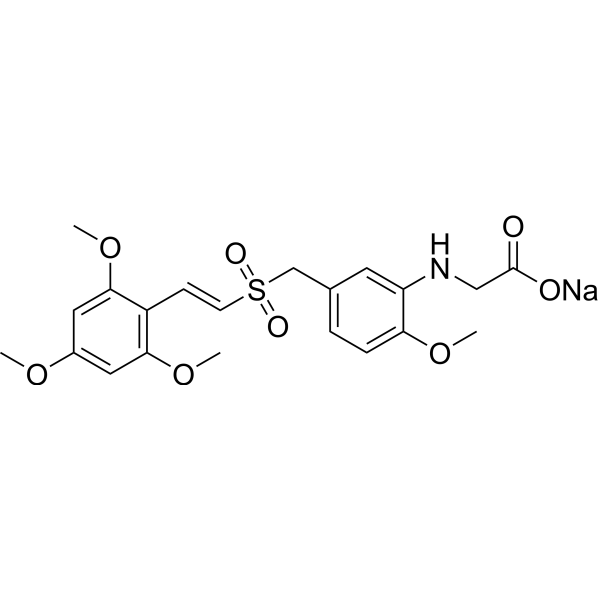
Rigosertib sodium (ON-01910 sodium) is a multi-kinase inhibitor and a selective anti-cancer agent, which induces apoptosis by inhibition the PI3K/Akt pathway, promotes the phosphorylation of histone H2AX and induces G2/M arrest in cell cycle. Rigosertib sodium is a selective and non-ATP-competitive inhibitor of PLK1 with an IC50 of 9 nM.
商品は「研究用試薬」です。人や動物の医療用・臨床診断用・食品用の製品ではありません。
研究用途以外に使用した場合、当社は一切の責任を負いかねます。
- 純度 : 99.57%
- CAS 番号: 592542-60-4
- 分子式: C21H24NNaO8S
- 分子量:473.47
-
保管条件:
4°C, stored under nitrogen
* In solvent : -80°C, 6 months; -20°C, 1 month (stored under nitrogen)

To place orders, for customer services and technical support, please contact: MedChemExpress USA
Tel: 609-228-6898 E-mail: [email protected] [email protected]


-
 生物活性
生物活性
-
化学情報
-
溶剤 & 溶解度
- プロトコル
- 純度とドキュメンテーション
- 参考文献
-
 Help & FAQs


-
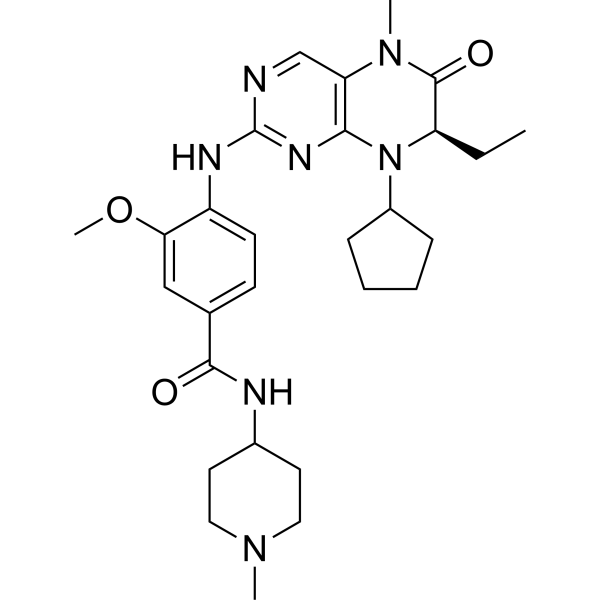
HY-50698
BI 2536PLK1 Inhibitor -
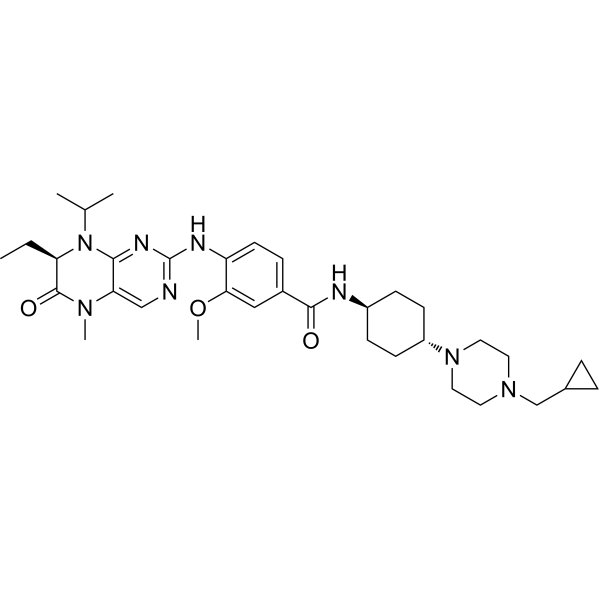
HY-12137
VolasertibPLK1 Inhibitor -
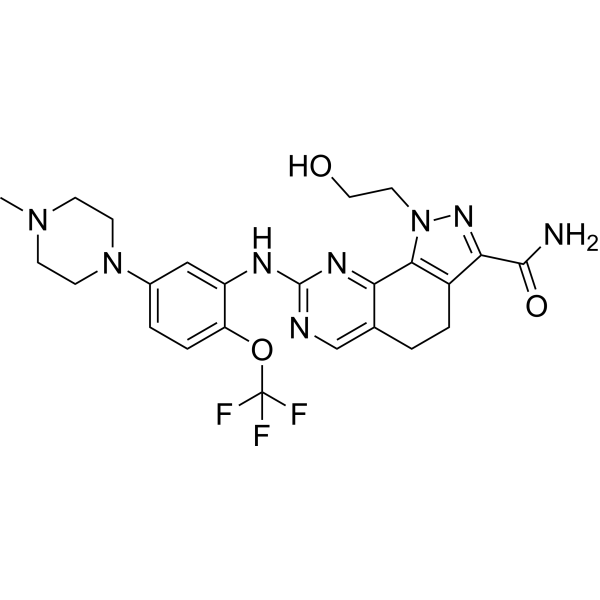
HY-15828
OnvansertibPLK1 Inhibitor -
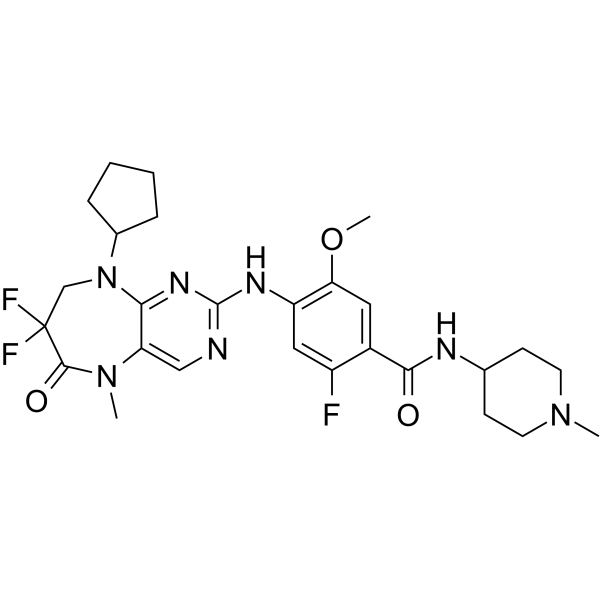
HY-15160
TAK-960PLK1 Inhibitor -
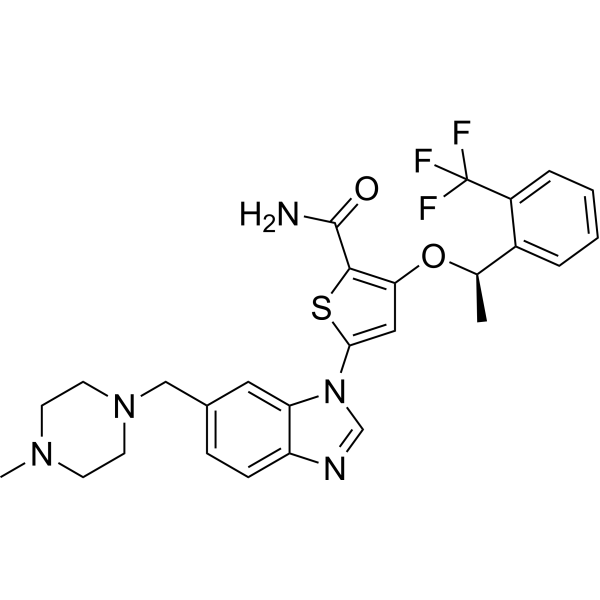
HY-50877
GSK461364PLK1 Inhibitor -
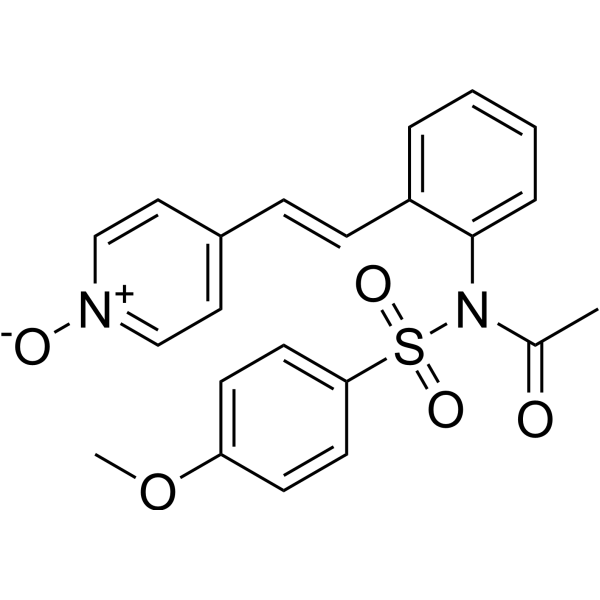
HY-12045
HMN-214PLK1 Inhibitor -
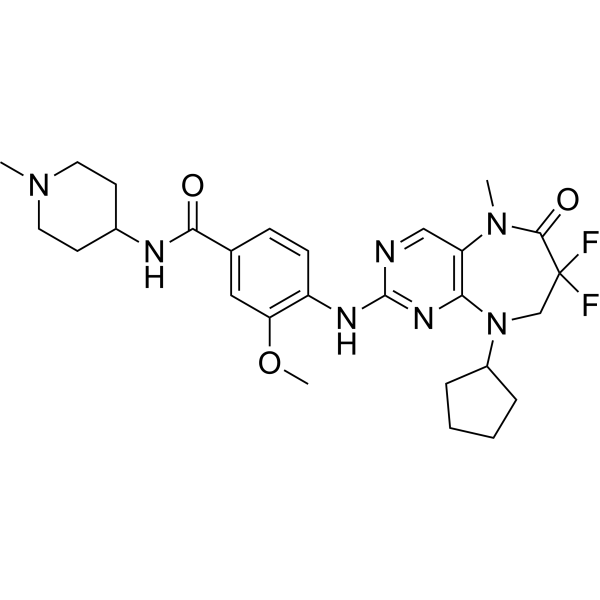
HY-15161
Ro3280PLK1 Inhibitor -
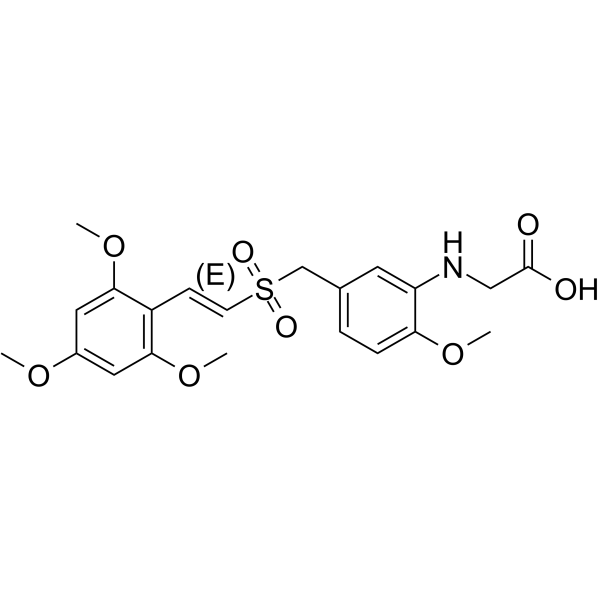
HY-12037A
RigosertibPI3K Inhibitor -
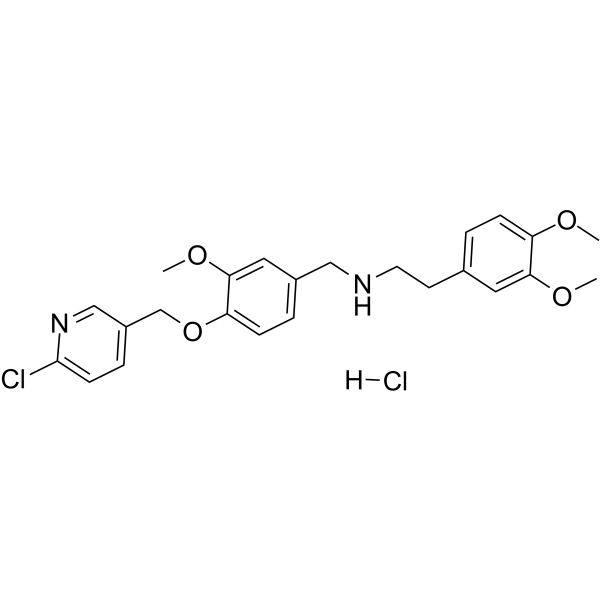
HY-15158
SBE13 HydrochloridePlk1 Inhibitor -
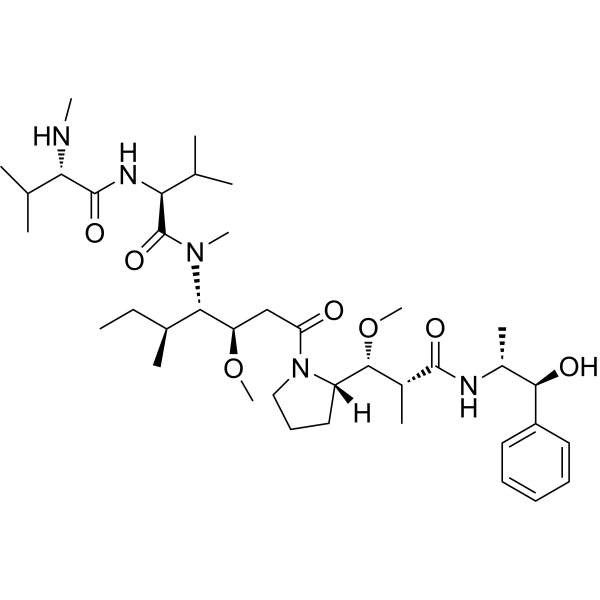
HY-15162
Monomethyl auristatin EAntimitotic Agent -
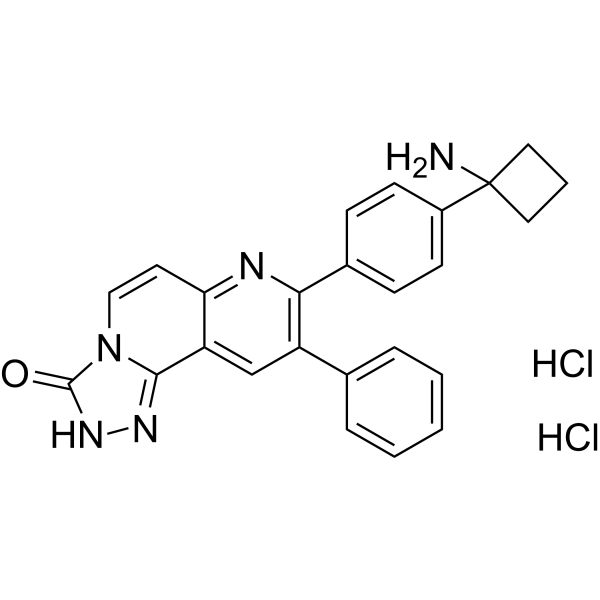
HY-10358
MK-2206 dihydrochlorideAllosteric Akt Inhibitor -
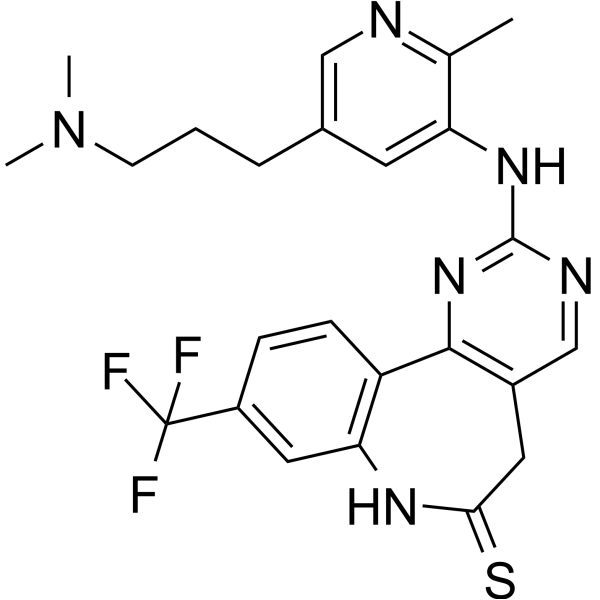
HY-15155
MLN0905PLK1 Inhibitor
MedChemExpress(MCE)の使用を引用している文献 Rigosertib sodium
More

生物活性
製品説明
IC50 & Target
[1]|
PLK1 9 nM (IC50) |
PLK2 260 nM (IC50) |
PDGFR 18 nM (IC50) |
Src 155 nM (IC50) |
BCR-ABL 32 nM (IC50) |
Cdk1 260 nM (IC50) |
Flt1 42 nM (IC50) |
Fyn 182 nM (IC50) |
Cellular Effect
|
Cell Line

|
Type | Value | Description | References |
|---|---|---|---|---|
| 2008 | IC50 |
0.15 μM
Compound: 28, ON 01910.Na, ESTYBON
|
Cytotoxicity against human 2008 cells assessed as cell viability after 96 hrs by trypan blue exclusion
Cytotoxicity against human 2008 cells assessed as cell viability after 96 hrs by trypan blue exclusion
|
[PMID: 21812421] |
| A2780 | GI50 |
0.04 μM
Compound: Rigosertib Sodium
|
Antiproliferative activity against human A2780 cells measured after 72 hrs by MTT assay
Antiproliferative activity against human A2780 cells measured after 72 hrs by MTT assay
|
[PMID: 27815119] |
| A549 | IC50 |
0.09 μM
Compound: 28, ON 01910.Na, ESTYBON
|
Cytotoxicity against human A549 cells after 96 hrs by trypan blue exclusion assay
Cytotoxicity against human A549 cells after 96 hrs by trypan blue exclusion assay
|
[PMID: 21812421] |
| AGS | IC50 |
0.08 μM
Compound: 28, ON 01910.Na, ESTYBON
|
Cytotoxicity against human AGS cells after 96 hrs by trypan blue exclusion assay
Cytotoxicity against human AGS cells after 96 hrs by trypan blue exclusion assay
|
[PMID: 21812421] |
| Bel-7402 | IC50 |
0.1 μM
Compound: 28, ON 01910.Na, ESTYBON
|
Cytotoxicity against human Bel7402 cells after 96 hrs by trypan blue exclusion assay
Cytotoxicity against human Bel7402 cells after 96 hrs by trypan blue exclusion assay
|
[PMID: 21812421] |
| BT-20 | IC50 |
0.08 μM
Compound: 28, ON 01910.Na, ESTYBON
|
Cytotoxicity against human BT20 cells after 96 hrs by trypan blue exclusion assay
Cytotoxicity against human BT20 cells after 96 hrs by trypan blue exclusion assay
|
[PMID: 21812421] |
| BT-474 | IC50 |
0.05 μM
Compound: 28, ON 01910.Na, ESTYBON
|
Cytotoxicity against human BT474 cells after 96 hrs by trypan blue exclusion assay
Cytotoxicity against human BT474 cells after 96 hrs by trypan blue exclusion assay
|
[PMID: 21812421] |
| BXPC-3 | IC50 |
0.075 μM
Compound: 28, ON 01910.Na, ESTYBON
|
Cytotoxicity against human BxPC3 cells after 96 hrs by trypan blue exclusion assay
Cytotoxicity against human BxPC3 cells after 96 hrs by trypan blue exclusion assay
|
[PMID: 21812421] |
| CCRF-CEM | IC50 |
0.1 μM
Compound: 28, ON 01910.Na, ESTYBON
|
Cytotoxicity against human CEM cells assessed as cell viability after 96 hrs by trypan blue exclusion
Cytotoxicity against human CEM cells assessed as cell viability after 96 hrs by trypan blue exclusion
|
[PMID: 21812421] |
| CEM/C2 | IC50 |
0.05 μM
Compound: 28, ON 01910.Na, ESTYBON
|
Cytotoxicity against multidrug-resistant human CEM/C2 cells assessed as cell viability after 96 hrs by trypan blue exclusion
Cytotoxicity against multidrug-resistant human CEM/C2 cells assessed as cell viability after 96 hrs by trypan blue exclusion
|
[PMID: 21812421] |
| COLO 205 | IC50 |
0.15 μM
Compound: 28, ON 01910.Na, ESTYBON
|
Cytotoxicity against human COLO205 cells after 96 hrs by trypan blue exclusion assay
Cytotoxicity against human COLO205 cells after 96 hrs by trypan blue exclusion assay
|
[PMID: 21812421] |
| COLO 320 | IC50 |
0.06 μM
Compound: 28, ON 01910.Na, ESTYBON
|
Cytotoxicity against human COLO320 cells after 96 hrs by trypan blue exclusion assay
Cytotoxicity against human COLO320 cells after 96 hrs by trypan blue exclusion assay
|
[PMID: 21812421] |
| Daudi | IC50 |
0.15 μM
Compound: 28, ON 01910.Na, ESTYBON
|
Cytotoxicity against human Daudi cells after 96 hrs by trypan blue exclusion assay
Cytotoxicity against human Daudi cells after 96 hrs by trypan blue exclusion assay
|
[PMID: 21812421] |
| DLD-1 | IC50 |
0.15 μM
Compound: 28, ON 01910.Na, ESTYBON
|
Cytotoxicity against human DLD1 cells after 96 hrs by trypan blue exclusion assay
Cytotoxicity against human DLD1 cells after 96 hrs by trypan blue exclusion assay
|
[PMID: 21812421] |
| DU-145 | IC50 |
0.1 μM
Compound: 28, ON 01910.Na, ESTYBON
|
Cytotoxicity against human DU145 cells after 96 hrs by trypan blue exclusion assay
Cytotoxicity against human DU145 cells after 96 hrs by trypan blue exclusion assay
|
[PMID: 21812421] |
| Granta-519 | IC50 |
0.075 μM
Compound: 28, ON 01910.Na, ESTYBON
|
Cytotoxicity against human GRANTA-519 cells after 96 hrs by trypan blue exclusion assay
Cytotoxicity against human GRANTA-519 cells after 96 hrs by trypan blue exclusion assay
|
[PMID: 21812421] |
| HCC70 | IC50 |
0.075 μM
Compound: 28, ON 01910.Na, ESTYBON
|
Cytotoxicity against human HCC70 cells after 96 hrs by trypan blue exclusion assay
Cytotoxicity against human HCC70 cells after 96 hrs by trypan blue exclusion assay
|
[PMID: 21812421] |
| HCT-116 | GI50 |
0.06 μM
Compound: Rigosertib Sodium
|
Antiproliferative activity against human HCT116 cells measured after 72 hrs by MTT assay
Antiproliferative activity against human HCT116 cells measured after 72 hrs by MTT assay
|
[PMID: 27815119] |
| HCT-116 | IC50 |
0.01 μM
Compound: 1; ON01910
|
Cytotoxicity against human HCT-116 cells
Cytotoxicity against human HCT-116 cells
|
[PMID: 35305462] |
| HCT-116 | IC50 |
0.075 μM
Compound: 28, ON 01910.Na, ESTYBON
|
Cytotoxicity against human HCT116 cells after 96 hrs by trypan blue exclusion assay
Cytotoxicity against human HCT116 cells after 96 hrs by trypan blue exclusion assay
|
[PMID: 21812421] |
| HCT-15 | IC50 |
0.09 μM
Compound: 28, ON 01910.Na, ESTYBON
|
Cytotoxicity against human HCT15 cells after 96 hrs by trypan blue exclusion assay
Cytotoxicity against human HCT15 cells after 96 hrs by trypan blue exclusion assay
|
[PMID: 21812421] |
| HEL | IC50 |
0.05 μM
Compound: 28, ON 01910.Na, ESTYBON
|
Cytotoxicity against human HEL cells after 96 hrs by trypan blue exclusion assay
Cytotoxicity against human HEL cells after 96 hrs by trypan blue exclusion assay
|
[PMID: 21812421] |
| HeLa | IC50 |
0.01 μM
Compound: 1; ON01910
|
Cytotoxicity against human HeLa cells
Cytotoxicity against human HeLa cells
|
[PMID: 35305462] |
| HeLa | IC50 |
0.1 μM
Compound: 28, ON 01910.Na, ESTYBON
|
Cytotoxicity against human HeLa cells after 96 hrs by trypan blue exclusion assay
Cytotoxicity against human HeLa cells after 96 hrs by trypan blue exclusion assay
|
[PMID: 21812421] |
| HepG2 | IC50 |
0.01 μM
Compound: 1; ON01910
|
Cytotoxicity against human HepG2 cells
Cytotoxicity against human HepG2 cells
|
[PMID: 35305462] |
| HL-60 | IC50 |
0.02 μM
Compound: 28, ON 01910.Na, ESTYBON
|
Cytotoxicity against human HL60 cells after 96 hrs by trypan blue exclusion assay
Cytotoxicity against human HL60 cells after 96 hrs by trypan blue exclusion assay
|
[PMID: 21812421] |
| HUVEC | IC50 |
>100 μM
Compound: 28, ON 01910.Na, ESTYBON
|
Cytotoxicity against HUVEC after 96 hrs by trypan blue exclusion assay
Cytotoxicity against HUVEC after 96 hrs by trypan blue exclusion assay
|
[PMID: 21812421] |
| K562 | IC50 |
0.015 μM
Compound: 28, ON 01910.Na, ESTYBON
|
Cytotoxicity against human K562 cells after 96 hrs by trypan blue exclusion assay
Cytotoxicity against human K562 cells after 96 hrs by trypan blue exclusion assay
|
[PMID: 21812421] |
| KB | IC50 |
0.07 μM
Compound: 28, ON 01910.Na, ESTYBON
|
Cytotoxicity against human KB cells after 96 hrs by trypan blue exclusion assay
Cytotoxicity against human KB cells after 96 hrs by trypan blue exclusion assay
|
[PMID: 21812421] |
| KG-1a | IC50 |
0.03 μM
Compound: 28, ON 01910.Na, ESTYBON
|
Cytotoxicity against human KG1a cells after 96 hrs by trypan blue exclusion assay
Cytotoxicity against human KG1a cells after 96 hrs by trypan blue exclusion assay
|
[PMID: 21812421] |
| LP-1 | IC50 |
0.03 μM
Compound: 28, ON 01910.Na, ESTYBON
|
Cytotoxicity against human LP-1 cells after 96 hrs by trypan blue exclusion assay
Cytotoxicity against human LP-1 cells after 96 hrs by trypan blue exclusion assay
|
[PMID: 21812421] |
| MCF7 | IC50 |
0.01 μM
Compound: 1; ON01910
|
Cytotoxicity against human MCF7 cells
Cytotoxicity against human MCF7 cells
|
[PMID: 35305462] |
| MCF7 | IC50 |
0.075 μM
Compound: 28, ON 01910.Na, ESTYBON
|
Cytotoxicity against human MCF7 cells after 96 hrs by trypan blue exclusion assay
Cytotoxicity against human MCF7 cells after 96 hrs by trypan blue exclusion assay
|
[PMID: 21812421] |
| MDA-MB-157 | IC50 |
0.075 μM
Compound: 28, ON 01910.Na, ESTYBON
|
Cytotoxicity against human MDA-MB-157 cells after 96 hrs by trypan blue exclusion assay
Cytotoxicity against human MDA-MB-157 cells after 96 hrs by trypan blue exclusion assay
|
[PMID: 21812421] |
| MDA-MB-231 | IC50 |
0.025 μM
Compound: 28, ON 01910.Na, ESTYBON
|
Cytotoxicity against human MDA-MB-231 cells after 96 hrs by trypan blue exclusion assay
Cytotoxicity against human MDA-MB-231 cells after 96 hrs by trypan blue exclusion assay
|
[PMID: 21812421] |
| MES-SA | IC50 |
0.1 μM
Compound: 28, ON 01910.Na, ESTYBON
|
Cytotoxicity against human MES-SA cells assessed as cell viability after 96 hrs by trypan blue exclusion
Cytotoxicity against human MES-SA cells assessed as cell viability after 96 hrs by trypan blue exclusion
|
[PMID: 21812421] |
| MES-SA/Dx5 | IC50 |
0.1 μM
Compound: 28, ON 01910.Na, ESTYBON
|
Cytotoxicity against multidrug-resistant human MES-SA/Dx5 cells assessed as cell viability after 96 hrs by trypan blue exclusion
Cytotoxicity against multidrug-resistant human MES-SA/Dx5 cells assessed as cell viability after 96 hrs by trypan blue exclusion
|
[PMID: 21812421] |
| MIA PaCa-2 | IC50 |
0.05 μM
Compound: 28, ON 01910.Na, ESTYBON
|
Cytotoxicity against human MIAPaCa2 cells after 96 hrs by trypan blue exclusion assay
Cytotoxicity against human MIAPaCa2 cells after 96 hrs by trypan blue exclusion assay
|
[PMID: 21812421] |
| MOLT-4 | IC50 |
0.04 μM
Compound: 28, ON 01910.Na, ESTYBON
|
Cytotoxicity against human MOLT4 cells after 96 hrs by trypan blue exclusion assay
Cytotoxicity against human MOLT4 cells after 96 hrs by trypan blue exclusion assay
|
[PMID: 21812421] |
| NAMALVA | IC50 |
0.075 μM
Compound: 28, ON 01910.Na, ESTYBON
|
Cytotoxicity against human NAMALWA cells after 96 hrs by trypan blue exclusion assay
Cytotoxicity against human NAMALWA cells after 96 hrs by trypan blue exclusion assay
|
[PMID: 21812421] |
| NCI-H1299 | IC50 |
0.01 μM
Compound: 1; ON01910
|
Cytotoxicity against human NCI-H1299 cells
Cytotoxicity against human NCI-H1299 cells
|
[PMID: 35305462] |
| NCI-H157 | IC50 |
0.08 μM
Compound: 28, ON 01910.Na, ESTYBON
|
Cytotoxicity against human NCI-H157 cells after 96 hrs by trypan blue exclusion assay
Cytotoxicity against human NCI-H157 cells after 96 hrs by trypan blue exclusion assay
|
[PMID: 21812421] |
| NCI-H187 | IC50 |
0.08 μM
Compound: 28, ON 01910.Na, ESTYBON
|
Cytotoxicity against human NCI-H187 cells after 96 hrs by trypan blue exclusion assay
Cytotoxicity against human NCI-H187 cells after 96 hrs by trypan blue exclusion assay
|
[PMID: 21812421] |
| NCI-H1975 | IC50 |
0.09 μM
Compound: 28, ON 01910.Na, ESTYBON
|
Cytotoxicity against human NCI-H1975 cells after 96 hrs by trypan blue exclusion assay
Cytotoxicity against human NCI-H1975 cells after 96 hrs by trypan blue exclusion assay
|
[PMID: 21812421] |
| NCI-H417 | IC50 |
0.08 μM
Compound: 28, ON 01910.Na, ESTYBON
|
Cytotoxicity against human NCI-N417 cells after 96 hrs by trypan blue exclusion assay
Cytotoxicity against human NCI-N417 cells after 96 hrs by trypan blue exclusion assay
|
[PMID: 21812421] |
| OPM-2 | IC50 |
0.015 μM
Compound: 28, ON 01910.Na, ESTYBON
|
Cytotoxicity against human OPM2 cells after 96 hrs by trypan blue exclusion assay
Cytotoxicity against human OPM2 cells after 96 hrs by trypan blue exclusion assay
|
[PMID: 21812421] |
| OVCAR-3 | IC50 |
0.075 μM
Compound: 28, ON 01910.Na, ESTYBON
|
Cytotoxicity against human OVCAR3 cells after 96 hrs by trypan blue exclusion assay
Cytotoxicity against human OVCAR3 cells after 96 hrs by trypan blue exclusion assay
|
[PMID: 21812421] |
| PANC-1 | IC50 |
0.04 μM
Compound: 28, ON 01910.Na, ESTYBON
|
Cytotoxicity against human PANC1 cells after 96 hrs by trypan blue exclusion assay
Cytotoxicity against human PANC1 cells after 96 hrs by trypan blue exclusion assay
|
[PMID: 21812421] |
| PC-3 | IC50 |
0.15 μM
Compound: 28, ON 01910.Na, ESTYBON
|
Cytotoxicity against human PC3 cells after 96 hrs by trypan blue exclusion assay
Cytotoxicity against human PC3 cells after 96 hrs by trypan blue exclusion assay
|
[PMID: 21812421] |
| Raji | IC50 |
0.075 μM
Compound: 28, ON 01910.Na, ESTYBON
|
Cytotoxicity against human Raji cells after 96 hrs by trypan blue exclusion assay
Cytotoxicity against human Raji cells after 96 hrs by trypan blue exclusion assay
|
[PMID: 21812421] |
| RPMI-7951 | IC50 |
0.025 μM
Compound: 28, ON 01910.Na, ESTYBON
|
Cytotoxicity against human RPMI7951 cells after 96 hrs by trypan blue exclusion assay
Cytotoxicity against human RPMI7951 cells after 96 hrs by trypan blue exclusion assay
|
[PMID: 21812421] |
| SK-BR-3 | IC50 |
0.075 μM
Compound: 28, ON 01910.Na, ESTYBON
|
Cytotoxicity against human SKBR3 cells after 96 hrs by trypan blue exclusion assay
Cytotoxicity against human SKBR3 cells after 96 hrs by trypan blue exclusion assay
|
[PMID: 21812421] |
| SW480 | IC50 |
0.06 μM
Compound: 28, ON 01910.Na, ESTYBON
|
Cytotoxicity against human SW480 cells after 96 hrs by trypan blue exclusion assay
Cytotoxicity against human SW480 cells after 96 hrs by trypan blue exclusion assay
|
[PMID: 21812421] |
| T47D | IC50 |
0.17 μM
Compound: 28, ON 01910.Na, ESTYBON
|
Cytotoxicity against human T47D cells after 96 hrs by trypan blue exclusion assay
Cytotoxicity against human T47D cells after 96 hrs by trypan blue exclusion assay
|
[PMID: 21812421] |
| U-266 | IC50 |
0.025 μM
Compound: 28, ON 01910.Na, ESTYBON
|
Cytotoxicity against human U266 cells after 96 hrs by trypan blue exclusion assay
Cytotoxicity against human U266 cells after 96 hrs by trypan blue exclusion assay
|
[PMID: 21812421] |
| U-87MG ATCC | IC50 |
0.08 μM
Compound: 28, ON 01910.Na, ESTYBON
|
Cytotoxicity against human U87 cells after 96 hrs by trypan blue exclusion assay
Cytotoxicity against human U87 cells after 96 hrs by trypan blue exclusion assay
|
[PMID: 21812421] |
| U-937 | IC50 |
0.01 μM
Compound: 28, ON 01910.Na, ESTYBON
|
Cytotoxicity against human U937 cells after 96 hrs by trypan blue exclusion assay
Cytotoxicity against human U937 cells after 96 hrs by trypan blue exclusion assay
|
[PMID: 21812421] |
| WM793 | IC50 |
0.075 μM
Compound: 28, ON 01910.Na, ESTYBON
|
Cytotoxicity against human WM793 cells after 96 hrs by trypan blue exclusion assay
Cytotoxicity against human WM793 cells after 96 hrs by trypan blue exclusion assay
|
[PMID: 21812421] |
体外実験
Rigosertib is non-ATP-competitive inhibitor of PLK1 with IC50 of 9 nM. Rigosertib also exhibits inhibition of PLK2, PDGFR, Flt1, BCR-ABL, Fyn, Src, and CDK1, with IC50 of 18-260 nM. Rigosertib shows cell killing activity against 94 different tumor cell lines with IC50 of 50-250 nM, including BT27, MCF-7, DU145, PC3, U87, A549, H187, RF1, HCT15, SW480, and KB cells. While in normal cells, such as HFL, PrEC, HMEC, and HUVEC, Rigosertib has little or no effect unless its concentration is greater than 5-10 μM. In HeLa cells, Rigosertib (100-250 nM) induces spindle abnormalities and apoptosis[3]. Rigosertib also inhibits several multidrug resistant tumor cell lines, including MES-SA, MES-SA/DX5a, CEM, and CEM/C2a, with IC50 of 50-100 nM. In DU145 cells, Rigosertib (0.25-5 μM) blocks cell cycle progression in G2/M phase, results in an accumulation of cells containing subG1 content of DNA, and activates apoptotic pathways. In A549 cells, Rigosertib (50 nM-0.5 μM) induces loss of viability and caspase 3/7 activation[4]. Rigosertib sodium (2 μM) induces apoptosis in chronic lymphocytic leukemia (CLL) cells without toxicity against T-cells or normal B-cells. Rigosertib sodium (2 μM) also abrogates the pro-survival effect of follicular dendritic cells on CLL cells and reduces SDF-1-induced migration of leukemic cells[5].
MedChemExpress (MCE) has not independently confirmed the accuracy of these methods. They are for reference only. Further protocols information, click here.
体内実験
MedChemExpress (MCE) has not independently confirmed the accuracy of these methods. They are for reference only.
臨床実験
| NCT Number | Sponsor | Condition | Start Date |
Phase
|
|---|---|---|---|---|
| NCT01329991 | Plexxikon| | 2011-05 | PHASE1 |


化学情報
-
CAS 番号 592542-60-4
-
性状 Solid
-
分子量 473.47
-
分子式 C21H24NNaO8S
-
Color White to yellow
-
SMILES
COC1=CC=C(C=C1NCC(O[Na])=O)CS(/C=C/C2=C(C=C(C=C2OC)OC)OC)(=O)=O
-
別名
ON-01910 sodium
-
輸送条件
Room temperature in continental US; may vary elsewhere.
-
保管条件
4°C, stored under nitrogen
* In solvent : -80°C, 6 months; -20°C, 1 month (stored under nitrogen)


Publications (6)
-
Journal Impact Factor
-
Most Recent
-
Sci Transl Med
PP2A inhibition is a druggable MEK inhibitor resistance mechanism in KRAS-mutant lung cancer cells. [Abstract]2018 Jul 18;10(450):eaaq1093. PMID: 30021885 -
Cancer Lett
GPI inactivation mediates pentose phosphate pathway flux switch-on inducing temozolomide resistance in glioma stem cell. [Abstract]2026 May 1:645:218384. PMID: 41763452 -
Int J Biol Sci
Glucocorticoids improve severe or critical COVID-19 by activating ACE2 and reducing IL-6 levels. [Abstract]2020 Jun 27;16(13):2382-2391. PMID: 32760206 -
Oncogenesis
STAG2 expression imparts distinct therapeutic vulnerabilities in muscle-invasive bladder cancer cells. [Abstract]2025 Mar 1;14(1):4. PMID: 40025053 -
Sci Rep
Identification of Polo-like kinases as potential novel drug targets for influenza A virus. [Abstract]2017 Aug 17;7(1):8629. PMID: 28819179 -
Oncol Res
Therapeutic Targeting PLK1 by ON-01910.Na Is Effective in Local Treatment of Retinoblastoma. [Abstract]2021 Sep 7;28(7):745-761. PMID: 33573708


溶剤 & 溶解度
体外:
DMSO : 150 mg/mL (316.81 mM; Need ultrasonic; Hygroscopic DMSO has a significant impact on the solubility of product, please use newly opened DMSO)
H2O : ≥ 52 mg/mL (109.83 mM)
* "≥" means soluble, but saturation unknown.
Please refer to the solubility information to select the appropriate solvent. Once prepared, please aliquot and store the solution to prevent product inactivation from repeated freeze-thaw cycles.
Storage method and period of stock solution: -80°C, 6 months; -20°C, 1 month (stored under nitrogen). When stored at -80°C, please use it within 6 months. When stored at -20°C, please use it within 1 month.
* Note: If you choose water as the stock solution, please dilute it to the working solution, then filter and sterilize it with a 0.22 μm filter before use.
Please refer to the solubility information to select the appropriate solvent. Once prepared, please aliquot and store the solution to prevent product inactivation from repeated freeze-thaw cycles.
Storage method and period of stock solution: -80°C, 6 months; -20°C, 1 month (stored under nitrogen). When stored at -80°C, please use it within 6 months. When stored at -20°C, please use it within 1 month.
* Note: If you choose water as the stock solution, please dilute it to the working solution, then filter and sterilize it with a 0.22 μm filter before use.
濃度 (開始) × 体積 (開始) = 濃度 (終了) × 体積 (終了)
体内:
Select the appropriate dissolution method based on your experimental animal and administration route.
- For the following dissolution methods, please ensure to first prepare a clear stock solution using an In Vitro approach and then sequentially add co-solvents:
- To ensure reliable experimental results, the clarified stock solution can be appropriately stored based on storage conditions. As for the working solution for In Vivo experiments, it is recommended to prepare freshly and use it on the same day.
- The percentages shown for the solvents indicate their volumetric ratio in the final prepared solution. If precipitation or phase separation occurs during preparation, heat and/or sonication can be used to aid dissolution.
Add each solvent one by one: 10% DMSO 40% PEG300 5% Tween-80 45% Saline
Solubility: ≥ 5.25 mg/mL (11.09 mM); Clear solution
This protocol yields a clear solution of ≥ 5.25 mg/mL (saturation unknown).
Taking 1 mL working solution as an example, add 100 μL DMSO stock solution (52.5 mg/mL) to 400 μL PEG300, and mix evenly; then add 50 μL Tween-80 and mix evenly; then add 450 μL Saline to adjust the volume to 1 mL.
Preparation of Saline: Dissolve 0.9 g sodium chloride in ddH₂O and dilute to 100 mL to obtain a clear Saline solution.
Add each solvent one by one: 10% DMSO 90% (20% SBE-β-CD in Saline)
Solubility: ≥ 5.25 mg/mL (11.09 mM); Clear solution
This protocol yields a clear solution of ≥ 5.25 mg/mL (saturation unknown).
Taking 1 mL working solution as an example, add 100 μL DMSO stock solution (52.5 mg/mL) to 900 μL 20% SBE-β-CD in Saline, and mix evenly.
Preparation of 20% SBE-β-CD in Saline (4°C, storage for one week): 2 g SBE-β-CD powder is dissolved in 10 mL Saline, completely dissolve until clear.
For the following dissolution methods, please prepare the working solution directly:
It is recommended to prepare fresh solutions and use them promptly within a short period of time.
The percentages shown for the solvents indicate their volumetric ratio in the final prepared solution. If precipitation or phase separation occurs during preparation, heat and/or sonication can be used to aid dissolution.
Add each solvent one by one: PBS
Solubility: 50 mg/mL (105.60 mM); Clear solution; Need ultrasonic
In Vivo Dissolution Calculator
Please enter the basic information of animal experiments:
-
-
-
-
Recommended: Prepare an additional quantity of animals to account for potential losses during experiments.
Working solution concentration: 0.22 mg/mL
This product has good water solubility, please refer to the measured solubility data in water/PBS/Saline for details.

プロトコル
-
Kinase activity and phosphorylation assays
Kinase activity assays measure the ability of kinases to transfer phosphate groups from ATP to specific substrates, while phosphorylation assays detect the presence and levels of phosphorylated proteins. Common methods include radiolabeled ATP incorporation (e. g. ,), ADP release detection via bioluminescence (e. g. ,[3]), enzyme-linked immunosorbent assays (ELISA) for phospho-specific epitopes (e. g. ,[6]), and microtiter-based formats for high-throughput screening (e. g. ,[8]). The ADP-Glo assay quantifies kinase activity by measuring ADP produced during phosphorylation using a luciferase-based system. Radiometric assays involve autoradiography or scintillation counting after incorporation of 32P-labeled ATP into substrate proteins. ELISA-based approaches rely on phospho-specific antibodies to detect activated kinases in cell lysates or purified samples.
-
Western Blot
Western blotting (WB) is a commonly used experimental method in molecular biology, biochemistry, and immunogenetics for identifying and quantifying target proteins. It combines gel electrophoresis with immunoassay, enabling researchers to analyze protein expression, post-translational modifications, and molecular weight.
-
Apoptosis
Apoptosis, also called programmed cell death, is generally characterized by distinct morphological characteristics.
-
TUNEL staining for apoptotic DNA fragmentation
TUNEL staining detects DNA strand breaks by using terminal deoxynucleotidyl transferase to add labeled nucleotides to exposed 3′-OH DNA termini, generating either microscopic staining in fixed cells or tissue sections, or fluorescence/cytometric signal in cell suspensions. TUNEL positivity reflects DNA fragmentation but should not be interpreted alone as definitive apoptosis, because TUNEL can also label necrotic, autolytic, mechanically damaged, or DNA-repair-associated DNA breaks.
-
Flow cytometric DNA-content cell-cycle staining
Flow cytometric DNA-content cell-cycle staining measures the fluorescence intensity of DNA-bound fluorochromes in single cells or nuclei to estimate DNA content distributions, allowing assignment of populations to G0/G1, S, and G2/M phases by DNA histogram deconvolution. Propidium iodide (PI) intercalates into DNA, and PI fluorescence is proportional to cellular DNA content when staining is performed under conditions that make DNA accessible and minimize non-DNA signal. Cells with G2/M DNA content are expected to show approximately twice the fluorescence intensity of G0/G1 cells, while S-phase cells occupy intermediate fluorescence values. PI-based DNA-content analysis can also detect cells with fractional DNA content, often reported as sub-G1, when DNA fragmentation and extraction during staining reduce retained DNA signal in apoptotic cells. DAPI is an alternative DNA fluorochrome for univariate DNA-content analysis, while bivariate approaches combining DNA content with proliferation
-
Cell Cytotoxicity Assay
Cytotoxicity assays are usually based on the assessment of cell membrane damage, which can also be indirectly detected by measuring cell viability. Detection methods include MTT assay, CKK-8 assay, LDH assay and ATP assay, etc.
-
Annexin V plus membrane-impermeant dye apoptosis staining
Annexin V-based apoptosis assays rely on the detection of phosphatidylserine (PS) externalization from the inner leaflet of the plasma membrane to the outer leaflet, an early biochemical hallmark of apoptosis. Fluorescently labeled Annexin V binds PS in a calcium-dependent manner, enabling identification of early apoptotic cells by flow cytometry or fluorescence microscopy. When combined with a membrane-impermeant DNA-binding dye (e. g. , propidium iodide), this approach allows discrimination between viable (Annexin V−/dye−), early apoptotic (Annexin V+/dye−), and late apoptotic or necrotic (Annexin V+/dye+) cell populations by assessing membrane integrity and PS exposure.
-
BrdU Incorporation Assay
Bromodeoxyuridine (BrdU) incorporation assay is based on the principle that BrdU, a thymidine analog, is incorporated into newly synthesized DNA during the S phase of the cell cycle, thereby serving as a marker of DNA replication and cellular proliferation. Incorporated BrdU can be detected using anti-BrdU antibodies following DNA denaturation, enabling visualization or quantification of proliferating cells through immunochemical detection methods such as immunofluorescence or immunohistochemistry.
-
Apoptosis Solutions
Apoptosis is a regulated, generally non-lytic cell-death pathway that removes unwanted, damaged, infected, or abnormal cells through coordinated morphological changes, caspase activation, DNA fragmentation, and membrane remodeling. The intrinsic apoptosis pathway is controlled mainly by mitochondrial outer membrane permeabilization, BCL-2 family proteins, cytochrome c release, apoptosome formation, caspase-9 activation, and downstream executioner caspase-3/7 activation. The extrinsic apoptosis pathway is initiated by death receptors such as Fas, TNFR, and TRAIL receptors, which recruit adaptor proteins and activate caspase-8 before engaging executioner caspases or mitochondrial amplification through BID cleavage. Apoptosis is linked to many phenotypes, including cancer cell killing, tissue homeostasis, immune regulation, neurodegeneration, infection response, and treatment-induced cytotoxicity; unresolved questions include how apoptosis interacts with necroptosis, pyroptosis, ferroptos
-
Protocol for Cell Cycle
Cell-cycle analysis by flow cytometry measures DNA content in single cells to estimate the fraction of cells in G0/G1, S, and G2/M phases. Propidium iodide intercalates into DNA, and after RNA removal with RNase, fluorescence intensity reflects cellular DNA content: 2N cells are assigned to G0/G1, cells between 2N and 4N to S phase, and 4N cells to G2/M. DNA-content analysis alone cannot reliably separate G0 from G1 or G2 from M. Ki-67 can distinguish quiescent G0 cells from cycling cells, EdU or BrdU incorporation marks active DNA synthesis in S phase, and phospho-histone H3 staining identifies mitotic cells within the 4N population.
-
Protocol for Kinase activity and phosphorylation assays
Kinase activity assays measure transfer of phosphate from ATP to a protein or peptide substrate, generating phosphorylated substrate, ADP, or incorporated radiolabeled phosphate as the readout; phosphorylation assays measure site-specific phosphorylation in cells or tissues as a proxy for kinase-pathway activation, inhibition, or substrate regulation. Phosphorylation can be detected by phospho-specific Western blot, immunoprecipitation kinase assay, phospho-immunofluorescence, phospho-flow cytometry, luminescent ADP detection, radiolabeled ATP incorporation, or reporter-based pathway assays, and these readouts can be applied to cancer cells, primary neurons, mouse tumors, organoids, inflammatory macrophages, ferroptosis studies, and mitophagy studies when the kinase target is biologically relevant.
-
Directly Induced Neuron Culture
Directly induced neuron culture converts somatic cells, most commonly fibroblasts, into induced neurons without passing through a pluripotent or neural progenitor stage; classic evidence shows that mouse fibroblasts can be converted by Ascl1, Brn2/Pou3f2, and Myt1l, human fibroblasts can be converted by defined neuronal transcription factors, and human fibroblasts can also be converted by miR-9/9-124 with neurogenic or subtype-specifying transcription factors. The readout is acquisition of neuronal identity and function, assessed by neuronal morphology, neuronal markers such as Tuj1/βIII-tubulin, MAP2, synapsin, and subtype markers when relevant, together with functional assays such as action-potential firing, synaptic activity, and electrophysiology.


純度とドキュメンテーション
-
データシート (280 KB)
-
SDS (252 KB)
- English - EN (252 KB)
- Français - FR (252 KB)
- Deutsch - DE (252 KB)
- Norwegian - NO (252 KB)
- Español - ES (252 KB)
- Swedish - SV (252 KB)
- Italian - IT (252 KB)
- Korean - KR (252 KB)
- Portuguese - PT (252 KB)
-
取扱説明書 (2659 KB)
参考文献
[1]. Xu F, et al. Rigosertib as a selective anti-tumor agent can ameliorate multiple dysregulated signalingtransduction pathways in high-grade myelodysplastic syndrome. Sci Rep. 2014 Dec 4;4:7310. [Content Brief]
[2]. Hyoda T, et al. Rigosertib induces cell death of a myelodysplastic syndrome-derived cell line by DNA damage-induced G2/M arrest. Cancer Sci. 2015 Mar;106(3):287-93. [Content Brief]
[3]. Gumireddy K, et al. ON01910, a non-ATP-competitive small molecule inhibitor of Plk1, is a potent anticancer agent. Cancer Cell. 2005 Mar;7(3):275-86. [Content Brief]
[4]. Reddy MV, et al. Discovery of a clinical stage multi-kinase inhibitor sodium (E)-2-{2-methoxy-5-[(2',4',6'-trimethoxystyrylsulfonyl)methyl]phenylamino}acetate (ON 01910.Na): synthesis, structure-activity relationship, and biological activity. J Med Chem. [Content Brief]
[5]. Chapman CM, et al. ON 01910.Na is selectively cytotoxic for chronic lymphocytic leukemia cells through a dual mechanism of action involving PI3K/AKT inhibition and induction of oxidative stress. Clin Cancer Res. 2012 Apr 1;18(7):1979-91 [Content Brief]


Complete Stock Solution Preparation Table
Please refer to the solubility information to select the appropriate solvent. Once prepared, please aliquot and store the solution to prevent product inactivation from repeated freeze-thaw cycles.
Storage method and period of stock solution: -80°C, 6 months; -20°C, 1 month (stored under nitrogen). When stored at -80°C, please use it within 6 months. When stored at -20°C, please use it within 1 month.
| Optional Solvent | Concentration Solvent Mass | 1 mg | 5 mg | 10 mg | 25 mg |
|---|---|---|---|---|---|
| H2O / DMSO | 1 mM | 2.1121 mL | 10.5603 mL | 21.1207 mL | 52.8017 mL |
| 5 mM | 0.4224 mL | 2.1121 mL | 4.2241 mL | 10.5603 mL | |
| 10 mM | 0.2112 mL | 1.0560 mL | 2.1121 mL | 5.2802 mL | |
| 15 mM | 0.1408 mL | 0.7040 mL | 1.4080 mL | 3.5201 mL | |
| 20 mM | 0.1056 mL | 0.5280 mL | 1.0560 mL | 2.6401 mL | |
| 25 mM | 0.0845 mL | 0.4224 mL | 0.8448 mL | 2.1121 mL | |
| 30 mM | 0.0704 mL | 0.3520 mL | 0.7040 mL | 1.7601 mL | |
| 40 mM | 0.0528 mL | 0.2640 mL | 0.5280 mL | 1.3200 mL | |
| 50 mM | 0.0422 mL | 0.2112 mL | 0.4224 mL | 1.0560 mL | |
| 60 mM | 0.0352 mL | 0.1760 mL | 0.3520 mL | 0.8800 mL | |
| 80 mM | 0.0264 mL | 0.1320 mL | 0.2640 mL | 0.6600 mL | |
| 100 mM | 0.0211 mL | 0.1056 mL | 0.2112 mL | 0.5280 mL |
* Note: If you choose water as the stock solution, please dilute it to the working solution, then filter and sterilize it with a 0.22 μm filter before use.


Rigosertib sodium 関連分類
HY-12037 関連分類
 Powered by Bioz